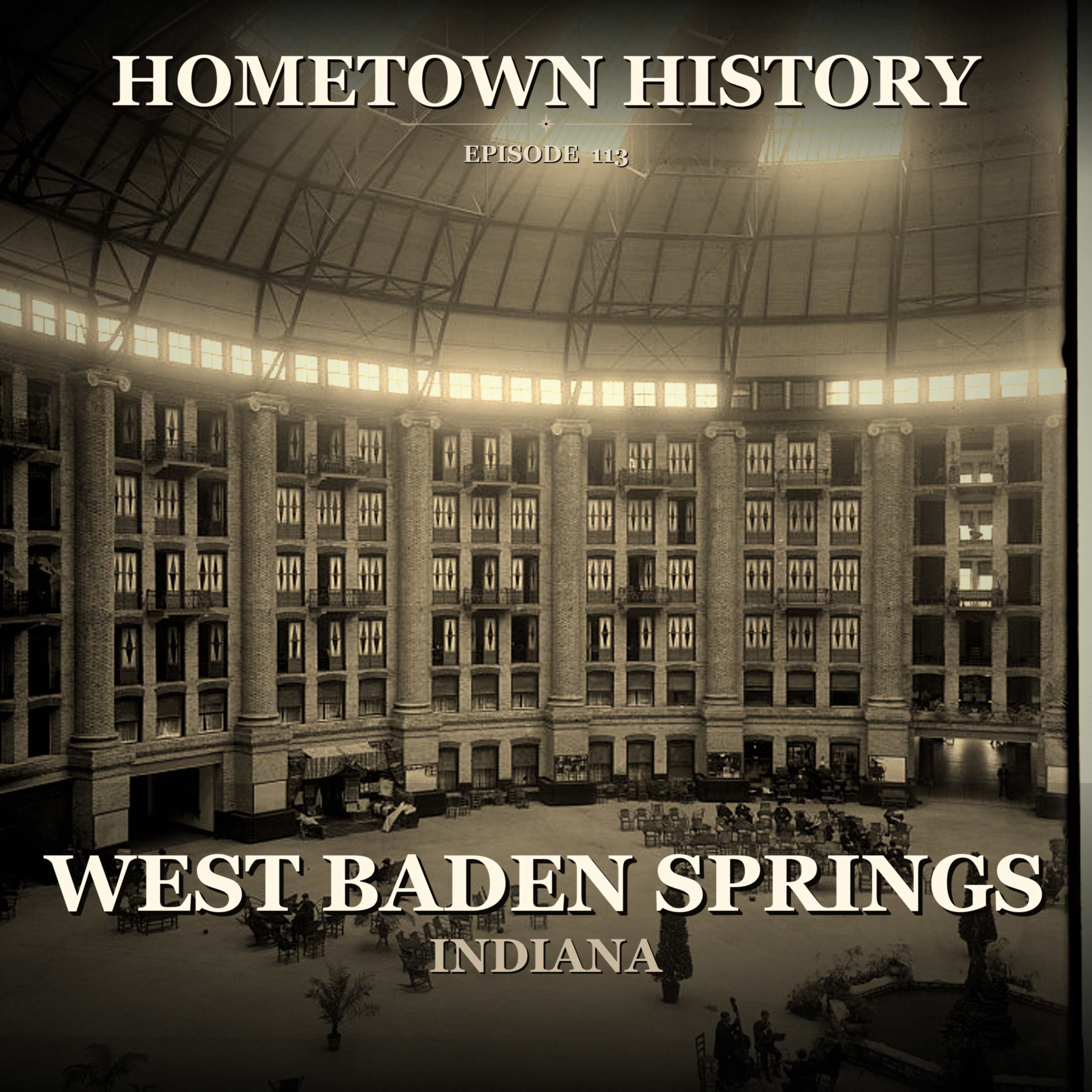
0:04 [SPEAKER_00]: After my conversation with Jeff Lane at the Westbaden Hotel, I went over to the French Lake Hotel to meet Dan Frotcher for a tour of both campuses because I've already covered the general history of the Westbaden Hotel in our interview with Jeff. 0:23 [SPEAKER_00]: I'll be focusing on some of the quirkier or more detailed parts of the Westbaden story during that part of the tour. 0:32 [SPEAKER_00]: but getting back to the French Le Cotelle. 0:35 [SPEAKER_00]: The first thing I learned from Dan was that the French Le Casino, which now looks no different from the outside from any other part of the building, used to have the appearance of a riverboat, in order to cheat gambling legislation. 0:51 [SPEAKER_00]: It even had a pond up against it to qualify it as a water feature. 1:03 [SPEAKER_01]: I'm going to have the four of you come over here. 1:05 [SPEAKER_01]: You all have been looking over here thinking that I was at loon because Arcasino no longer looks like a riverboat. 1:12 [SPEAKER_01]: But for 18 months, it had vinyl sighted with a wooden planking, two smokesacks, a bridge or wheelhouse, neon paddle wheels, on the left and right, or port and starboard side. 1:21 [SPEAKER_01]: And to the east, the far side of the casino, 1:24 [SPEAKER_01]: that was the water feature. 1:26 [SPEAKER_01]: I won't use all the very, very negative description of how it looked, but my favorite was said to me during a tour of West Bay in August of 2007. 1:34 [SPEAKER_01]: The gentleman told me that we did not have a riverboat. 1:37 [SPEAKER_01]: We had an oil tanker on the witness protection program. 1:39 [SPEAKER_01]: But I'm bummed. 1:40 [SPEAKER_01]: It did. 1:41 [SPEAKER_01]: It looked ridiculous. 1:43 [SPEAKER_01]: Anyway, after 18 months to say, yeah, it looks ridiculous. 1:46 [SPEAKER_01]: Make it look historic. 1:48 [SPEAKER_01]: So the nautical thing goes away. 1:49 [SPEAKER_01]: They fill 1:53 [SPEAKER_01]: It's not because West Baton is a domed hotel, but because the largest illegal casino that stood in his valley, the brown hotel, by the way, no relation to the brownie Kentucky, it had a dome. 2:13 [SPEAKER_01]: I can personally attest to the fact that my grandmother made me drink Pluto water when I was nine years old, that's nearly a 50-year-old memory, next month it turns 50, and let me tell you, yes, it's nasty tasting and it's very potent. 2:26 [SPEAKER_00]: But as we learned the last week, potent was just what people were looking for. 2:31 [SPEAKER_01]: Tales of Pluto water doubled every year from 1901 to 1919, three shifts around the clock six days a week, bottling Pluto water. 2:40 [SPEAKER_01]: and making effort-lessing salts or crystals as they call them. 2:45 [SPEAKER_01]: Sales approach $2 million and that is $2 million in $19-19 that's an incredible 2:52 [SPEAKER_01]: amount of income. 2:53 [SPEAKER_01]: 1971, the federal government banned the sale of Pluto water because it contains lithium carbonate. 2:59 [SPEAKER_01]: Now, I've heard both sides of this trace amounts and a very liberal, very large amount. 3:05 [SPEAKER_01]: Whatever it is, it's a controlled substance. 3:07 [SPEAKER_01]: Lithium carbonate is used in the mental health profession to level out the mood swings of our porters or in the manic depression, so they had to stop it. 3:15 [SPEAKER_00]: My ass, Dan, if he thought this lithium was the reason for the general sense of well-being at the resort, they were basically dosing a mood disorder drug all day long. 3:28 [SPEAKER_01]: Well, that's a whole day. 3:29 [SPEAKER_01]: If it's a large amount, yeah, but if it's a trace amount, no, one story that I've heard is that in order to get a lift from the lithium, you would have to drink approximately a bathtub full of French liquid, Pluto water. 3:41 [SPEAKER_01]: That's 80 to 100 gallons of a lackstiff. 3:44 [SPEAKER_01]: Don't try it at home, kids, all right. 3:47 [SPEAKER_01]: But if it had a higher, if there was a higher percentage in it, then yeah, that would make sense. 3:51 [SPEAKER_01]: So yeah, people got to live for the lithium. 3:53 [SPEAKER_00]: One of the tricks with measuring the presence of lithium in a natural body of water is just and how much it might fluctuate, like any other natural rhythm 4:05 [SPEAKER_00]: It's also possible that the presence of this mood-altering substance has increased or decreased overall throughout the last 200 years. 4:15 [SPEAKER_00]: There's just no way to know. 4:17 [SPEAKER_01]: So what does the Pluto Corporation do today? 4:19 [SPEAKER_01]: They basically manufacture plastic bottles, label them and fill them and ship them for a variety of companies, mainly companies that make household cleaning products, and even an Indiana-based petroleum company. 4:31 [SPEAKER_01]: So probably one of the larger employers, the resort would be number one, and then probably I would say the second, third, and maybe fourth largest employer in this area. 4:42 [SPEAKER_00]: In the hallway is a group portrait on the front lawn of a democratic party political convention with a very grouchy-looking Franklin Delano Roosevelt front-end center. 4:55 [SPEAKER_00]: Part of what makes this so striking is the fact that his wheelchair embraces are fully visible. 5:03 [SPEAKER_01]: a lot of democratic party events occurred here, including the 1931 Democratic Governor's Convention, and just write a center that is Governor New York State Franklin Delano Roosevelt. 5:15 [SPEAKER_01]: He's wearing a tan suit, oh my, and there's Eleanor. 5:19 [SPEAKER_01]: And you can see his leg braces and he's sitting in a wheelchair. 5:23 [SPEAKER_01]: He's got a rather grumpy look on his face, and I have a feeling that he didn't need the warnings of how effective Pluto water was. 5:29 [SPEAKER_01]: But he gathered the strength that he needed, the Democratic Party support, to secure the party's nomination which become the next president. 5:40 [SPEAKER_01]: There's an interpretation that he accepted the party nomination here, that if you watch Ken Burns special on prohibition, they had the actual news real footage, Governor Roosevelt is in Chicago accepting the party's nomination. 5:54 [SPEAKER_01]: So he got the party support here, and its fellow governors and other Democratic party heads said, we got your back, we're going to support you. 6:03 [SPEAKER_01]: And then at some point he would end up in Chicago for the party caucus. 6:06 [SPEAKER_01]: But little neat part of French League history. 6:10 [SPEAKER_00]: We paused at a gilded table in the French League lobby. 6:14 [SPEAKER_01]: It was found by a resort employee, or hotel employee in the 1990s, at an auction of Tammy Faye Bakers, and the bidding's going up, and this employee needed authorization to spend more money. 6:30 [SPEAKER_01]: And the kicker that made the deal, made the authorization come through, is that Tammy Faye Bakers somehow got this table from Liberace. 6:39 [SPEAKER_01]: some you look at the table and with either of those names in your mind you go, yeah, mixed total sense. 6:46 [SPEAKER_00]: I asked Dan if guests came to take the water cure all on their own, or if this was something a doctor would recommend. 6:53 [SPEAKER_01]: Pretty much if the docs didn't know how to cure you of whatever was telling you, they sent you to places with sulfrated lacts in a mineral water, hoping that you would flush your troubles down the drain. 7:07 [SPEAKER_00]: On the wall in front of us, inside the Westbaden lobby, is an enlarged postcard from an earlier version of the Westbaden hotel. 7:15 [SPEAKER_00]: It dates to the 1890s and shows all kinds of exclusive amenities you would never expect from a hotel. 7:24 [SPEAKER_01]: an offer house, a photography studio, a casino, and a rather unique athletic facility. 7:30 [SPEAKER_01]: The bicycle track built in 1893, a two-story wooden oval track, one-third of a mile around, pony rides for the kids on the ground level, the upper deck, the alternated between bicycling, 7:42 [SPEAKER_01]: and promenade and are strolling. 7:44 [SPEAKER_01]: In the northern end, you have the dirt dime in the infield of a league regulation baseball field, roof floodlights, tennis courts on this end. 7:53 [SPEAKER_01]: So you have an 1893 allegedly lit athletic facility with a league regulation baseball field. 8:01 [SPEAKER_01]: You had professional teams like the Pittsburgh Pirates and Sanatty Red, Chicago Cubs, Chicago White Sox and the St. Louis Browns attempting to hold spring training. 8:08 [SPEAKER_01]: Now the issue is those two fields are out front and they flood all the time. 8:15 [SPEAKER_01]: The pirates had at the worst. 8:16 [SPEAKER_01]: There are a lot of time for spring training was normally late March, early April. 8:20 [SPEAKER_01]: Back then, there were pretty much two weather conditions, frozen or flooded. 8:24 [SPEAKER_01]: So, if you go sliding in the third on frozen ground, you've put yourself on the disabled list or injured. 8:30 [SPEAKER_01]: You're not playing that season. 8:32 [SPEAKER_01]: If you've got two feet of standing water, 8:34 [SPEAKER_01]: you're not holding frame training. 8:37 [SPEAKER_01]: Now, that's from Pittsburgh area newspapers. 8:39 [SPEAKER_01]: I've found a collection of them that were gathered. 8:41 [SPEAKER_01]: I think it was Mr. Cook's son Carl. 8:43 [SPEAKER_01]: He had gone through and researched all these newspapers snippets. 8:46 [SPEAKER_01]: So what I mentioned was one of them, and another one, was that Pirates Management demanded that each player on a daily basis, and it was given an ounces, but I converted it to gallons. 8:56 [SPEAKER_01]: demanded at each player in a daily basis drink two and a half gallons of the slacks in a mineral water. 9:01 [SPEAKER_01]: So pretty discussing as I like to put it, the pirates never held batting practice with somehow the player still managed to get their runs and you're welcome. 9:09 [SPEAKER_01]: I'm here all week, try the veal. 9:11 [SPEAKER_01]: You should have heard what the guest said. 9:12 [SPEAKER_01]: I cleaned it up. 9:14 [SPEAKER_00]: At that time, the main resort here at West Baden was a large wooden hotel owned by a man named Elise and Claire. 9:23 [SPEAKER_01]: June 14, 1901, one o'clock in the morning, fire strikes, and the forestry wooden hotel is destroyed by fire. 9:30 [SPEAKER_01]: Among the guests, there were 268 guests at that morning. 9:32 [SPEAKER_01]: Among them, members of the Student Baker Family from South Bend, and Lisa and Claire, wife Caroline, only child daughter Lillian, Lillian, reminds Mr. and Claire. 9:42 [SPEAKER_01]: of the family trip through Europe, and the book he had written, and the sketches, hey dad, you have a dream hotel you sketched, make it a reality. 9:51 [SPEAKER_01]: So St. Clair is discouraged, but encouraged by a st. Julian in late June early July, St. Clair tells the world he's going to build an absolutely fire-photel. 10:00 [SPEAKER_01]: the Dome Day trim, I'll make it one of the eighth one of the modern world, and he vows to have it ready June 14, 1902. 10:06 [SPEAKER_01]: That is one year to the day of the fire, and he's making this announcement in late June early July, so he's already slipped his schedule a couple of weeks, and he's got a press release. 10:16 [SPEAKER_01]: He needs the three M's, money, manpower, materials, money, tenure, loan against the bond used in the hotel for $500,000, and he won $100,000 in 10:32 [SPEAKER_01]: manpower 500 workers all skills trades and disciplines. 10:36 [SPEAKER_01]: Ground breaking here in West Baton is early October 1901 leaving eight months in a handful of days to complete this project. 10:45 [SPEAKER_01]: Just to give you an idea on the logistics, nearly 500 rail cars of brick were required to build this place. 10:53 [SPEAKER_01]: Let alone sand, paint, wood, steel, you name it. 10:58 [SPEAKER_01]: But the logistics of trying to get 500 rail cars of brick into this valley, it's much of a nightmare. 11:04 [SPEAKER_01]: All right. 11:05 [SPEAKER_01]: Money, manpower, materials, going together. 11:07 [SPEAKER_01]: They start early to mid October building this place. 11:10 [SPEAKER_01]: Absolutely fireproof was the claim. 11:12 [SPEAKER_01]: Pretty accurate, limestone foot is a foundation, triple thick, interlocked columns of brick for the exterior and some interior walls, steel reinforced concrete floors. 11:24 [SPEAKER_01]: Except for the wood and the window, door frames and the door panels themselves, that's fireproof. 11:30 [SPEAKER_01]: So the hotel opens June 14, 1902, 8 months and two days from groundbreaking. 11:36 [SPEAKER_00]: On a poster in the hallway, we see a large advertisement for the new domed hotel. 11:42 [SPEAKER_00]: There were 500 guest rooms. 11:45 [SPEAKER_00]: a typical for the shady marketing techniques of this era. 11:49 [SPEAKER_00]: Sinclair fools the public into thinking there are seven hundred and eight guest rooms. 11:54 [SPEAKER_00]: By listing this number and board lettering at the bottom of the poster. 11:59 [SPEAKER_01]: Seven hundred and eight rooms. 12:00 [SPEAKER_01]: Yes. 12:01 [SPEAKER_01]: If you count every room closet mop closet storage closet in the five hundred guest rooms, seven hundred and eight rooms. 12:07 [SPEAKER_01]: This is Mr. Sinclair. 12:08 [SPEAKER_01]: Again, his middle name is Wiley and he does live up to that name. 12:12 [SPEAKER_01]: So this is him. 12:13 [SPEAKER_01]: trying to make it appear like he has seven hundred and eight rooms compared to the possible two hundred guest rooms down at French lick. 12:22 [SPEAKER_01]: So he's trying to make it look like he's more than three times the size as his main competitor. 12:27 [SPEAKER_01]: But look how the sneakiness continues. 12:30 [SPEAKER_01]: telephone, hot and cold water, toilet, and closed closet in every room. 12:34 [SPEAKER_01]: So it's a seven hundred and eight rooms, but it implies guest rooms, and then it shows you the, for the time rather modern amenities, don't quite, no, no why they don't put electric light and steam heat up here, but we do know this hotel and even the one that burned down had electricity. 12:52 [SPEAKER_00]: Because of the dome, it's easy to overlook the floor. 12:55 [SPEAKER_00]: You spend so much time looking up that you might fail to realize you're walking across the top of a 12 million piece mosaic that once covered everything from the lobby through the entire atrium. 13:11 [SPEAKER_01]: Cassini, Mozac, and tile comes from Cincinnati, Ohio. 13:15 [SPEAKER_01]: It's commissioned to design and install a Marble Mozac tile floor. 13:18 [SPEAKER_01]: These are individually size cut and installed marble piles placed individually. 13:24 [SPEAKER_01]: penny a piece installed. 13:26 [SPEAKER_01]: How do we know that? 13:27 [SPEAKER_01]: Indian landmarks has the invoice. 13:28 [SPEAKER_01]: A penny a piece installed, line item total for the marble tile is $120,000. 13:33 [SPEAKER_01]: So do the simple math, move the decimal point to places, $12 million pieces. 13:39 [SPEAKER_01]: So at one point that means this entire floor was covered with these penny tiles. 13:44 [SPEAKER_01]: So this tile force put in, but we just came off a carpet. 13:46 [SPEAKER_01]: So why is there carpet? 13:48 [SPEAKER_01]: Simple answer, 1901, they didn't look under the hood. 13:51 [SPEAKER_01]: The contractors built in the blind. 13:53 [SPEAKER_01]: The concrete floors started splitting and cracking immediately. 13:56 [SPEAKER_01]: You can patch and fill concrete. 13:57 [SPEAKER_01]: You can't patch and fill marble tile. 14:00 [SPEAKER_01]: So the owners in mid-30s, through the mid-60s, removed the damaged tile, stored it in the basement, in boxes and bins beneath the dining room, and then poured concrete. 14:12 [SPEAKER_01]: During the 1990s, Rescue Corps samples were drilled, and they found that this atrium was built upon large deposits of shale colon pyrate, which were not stable to build on. 14:21 [SPEAKER_01]: So in the 90s, the shale colon pyrate was removed, so fresh fill, concrete cap, and initially it was a yellow epoxy resin floor that was not conducive to the resort hotel operations. 14:32 [SPEAKER_01]: So three sets of carpeting have been in the atrium starting with the first installation in 2008. 14:38 [SPEAKER_01]: It is the same family owned and operated company that has done all three installations. 14:43 [SPEAKER_01]: This installation finished up April of 2021, so basically during the winter, and the patterns have gotten more and more complex. 14:52 [SPEAKER_01]: Anyway, I think it accompanies this tile, because the company that was hired to do this manufacturer of the carpet, they actually had swaths of carpet that tried to reproduce in the marble patterns, and it's just too much of a material contrast. 15:05 [SPEAKER_01]: It just did not look right, and so that's why they chose this one. 15:07 [SPEAKER_01]: And I think it just works awesome. 15:11 [SPEAKER_00]: And it looks great. 15:13 [SPEAKER_00]: And like seemingly everything else inside these facilities, it's a custom design. 15:19 [SPEAKER_00]: You won't find anywhere else. 15:22 [SPEAKER_00]: During the 1920s, West Baden was owned by a local gambler, turned a millionaire, named Edward Ballard, and it became a nationally known destination for the rich and famous. 15:35 [SPEAKER_00]: But at the end of the decade, disaster struck again. 15:39 [SPEAKER_01]: October 1929, stock market crash, the death blow. 15:43 [SPEAKER_01]: Ballers just to hotel down in 1932, shuts it down for good, puts it up on the real estate market for $300,000. 15:50 [SPEAKER_01]: It's actually worth $3 million. 15:52 [SPEAKER_01]: So he's taking a huge hit on this place. 15:54 [SPEAKER_01]: It's the depression, nobody wants it. 15:57 [SPEAKER_01]: 1934, a delegation from the Society of Jesus, more commonly known as the Jesuits, they come down from Chicago, me with Mr. Ballard, and he's so thrilled, he did it to him for free. 16:08 [SPEAKER_01]: But nothing's free. 16:10 [SPEAKER_01]: Next, business day that JEDUT have to go to the county clerk at the courthouse and pay $1 for the deed transfer. 16:17 [SPEAKER_01]: So, 1934, this becomes Westbaden College, a Jesuit seminary. 16:21 [SPEAKER_01]: Westbaden College functions here from 1934 to 1964. 16:24 [SPEAKER_01]: 400 men are ordained into the Jesuit order that takes their final thousand ordained. 16:30 [SPEAKER_01]: And about three dozen Jesuit priests are actually buried on the hotel grounds. 16:34 [SPEAKER_01]: On the Westbaden College, you'll see a cemetery up on the slope, and there are three dozen internments there, which are Jesuit priests, 16:44 [SPEAKER_00]: One of the unexpected ways, you start to grasp the scale of these hotels, is by noticing all the little furnishing and the rooms and common spaces. 16:55 [SPEAKER_00]: If there's one of them, there's probably 2000 others, spread all throughout these buildings. 17:02 [SPEAKER_00]: In the hallways, we notice small art deco looking like fixtures, every few feet. 17:09 [SPEAKER_00]: Out of curiosity, one of us asked Dan if they were original. 17:17 [SPEAKER_01]: all of them to my knowledge, all of hundreds of them throughout the hotel are all original. 17:21 [SPEAKER_01]: Pretty much put it this way. 17:23 [SPEAKER_01]: Who's going to have time to vandalize this place, mischief is kids? 17:26 [SPEAKER_01]: They're from here. 17:27 [SPEAKER_01]: You go far enough up that ancestral tree. 17:29 [SPEAKER_01]: Who do you think worked here? 17:30 [SPEAKER_01]: You just disgraced the hotel. 17:31 [SPEAKER_01]: Your grandmami and grandpappy worked it. 17:33 [SPEAKER_01]: That's a padlin. 17:35 [SPEAKER_01]: So that probably would deter too much serious mayhem in vandalism. 17:41 [SPEAKER_00]: On one side of the atrium, sits a massive ceramic fireplace, 17:48 [SPEAKER_00]: It's a colorful outdoor scene, where a gnome sits under a tree by a stony river, symbolizing the healing waters of the French like springs. 17:58 [SPEAKER_00]: The whole thing is a custom design. 18:01 [SPEAKER_01]: Hotel literature 1902, boasting brags about a mammoth brick fireplace that can hold a 14-foot log, I don't recommend that you'll get burned crushed or both. 18:10 [SPEAKER_01]: Rookwood pottery from Cincinnati is brought in by Miss Lillian in her husband to design and install a ceramic surround. 18:20 [SPEAKER_01]: We used to say on our tours, we think it's Rookwood because we had no evidence. 18:24 [SPEAKER_01]: 1998, a research scientist from Procter and Gamble, who collects Rookwood pottery, took our tour. 18:30 [SPEAKER_01]: And our tour guide said, we think it's Rookwood but we can't prove it. 18:34 [SPEAKER_01]: And the scientist said, no, that's Rookwood. 18:37 [SPEAKER_01]: knowing and proving are two different things. 18:39 [SPEAKER_01]: In just over two months upon returning home to Ohio, this research time scientists found the documentation necessary. 18:48 [SPEAKER_01]: The archive work order books from Rookwood Pottery in the Cincinnati Library System. 18:54 [SPEAKER_01]: I've got some of those documents at my house right now. 18:56 [SPEAKER_01]: On the sheet, it's a photocopy page. 18:57 [SPEAKER_01]: It says West Baydon Hotel, Rotunda. 19:00 [SPEAKER_01]: Technically, this is a Rotunda, not an atrium, but the terms are used interchangeably today. 19:06 [SPEAKER_01]: fireplace and again this is all on this document mentioned by name and the color of his garb and the yellow drinking horn is brutal. 19:15 [SPEAKER_01]: I call him the little maroon, no-of-good health because that's more maroon red than pure red. 19:21 [SPEAKER_01]: Yellow drinking horn. 19:22 [SPEAKER_01]: Why is frutal smiling? 19:24 [SPEAKER_01]: Regularity. 19:25 [SPEAKER_01]: So, mention my name and the color of the peril and drinking horn on this document. 19:30 [SPEAKER_01]: So, that's definitive fruit right there. 19:32 [SPEAKER_01]: Most people want, especially with our smart devices, they want two-tier authentication, West Baden Hotel, under tree. 19:41 [SPEAKER_01]: It's Rookwood Pottery, and it's original, and it's priceless. 19:46 [SPEAKER_00]: As we learned in our interview with Jeff, the hotel was vacant for 13 years. 19:52 [SPEAKER_00]: From 1983 to 1996, somewhere in the middle, the walls of the building started to collapse. 20:01 [SPEAKER_01]: This hotel was built between the summer of 1919-1902 unless of the year, winter of 1991. 20:06 [SPEAKER_01]: If you want to try the property's 89th birthday, a 108-foot section of the hotel collapsed. 20:11 [SPEAKER_01]: That's everything from our shop. 20:13 [SPEAKER_01]: All the way down to the sliding glass doors of the marquee entrance. 20:16 [SPEAKER_01]: Boom. 20:17 [SPEAKER_01]: Now the property was abandoned, tied up in bankruptcy courts to know and danger to human life. 20:21 [SPEAKER_01]: However, the NAFLE part service designated honored the West Bank Springs Hotel as a national historic landmark in 1987. 20:29 [SPEAKER_01]: That's a federal program that honors and recognizes historic sites throughout our nation. 20:35 [SPEAKER_01]: So here it is, we have a national treasure self-destructing in southern Indiana. 20:38 [SPEAKER_01]: And the LN marks would acquire this property after an anonymous donor paid the $250,000 negotiated purchase price. 20:46 [SPEAKER_01]: Then we met with Bill and Gayle Cook who were incorporated, and with a handshake, they agreed to fund the initial rescue, and that was the springboard to them coming back in 2005-6 and 7 to restore initially the French League springs, and then the West Bay and Spring so tell. 21:00 [SPEAKER_01]: With the cooks, they wanted to make sure that it was historically accurate. 21:03 [SPEAKER_01]: That's one thing. 21:04 [SPEAKER_01]: They had been such avid strong supporters of the historic preservation here. 21:08 [SPEAKER_01]: in Indiana, they want to get it right and if it takes multiple swings at it they just want to get it right and working with Indiana landmarks that was achieved. 21:19 [SPEAKER_00]: Because of how magnificent these two hotels are, I suggested that being part of their renovation was probably something of a dream project for those who are able to work on it. 21:32 [SPEAKER_01]: Yes, this is a dream project. 21:34 [SPEAKER_01]: There were people up at Westbaden in the 90s. 21:37 [SPEAKER_01]: We had people come from all across the country to try to get on that project. 21:40 [SPEAKER_01]: And here in 2005 and 6, it was the same thing. 21:43 [SPEAKER_01]: They were trying skilled and unskilled labor from all across the country just so this could be on their resume. 21:50 [SPEAKER_01]: They wouldn't be a part of it. 21:51 [SPEAKER_01]: I had a passion, but also, again, you'd get one historic preservation restoration project under your belt and it makes you more employable for future. 22:00 [SPEAKER_00]: One of the coolest spaces in the French Le Cotelle is the power plant bar in Grille. 22:07 [SPEAKER_00]: Its walls feature many of the old control panels from the power plant, large levers, dials and switches, cover one wall. 22:18 [SPEAKER_01]: When the cooks took over, 22:20 [SPEAKER_01]: They did a hard look, a hard assessment of what they had here. 22:24 [SPEAKER_01]: And anything that could be salvaged from the power plant, the bottling plant, and the large ballroom that had been built by Sheraton, called the Hoosier Ballroom, 2000-seat capacity, would be taken from those structures before their demolition, repaired restored, and then used in the restoration of the historic hotel. 22:41 [SPEAKER_01]: The power plant bar in grill? 22:43 [SPEAKER_01]: This is why it's called the power plant barn grill. 22:46 [SPEAKER_01]: Those are the marble switch panels from the old power house. 22:49 [SPEAKER_01]: Kind of looks like something out of Dr. Frankenstein's laboratory from that old black and white classic, right? 22:56 [SPEAKER_01]: And, of course, they have all sorts of the craft beers here from your standard tradition domestic imports, great service, great high-end gastro-club type of food. 23:06 [SPEAKER_00]: Of course, at the end of our tour, I had to ask Dan for his thoughts on the so-called angel room, located in the hub at the top of the dome. 23:17 [SPEAKER_01]: There's no way to access the inside of that hub on the inside. 23:22 [SPEAKER_01]: So you have to go along the flat part of the roof, take this ladder up the outside of the dome. 23:26 [SPEAKER_01]: The ladder stops somewhere between 50 to 60 feet from the top. 23:29 [SPEAKER_01]: So it's fingers on shingles, go to the top, go into this maintenance shed, and in 96, if the workers open up the trap door and hop down inside, and they rediscovered paintings. 23:42 [SPEAKER_01]: of angels and smaller cherubs inside that hollow steel cylinder. 23:47 [SPEAKER_01]: The inspiration of the cherubs definitely the cherubs painted by Raphael of this team Madonna. 23:52 [SPEAKER_00]: A few minutes later, standing in the hallway behind the fireplace, damp pointed out a large paneled poster with images of some of these angels. 24:04 [SPEAKER_01]: Here are photographs of four of the taller angles that are up there. 24:08 [SPEAKER_01]: The inspiration we believe is Fra Angelico in mid-15th century floor and team religious artists. 24:14 [SPEAKER_01]: Who painted them? 24:16 [SPEAKER_01]: The artists never signed their work, so it's a mystery. 24:19 [SPEAKER_01]: We do know who didn't paint them based off of some of the graffiti. 24:23 [SPEAKER_01]: It wasn't the Jesuits. 24:24 [SPEAKER_01]: The earliest legible graffiti with a date is from 1918 that's 16 years for the Jesuits. 24:30 [SPEAKER_01]: Let it in, paint it. 24:34 [SPEAKER_01]: My personal inclination, the original worker is a no-102, or possibly those who redecorated the age of 19, 17. 24:43 [SPEAKER_01]: I don't know, it's a mystery. 24:45 [SPEAKER_01]: Last year, Indian landmarks released mobile app tours on Apple Google Play Store for the both hotels. 24:51 [SPEAKER_01]: So go to those French-lic-West Bayton tours, and you can get to the annual room. 24:56 [SPEAKER_01]: We need a new imagery of the angel room and I've been trying to get to the angel room since October 2006. 25:00 [SPEAKER_01]: So coming up on 15 years and I finally got to get up there with Indian landmarks art director, he took the professional photographs and his wife who was assisting him took one of me up there. 25:12 [SPEAKER_00]: Dan pulled out his phone and showed us pictures of himself standing in the angel room in front of one of the paintings. 25:20 [SPEAKER_01]: I'm sharing this just so you get an idea of the scale, 25:26 [SPEAKER_01]: So what, eight, eight and a half feet? 25:29 [SPEAKER_01]: And of course, the angel I'm in front of is this one. 25:32 [SPEAKER_01]: And the graffiti's are removed to protect the guilty, because some of the people who have written their names on those angels work at this resort. 25:38 [SPEAKER_01]: And so some reason they told me their secret, and I'll go to the grave with it. 25:44 [SPEAKER_00]: I asked Dan for a reminder on how visitors might book tours like this one. 25:49 [SPEAKER_01]: People can purchase tickets here. 25:50 [SPEAKER_01]: We also have an online vendor called Fair Harbor, so you can make a treat or you have your tickets before you travel. 25:56 [SPEAKER_01]: And then we have also the QR code for our the mobile app tours that I talked about. 26:00 [SPEAKER_01]: And there's other tour for our grams, Indian landmarks.org and you can email Sandy anytime. 26:07 [SPEAKER_00]: I'd like to thank Dan again for joining me in allowing us to record and share part of this tour
Show full transcript (277 segments)