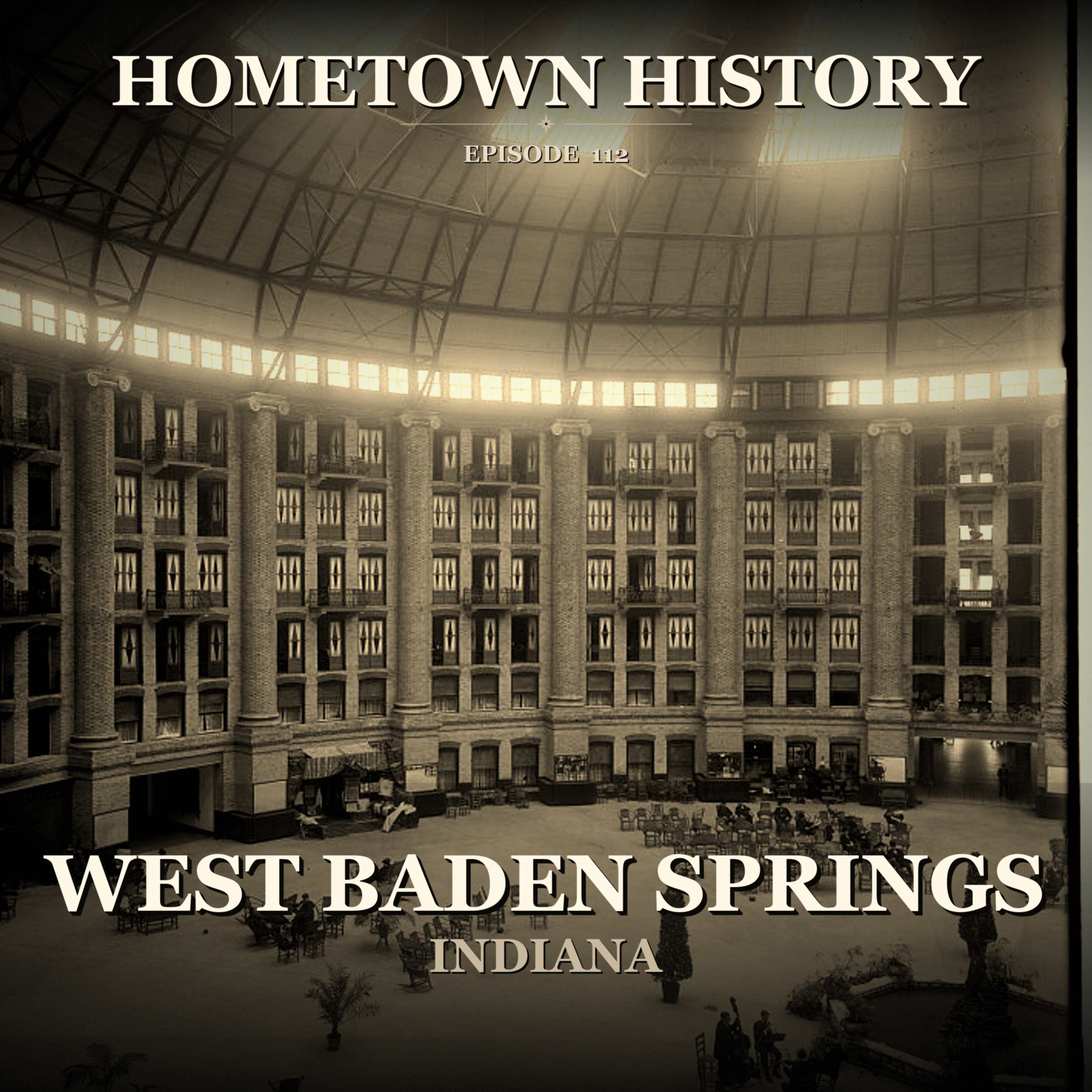
0:07 [SPEAKER_00]: When it was built in 1902, with the biggest free span dome in the world, the West Baden Springs Hotel in southern Indiana was known as the eighth wonder of the world. 0:20 [SPEAKER_00]: About a month ago, in February of 2023, the travel site Tripivisor named it one of the top 0:31 [SPEAKER_00]: The West Baden Resort and the equally impressive French-like resort, next door, were founded on the site of an ancient sulfur spring, which drew wealthy travelers from all over the country to take of its quote, healthy powers. 0:50 [SPEAKER_00]: To house all of this traffic, and to meet the expectations of so many wealthy guests, both resorts were built around 1901, and are still thriving today. 1:04 [SPEAKER_00]: I recently traveled to the town of French Lake Indiana to stay at night at the West Baden, and to meet with official resort historians, Jeff Lane, and Dan Frotcher. 1:17 [SPEAKER_00]: I started with Jeff in the atrium of this hotel. 1:20 [SPEAKER_00]: Under the massive 100 foot high, 200 foot wide glass and steel dome. 1:34 [SPEAKER_00]: you are the county historian, so you will know the history of both this location and the French Alec hotel as well. 1:43 [SPEAKER_00]: Yes. 1:44 [SPEAKER_00]: And do they call it the French Alec hotel or do they call it the resort? 1:48 [SPEAKER_01]: The French-lic-resort is made up of the French-lic springs hotel and the West-Baden springs hotel. 1:59 [SPEAKER_01]: Your room number here begins with a four. 2:03 [SPEAKER_01]: Right. 2:04 [SPEAKER_01]: Do you know why? 2:05 [SPEAKER_01]: I do not. 2:06 [SPEAKER_01]: This is the fourth wing of the French-lic-resort. 2:13 [SPEAKER_00]: Let me just pause here to say that this resort is probably much bigger than you are imagining. 2:19 [SPEAKER_00]: In terms of total acreage, it's bigger than all but 20 American University campuses. 2:27 [SPEAKER_00]: With 3,000 acres and hundreds of thousands of square feet of indoor space, you can really get lost in one of these hotels. 2:38 [SPEAKER_00]: There are three golf courses, horse stables, a massive casino, and countless other amenities. 2:49 [SPEAKER_01]: The front wing is the spa wing, and it's number one. 2:54 [SPEAKER_01]: The spring wing goes toward and along the Pluto spring house, and that is wing two. 3:05 [SPEAKER_01]: The garden wing basically points this direction and it's number three and this then is number four. 3:15 [SPEAKER_01]: We do have a third hotel on the property. 3:19 [SPEAKER_01]: It's new and it is known as the valley tower and it is built right next to the casino. 3:29 [SPEAKER_01]: and it contains 71 guest rooms, and is six stories tall, and so that is our newest hotel. 3:40 [SPEAKER_00]: To fully appreciate the strangeness of this gigantic campus, you have to picture it out in the middle of nowhere in the hills of southern Indiana. 3:53 [SPEAKER_00]: The town of French Lake itself has a population 3:59 [SPEAKER_00]: Let's go ahead and start from the beginning. 4:01 [SPEAKER_00]: What was this area like before these hotels were ever developed, driving here, there is basically nothing from the south before you get here. 4:12 [SPEAKER_00]: And then suddenly you pull into town now, and there are these two massive resorts. 4:18 [SPEAKER_00]: But what was this area like before these resorts were here? 4:21 [SPEAKER_01]: These were just farming communities, French-lic was a small town, the lowland, was very low. 4:28 [SPEAKER_01]: The animals would come here, and the mineral water that came 4:34 [SPEAKER_01]: up from beneath the surface would actually coat the rocks near those lands. 4:43 [SPEAKER_01]: They were called the saline lands and they would coat those rocks with minerals. 4:50 [SPEAKER_01]: The water would evaporate. 4:52 [SPEAKER_01]: The animals would come here and lick 4:56 [SPEAKER_01]: like people now purchase salt blocks for their animals to lick the minerals. 5:03 [SPEAKER_01]: And so that's where the lick term comes from. 5:07 [SPEAKER_01]: But the first hotel was built at French lick in about 1845 by Dr. William A. Bulls. 5:17 [SPEAKER_01]: He knew of the minerals. 5:20 [SPEAKER_01]: He knew that the animals loved coming here. 5:23 [SPEAKER_01]: And so it was his decision to build a frame hotel there near the site of the present French le Cotelle. 5:34 [SPEAKER_01]: It was a place where people could come to relax to drink the mineral water to get healthy. 5:43 [SPEAKER_01]: they would actually come here for their health. 5:46 [SPEAKER_01]: People would not be feeling well. 5:49 [SPEAKER_01]: And so they would drink that mineral water. 5:51 [SPEAKER_01]: They would actually get out and exercise. 5:55 [SPEAKER_01]: They loved it. 5:57 [SPEAKER_01]: They would come here in the early days. 6:00 [SPEAKER_01]: on horseback or by possibly stage coach or by carriage. 6:06 [SPEAKER_01]: So it wasn't the easiest place to get to. 6:08 [SPEAKER_01]: There were several illegal. 6:11 [SPEAKER_01]: They were all illegal casinos. 6:14 [SPEAKER_01]: We didn't call them casinos in those days. 6:17 [SPEAKER_01]: We called them supper clubs. 6:19 [SPEAKER_01]: because you would die, then you would move into another room to actually play the games. 6:27 [SPEAKER_01]: And so that was a fun time. 6:29 [SPEAKER_01]: And so, in fact, some of those structures are still standing today. 6:34 [SPEAKER_00]: Before we get into that, of course, people were coming here for this water, the Pluto water. 6:40 [SPEAKER_00]: And what was the water here called? 6:41 [SPEAKER_01]: The water here was called Spruodle Water. 6:45 [SPEAKER_01]: And that is a German word, and it translates to sparkling water or mineral water. 6:55 [SPEAKER_00]: And for people when they were come here, they were coming here to I assume bath in this water. 7:00 [SPEAKER_01]: They would drink the water in the spring houses, which are out in the gardens, and then in the spa, they would bath in the water. 7:11 [SPEAKER_00]: And so out in the gardens, there would be just a spring. 7:14 [SPEAKER_00]: They would take a cup, drink it, but they then go walk around the gardens. 7:19 [SPEAKER_01]: They would. 7:19 [SPEAKER_01]: Each hotel had its own house, physician, and the house physician would prescribe a certain amount of water that you should drink every day. 7:29 [SPEAKER_01]: At French liquor, I know specifically, and I've seen pictures of them for West Baden, but I have never seen, but it was a walking stick, 7:41 [SPEAKER_01]: not one that would support you, but one that you would just stroll around with, and you would walk in the garden. 7:50 [SPEAKER_01]: Now the water because of the minerals that it contained at both hotels would have a very positive effect on your system, as it served as a laxative. 8:07 [SPEAKER_01]: And so, throughout the gardens and grounds of both hotels, there's no better way to put it, there were privies. 8:17 [SPEAKER_01]: And when you felt the need to visit one of those places, the story goes that you would hang your walking stick on the door outside on the little handle, and you would go inside and do what needed to be done, and the stick marked it so that people walking by knew that was not available and they needed to go to the next one. 8:46 [SPEAKER_01]: How quickly would this water take effect? 8:48 [SPEAKER_01]: This water could take effect pretty quickly, depending on how much had been consumed and the amount of walking that had taken place. 8:59 [SPEAKER_01]: So the amount of walking had an impact. 9:01 [SPEAKER_01]: Oh, it definitely. 9:02 [SPEAKER_01]: Because so many people that came to both of these hotels were extremely wealthy, and they had so many people literally waiting on them hand and foot. 9:14 [SPEAKER_01]: And so, if you don't use certain parts of your body, you eventually lose that function, and so by actually being able to exercise maybe for the first time, and that was the goal. 9:32 [SPEAKER_01]: I mean, these rooms were not large. 9:34 [SPEAKER_01]: you were not encouraged to go sit in your room or to sit out here in the atrium or the lobbies. 9:42 [SPEAKER_01]: You were encouraged to get out and move around and walk or play tennis or go golfing or go horseback riding. 9:52 [SPEAKER_01]: You were meant to move around and the more you moved, the more you moved, the more you moved. 10:00 [SPEAKER_01]: That's right. 10:01 [SPEAKER_00]: One of the things that we noticed from staying in our room was the room. 10:06 [SPEAKER_00]: It's very nice. 10:08 [SPEAKER_00]: Yes, they are. 10:08 [SPEAKER_00]: But one of the best parts of the room is the bathroom. 10:12 [SPEAKER_00]: it's almost as large as the room and it is one of the nicest bathrooms in a resort I've ever been in and I've been in the gay lord in Nashville, I've been in a lot of very nice resort here and the bathroom is very nice. 10:28 [SPEAKER_00]: There are two showers, one bathtub, you have a nice little toilet in a ton of what a room. 10:35 [SPEAKER_00]: was that the case back then that the bathrooms were a little larger or is that just a future now? 10:42 [SPEAKER_01]: I think that's just a feature now. 10:44 [SPEAKER_01]: I know in a original stationary that we have seen some room might have had a sink. 10:52 [SPEAKER_01]: Some rooms might have had maybe a tub and a toilet. 10:58 [SPEAKER_01]: I don't know that very many rooms had all of the facilities. 11:04 [SPEAKER_00]: The outdoor bathrooms that you're talking about, do you know what those would have been like? 11:09 [SPEAKER_00]: Are they still out there? 11:11 [SPEAKER_01]: They are no longer on property on either property. 11:14 [SPEAKER_01]: I would say they were very simple, just like any outhouse that you would 11:21 [SPEAKER_01]: go to today. 11:22 [SPEAKER_01]: It has a function and that's the way it is. 11:27 [SPEAKER_00]: Do you happen to know when they were building these resorts if they had to take into account that people will be using the bathroom so often? 11:36 [SPEAKER_00]: I don't know. 11:37 [SPEAKER_00]: It's just the amount of water in a resort this large at that point in time. 11:42 [SPEAKER_01]: I'm just wondering. 11:43 [SPEAKER_01]: It's a good point. 11:44 [SPEAKER_01]: I've never really thought 11:48 [SPEAKER_01]: That's why I would be surprised if every room would have had all of the facilities. 11:56 [SPEAKER_01]: When this particular structure was built, 12:00 [SPEAKER_01]: it was electrically lit, Mr. Sinclair had huge dynamos in the power plant that produced the electricity. 12:11 [SPEAKER_01]: I guess I like to think of this building when it was built in less than a year, by the way. 12:18 [SPEAKER_01]: October 1st is when they laid the first brick and it was finished by August of 192. 12:29 [SPEAKER_01]: and so less than one year, this building was standing, I doubt if every room was furnished, but still to see something like this would have just been incredible, but it would have taken a lot of serious planning and plumbing, of course, like you say, for all of that to have taken place. 12:56 [SPEAKER_01]: Yeah. 12:57 [SPEAKER_00]: Being a local, did you ever taste the mineral water? 13:01 [SPEAKER_01]: Absolutely. 13:01 [SPEAKER_01]: In fact, I have tasted Pluto water. 13:05 [SPEAKER_01]: These springs at West Bay, and of course, are capped and have worked capped by a past owner. 13:12 [SPEAKER_01]: And I think that probably had to do with liability insurance and things like that. 13:17 [SPEAKER_01]: But the Pluto spring, I have drank Pluto water. 13:21 [SPEAKER_00]: The Pluto Spring, for reference, is over at the French Lucrasort. 13:27 [SPEAKER_01]: I didn't drink enough of it that it had any sort of effect on me, one way or another. 13:35 [SPEAKER_00]: And they don't bottle the water any longer. 13:36 [SPEAKER_01]: No, they don't. 13:37 [SPEAKER_01]: Actually, 1971 was the last year Pluto water was bottled because the chemists in the laboratories at the Pluto bottling plant retraces of lithium in the water. 13:53 [SPEAKER_01]: And so at that point, lithium became a controlled substance and there is no more bottling of 14:01 [SPEAKER_01]: Pluto water after that time. 14:03 [SPEAKER_01]: So if you find any Pluto bottle, it's definitely 1971 or earlier. 14:10 [SPEAKER_01]: My dad had a brother who lived in the state of Kansas, and he would always bring gallon jugs with him anytime he came in to visit because he always wanted to take home Pluto water because he just swore by it because the farm that they lived on that my dad was born on actually 14:31 [SPEAKER_01]: out in the field and that farm was called flat lick springs. 14:37 [SPEAKER_01]: They had one horse my dad is told me that if they couldn't find the horse in the barn lot they would look out in the field and that horse would be down there drinking that mineral water. 14:49 [SPEAKER_01]: So it really had a major draw for that particular horse. 14:54 [SPEAKER_00]: Do you know what owner ended up capping the springs here? 14:59 [SPEAKER_01]: I don't know for sure, but I would say probably the springs were capped right after it became a Jesuit seminary. 15:10 [SPEAKER_01]: It was a Jesuit seminary for 30 years from 1934 through 1964. 15:16 [SPEAKER_01]: And that's just my guess that's probably when the springs were capped. 15:21 [SPEAKER_00]: And you think it was for a insurance purpose? 15:23 [SPEAKER_01]: I would say that. 15:24 [SPEAKER_01]: And this was private property. 15:27 [SPEAKER_01]: And they didn't want former guests coming back onto the property because they had a totally different purpose for the use of this building. 15:38 [SPEAKER_01]: Because the young men coming here were wanting to become priests. 15:44 [SPEAKER_01]: So they were students and they needed to study. 15:46 [SPEAKER_01]: They were attending classes. 15:49 [SPEAKER_01]: they were doing a lot of reading and they just could be bothered with a lot of people coming in and out of the building and the property. 15:58 [SPEAKER_01]: So that's merely my speculation, but to me that seems like that's pretty logical. 16:05 [SPEAKER_00]: And how many people would have been here when the Chesa which we were here? 16:08 [SPEAKER_01]: I have read that there might have been at its greatest number as many as possibly 500 16:16 [SPEAKER_00]: So they were just staying in the while we now know as hotel room. 16:19 [SPEAKER_00]: That's exactly right. 16:21 [SPEAKER_00]: I can't imagine just so it's using this as their space, but one of the things that I remember from last night watching the video in your museum was that when they built this atrium, it was the largest dome, is that right? 16:35 [SPEAKER_01]: Yes, in fact, it was the largest free span dome in the entire world built of steel, glass, 16:47 [SPEAKER_01]: until the Houston Astridone was built in the 1960s. 16:52 [SPEAKER_00]: When I first walked in here, I mean, it just almost takes your breath away. 16:55 [SPEAKER_00]: It's just a very impressive sight. 16:57 [SPEAKER_01]: It still takes my breath away. 16:58 [SPEAKER_00]: Yeah. 16:59 [SPEAKER_00]: So after the Jesuits were here, what made them leave? 17:03 [SPEAKER_01]: I think it was due to declining enrollment and being able to afford to maintain a building like this and all of the property. 17:14 [SPEAKER_01]: There were three groups here. 17:16 [SPEAKER_01]: There were the brothers who basically did all of the work and then the students and then the priests. 17:25 [SPEAKER_01]: And that is why we have the cemetery on the property today. 17:29 [SPEAKER_01]: And that's the Jesuits cemetery or the St. Ignatius cemetery, and because there were some priests who passed while they were here, and I guess had asked to be buried on the property. 17:45 [SPEAKER_01]: And so there are 40 graves in the cemetery. 17:48 [SPEAKER_01]: They wanted to remain on the property. 17:51 [SPEAKER_00]: So what happens to the property after they leave the Jesuits? 17:56 [SPEAKER_01]: Well, then it was for sale again. 17:58 [SPEAKER_01]: It was purchased at auction by a couple from Midland, Michigan. 18:03 [SPEAKER_01]: Dr. and Mrs. McColley, whiting, and they donated this property to Northwood Institute. 18:09 [SPEAKER_01]: Northwood was a private liberal arts college. 18:13 [SPEAKER_01]: They offered degrees in automotive marketing, hotel and restaurant management, education courses. 18:20 [SPEAKER_01]: Northwood was an institute. 18:22 [SPEAKER_01]: Then, now Northwood is a university. 18:25 [SPEAKER_01]: So what caused the college to leave? 18:28 [SPEAKER_01]: Once again, maintaining this particular structure and a lack of students attending once again. 18:36 [SPEAKER_00]: And what happened to the property? 18:38 [SPEAKER_01]: The last class graduated in 1983 from 1983 to 1996. 18:45 [SPEAKER_01]: This property was basically vacant. 18:50 [SPEAKER_01]: and in fact that's probably what caused the collapse from the sixth all the way to the first floor in the outer section and it was just 13 years vandalism animals moved in people were stealing things. 19:08 [SPEAKER_01]: I think people wanted a piece to save and in fact at one point we had what we called an 19:20 [SPEAKER_01]: to bring back anything. 19:22 [SPEAKER_01]: No questions asked that they might have taken to save, to preserve, and some people literally did bring back items. 19:32 [SPEAKER_01]: So that was good. 19:33 [SPEAKER_01]: That was very good. 19:35 [SPEAKER_00]: One of the things that they mentioned in the video was that back in the early 1900s maybe they were calling this the eighth wonder of the world. 19:44 [SPEAKER_01]: Yes. 19:44 [SPEAKER_01]: When did that term come about? 19:50 [SPEAKER_01]: Okay, because it was just absolutely amazing to have been able to have built a structure like this in such a short period of time built by a young architect, the Mr. Sinclair found in Charleston, West Virginia. 20:11 [SPEAKER_01]: He had built the annex to the state capital in Charleston, 20:19 [SPEAKER_01]: wouldn't take on the project because they didn't think it was possible, but this architect Harrison Albright said, yes, it's possible. 20:28 [SPEAKER_01]: I can build the hotel of your dreams, and I have a good friend who is a bridge engineer. 20:36 [SPEAKER_01]: His name is Oliver Westcott. 20:39 [SPEAKER_01]: and he built the dome so that it had the ability at the top of each of the columns to expand and contract. 20:49 [SPEAKER_01]: So the trusses sit on castors at the top of the columns and the castors are the four little wheels which we can't see but like the four wheels of inline roller skates 21:08 [SPEAKER_01]: in a track and that allows it as bridges need to be able to expand and contract with temperature changes. 21:18 [SPEAKER_01]: Certainly in southern Indiana, we have plenty of temperature changes, rapidly at times, and it worked, and it's still working. 21:27 [SPEAKER_00]: So we know that when West Baden was in its worst time, 21:36 [SPEAKER_01]: I would actually say just about 2005, just about the time the cooks purchased French lick. 21:45 [SPEAKER_01]: I would probably say that was when it was at its worst. 21:49 [SPEAKER_01]: That's probably why they purchased French-lic first. 21:53 [SPEAKER_01]: I don't know if that's true at all. 21:56 [SPEAKER_01]: But I would say they saw the major need that building really needed some help pretty fast. 22:04 [SPEAKER_01]: It never got to this point because it remained open. 22:16 [SPEAKER_00]: For a little more background, the cooks we're referring to are bill and gal cook, billionaire entrepreneurs from Bloomington and Diana. 22:27 [SPEAKER_00]: We'll hear Dan say more about them during the tour in our next episode. 22:32 [SPEAKER_00]: But these are the kind of philanthropists that historical preservation societies dream of. 22:39 [SPEAKER_00]: They basically came in and wrote a blank check to restore these two massive properties 22:45 [SPEAKER_00]: has authentically and responsibly as possible. 22:50 [SPEAKER_00]: It is safe to say that without their intervention, both hotels would likely be abandoned and derelict today. 23:02 [SPEAKER_00]: And what year was it when the cooks started working on this property? 23:07 [SPEAKER_01]: This property, they purchased in 23:12 [SPEAKER_01]: Well, actually, they started a portion of this property in 1996. 23:19 [SPEAKER_00]: When I was a freshman in high school, I think it was around 2004 or 2005. 23:24 [SPEAKER_00]: I came here for the very first time and we stayed at French League. 23:31 [SPEAKER_00]: I think they were about to start construction. 23:33 [SPEAKER_00]: There were pictures all around of what their plans were to do. 23:37 [SPEAKER_00]: When you first started here, you were a historian, but did you do the tours back then at all? 23:41 [SPEAKER_01]: well, I was the tour coordinator. 23:44 [SPEAKER_01]: So I was in charge of finding volunteers throughout the community to bring people back and give them tours of what we could see and I know the price was $10. 24:00 [SPEAKER_00]: Is there anything else about the history of the two complexes that people should know about? 24:06 [SPEAKER_01]: I don't know if you were aware of this or not. 24:09 [SPEAKER_01]: but the beverage tomato juice was first served at the French lick Springs hotel in 1917 by Chef Lewis Perrin when he ran out of oranges one morning for breakfast that he was squeezing for fresh orange juice. 24:32 [SPEAKER_01]: and so they had an abundance of tomatoes on hand and so together in the kitchen they started squeezing those tomatoes, they made orange juice, they added a few little extra ingredients and they actually serve that tomato juice at 1875 the steakhouse which is just off the lobby at the 25:00 [SPEAKER_01]: and you can actually look on your electronic device, go to tomato juice and it's origin and I think you'll be absolutely amazed to see what I just told you basically. 25:14 [SPEAKER_00]: It's very cool. 25:15 [SPEAKER_00]: It is. 25:15 [SPEAKER_00]: I offer Jeff the opportunity to pitch any upcoming events. 25:23 [SPEAKER_01]: upcoming events. 25:26 [SPEAKER_01]: The biggest event that I can think of is in May that's national preservation month and we do bring automobiles into the atrium which are part of our fleet of vintage automobiles and in September we have a 25:48 [SPEAKER_01]: Vintage week, and we have baseball out in what was originally the golf course, and they literally have these teams that come in who dress in vintage looking costumes and throw a 26:06 [SPEAKER_01]: baseball that looks like it's from that time period. 26:11 [SPEAKER_01]: And I also give trolley tours during the months of March, May and September on Mondays at 11 a.m. 26:23 [SPEAKER_00]: One of the nice things about being here is there's two locations. 26:27 [SPEAKER_00]: There's a trolley that's always running. 26:29 [SPEAKER_00]: You have a casino, but you really don't have to leave the two locations. 26:34 [SPEAKER_00]: You have food, you have a museum, the museum will give you the history. 26:39 [SPEAKER_00]: So everything you could need is here, but very unique in that aspect. 26:45 [SPEAKER_00]: You're in a tiny town, but you don't need to leave the resort, that's exactly it's very nice. 26:50 [SPEAKER_00]: And when it's not winter out, you can walk the grounds and Oh, sure, it's being just the gardens. 26:55 [SPEAKER_01]: Oh, and see the fountain flowing. 26:57 [SPEAKER_00]: One thing you seem to hear in every small town in Indiana is a claim that either alcohol or John 27:13 [SPEAKER_00]: What I'd heard a French lick was that Al Capone once stayed here, and because of the nature of this hotel, it actually seemed possible. 27:22 [SPEAKER_00]: I asked Jeff if it was true. 27:25 [SPEAKER_01]: If he did, we have no proof. 27:30 [SPEAKER_01]: I have heard that he walked up the steps at the French League Springs Hotel because he wanted to get married there. 27:42 [SPEAKER_01]: Thomas Taggart met him at the top of the steps and said, you are not welcome here, and he turned around and left. 27:52 [SPEAKER_01]: which would make one thing he might have come here. 27:56 [SPEAKER_01]: And we know for a fact that a lot of people did come here from Chicago, and that's really why Mr. Sinclair bought the first hotel that stood here because in 1887, the Monon Railroad, 28:14 [SPEAKER_01]: decided to run a spur from orlies into this area. 28:23 [SPEAKER_01]: And of course, that's a great way to get people here, rather than horseback, stage coach, carriage, you know, rail, oh my gosh. 28:35 [SPEAKER_01]: And that would later be called the Monon Railroad, but it was first called the C-I-N-L. 28:44 [SPEAKER_01]: It was the Chicago Illinois Louisville, but it only ran through the state of Indiana. 29:00 [SPEAKER_00]: The other thing I've heard about Westbaden, 29:03 [SPEAKER_00]: was of a mysterious hidden room above the top of the dome where an unknown painter had left a series of giant angel portraits modeled from similar images from the Renaissance. 29:18 [SPEAKER_00]: To this day, no one knows who painted these portraits and very few have seen them in person. 29:25 [SPEAKER_00]: I asked Jeff for any insight he might have, and to the so-called angel room. 29:32 [SPEAKER_01]: Some people have gone there, I have never been there, nor will I ever be there, extreme fear of heights, if I were to go there, I would have to be sedated, it's right up there above the big ground, it's in the drum. 29:49 [SPEAKER_01]: Oh really? 29:51 [SPEAKER_00]: Jeff is pointing to exactly where I heard the room is located. 29:55 [SPEAKER_00]: Directly over my head, at the center of this 100 foot tall, 200 foot wide dome ceiling. 30:03 [SPEAKER_01]: I would be afraid, I have walked on the roof of the 6th floor rooms, where you see the windows all around the top above the 6th floor, you can be on the roof and look through those and look in. 30:18 [SPEAKER_01]: That's a little eerie. 30:20 [SPEAKER_00]: Though the angel room is inside the building, you have to leave the building to get there. 30:27 [SPEAKER_01]: You've got to go on the roof and there's a stairway that you go up and over and you go over one of these panels where there's no glass. 30:36 [SPEAKER_01]: My fear is that I walk on one of those 30:40 [SPEAKER_01]: because we're 110 feet up roughly from the floor to the top of the roof and we're 200 feet in diameter. 30:52 [SPEAKER_01]: I'm afraid I'm going to look down through a skylight and just freeze. 30:58 [SPEAKER_01]: I've had one hard attack because I don't want another one. 31:02 [SPEAKER_01]: Yeah, I had one in my classroom sitting at my desk giving a math test one day. 31:09 [SPEAKER_01]: Very mild So I do have some stints and I've been fine ever since But yeah, I don't think I want to push it. 31:17 [SPEAKER_01]: My dad used to tell me he said Jeff I've not seen the angels in the angel room at Westbaden I'm sure you will never see the angels in the angel room at Westbaden 31:31 [SPEAKER_01]: So here's what we need to do. 31:33 [SPEAKER_01]: We need to just live the right kind of life. 31:37 [SPEAKER_01]: So that someday we'll see real angels and not have to worry about the West Bay angels or walking on a roof or going through a skylight. 31:48 [SPEAKER_01]: I just, I can't. 31:50 [SPEAKER_01]: I have such a fear of heights. 31:53 [SPEAKER_01]: I can't stand to watch someone jump out of an airplane on TV. 32:02 [SPEAKER_01]: and have never had a fall. 32:05 [SPEAKER_00]: If you're ever close, you should at least stop in and see it. 32:10 [SPEAKER_00]: And if possible, stay your night or two. 32:12 [SPEAKER_00]: Remember, it's currently ranked as the fifth best hotel in the United States. 32:20 [SPEAKER_00]: In the next episode, we're going to be taking a tour with Dan Froscher to go behind the scenes and learn more about the history
Show full transcript (283 segments)