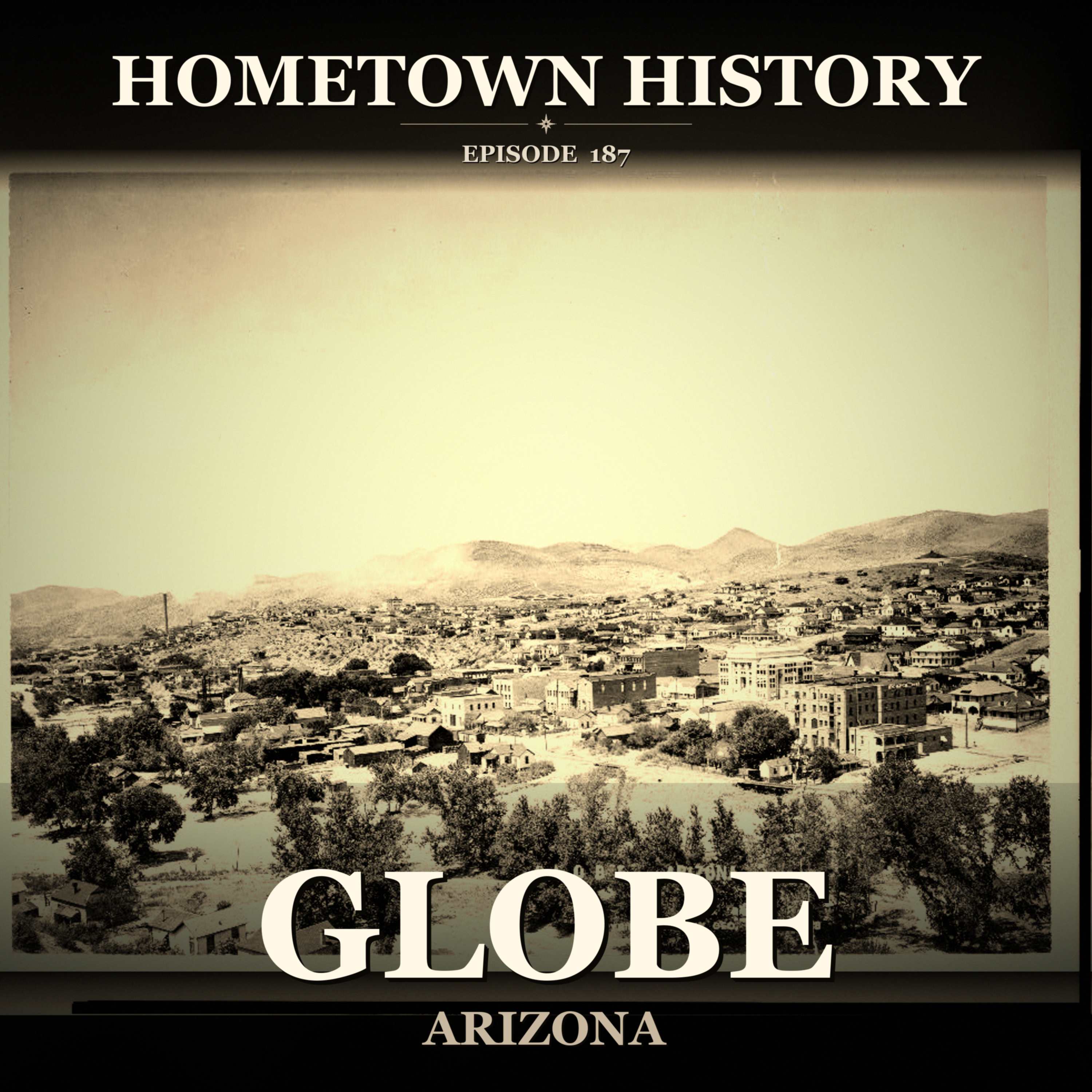
0:05 [SPEAKER_00]: Saturday night, November 16, 1907. 0:10 [SPEAKER_00]: Approaching midnight, in Globe Arizona's Red Light District. 0:14 [SPEAKER_00]: Two Globe police officers found him lying in the dirt. 0:19 [SPEAKER_00]: A 25-year-old finished minor named Richard 0:24 [SPEAKER_00]: He'd been drugged and robbed. 0:27 [SPEAKER_00]: His pockets were empty. 0:29 [SPEAKER_00]: Over $100 gone, the officers tried to rouse him, asked where he lived. 0:38 [SPEAKER_00]: Veclund managed to open his eyes, and a voice so weak they could barely hear him. 0:44 [SPEAKER_00]: He whispered, room 18 in her national. 0:50 [SPEAKER_00]: the officers froze. 0:51 [SPEAKER_00]: 13 months earlier, almost to the day, another minor had been drugged in that exact room. 1:01 [SPEAKER_00]: His body was found in a canyon outside town, throat slit, heart torn out, and thrown under a bush, then blown apart dynamite to hide his identity. 1:15 [SPEAKER_00]: room 18 had been locked in empty. 1:19 [SPEAKER_00]: In vexland didn't even live at the international hotel. 1:24 [SPEAKER_00]: He roamed four blocks away at the central house. 1:28 [SPEAKER_00]: So why, with his body failing him, would he name the cursed room where another man had been murdered exactly one year before? 1:40 [SPEAKER_00]: welcome back friend to hometown history. 1:43 [SPEAKER_00]: The podcast that takes a stroll down the main streets and back alleys of the past to uncover how local stories shaped the world. 1:51 [SPEAKER_00]: I'm Shane Waters, and today we're exploring Globe, Arizona, where two miners died 13 months apart in the same 2:06 [SPEAKER_00]: to understand what happened and roommate teen, we need to go back to where the story begins. 2:13 [SPEAKER_00]: Globe, Arizona in the middle of a copper boom that made some men rich and left others dead in the dirt. 2:23 [SPEAKER_00]: Globes sits in the mountains of Central Arizona, about 70 miles east of Phoenix. 2:30 [SPEAKER_00]: In the early 1900s, it was quite simply one of the richest copper mining centers in the American Southwest. 2:38 [SPEAKER_00]: The folks running the old dominion mine alone had the capacity to process three million pounds of copper every single month. 2:47 [SPEAKER_00]: with actual production reaching up to 2 million pounds. 2:51 [SPEAKER_00]: That's the equivalent of about $10 million in today's money. 2:56 [SPEAKER_00]: Every 30 days. 2:59 [SPEAKER_00]: That kind of wealth transforms a town. 3:02 [SPEAKER_00]: Globes population exploded from around 1200 people in 1900 to somewhere between 5 and 10,000 by 1906, 3:13 [SPEAKER_00]: Most of them were single men, minors, smelter workers, teamsters, coming from all over the world for jobs that paid well, but could kill you in a dozen different ways. 3:27 [SPEAKER_00]: In these weren't men with families waiting at home, many were immigrants. 3:33 [SPEAKER_00]: Quite often from Finland, Italy and Mexico. 3:37 [SPEAKER_00]: They lived in boarding houses, worked brutal shifts underground, and when they got paid, which was cash, always cash. 3:48 [SPEAKER_00]: They had hundreds of dollars in their pockets, and nowhere safe to put it. 3:53 [SPEAKER_00]: No bank accounts, no family, watching over them. 3:57 [SPEAKER_00]: Just money and opportunity. 4:01 [SPEAKER_00]: globe had two distinct sections. 4:04 [SPEAKER_00]: There was the respectable part of town, businesses, churches, families, and then there was the tenderloin district. 4:13 [SPEAKER_00]: The tenderloin was globe's red light district, a collection of saloons, gambling houses, and brothels clustered along north Broadway street. 4:24 [SPEAKER_00]: It wasn't hidden, it wasn't secret. 4:27 [SPEAKER_00]: It was quite openly where miners went to spend their money. 4:31 [SPEAKER_00]: And among those establishments, set the International House, a two-story building that rented rooms by the night, by the hour, or by however long your cash lasted. 4:45 [SPEAKER_00]: Every mining town in the west had a district like this. 4:50 [SPEAKER_00]: When you've got thousands of young men with money, and no family, commerce, follows. 4:56 [SPEAKER_00]: What made globe different, what makes this story matter, is that some folks in the tenderloin saw those minors, not as customers, but as prey. 5:09 [SPEAKER_00]: In room 18 at the International House, that's where the hunting happened. 5:16 [SPEAKER_00]: The first murder began in late October, 1906, a little over a year before Veclyn's death. 5:25 [SPEAKER_00]: A minor named Joseph Luvig, folks called him Joe, worked at the big Johnny Mine, about seven miles outside of globe. 5:35 [SPEAKER_00]: He was a quiet man, kept to himself, but on this particular night, he went to the tenderloin 5:44 [SPEAKER_00]: Maybe he was looking for a company, maybe just drinks. 5:48 [SPEAKER_00]: What we know for certain is that Joseph Lovic entered room 18 on the second floor of the International House, and he never walked out alive. 6:00 [SPEAKER_00]: According to the investigation that followed, Louvig was drugged in that room. 6:06 [SPEAKER_00]: Laura Hydrate, most likely, the same knockout drops that were quite common in mining camp saloons. 6:14 [SPEAKER_00]: Someone slipped it into his drink. 6:17 [SPEAKER_00]: When he passed out, they robbed him. 6:21 [SPEAKER_00]: but they didn't stop there. 6:23 [SPEAKER_00]: Joseph Louvig's throat was slit. 6:26 [SPEAKER_00]: His heart was torn from his chest and thrown under a bush. 6:31 [SPEAKER_00]: Then to prevent anyone from identifying him, the killers wrapped his body with a towel around the neck, secured it with string and blew it apart with dynamite. 6:44 [SPEAKER_00]: The body was found that Sunday afternoon, by H.C. Houser, an employee at the Arizona Silver Belt newspaper. 6:54 [SPEAKER_00]: He was hunting in a canyon about a mile from globe, with two boys, Glenn Chuck, and Warren Davies. 7:02 [SPEAKER_00]: Because of the dynamite damage, it was quite impossible to identify it first. 7:08 [SPEAKER_00]: They eventually confirmed his identity. 7:10 [SPEAKER_00]: They were peace of a bill found with 7:14 [SPEAKER_00]: something linking him to the big Johnny mine. 7:19 [SPEAKER_00]: Sheriff Edward P. Shanley opened an investigation immediately and that's where they found the blood. 7:27 [SPEAKER_00]: Room 18 at the International House. 7:31 [SPEAKER_00]: Louvig's bed was soaked with it. 7:34 [SPEAKER_00]: According to the chamber made, a woman named Hattie Jackson, she'd seen Louvig walk out of the building with something around his neck the night before, 7:45 [SPEAKER_00]: but four physicians examined to the evidence and stated that Ludwig couldn't have walked out at all, given his injuries. 7:54 [SPEAKER_00]: Someone was lying, or someone remembered wrong. 7:59 [SPEAKER_00]: Either way, the investigation stalled. 8:03 [SPEAKER_00]: The air's owner Silverbelt called at the most horrible and mysterious murder in the 8:11 [SPEAKER_00]: They offered a $350 reward for information. 8:16 [SPEAKER_00]: Nobody came forward. 8:18 [SPEAKER_00]: The case went cold. 8:20 [SPEAKER_00]: Room 18, stayed empty. 8:25 [SPEAKER_00]: for 13 months, room 18, sat empty, locked. 8:31 [SPEAKER_00]: Pascuele Negro, the owner of the International House, later total authorities he kept it vacant for over a month, before Richard Veclund was found. 8:42 [SPEAKER_00]: Folks knew what happened there. 8:45 [SPEAKER_00]: Nobody wanted to run it. 8:48 [SPEAKER_00]: October 1906 became November, then December, winter passed, spring came, summer, fall again. 9:02 [SPEAKER_00]: Joseph Louvig's murder remained unsolved. 9:05 [SPEAKER_00]: No arrests, no suspects publicly named. 9:10 [SPEAKER_00]: No justice. 9:12 [SPEAKER_00]: And then came Saturday night, November 16, 1907. 9:17 [SPEAKER_00]: Exactly 13 months to the day after Joseph Louvig was killed. 9:23 [SPEAKER_00]: That's when two globe officers found Richard veckland, passed out in the Tindalloy district, drugged and robbed. 9:33 [SPEAKER_00]: He arrived that night around 930 with three friends, Felix Hendricksson, John Hoffman, and Victor Hargelin. 9:43 [SPEAKER_00]: He had over $100 in his pockets. 9:54 [SPEAKER_00]: The officers' new veckland didn't live at the International House. 9:59 [SPEAKER_00]: He rented a room at the Central House, on broad street, for blocks away. 10:05 [SPEAKER_00]: Yet when they asked where he lived, he whispered, Room 18 International. 10:12 [SPEAKER_00]: They carried him to the International House. 10:15 [SPEAKER_00]: The door to Room 18 was locked. 10:18 [SPEAKER_00]: It had been locked for over a month. 10:25 [SPEAKER_00]: their own keys, that detail matters. 10:29 [SPEAKER_00]: They put vexland in the bed and called for a doctor. 10:33 [SPEAKER_00]: He was barely conscious. 10:36 [SPEAKER_00]: His pulse weak, his breathing, shallow. 10:41 [SPEAKER_00]: Sunday afternoon, November 17th, around to a clock. 10:46 [SPEAKER_00]: Haddy Jackson, the same chamber made 10:55 [SPEAKER_00]: She found Richard Veclent dead in the bed. 10:59 [SPEAKER_00]: The post-mortem examination told a clear story. 11:03 [SPEAKER_00]: His lungs were badly discolored. 11:05 [SPEAKER_00]: His heart was clogged with blood that had turned black. 11:09 [SPEAKER_00]: According to the examining physicians, it was quite obvious. 11:14 [SPEAKER_00]: Veclent had been poisoned. 11:18 [SPEAKER_00]: They sent his stomach to San Francisco for chemical analysis. 11:23 [SPEAKER_00]: Meanwhile, the newspapers were already connecting the cases. 11:27 [SPEAKER_00]: The Arizona Silver Belt ran a detailed article, explicitly linking Vecalent's death to Joseph Louvig's murder, 13 months earlier. 11:38 [SPEAKER_00]: But this time investigators had witnesses, and those witnesses had heard something, damning 11:46 [SPEAKER_00]: According to multiple testimonies, a woman named Alina Mendoza had been overheard pointing to the past out Richard Veclund, and saying to someone nearby, do you see that guy there? 12:00 [SPEAKER_00]: Well, he had a big role when he came here, and it took four bottles to get it away from him. 12:07 [SPEAKER_00]: Four bottles of knockout drops, to drug Richard Veclund enough to rob him. 12:13 [SPEAKER_00]: Someone was bragging about it. 12:16 [SPEAKER_00]: On November 20, 1907, Officers made three arrests. 12:22 [SPEAKER_00]: Alena Mendoza, the woman who'd made the statement about four bottles, she was charged with murder. 12:30 [SPEAKER_00]: Ada Barry, described in contemporary newspapers as collard, was also arrested. 12:37 [SPEAKER_00]: Witnesses reported hearing her argue with a man who demanded she returned money taken 12:44 [SPEAKER_00]: and George Young. 12:46 [SPEAKER_00]: Also described its collard, believed to be Ada Barry's handler. 12:51 [SPEAKER_00]: He was arrested as an accomplice. 12:54 [SPEAKER_00]: The newspaper's characterized all three suspects, as confirmed Dope Feans, language that tells you quite a lot about how the press viewed people in the tenderloin. 13:07 [SPEAKER_00]: The grand jury heard the evidence. 13:09 [SPEAKER_00]: They indicted Alina Mendoza for Richard Veclen's murder. 13:14 [SPEAKER_00]: Ada Barry and George Young were released with out indictment. 13:19 [SPEAKER_00]: For the first time in 13 months, it looked like someone might face trial for what happened in Room 18. 13:28 [SPEAKER_00]: December 14th, 1907, 13:32 [SPEAKER_00]: The chemical analysis came back from San Francisco, no traces of poison, none. 13:40 [SPEAKER_00]: Richard Veclin's stomach, which had been sent to California's best laboratories for testing, showed no evidence of chloral hydrate, no evidence of any toxic substance that would explain his death. 14:03 [SPEAKER_00]: the lack of toxicological evidence meant the case collapsed. 14:08 [SPEAKER_00]: According to Arizona law, prosecutors couldn't convict her of murder without proving the state of cause of evidence. 14:17 [SPEAKER_00]: Elena Mendoza was released. 14:19 [SPEAKER_00]: Ada Barry already out on the streets. 14:22 [SPEAKER_00]: In George Young, back to whatever he'd been doing before. 14:27 [SPEAKER_00]: all charges dropped. 14:30 [SPEAKER_00]: Case closed. 14:32 [SPEAKER_00]: Joseph Ludwig's murder, from 13 months earlier, still unsolved. 14:38 [SPEAKER_00]: No arrests ever made. 14:40 [SPEAKER_00]: Two dead minors, two investigations, zero convictions. 14:55 [SPEAKER_00]: So what happened? 14:56 [SPEAKER_00]: How could physicians clearly observe poisoning symptoms? 15:00 [SPEAKER_00]: Discoldered lungs, blood turned black, but laboratories found nothing. 15:07 [SPEAKER_00]: By all accounts 1907 toxicology had severe limitations. 15:13 [SPEAKER_00]: Coloral hydrate metabolizes quickly in the body. 15:17 [SPEAKER_00]: By the time Veclyn died, roughly 16 hours after being drugged, most of the chemical evidence would have been processed out of a stomach. 15:28 [SPEAKER_00]: The tests were looking for something that was quite simply no longer there. 15:34 [SPEAKER_00]: There's one more detail worth noting. 15:37 [SPEAKER_00]: Pesquaila Negro, the owner of the International House, filed a complaint after Veclyn's death. 15:46 [SPEAKER_00]: He wanted to know why the officers had keys to roommate teen in the first place. 15:51 [SPEAKER_00]: The room had been locked and vacant, according to Negro, for over a month. 15:58 [SPEAKER_00]: And why, when they found a dying man, did they take him to a locked room, instead of to a doctor, 16:06 [SPEAKER_00]: It's a fair question, while that was never answered. 16:10 [SPEAKER_00]: Two months later, Negro was thrown from his buggy and died from his injuries. 16:17 [SPEAKER_00]: So we can't ask him what he knew from roommate 10. 16:23 [SPEAKER_00]: So what really happened in roommate teen, the most likely explanation, the one that fits all the evidence, is that the international house was running a systematic robbery operation, targeting vulnerable minors. 16:39 [SPEAKER_00]: Women would lure cash-carrying workers to specific rooms. 16:44 [SPEAKER_00]: Accomplices would spike their drinks with coral hydrate, 16:48 [SPEAKER_00]: Once the victims were unconscious, they'd be robbed and either left to die or dump somewhere to make the crime look like something else. 16:59 [SPEAKER_00]: Joseph Luvig and Richard Weckland weren't the only victims. 17:04 [SPEAKER_00]: They were just the ones who died in ways that couldn't be completely hidden. 17:08 [SPEAKER_00]: How many other miners woke up in alleys with empty pockets and no memory of what happened 17:15 [SPEAKER_00]: and how many stumbled back to their boarding houses, to a shamed or confused, to report it. 17:22 [SPEAKER_00]: We'll never know. 17:25 [SPEAKER_00]: But this reveals which folks mattered in boom towns like Lob. 17:30 [SPEAKER_00]: When Joseph Lovick's mutilated body was found, authorities investigated. 17:36 [SPEAKER_00]: But when the case went 17:41 [SPEAKER_00]: When Richard Weckland died, whispering room 18, International, police arrested suspects again, but again, the case fell apart. 17:53 [SPEAKER_00]: Why? 17:53 [SPEAKER_00]: Because Louvig and Weckland were expendable. 17:58 [SPEAKER_00]: They were immigrant minors, single men with no families to demand justice, no powerful connections to pressure officials, 18:08 [SPEAKER_00]: The building that housed the International House still stands at 636 North Broad Street in Globe. 18:17 [SPEAKER_00]: It's called the Drift in Saloon now. 18:20 [SPEAKER_00]: You can visit it. 18:22 [SPEAKER_00]: You can walk up to that second floor. 18:25 [SPEAKER_00]: The building survived more than 120 years, but the memory of what happened there exists mostly in ghost stories now. 18:35 [SPEAKER_00]: paranormal investigators have been there. 18:37 [SPEAKER_00]: TV shows have filmed there. 18:41 [SPEAKER_00]: Folks talk about the curse of roommate teen. 18:45 [SPEAKER_00]: But the real story isn't about curses. 18:48 [SPEAKER_00]: It's about a system that decided some lives were worth investigating, and others weren't. 18:55 [SPEAKER_00]: And if you look around today, at unsolved crimes involving immigrants, sex workers, addicts, homeless people, you'll see the same calculus still being made. 19:08 [SPEAKER_00]: Who gets justice? 19:10 [SPEAKER_00]: Who gets a thorough investigation? 19:13 [SPEAKER_00]: Who gets resources devoted to their case? 19:16 [SPEAKER_00]: Quite often, it comes down to the same question, globe faced in 1907, whose life is considered valuable enough to protect. 19:28 [SPEAKER_00]: Two miners walked into room 18, neither walked out, and globe Arizona decided that was acceptable. 19:40 [SPEAKER_00]: That's the story of Globe Arizona's roommate teen. 19:44 [SPEAKER_00]: A curse place where two miners died, 13 months apart. 19:48 [SPEAKER_00]: Injustice stayed locked behind closed doors. 19:54 [SPEAKER_00]: If you found this story as haunting, as I did, share it with someone who believes every forgotten voice deserves to be heard. 20:04 [SPEAKER_00]: I'm Shane Waters, every hometown has a story. 20:08 [SPEAKER_00]: Tonight, it's the one globe Arizona wanted to forget. 20:14 [SPEAKER_00]: Good night, friend.
Show full transcript (195 segments)