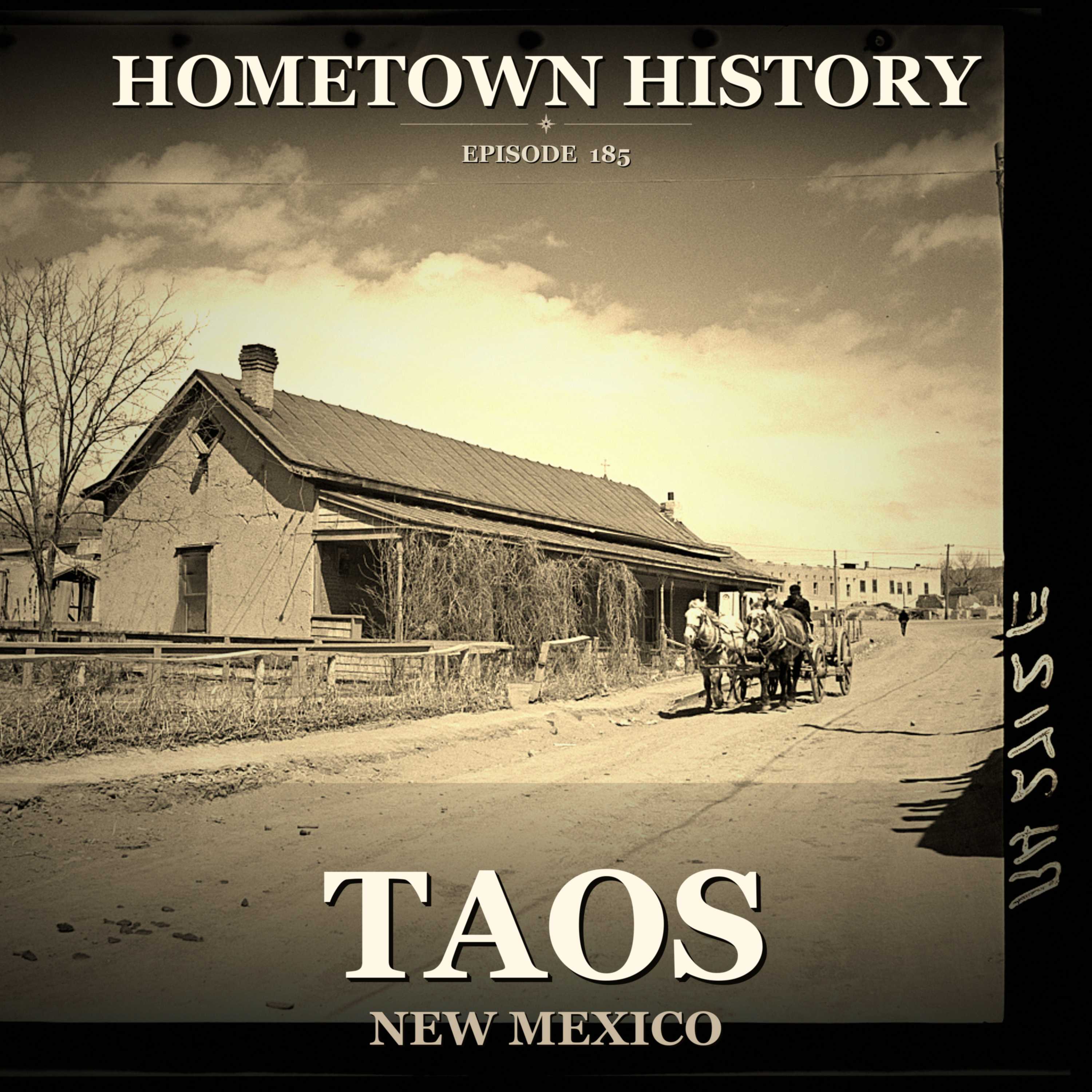
Forgotten stories from America's small towns.Hosted by Shane Waters19 min episode
Taos, New Mexico: The Headless Body in the Fortress Mansion
Transcript
167 segmentsShow Notes
Taos, New Mexico. On the morning of July 3rd, 1929, U.S. Deputy Marshal Jim Martinez stood outside Arthur Rothford Manphy's fortress-like mansion in the heart of Taos, New Mexico. He'd come to serve legal papers to the 70-year-old Englishman, but the moment he approached the back door, he knew something was quite wrong. Flies. Hundreds of them. Blackening the screen door, their buzzing audible from 20 feet away. Martinez scaled the high adobe wall.
TIMELINE
1848: After the Mexican-American War ended in 1848, the Treaty of Guadalupe Hidalgo promised to protect existing Spanish land grants.
1883: Arthur Rotsford Manby arrived in New Mexico territory in 1883 at 24 years old.
1884: In 1884, while Manby was still establishing himself in New Mexico, a man named Ross Edmondson was found dead outside Taos.
1897: By 1897, Manby claimed ownership of virtually the entire Martinez Grant.
1920: By 1920, Manby's reputation was so dark that he'd effectively become a pariah.
1929: On the morning of July 3rd, 1929, U.S. Deputy Marshal Jim Martinez stood outside Arthur Rothford Manphy's fortress-like mansion in the heart of Taos, New Mexico.
WHY THIS MATTERS
The story of Taos is a reminder that the events that shaped America didn't always happen in the biggest cities. What unfolded here left marks on the community that are still visible today. The full story is more complicated, and more human, than the version most people know.
Episode 185 | Hometown History | Hosted by Shane Waters
Hometown History explores forgotten stories from small-town America. The overlooked events, hidden triumphs, and buried tragedies that shaped the country we live in. New episodes every Tuesday. Find every episode at mythsandmalice.com/hometown-history
Advertising Inquiries: https://redcircle.com/brands
Privacy & Opt-Out: https://redcircle.com/privacy
Credits
Shane Waters, Founder & Host
Produced by Myths & Malice
Listen to Hometown History
Get More from Hometown History
Unlock exclusive content and support the show.
- Ad-free listening
- Early access to episodes
- Bonus episodes
- Support independent podcasting
the M&M Dispatch
Get new Hometown History episodes and the stories behind the towns we visit.
Enjoying Hometown History?
Leave a rating on Apple Podcasts. It takes a few seconds and helps new listeners find the show.