San Juan Islands, Washington: The Pig War's Diplomatic Resolution
Show Notes
In 1859, an American settler shot a British pig on San Juan Island, nearly triggering war between the United States and Great Britain over a disputed boundary in the Pacific Northwest. While military forces from both nations occupied the island for over a decade, diplomats worked behind the scenes to find a peaceful resolution to this territorial dispute. The story of how the Pig War ended reveals a remarkable example of 19th-century international cooperation that shaped the modern border between the United States and Canada.
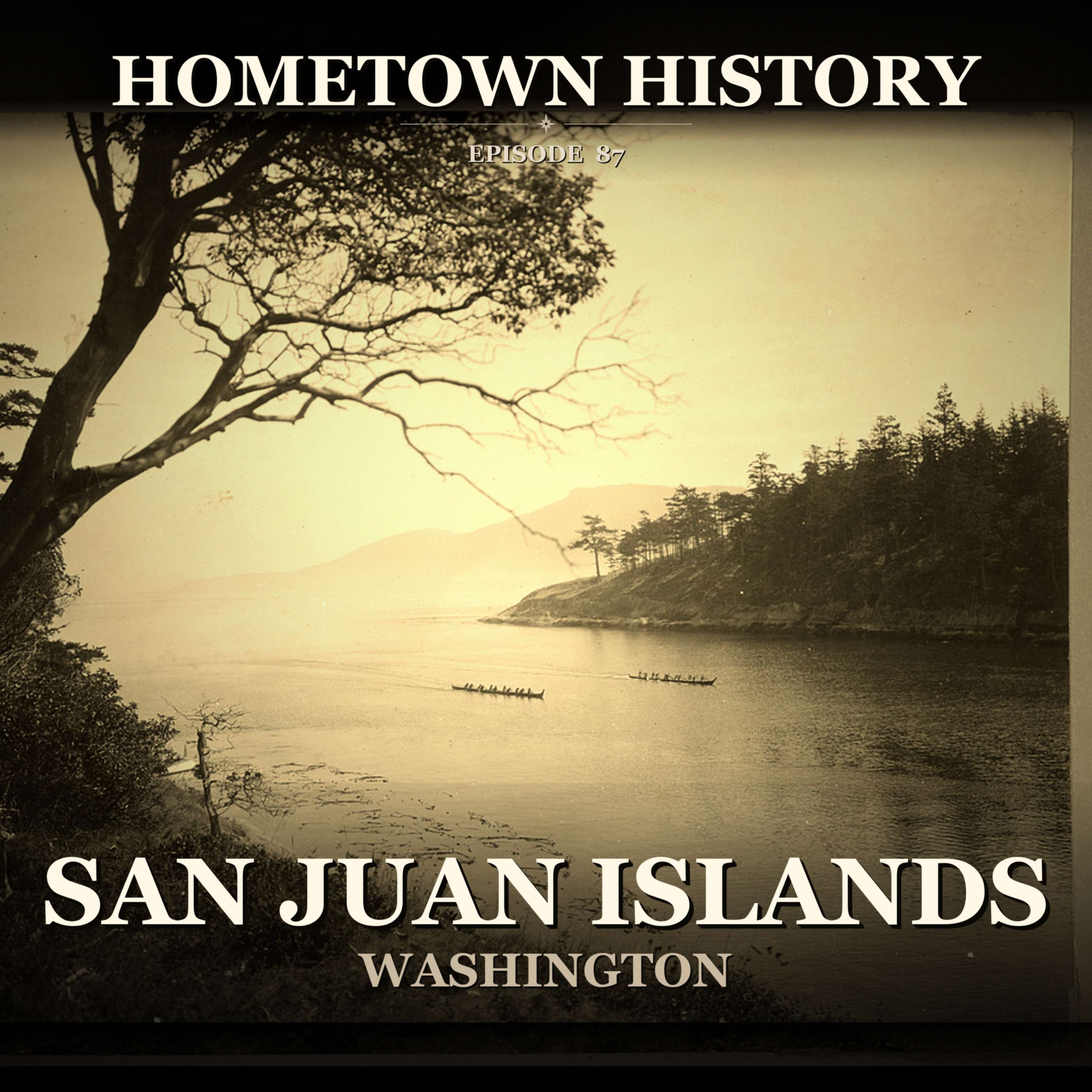
The San Juan Islands sit in the waters between modern-day Washington State and British Columbia, a strategic location that both nations claimed after the Oregon Treaty of 1846 left the maritime boundary deliberately vague. After the pig incident nearly escalated into armed conflict, General Winfield Scott negotiated a joint military occupation that lasted from 1859 to 1872. During this unprecedented arrangement, American and British forces maintained separate camps on opposite ends of San Juan Island while their governments sought diplomatic solutions. The question wasn't just about sovereignty over a few islands—it was about national pride, access to valuable shipping lanes, and the final adjustment of the Canadian-American border.
The resolution came through international arbitration, with Kaiser Wilhelm I of Germany serving as the neutral judge. In 1872, after carefully reviewing maps, treaties, and legal arguments from both sides, the German Emperor awarded all of the San Juan Islands to the United States. The British accepted this verdict without protest, their military garrison departed peacefully, and the last contested portion of the border between the two nations was finally settled. What could have been another bloody chapter in Anglo-American relations instead became a model for peaceful conflict resolution.
Timeline of Events:
- June 15, 1859: American settler Lyman Cutlar shoots a British pig belonging to the Hudson's Bay Company, triggering the crisis (covered in Part 1)
- October 1859: General Winfield Scott arrives and negotiates joint military occupation with British Governor James Douglas
- 1859-1872: Joint occupation period—American and British forces maintain separate camps on San Juan Island
- 1863: Both nations agree to submit the boundary dispute to international arbitration
- 1871: Treaty of Washington formally establishes arbitration process with Kaiser Wilhelm I of Germany as arbiter
- October 21, 1872: Kaiser Wilhelm I issues his decision, awarding all San Juan Islands to the United States
- November 1872: British forces peacefully withdraw from San Juan Island, ending the joint occupation
Historical Significance:
The peaceful resolution of the Pig War represents one of the most successful examples of 19th-century conflict avoidance between major powers. Rather than allowing military pride or national interests to escalate the situation into war, both the United States and Great Britain chose diplomacy and third-party arbitration—a progressive approach for the era. The joint occupation itself was unprecedented: for thirteen years, soldiers from two rival nations maintained separate military installations on the same small island without a single shot fired in anger.
The outcome permanently established the maritime boundary in the Pacific Northwest and marked the final territorial adjustment between the United States and British North America. Today, the former military camps on San Juan Island are preserved as San Juan Island National Historical Park, where visitors can explore the British and American camps and learn about this unique moment when two nations chose peace over war. The Pig War remains a powerful reminder that even the most absurd conflicts—beginning with a single dead pig—can be resolved through patience, negotiation, and a willingness to accept neutral judgment.
Sources & Further Reading:
- San Juan Island National Historical Park - Official NPS site with historical documents and maps (nps.gov/sajh)
- Mike Vouri, The Pig War: Standoff at Griffin Bay (2013) - Comprehensive history of the boundary dispute
- David Richardson, Pig War Islands (2011) - Focus on diplomatic negotiations
- Washington State Historical Society archives - Primary sources on territorial history
- Oregon Historical Quarterly - Academic articles on Pacific Northwest boundary disputes
Support this podcast at — https://redcircle.com/hometownhistory/exclusive-content
Advertising Inquiries: https://redcircle.com/brands
Privacy & Opt-Out: https://redcircle.com/privacy
Credits
Shane Waters — Founder & Host
Produced by Myths & Malice