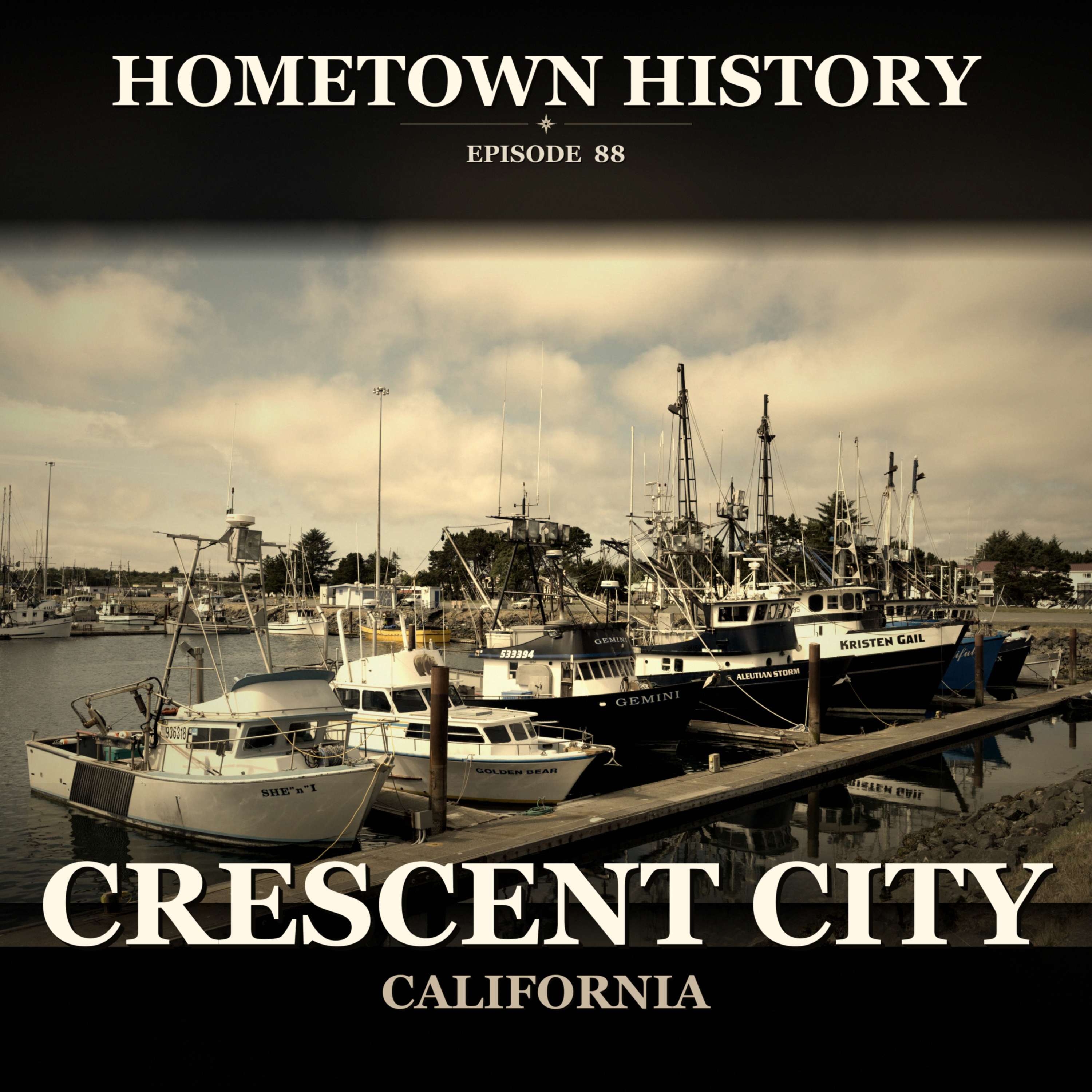
Forgotten stories from America's small towns.Hosted by Shane Waters28 min episode
Crescent City, California: Surviving Three Devastating Tsunamis
Transcript
325 segmentsShow Notes
Crescent City, California. I love the atmosphere here. It reminds me of backroom storage rooms for investigation libraries. Oh, -huh. Yeah. That's what this is. This is our research room. We're sitting in the back room of the Del Norte County Historical Museum in Crescent City, California. Across from me at the table is Karen Beteljewski, and she's walking me through the ins and outs of the local archives. So is this where you keep, like, everything for the museum? Yeah, not everything.
TIMELINE
1700: The big tsunami was in 1700, January 26th.
1856: Battery Point was built in 1856.
1949: There was an incident in 1949, 1950, where they built their own harbor here.
1964: However, the 1964 tsunami was not the big tsunami.
2011: In the 2011 tsunami, there were a few things that floated ashore here on the West Coast.
WHY THIS MATTERS
The story of Crescent City is a reminder that the events that shaped America didn't always happen in the biggest cities. What unfolded here left marks on the community that are still visible today. The full story is more complicated, and more human, than the version most people know.
Episode 88 | Hometown History | Hosted by Shane Waters
If you liked this: Episode 81 (Death Valley, California)
Hometown History explores forgotten stories from small-town America. The overlooked events, hidden triumphs, and buried tragedies that shaped the country we live in. New episodes every Tuesday. Find every episode at mythsandmalice.com/hometown-history
Advertising Inquiries: https://redcircle.com/brands
Privacy & Opt-Out: https://redcircle.com/privacy
Credits
Shane Waters, Founder & Host
Produced by Myths & Malice
Listen to Hometown History
Get More from Hometown History
Unlock exclusive content and support the show.
- Ad-free listening
- Early access to episodes
- Bonus episodes
- Support independent podcasting
the M&M Dispatch
Get new Hometown History episodes and the stories behind the towns we visit.
Enjoying Hometown History?
Leave a rating on Apple Podcasts. It takes a few seconds and helps new listeners find the show.