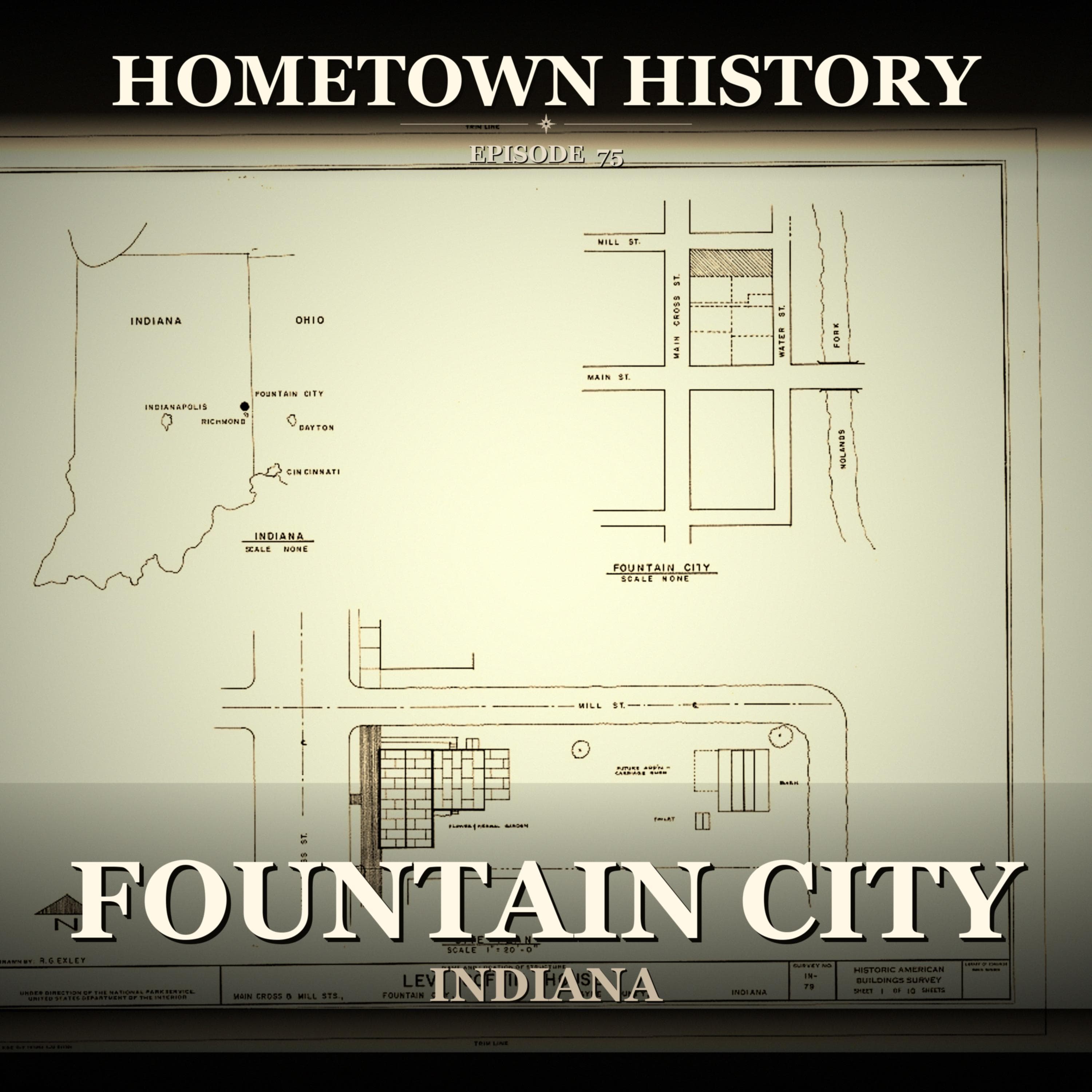
Fountain City, Indiana: The Underground Railroad's Grand Central Station
Show Notes
Between 1826 and 1847, a modest Federal-style brick home in Fountain City, Indiana became known as the "Grand Central Station" of the Underground Railroad. Levi and Catherine Coffin, Quaker abolitionists who moved from North Carolina to escape slavery's reach, helped more than 2,000 freedom seekers reach safety in Canada during their twenty years in this small Indiana town. Their success rate was remarkable: every person who passed through their home successfully reached freedom.
This episode concludes the story of the Coffins' Indiana years, exploring the practical realities of operating the busiest Underground Railroad station in the Midwest. The Coffins' eight-room home featured an indoor spring-fed well in the basement kitchen, allowing Catherine to draw unlimited water for unexpected guests without arousing neighbor suspicion. Secret compartments, false-bottom wagons, and a network of sympathetic Quaker neighbors made Fountain City an almost impenetrable safe haven for those fleeing enslavement.
Joanna Hahn, Central Regional Director of the Indiana State Museum System, shares remarkable stories from Levi Coffin's 1876 autobiography "Reminiscences," including the account of Aunt Rachel, who lived with the family for six months while searching for her separated children, and the story of Burrell, whose family was rescued from Tennessee by the Rankin family of Ripley, Ohio. The episode also examines Catherine Coffin's crucial but often overlooked role—she managed the domestic work of feeding, clothing, and caring for dozens of traumatized strangers who arrived at all hours, while Levi ran his dry goods store to fund their expensive humanitarian work.
Timeline of This Episode's Events:
- 1826: Levi and Catherine Coffin settle in Newport (now Fountain City), Indiana, beginning Underground Railroad work
- 1839: Coffins build Federal-style brick home specifically designed for Underground Railroad operations
- 1840s: House becomes known as "Grand Central Station" where three major escape routes converged
- 1845-1847: Coffins reluctantly prepare to move to Cincinnati to manage free-labor goods warehouse
- 1850: Fugitive Slave Act passes, dramatically increasing danger for freedom seekers and conductors alike
- 1876: Levi publishes "Reminiscences," providing firsthand account of Underground Railroad operations
This occurred during the final decades before the Civil War, when the Underground Railroad reached its peak efficiency despite increasing legal persecution under the Fugitive Slave Act of 1850.
Historical Significance:
The Coffin story reveals how ordinary citizens defied federal law through coordinated community action. Fountain City's network of Quaker families created a surveillance system that warned the Coffins when slave catchers approached, while Levi's insistence on demanding search warrants bought crucial time to move freedom seekers to the next station. The Coffins' work demonstrates that successful resistance to slavery required not just individual courage but extensive community infrastructure, financial resources, and strategic planning. Today, the Levi Coffin House is a National Historic Landmark, ranked by The History Channel as one of America's top 25 historic sites.
Sources & Further Reading:
- Levi Coffin State Historic Site (Indiana State Museum System): Official historic site with original Coffin home, interpretive center, and archives - https://www.indianamuseum.org/historic-sites/levi-and-catharine-coffin-state-historic-site/
- "Reminiscences of Levi Coffin" (1876): Levi Coffin's firsthand autobiography documenting Underground Railroad operations - https://docsouth.unc.edu/nc/coffin/coffin.html
- Indiana Landmarks: Historical analysis and architectural documentation of Coffin House - https://www.indianalandmarks.org/2016/06/levi-coffin-and-the-underground-railroad/
- John Rankin House (Ohio History Connection): Information about the Rankin family's Underground Railroad work in Ripley, Ohio - https://www.ohiohistory.org/visit/browse-historical-sites/john-rankin-house/
Subscribe to Hometown History every Tuesday for forgotten American stories.
Support this podcast at — https://redcircle.com/hometownhistory/exclusive-content
Advertising Inquiries: https://redcircle.com/brands
Privacy & Opt-Out: https://redcircle.com/privacy
Credits
Shane Waters — Founder & Host
Produced by Myths & Malice