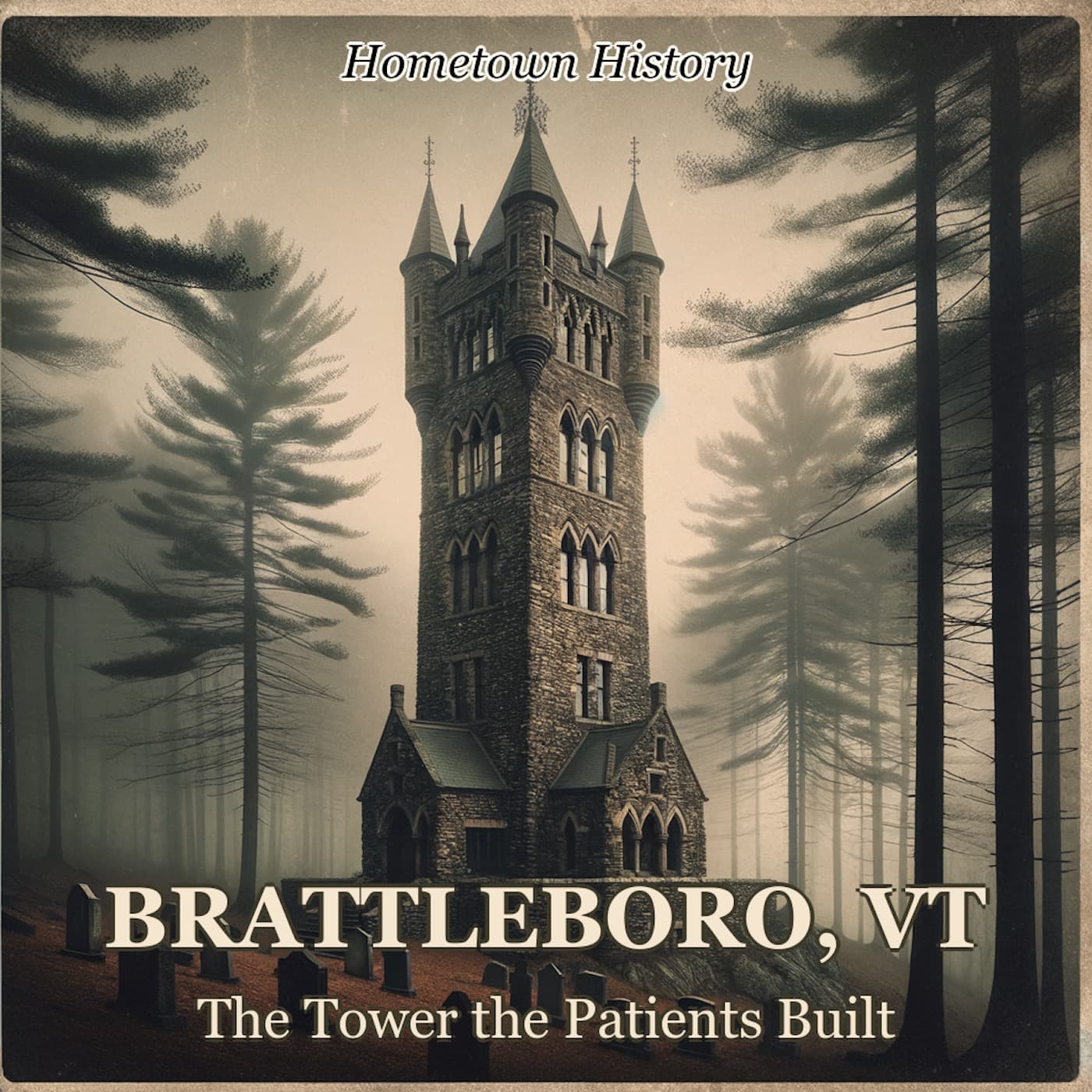
Forgotten stories from America's small towns.Hosted by Shane Waters20 min episode
Brattleboro, Vermont: The Asylum Tower Holding a Century of Secrets
Transcript
167 segmentsShow Notes
In the woods above Brattleboro, Vermont, a 65-foot stone tower has stood since the 1890s. It was not built by architects or hired masons. It was built by the patients of an insane asylum, stone by stone, under the direction of their doctors who believed that breaking rocks could fix broken minds. But some patients found another use for the tower they had built with their own hands. They climbed it one last time. In 1938, officials sealed the door shut. At the base of that tower sits a cemetery holding more than 650 burials, many marked only with numbers.
This is the story of Anna Hunt Marsh, the daughter of Vermont's Lieutenant Governor, who watched her husband's patient die from ice water submersion and forced opium comas in 1806. She spent twenty-eight years turning that grief into action. When she died in 1834, her will contained a single sentence that would change Brattleboro forever: ten thousand dollars left for the purpose of building a hospital for the insane in Windham County. She became the first woman in American history to found a mental health institution.
Hometown History explores forgotten stories from small-town America. The overlooked events, hidden triumphs, and buried tragedies that shaped the country we live in. New episodes every Tuesday. Find every episode at mythsandmalice.com/hometown-history
Advertising Inquiries: https://redcircle.com/brands
Privacy & Opt-Out: https://redcircle.com/privacy
Credits
Shane Waters, Founder & Host
Produced by Myths & Malice
Listen to Hometown History
Get More from Hometown History
Unlock exclusive content and support the show.
- Ad-free listening
- Early access to episodes
- Bonus episodes
- Support independent podcasting
the M&M Dispatch
Get new Hometown History episodes and the stories behind the towns we visit.
Enjoying Hometown History?
Leave a rating on Apple Podcasts. It takes a few seconds and helps new listeners find the show.