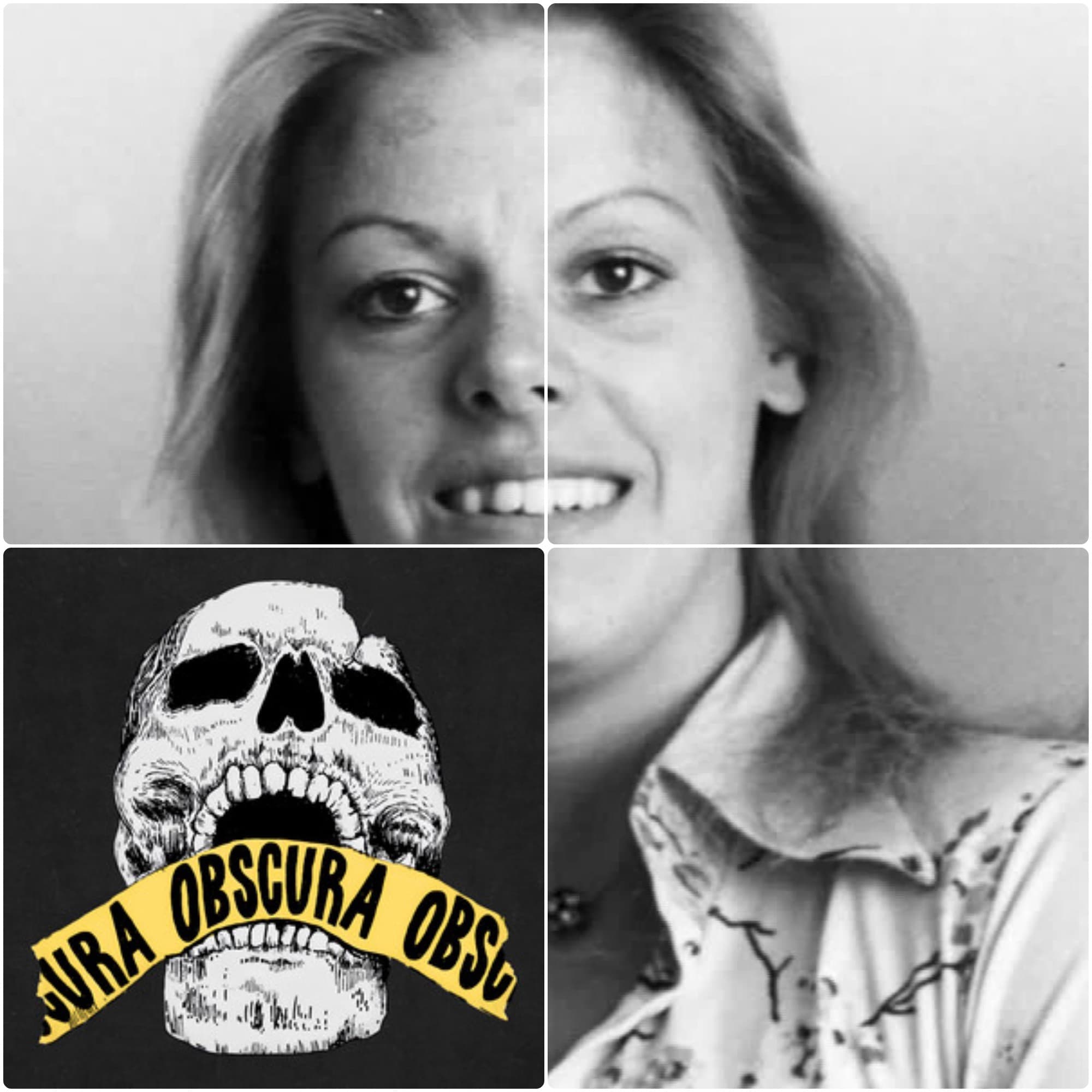
0:01 [SPEAKER_03]: In the summer of 1976, the local society pages of a foreign newspaper ran a small wedding announcement. 0:08 [SPEAKER_03]: In 19-year-old bride, a 69-year-old groom, the groom was the president of a local yacht club, the bride was hitchhiking through the state, sleeping wherever she could, supporting herself with whatever cash she could pull together off the side of the road. 0:24 [SPEAKER_03]: And the two of them had met by accident. 0:27 [SPEAKER_03]: The marriage had come together inside of a few weeks. 0:30 [SPEAKER_03]: There was a photograph in the paper. 0:32 [SPEAKER_03]: There was language about the happy couple. 0:35 [SPEAKER_03]: There was a tone of mild local human interest. 0:38 [SPEAKER_03]: The sort of small town item that runs in a coastal fort of paper between the church news and the lion's club calendar. 0:45 [SPEAKER_03]: Nine weeks later, the marriage was an old. 0:48 [SPEAKER_03]: The groom had filed a restraining order. 0:51 [SPEAKER_03]: The bride had hit him with his own cane. 0:53 [SPEAKER_03]: She had come at the bartender at Bernie's club and thrown a cue ball in his head. 0:58 [SPEAKER_03]: She had been arrested for assault and disturbing the peace that her own husband's expense, nine weeks, 45 business days, give or take. 1:06 [SPEAKER_03]: From the society pages to the courthouse, to a newspaper wedding photo that nobody was going to want printed, anywhere ever again. 1:15 [SPEAKER_03]: The bride was Eileen Carol Warnos, by 1976, she was 20 years old. 1:20 [SPEAKER_03]: She had been on the road alone, since her grandfather had thrown her out of the house in Troy, Michigan, in 1971, at age 15. 1:29 [SPEAKER_03]: She had logged thousands of miles by the side of various highways. 1:33 [SPEAKER_03]: She had picked up in a rest record. 1:35 [SPEAKER_03]: She had used at least one alias. 1:37 [SPEAKER_03]: She'd been arrested at 18 in Jefferson County, Colorado, for, of all things, driving drunk and firing a 22 caliber pistol out of the window of a moving car. 1:48 [SPEAKER_03]: This is part two of a four-part series. 1:51 [SPEAKER_03]: Last episode we walked her childhood, the fire at age six, the grandfather and the bell, the kitten and the bucket. 1:59 [SPEAKER_03]: This cigarette pig nicknamed at age 11, the pregnancy at 14, 2:07 [SPEAKER_03]: Her grandmother, Brida, dying that you'll lie, her grandfather throwing her out a few weeks later, the sleeping bag in the woods on the edge of Troy. 2:16 [SPEAKER_03]: That is where we left her. 2:18 [SPEAKER_03]: Tonight, we follow her from there. 2:20 [SPEAKER_03]: All right. 2:21 [SPEAKER_03]: Let's get on with it. 2:26 [SPEAKER_02]: Welcome, listener. 2:27 [SPEAKER_02]: I'm glad you're here. 2:29 [SPEAKER_02]: Take a seat. 2:31 [SPEAKER_02]: Next to the fire. 2:35 [SPEAKER_00]: Welcome to Obscura. 2:37 [SPEAKER_00]: where we shine a light on the dark. 3:03 [SPEAKER_03]: Chapter 1, The Long Hitch 3:06 [SPEAKER_03]: The years between 1971 and 1976 are the hardest years of her life to reconstruct in any detail. 3:14 [SPEAKER_03]: Because the years between 1971 and 1976 are the years she spent functionally invisible to the institutions that record people's lives. 3:24 [SPEAKER_03]: She was a teenage runaway, then a teenage drifter, then a young adult drifter, she was hitchhiking mostly. 3:32 [SPEAKER_03]: She was sleeping in the woods, she was sleeping in motels, when somebody else paid for the motel. 3:39 [SPEAKER_03]: She was sleeping in cars, she was sleeping at the back ends of parking lots. 3:43 [SPEAKER_03]: She was eating when she could. 3:44 [SPEAKER_03]: She was working the only line of work she had ever been taught out of work, truck stops, rest areas, roadside bars, the kind of geography you can move through without leaving a paper trail, especially if you don't have a driver's license and you don't have an address and you don't have anyone calling around looking for you or even caring to do so. 4:06 [SPEAKER_03]: What she did have was a certain skill at survival that does not show up on any aptitude test. 4:12 [SPEAKER_03]: She could read men. 4:14 [SPEAKER_03]: She had been reading them since she was 11. 4:16 [SPEAKER_03]: She knew which ones were going to hand her a sandwich, which ones were going to her her. 4:21 [SPEAKER_03]: She had a working sense of which gas stations in which bars were on any given night on the safer end of the spectrum. 4:28 [SPEAKER_03]: She drank. 4:29 [SPEAKER_03]: She smoked. 4:30 [SPEAKER_03]: She lost weight. 4:31 [SPEAKER_03]: She gained a back. 4:33 [SPEAKER_03]: She moved. 4:34 [SPEAKER_03]: The first arrest of any consequence. 4:36 [SPEAKER_03]: Happen on May 27, 1974, in Jefferson County, Colorado, she was 18, the arresting officers had a long list of charges by the time they got her booked, driving under the influence, disorderly conduct, firing on 22 caliber pistol, from a moving vehicle. 4:54 [SPEAKER_03]: The word disorderly does not communicate in 1974 cop's shorthand. 4:59 [SPEAKER_03]: What was actually happening on a stretch of 5:04 [SPEAKER_03]: Of a young woman and drunk behind the wheel of somebody else's car, with a pistol in one hand, putting rounds out the window into whatever happened to be on that side of the highway. 5:14 [SPEAKER_03]: She was booked under the alias, Sandra Crutch. 5:17 [SPEAKER_03]: She did not show up for a court date. 5:19 [SPEAKER_03]: She called an additional charge for failure to appear. 5:23 [SPEAKER_03]: She was already gone. 5:24 [SPEAKER_03]: The Colorado arrest is small in the context of what was coming. 5:28 [SPEAKER_03]: But I think it is one of the most quietly important details in her entire pre-Forda wife, 18 years old, a pistol, car she didn't own, alcohol, and alias, the ability and willingness to point a fire arm at the world, and pull the trigger, anger, boredom, the rush, the self-soothing, 17 years before she would shoot Richard Mallory dead, and the woods of Central Florida. 5:52 [SPEAKER_03]: 18-year-old Eileen Warnos was already out there on a Colorado highway, drunken with a 22, after the Colorado arrest, the trail goes cold for a stretch. 6:03 [SPEAKER_03]: She kept moving, she drifted south, Florida was the destination eventually. 6:08 [SPEAKER_03]: Sheep, warm, lots of people who do not ask too many questions, a coastline, jobs and food service if you want them. 6:16 [SPEAKER_03]: and in the more transient end of the economy an entire culture of bars and motels and beaches were a young woman with a somehow on the side of the road can move through without being asked for ID more than once or twice a week. 6:30 [SPEAKER_03]: She got to Florida sometime in 1975 or maybe 1976. 6:34 [SPEAKER_03]: She was 19 years old. 6:36 [SPEAKER_03]: She had no money, no plan, no permanent address. 6:40 [SPEAKER_03]: She'd been on the road in one 6:44 [SPEAKER_03]: Then she met a man at a bar, chapter two, Lewis Affel. 6:50 [SPEAKER_03]: His name was Louis Gratzfeld. 6:52 [SPEAKER_03]: He was 69 years old. 6:54 [SPEAKER_03]: It had been born in Philadelphia in 1907. 6:58 [SPEAKER_03]: He was the president of a local yacht club. 7:00 [SPEAKER_03]: He was by every definition that existed in the fort of the mid-1970s, a person of social standing. 7:07 [SPEAKER_03]: He had money, he had house, and social connections. 7:10 [SPEAKER_03]: He had at the time, I mean, exactly 50 years on her an age. 7:15 [SPEAKER_03]: The exact mechanics of how they met are not crisply documented, but the broad strokes are, he was at a bar, she was at a bar, they started talking, he was charmed, she was depending on the account you read, either genuinely interested or in a transactional mode of war. 7:33 [SPEAKER_03]: Some board mixed up both. 7:34 [SPEAKER_03]: The age gap did not matter to her in a way that would matter to most people. 7:39 [SPEAKER_03]: They got married within weeks of meeting. 7:41 [SPEAKER_03]: The wedding announcement made it onto the local paper. 7:44 [SPEAKER_03]: There was a photograph. 7:45 [SPEAKER_03]: There was a write-up. 7:47 [SPEAKER_03]: I want to say something straightforward about Louis Gratzfeld, because I have read a few different framings of him in different sources, and I think the truth is somewhere in the middle of all of them. 7:57 [SPEAKER_03]: He was not a villain, he was not a predator in the criminal sense, by anything that is on public record. 8:04 [SPEAKER_03]: If here's to have been a lonely older man with money, who met a young woman, who was willing to be his wife, and who said yes when he proposed. 8:12 [SPEAKER_03]: He took her into his home, he paid for things, he gave her briefly the closest thing to a stable address, she had since she was 11 years old, by the standards of the relationship at the time, she was used to having with men, he was on balance, one of the better ones, and that's saying something considering the very large age gap. 8:32 [SPEAKER_03]: He was also an objective terms, 50 years older than she was, and the dynamic of a 69-year-old marrying a teenager who had been sleeping in cars and trading her body for cash since the age of 11 is not a healthy one. 8:45 [SPEAKER_03]: No matter how the older party intended it, there was no scenario in which that marriage was going to function on an equal footing. 8:53 [SPEAKER_03]: It was a transaction with romance painted over it, and the romance was thin, and that romance cracked fast. 9:00 [SPEAKER_03]: I leaned by every account that survived from the marriage was not bill for the role of Yacht Club wife in 1976. 9:06 [SPEAKER_03]: The drinking did not stop when she got married. 9:09 [SPEAKER_03]: The barfights did not stop. 9:11 [SPEAKER_03]: She kept showing up at local establishments and moods that did not fit the pain on the wall. 9:16 [SPEAKER_03]: She was allowed, she was confrontational, she was by some accounts, openly contemptuous of the social class her new husband belonged to, in a way that would have been read at the time as ungrateful, and that in retrospect reads more like the inability of a deeply traumatized young woman to perform a role that her childhood had given her no tools to perform. 9:38 [SPEAKER_03]: You can now drop a girl who slept in the snow at 15, into a yacht club banquet at 20, and expect her to know which forked to pick up, listener. 9:47 [SPEAKER_03]: The cane incident is the one that gets remembered. 9:49 [SPEAKER_03]: By every public account I have read, Lewis found at some point during the marriage walked with the assistance of a cane. 9:56 [SPEAKER_03]: I lean at some point during the marriage, him with it. 10:00 [SPEAKER_03]: The reporting on the moment is not detailed enough to give you the inciting argument or the precipitating event. 10:06 [SPEAKER_03]: With the broad outline is that I lean in the middle of some kind of confrontation, took her 69-year-old husband's mobility aid and used as a weapon against him. 10:15 [SPEAKER_03]: He filed for a restraining order. 10:18 [SPEAKER_03]: The marriage was, for all practical purposes, over. 10:21 [SPEAKER_03]: She left Florida and went back to Michigan. 10:24 [SPEAKER_03]: On July 14th, 1976, in a place called Bernie's Club, Eileen Warnos got into an argument with a bartender. 10:31 [SPEAKER_03]: The argument escalated, she picked up a pool ball, off the pool table, and threw it at his head. 10:37 [SPEAKER_03]: She was arrested for a song and disturbing the piece. 10:41 [SPEAKER_03]: Three days later, on July 17th, 1976, her brother Keith died. 10:46 [SPEAKER_03]: A graphical cancer, 21-year-old, the boy who had been her co-conspirator in her co-victum, and by some accounts, the source of some of the deepest and most complicated harm she carried out of childhood. 11:00 [SPEAKER_03]: He was 21-years-old. 11:01 [SPEAKER_03]: He had cancer in the part of his body where statistically, 21-year-olds almost never have cancer. 11:08 [SPEAKER_03]: He died in 1976. 11:09 [SPEAKER_03]: The same year, Eileen got married for nine weeks, and the same year she threw that billar ball 11:16 [SPEAKER_03]: He left her $10,000 in life insurance money. 11:19 [SPEAKER_03]: On July 21st, 1976, the marriage to Louis Fell was annulled, from wedding announcement to legal enrollment, 63 days, less than the length of an average summer vacation, a few weeks later, I leaned out a 105-dollar fine for drunk driving. 11:36 [SPEAKER_03]: She was part of her brother's life insurance money to pay the fine. 11:39 [SPEAKER_03]: She was the rest of it on luxury, including a new car. 11:42 [SPEAKER_03]: She wrecked the car, now only after she bonded. 11:45 [SPEAKER_03]: By the time the dust settled on summer of 1976, the $10,000 from Keith was gone. 11:51 [SPEAKER_03]: Spent smashed up on a road somewhere, burned through the hands of a young woman who had never been taught how to hold money in her life. 11:59 [SPEAKER_03]: She was 20 years old, her brother was dead, her marriage was a known, her grandfather while we, in March of that same year, had committed suicide. 12:08 [SPEAKER_03]: It hanged himself the same way her father had, by his own hand, in a quiet room she did not attend the funeral listener. 12:16 [SPEAKER_03]: Take inventory of the people who had been in her wife as a child, her mother gone, her father dead, her grandmother dead, her grandfather dead, her son, somewhere out there in the country, being raised by other people. 12:31 [SPEAKER_03]: Our nine-week husband divorcing her with a restraining order in his hand. 12:35 [SPEAKER_03]: By the clothes of 1976, every single biological tie, island warnos ever had to another human being. 12:42 [SPEAKER_03]: On this planet was either deceased or estranged. 12:46 [SPEAKER_03]: She was 20. 12:47 [SPEAKER_03]: She was, in the most little sense, the word can carry, an orphan, and she was angry. 12:53 [SPEAKER_03]: Chapter three, the whole. 12:56 [SPEAKER_03]: There are a couple of years here that move fast and slow at the same time. 13:00 [SPEAKER_03]: She drifted back south, forward up, pulled her back, the way forward up pulls a lot of people back. 13:06 [SPEAKER_03]: She ended up in the central fort of corner. 13:09 [SPEAKER_03]: The strip of Daytona Beach down through Volusha County and over toward the Gulf, the flat scrubland of two lean roads and gas stations and motels and bars that would eventually become the geographic theater of everything she would become known for. 13:22 [SPEAKER_03]: Do you not have a plan? 13:24 [SPEAKER_03]: She had a thumb on the side of a road and a body that could be exchanged for cash and nothing else. 13:29 [SPEAKER_03]: In 1978 and age 22, she shot herself in the stomach. 13:33 [SPEAKER_03]: This was not the first suicide attempt. 13:36 [SPEAKER_03]: According to public record between the ages of 14 and 22, 13:40 [SPEAKER_03]: She attempted suicide six times, different methods, different settings, different levels of seriousness. 13:47 [SPEAKER_03]: The 1978 attempt is the one that left a recorded mark, because the round actually went into her body, and she lived to be hospitalized for the wound. 13:56 [SPEAKER_03]: A self-inflicted gunshot wound to the stomach at 22 years old, by young woman who'd been trying to remove herself from this life on and off for the previous eight years. 14:07 [SPEAKER_03]: I want you to think about for a second, what it means to attempt suicide six times in eight years and survive all six attempts when they were serious attempts. 14:17 [SPEAKER_03]: This was not a person performing. 14:19 [SPEAKER_03]: This was not seeking attention. 14:21 [SPEAKER_03]: This was not even a cry for help. 14:23 [SPEAKER_03]: There was no one to cry out to help for. 14:25 [SPEAKER_03]: That is a person whose life is at the core engineering of it, unlivable, and was when trying repeatedly to exit. 14:33 [SPEAKER_03]: and was running to strange obstacles six times in a row that her body refused to die. 14:39 [SPEAKER_03]: There is a kind of cruelty in surviving that many attempts. 14:42 [SPEAKER_03]: The brain does not get to start over. 14:44 [SPEAKER_03]: It just wakes up the next morning in the same body, in the same circumstances, with the additional layer of failure stacked on top of everything else. 14:53 [SPEAKER_03]: I leaned woke up in a four to hospital with a bullet hole in her stomach in 1978. 14:58 [SPEAKER_03]: She walked out of that hospital eventually and went back to the same wife. 15:03 [SPEAKER_03]: The same roadside, the same bars, the same motel rooms, the same cars, the same men. 15:10 [SPEAKER_03]: The mind had decided it could not live with itself in 1978, had been ruled by the same body that refused to die. 15:17 [SPEAKER_03]: In 1962, when her face caught fire, the body was going to keep her alive, whether she wanted it or not. 15:24 [SPEAKER_03]: And so, the arrests started piling up, made 20th, 1981. 15:29 [SPEAKER_03]: Edgewater Fora, she was 25, she walked into a convenient store with a gun, she demanded the cash from the register. 15:37 [SPEAKER_03]: She walked out with $35 and two packs of cigarettes. 15:41 [SPEAKER_03]: That was the take. 15:42 [SPEAKER_03]: Whenever a convenient store was holding in the till, at whatever hour she walked in, that was what she took. 15:48 [SPEAKER_03]: It was in any objective accounting, one of the smaller armed robberies on the book that year. 15:53 [SPEAKER_03]: $35.1981, adjusted for inflation is about. 15:57 [SPEAKER_03]: $120 today. 15:59 [SPEAKER_03]: Two facts of cigarettes is then and now $9 or $10 worth of merchandise. 16:04 [SPEAKER_03]: She stuck a gun in the face of a working person to get a couple of meals worth a cash and smokes for the road. 16:10 [SPEAKER_03]: Whenever calculation she had made about risk versus reward in that moment, the math she was working with had nothing to do with the math the rest of the world does. 16:19 [SPEAKER_03]: She was arrested and she was charged. 16:21 [SPEAKER_03]: On May 4, 1982, she was sentenced to prison. 16:25 [SPEAKER_03]: She served 13 months to his earliest on June 30, 1983. 16:29 [SPEAKER_03]: She walked out of the Florida Correctional System at 27 years old with a felony conviction. 16:36 [SPEAKER_03]: No money, no driver's license under her real name. 16:39 [SPEAKER_03]: And the same skill sets she walked in with, she went back to the same road, the same bars, the same gas stations, the same motones, the same cars, on May 1st 1984, she was arrested again. 16:52 [SPEAKER_03]: This time for attempting to pass Ford's tracks out of bank and key west, she had been writing tracks she did not have the authority to cash. 17:00 [SPEAKER_03]: She had been doing this in a Ford a bank in person, in front of tellers, without any kind of disguise or cover story. 17:06 [SPEAKER_03]: Then even a moderately competent forger would have set up the bank owner, the police car, another file on the stack, and November of 1985, she was named as a suspect in the theft of a revolver in ammunition in Pascal County, Florida. 17:22 [SPEAKER_03]: The revolver in question was a small caliber. 17:25 [SPEAKER_03]: She was using an alias by then. 17:27 [SPEAKER_03]: She'd been using one for a while. 17:30 [SPEAKER_03]: This name she put on her ID was Lori Groudi. 17:33 [SPEAKER_03]: Lori Groudi was in real life the name of one of her aunts back in Michigan. 17:37 [SPEAKER_03]: She had picked the alias out of her own family tree, which given how she felt about her family, is a detail with its own quiet weight. 17:46 [SPEAKER_03]: Eleven days after the Pascal County gun theft's suspicion, the police pulled over Lowery Grote for driving without a license. 17:53 [SPEAKER_03]: On January 4th, 1986, in Miami, the police pulled over Lowery Grote again. 17:59 [SPEAKER_03]: This time in a stolen car. 18:01 [SPEAKER_03]: She was charged with Grand Theft Auto, resisting arrest, and obstruction of justice for using a false identity. 18:07 [SPEAKER_03]: The Miami officer searched the car. 18:09 [SPEAKER_03]: They found a 38 caliber revolver in a box of ammunition. 18:13 [SPEAKER_03]: A few months later, on June 2nd 1986, in Volusha County, Sheriff's deputy's pulled over a vehicle, and detained ailing for questioning. 18:22 [SPEAKER_03]: The reason was that a male companion in the car was alleging that she had pulled a gun on him during the ride and made it $200. 18:30 [SPEAKER_03]: She denied the claim. 18:32 [SPEAKER_03]: The deputy searched her. 18:34 [SPEAKER_03]: They searched the vehicle. 18:36 [SPEAKER_03]: Ileen was found to be carrying spare ammunition. 18:38 [SPEAKER_03]: Underneath the passenger seat where she had been sitting, the deputies recovered a 22 caliber pistol. 18:44 [SPEAKER_03]: The same caliber she had been firing out of a moving car in Colorado, at age 18. 18:50 [SPEAKER_03]: The same caliber that, in the spring and summer of fall 1990, was going to put rounds into seven men along Florida Highways. 18:58 [SPEAKER_03]: By the summer of 1986, more than three years before the first murder, 19:07 [SPEAKER_03]: and spear ammunition in her pockets, that detail is going to matter so much in the eventual trial she'd been an armed and dangerous person by any reasonable definition for at least a decade before her trial. 19:21 [SPEAKER_03]: Chapter 4, a bar called Zodiac. 19:25 [SPEAKER_03]: I want to tell you about a place, Listener. 19:27 [SPEAKER_03]: The Zodiac was a gay bar and Daytona Beach, Florida, in the 1980s. 19:32 [SPEAKER_03]: It served the lesbian community more than the gay male community. 19:36 [SPEAKER_03]: It was a working class blue collar, no-frold sort of place, cool tables, beer signs, adjuved box, cheap drinks, a particular kind of regular crowd. 19:46 [SPEAKER_03]: By the mid 1980s, it was one of the central social spaces for queer women in central 19:56 [SPEAKER_03]: In 1986, Eileen Moreno was walked into the zodiac and met a 24-year-old motel made, named Tyra Moore. 20:04 [SPEAKER_03]: Eileen was 30, she was six years older than Tyra, she had a felony record, she had a string of arrests, she had a stolen 38 in a recent past, and a stolen 22 in a recent present, she was working the highways in central Florida as a sex worker. 20:19 [SPEAKER_03]: which was almost the only employment she had ever held in her entire adult life. 20:24 [SPEAKER_03]: She was, by every available account, a hard person to be around, loud, volatile, deeply suspicious of anyone who seemed to want to be close to her. 20:34 [SPEAKER_03]: Quick to anger, quick to leave the room. 20:36 [SPEAKER_03]: Tyrell was younger, quieter by all accounts and nicer person, and the conventional sense of that word. 20:42 [SPEAKER_03]: She worked at a motel cleaning rooms. 20:44 [SPEAKER_03]: She was not for Florida. 20:46 [SPEAKER_03]: She was from Pennsylvania, originally. 20:48 [SPEAKER_03]: She was getting by. 20:49 [SPEAKER_03]: She was figuring out who she was. 20:51 [SPEAKER_03]: The zodiac was the kind of place she could be herself in on a Saturday night. 20:56 [SPEAKER_03]: Now I have to fight for it. 20:57 [SPEAKER_03]: The two of them met. 20:59 [SPEAKER_03]: They started talking. 21:00 [SPEAKER_03]: Within a short period of time, they were in a relationship. 21:03 [SPEAKER_03]: Listener, I want to be careful here, because the island and tyro relationship, is one of the most complicated parts of the story. 21:10 [SPEAKER_03]: And most public treatments of it have gotten slightly wrong in one direction or the other. 21:15 [SPEAKER_03]: The short hand version is, they were lovers in tyro became islands of conflicts. 21:20 [SPEAKER_03]: The short hand is wrong in important ways. 21:23 [SPEAKER_03]: The most honest version is that they were for a period of about four years. 21:27 [SPEAKER_03]: The closest thing to a stable family unit either of them ever had. 21:31 [SPEAKER_03]: They moved in together, they lived together, they ate together, they slept together. 21:37 [SPEAKER_03]: Eileen supported them, materially, with the money she made off the highways, Tyra worked motel jobs intermittently. 21:43 [SPEAKER_03]: They had their fights, the way couples have fights, and they have their good periods, the way couples have their good periods. 21:50 [SPEAKER_03]: They moved around constantly, for rooms to trailers to friends' couches, the way two people without much money move when they cannot quite get a stable address to hold. 21:59 [SPEAKER_03]: The thing that made it different from a regular relationship was the underlying texture of who Eileen was. 22:05 [SPEAKER_03]: which is to say, an adult who had never been emotionally regulated, who had been told from the age of two onward that she did not deserve to be loved, who had no template for what a healthy bond looks like, and who was now experiencing, possibly for the first time in her life, what it felt to come home to somebody who actually cared whether she made it through the day. 22:27 [SPEAKER_03]: That was new for her. 22:28 [SPEAKER_03]: That was in some ways more destabilizing than the absence of love ever had been. 22:32 [SPEAKER_03]: People who have been starved for affection, often do not know what to do with it when it shows up. 22:38 [SPEAKER_03]: They cling, they grip, they do not believe it, they sabotage it, they suffocated. 22:44 [SPEAKER_03]: Eileen, by every account that survived from people who knew them, did all those things. 22:48 [SPEAKER_03]: She was also throughout the relationship, doing the work that paid for it. 22:53 [SPEAKER_03]: The work that paid for it was the work of a sex worker, truckstamps, rest-off areas, the shoulders of two lane roads. 23:00 [SPEAKER_03]: The same circuit she had been working since she was a teenager. 23:03 [SPEAKER_03]: Only now in her 30s, with a partner at home she was trying to feed. 23:07 [SPEAKER_03]: She was getting in and out of cars with strange men, 20, 30 times a week. 23:12 [SPEAKER_03]: She was by her own leader testimony, raped on the job multiple times. 23:17 [SPEAKER_03]: She was beaten on the job multiple times. 23:19 [SPEAKER_03]: She was robbed on the job. 23:21 [SPEAKER_03]: She had guns full on her. 23:22 [SPEAKER_03]: She had knives full on her. 23:24 [SPEAKER_03]: She came home sometimes with bruises she could not explain to Tyra. 23:29 [SPEAKER_01]: And I'm going to have them on Judgement Day in front of me. 23:33 [SPEAKER_01]: And they're going to pay for their wrong doing. 23:36 [SPEAKER_01]: I was raped, tormented, badly, as I really did take my past and just throw it in the river. 23:44 [SPEAKER_01]: I mean, I never thought I'm, I never, dwelt on my past. 23:50 [SPEAKER_01]: Every day was a new day for me. 23:53 [SPEAKER_01]: I said to myself, I said, anybody ever comes up to me again and ever tries to rape me like that. 23:59 [SPEAKER_01]: He will definitely wish he had not met this prostitute. 24:03 [SPEAKER_01]: it wasn't every day. 24:06 [SPEAKER_01]: I was out prostituting and I was dealing with hundreds and hundreds of guys. 24:11 [SPEAKER_01]: You got a jerk that's going to come along and try to write me on going to fight. 24:15 [SPEAKER_01]: But most prostitutes encounter some kind of fight. 24:19 [SPEAKER_01]: Yeah, what do they do? 24:20 [SPEAKER_01]: They get killed or something then? 24:21 [SPEAKER_01]: Yeah, no. 24:22 [SPEAKER_01]: I don't believe in that. 24:24 [SPEAKER_03]: In the fall of 1985, Eileen was named a suspect in stealing a gun, in January of 1986, she was caught driving a stolen car in Miami, with a revolver in it. 24:35 [SPEAKER_03]: In June of 1986, she was called with a 22-pistol underneath her seat. 24:40 [SPEAKER_03]: In July of 1987, she and Tyro were both detained in Daytona Beach, in connection with a bar fight in which somebody had been hit with a beer bottle. 24:49 [SPEAKER_03]: In March of 1988, Eileen filed her own police complaint against a Daytona Beach bus driver, alleging that he had pushed her off the bus during the confrontation. 24:58 [SPEAKER_03]: Tyro was listed as witness to that incident. 25:01 [SPEAKER_03]: The last detail is, I think one of the most underappreciated moments in the timeline. 25:06 [SPEAKER_03]: By 1988, 25:07 [SPEAKER_03]: Eileen Warner's had become a person who was confident enough in her own legal standing to file complaints with the police. 25:14 [SPEAKER_03]: She became a person who, in her own self-consumption, was the wrong party in a confrontation with strangers. 25:20 [SPEAKER_03]: The bus driver had pushed her. 25:21 [SPEAKER_03]: The bus driver was at home. 25:24 [SPEAKER_03]: She had a witness. 25:25 [SPEAKER_03]: The narrative of grievance was already structured. 25:28 [SPEAKER_03]: The pattern of the wrong party reaching for a weapon to write the wrong, which was going to 25:37 [SPEAKER_03]: In her own telling, she was always the wrong party. 25:41 [SPEAKER_03]: She was always the one in the Ryan. 25:43 [SPEAKER_03]: That mental framework matters. 25:46 [SPEAKER_03]: That is going to be the one she carries in the 1989. 25:49 [SPEAKER_03]: Chapter 5, The Long Tail. 25:52 [SPEAKER_03]: The 80s were not on paper. 25:54 [SPEAKER_03]: A particularly violent period in Eileen's life. 25:57 [SPEAKER_03]: She did not kill anyone yet. 26:00 [SPEAKER_03]: She had robbed a convenient store. 26:02 [SPEAKER_03]: She had threatened a man with a gun in a car. 26:04 [SPEAKER_03]: She'd thrown punches and bars and thrown things. 26:06 [SPEAKER_03]: She'd hit her husband with a cane. 26:08 [SPEAKER_03]: She'd been in custody for short stretches. 26:11 [SPEAKER_03]: She even released from that custody. 26:13 [SPEAKER_03]: On to the same street she'd come from, the rest filed of. 26:16 [SPEAKER_03]: But they piled up at the level of quality of life misdemeaters and small-grade felonies, not at the level of homicide. 26:23 [SPEAKER_03]: But the road was going downhill. 26:26 [SPEAKER_03]: She was getting older. 26:27 [SPEAKER_03]: The body was getting older. 26:29 [SPEAKER_03]: The work she did to make the money was harder on a 30-year-old body than it had been on an 18-year-old body. 26:35 [SPEAKER_03]: And harder still, on a 33-year-old body than it had been on the 30-year-old body. 26:41 [SPEAKER_03]: The men in the cars were not getting nicer. 26:43 [SPEAKER_03]: The cash was not getting easier to come by. 26:46 [SPEAKER_03]: The arrests were getting more frequent. 26:48 [SPEAKER_03]: The aliases were getting harder to keep track of. 26:51 [SPEAKER_03]: The drinking was steady, daily. 26:53 [SPEAKER_03]: structural. 26:54 [SPEAKER_03]: She was angry. 26:55 [SPEAKER_03]: She'd always been angry. 26:57 [SPEAKER_03]: The anger had been hammered into her by the man she called daddy and had lived in her body since she was a child and had been refined and confirmed by every interaction with a male customer who had handled her badly on the job. 27:09 [SPEAKER_03]: And it become by her late twenties and into her early thirties, the single-most consistent emotional baseline she had. 27:17 [SPEAKER_03]: The men in the cars were not in her view, simply individual transactions. 27:22 [SPEAKER_03]: They were on some level the same man as the grandfather. 27:26 [SPEAKER_03]: The same man as the friend of the grandfather. 27:28 [SPEAKER_03]: The same man as the bus driver. 27:30 [SPEAKER_03]: The same man as the bartender at Bernie's club. 27:33 [SPEAKER_03]: The same man as Louis fell with his cane. 27:36 [SPEAKER_03]: The world was full of men who took something from her. 27:39 [SPEAKER_03]: and she had not been able to refuse any of them ever since she had been small. 27:44 [SPEAKER_03]: I want to flag something here and fairness in the historical record and keeping things on balance. 27:50 [SPEAKER_03]: Because the next thing I'm about to say is the thing that the legal system would later have to wrestle with. 27:55 [SPEAKER_03]: Eileen was, on the job, genuinely victimized by men. 27:59 [SPEAKER_03]: That is real. 28:01 [SPEAKER_03]: The work she did was dangerous. 28:03 [SPEAKER_03]: Sex workers in Central Florida and the late 1980s were statistically among the most assaulted populations in the entire state. 28:11 [SPEAKER_03]: That she was raped at gunpoint on the job, that she was beaten on the job, that she was robbed on the job, is consistent with the experience of an entire 28:23 [SPEAKER_03]: Her grievances were not invented. 28:25 [SPEAKER_03]: The men and some of those cars were indeed violent. 28:29 [SPEAKER_03]: I don't think there's any question about that listener. 28:31 [SPEAKER_03]: I don't think it's too doubt. 28:33 [SPEAKER_03]: This is something people doubt a lot. 28:35 [SPEAKER_03]: And I get it. 28:36 [SPEAKER_03]: A lot of serial killers fabricate a lot of things. 28:39 [SPEAKER_03]: But this had been an island's job her entire wife. 28:43 [SPEAKER_03]: And it's not surprising that more than a few of these guys took advantage of her and her her. 28:50 [SPEAKER_03]: and left her feeling like that child she was in the woods, all those many years ago, and there was something inside her that was building, and she was starting to look at every man the same, and when all men become rapists, they all become targets for revenge. 29:06 [SPEAKER_01]: Anybody who rapes to me is a sick, deranged piece of puke that doesn't even deserve to live. 29:13 [SPEAKER_03]: What is also true is that being a victim of violence on the job does not buy any reasonable framework. 29:20 [SPEAKER_03]: Give you all a license to shoot the next several men who get in a car with you. 29:24 [SPEAKER_03]: The legal system would eventually agree with this statement, but the line between those two frames, the frame in which Eileen was a victim, and the frame in which Eileen was a killer, is going to be bored in the next stretch of her wife, in ways that the news media of the 1990s, in the cottage industry of true crime that has grown up around her in the years since, has had a very difficult time keeping straight. 29:47 [SPEAKER_03]: I'm going to keep them straight on this show. 29:49 [SPEAKER_03]: All things are going to be true at the same time. 29:52 [SPEAKER_03]: She was being heard. 29:53 [SPEAKER_03]: She was also planning to her back. 29:56 [SPEAKER_03]: The planning to her back is the part that is going to be hers to own, and we are going to make her own it. 30:01 [SPEAKER_03]: But we are not going to pretend that the hurting was not happening on the other side of the equation. 30:07 [SPEAKER_03]: Because it was, and pretending otherwise, is it intellectually dishonest and empathetically, as well. 30:13 [SPEAKER_03]: In November of 1989, all of that was going to come together. 30:17 [SPEAKER_03]: Aileen was 33 years old. 30:20 [SPEAKER_03]: She and Tyrah had been together for three years. 30:23 [SPEAKER_03]: The relationship was trained, the money thin. 30:26 [SPEAKER_03]: The work was getting harder, the drinking was constant. 30:29 [SPEAKER_03]: The anger was at, by every measure that would later be examined in court, the highest level it had ever been in her life. 30:35 [SPEAKER_03]: A man named the Richard Mallory was about to drive a 1977 canoak into a wooded area in Citrus County, Florida, but that listener is for the next episode, chapter 6, Susan Behovic and other names. 30:51 [SPEAKER_03]: I want to circle back to the aliases for a minute, because the aliases tell a quiet story, underneath the obvious one. 30:58 [SPEAKER_03]: I lead Mornos by the late 1980s, was operating under at least four or five different identities, depending on which encounter with which jurisdiction we're talking about, where we growty, Susan Bohovek. 31:10 [SPEAKER_03]: Sandra Cretch, Tina Moore, Kami Marsh Graene, there were others, the names rotated. 31:17 [SPEAKER_03]: Choose different ones and different counties for different reasons. 31:20 [SPEAKER_03]: Some of them she used to dodge specific outstanding charges. 31:24 [SPEAKER_03]: Some of them she used because her real name was, by then, on enough warrants and watchlists, the operating as Irene Warnos, was harder than operating as anybody else. 31:34 [SPEAKER_03]: The worry-grotey alias is the one that catches me. 31:37 [SPEAKER_03]: because Lori Grody was a real person. 31:40 [SPEAKER_03]: Lori Grody was Ivy's biological on-back in Michigan. 31:43 [SPEAKER_03]: By using that name, Ilyne was in a strange and probably unconscious way doing two things at once. 31:50 [SPEAKER_03]: She was protecting herself from her own identity and she was tying herself in the only way she knew how to a family she could not actually go home to. 31:58 [SPEAKER_03]: Lori Grody, the real one was somewhere in Michigan living her own life. 32:03 [SPEAKER_03]: presumably unaware that her name was being run on traffic citations, in Central Florida by an issue not seen in years. 32:10 [SPEAKER_03]: The fact that Eileen reached for her AS name of all the names she could have made up out of thin air says something about her interior weather. 32:18 [SPEAKER_03]: She was even when she was running, still trying on some level, to belong to a family. 32:24 [SPEAKER_03]: The Susan Buhovic name was the one that ended up on the most paperwork. 32:28 [SPEAKER_03]: By 1987, Susan Buhovic had her own little file in the Daytona Beach Police Department's records. 32:35 [SPEAKER_03]: Susan Buhovic had been taken it for walking on the highway. 32:38 [SPEAKER_03]: Susan had been taken it for driving with a suspended license. 32:41 [SPEAKER_03]: Susan had been issued a citation then. 32:44 [SPEAKER_03]: In the language of the officer who wrote it, came with the editorial note that her attitude was quote, poor. 32:50 [SPEAKER_03]: Susan had by 1988, sent threatening letters to a court clerk about the suspended license citation. 32:56 [SPEAKER_03]: The Susan Bohovig file ran in parallel to the island Warnos file, and the two files had no idea they were the same person. 33:04 [SPEAKER_03]: The reason the aliases matter is that they were making her in a real and operational sense, ungovernable. 33:11 [SPEAKER_03]: The Florida Criminal Justice System, in the 1980s, did not have the kind of integrated database that would have connected Lori Grody to Susan Bohovek, to Sandra Cretch, Dileen Warnos. 33:23 [SPEAKER_03]: Each name was a different person to each county clerk. 33:26 [SPEAKER_03]: Each name had a different ramp sheet. 33:27 [SPEAKER_03]: Each name had different open warrants. 33:30 [SPEAKER_03]: By moving them, I leaned and could keep the system forever fully assembling the picture of who she was and what she was doing. 33:37 [SPEAKER_03]: That is the long quiet ramp that leads into 1989. 33:41 [SPEAKER_03]: Not just a woman with a record and a temper, but a woman with five records and five timbers distributed across administrative Williamscapes. 33:49 [SPEAKER_03]: It was not capable of seeing her as one person until something big enough happened to force that integration. 33:56 [SPEAKER_03]: The thing that was going to force the integration was a body in the woods. 34:00 [SPEAKER_03]: Chapter 7, but we have the land in 1989. 34:04 [SPEAKER_03]: By the start of 1989, here's where I mean Warno stood. 34:08 [SPEAKER_03]: She was 32 years old, going on 33. 34:11 [SPEAKER_03]: She had been working the four to highways as a sex worker for on and off more than a decade. 34:18 [SPEAKER_03]: Chanafelany armed robbery conviction, Chana string of misdemeanor and small felony arrests, under at least four ameluses. 34:25 [SPEAKER_03]: She had been suspected of stealing at least two firearms. 34:28 [SPEAKER_03]: She had been called with a 22 caliber pistol, underneath her sea and a vehicle in Volusha County. 34:33 [SPEAKER_03]: Chiving accused of pulling a gun on a man and demanding money. 34:37 [SPEAKER_03]: Chana Wong turned partner, Tyre Moore, and relationship that was by some accounts deteriorating. 34:43 [SPEAKER_03]: By other accounts, the only thing keeping her tethered, anything that looked like normal life. 34:48 [SPEAKER_03]: Jeno permanent address, she and Tyram move between trailers of motels, friends, couches, and short-term rentals. 34:55 [SPEAKER_03]: Jeno credit, she had no checking account that was not under somebody else's name. 35:00 [SPEAKER_03]: Jeno drivers license under her own name that was current, and she had a very 35:04 [SPEAKER_03]: Very short-fused. 35:06 [SPEAKER_03]: Janna working knowledge of the Central Florida Road System, she knew which exits had to which gas stations, she knew which truck stops had which kind of clientele, she knew which highways were patrol that which hours, in which were not. 35:19 [SPEAKER_03]: She knew the wooded areas off the main routes, the dirt roads that branched off the asphalt, the places where you could pull a car 100 yards into the trees, and not be visible from the highway anymore. 35:30 [SPEAKER_03]: She had a body that had been violated since before she could remember, and a mind that had been catalogued every time it had been violated, and a register of grievance that grown so large by 1989, then it had, in some cognitive sense, started to be the primary interpretive lens, there which she understood every interaction, with every man she ever encountered, and she had a 22 caliber pistol. 35:55 [SPEAKER_03]: The pieces were on the table, listener. 35:58 [SPEAKER_03]: The state of Florida did not yet know it. 36:00 [SPEAKER_03]: I remorted not yet know it. 36:02 [SPEAKER_03]: I lean herself in the conscious daylight version of our own thinking may not have known it, but the pieces were on the table, nonetheless, and the alignment was already happening at the edges of awareness. 36:13 [SPEAKER_03]: 18 years lie between the sleeping bag in the snow and the first body on the side of a four to highway. 36:20 [SPEAKER_03]: Most of those 18 years are not on the surface dramatic. 36:24 [SPEAKER_03]: Their gas stations and motel rooms and rest stops and county jails, their forged checks and traffic citations and barfights and drunk driving fines. 36:33 [SPEAKER_03]: There are aliases that piled up in different file cabinets in different cities. 36:37 [SPEAKER_03]: They are the slow accumulation of a wife lived almost entirely in transit. 36:42 [SPEAKER_03]: By a person, I've never had the chance to build a boring scaffolding, the rest of us take for granted. 36:47 [SPEAKER_03]: A driver's license, a bank account, a landlord, a doctor, an employer, a friend who's known you since childhood, I leaned head none of those things in any stable form, for any meaningful stretch of our adult life, Jantira eventually for four years. 37:06 [SPEAKER_03]: Chad Lewis fell for nine weeks until the cane. 37:08 [SPEAKER_03]: She had a lot of strangers in cars, and a lot of overnight motel clerks, and a lot of bartenders, and a lot of arresting officers, and that was in the end the bulk of who she encountered. 37:20 [SPEAKER_03]: The wedge between her and the rest of society was being driven a millimeter at a time every year. 37:26 [SPEAKER_03]: Every arrest, every alias, every drunk driving fine, every man in every car. 37:31 [SPEAKER_03]: By 1989, the wedge was deep enough that she could not see the rest of society from the position she was operating in. 37:38 [SPEAKER_03]: And the rest of society was not really capable of seeing her either. 37:43 [SPEAKER_03]: She was the off-map of normal life. 37:45 [SPEAKER_03]: She had been off the map for so long that the map makers had stopped trying to put her there. 37:50 [SPEAKER_03]: Next episode, we are going to walk through the seven men, Richard Mallory, David Spears, Charles Carskaden, Peter Siams, Troy Burrass, Charles Humphreys, Walter Antonio, seven men, 12 months. 38:04 [SPEAKER_03]: We're going to walk that timeline, but that is later. 38:07 [SPEAKER_03]: Tonight, before I let you go, I want to do what I always try to do on this show, which is bringing back to the people and the edges of the story. 38:15 [SPEAKER_03]: Louis Gratzfeld, the yacht club president, the 69-year-old crew, in the society pages photo, he went on with his life after the enrollment, he died in January 2000, 24 years after the marriage ended in nine weeks in a restraining order. 38:31 [SPEAKER_03]: Whenever he made of those nine weeks, and the rest of his years on Earth, it's not a part of any record I have access to, but he was a real person, and he had a real wife on either side of the brief crash named Eileen. 38:44 [SPEAKER_03]: And he counts as one of the many people her path crossed and damaged in ways that did not make a headline. 38:49 [SPEAKER_03]: I mentioned him here now because there'll be no reason to mention him in the future. 38:54 [SPEAKER_03]: And then back to Eileen, a mine that has stored every grievance for 33 years, and has, by then, structured the entire male population of Central Florida into a single composite enemy. 39:06 [SPEAKER_03]: The first body on a Florida highway was 12 months away. 39:10 [SPEAKER_03]: Thank you for listening, and keep the fire burning.
Show full transcript (434 segments)