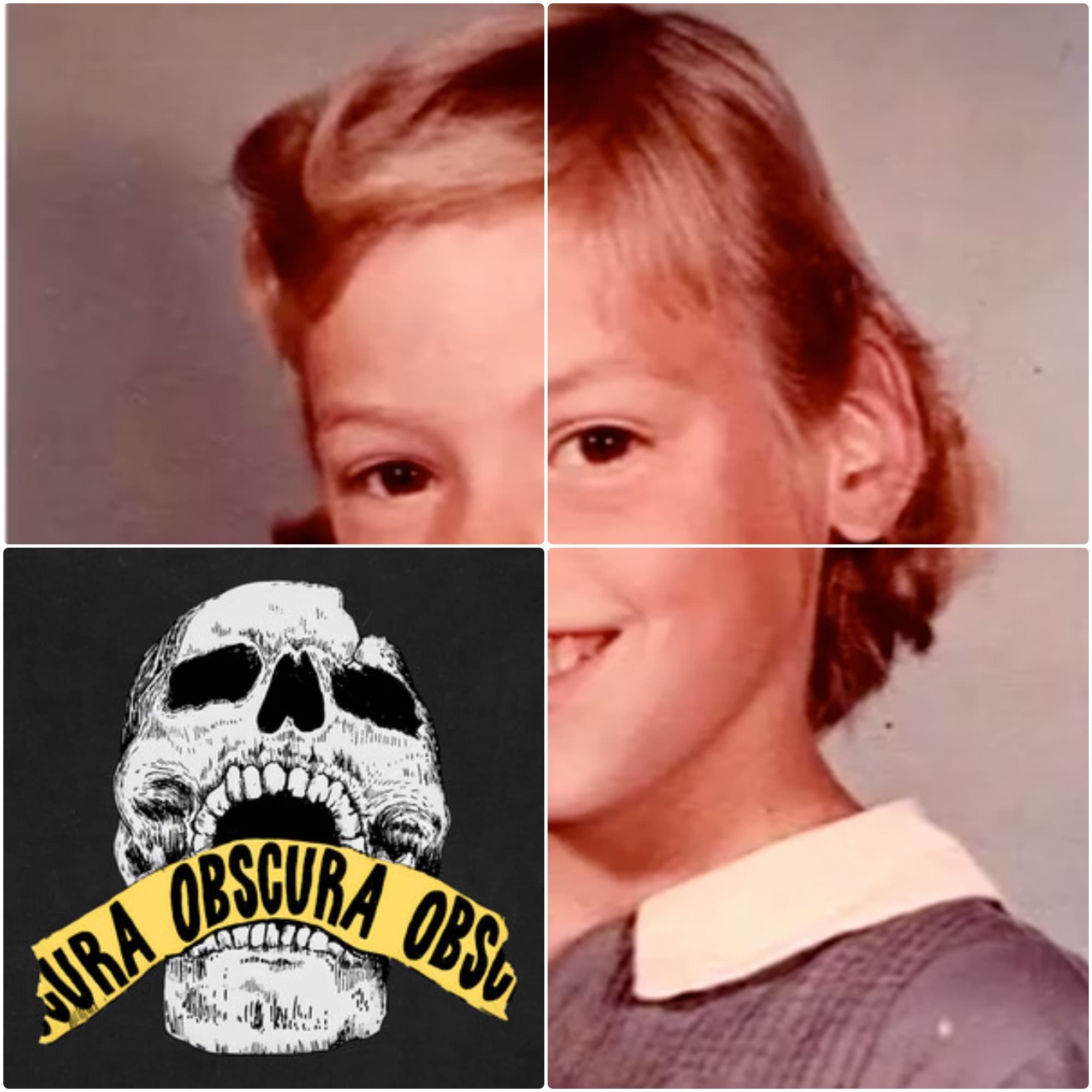
0:01 [SPEAKER_03]: In the winner of 1971, in the woods, on the outskirts of Troy, Michigan, a 15-year-old girl was living in a sleeping bag in the snow, Janet Small clearing she had picked out for herself, a fire pet she had dug. 0:16 [SPEAKER_03]: A few items of clothing and a plastic bag, cigarettes when she could trade for them. 0:21 [SPEAKER_03]: The patch of woods around her was hers in a way that nothing in her life up to that point had ever really been, which is to say, hers because nobody else had bothered to claim it. 0:32 [SPEAKER_03]: Four months earlier, she had given birth to a son in a Detroit home-front-wed mother's. 0:38 [SPEAKER_03]: The boy had been taken from her almost immediately, in place for adoption. 0:42 [SPEAKER_03]: a few weeks before that, her grandmother had died of liver failure a few weeks after that, her grandfather had thrown her out of the house. 0:51 [SPEAKER_03]: Her mother had walked out on her when she was almost four years old, and had never come back. 0:56 [SPEAKER_03]: Her father, a man she had never met, had hanged himself in a Michigan prison cell. 1:02 [SPEAKER_03]: Two years earlier, while serving a life sentence for raping a seven-year-old girl, her face was scarred from a fire, she had been in an age six. 1:11 [SPEAKER_03]: Her IQ, when it would eventually be measured, was 81. 1:16 [SPEAKER_03]: She had stopped going to school. 1:17 [SPEAKER_03]: She had no money. 1:18 [SPEAKER_03]: There was no dawn on the planet looking out for her. 1:22 [SPEAKER_03]: What she had was a sleeping bag in the snow. 1:26 [SPEAKER_03]: Her name was Eileen Carroll Pittman. 1:29 [SPEAKER_03]: The world would come to know her by her grandparents last name. 1:33 [SPEAKER_03]: Warnos. 1:34 [SPEAKER_03]: By the time most people heard that name on the news, she was 34 years old, sitting in a fort a courtroom accused of shooting seven-mended death along the highways of central fort, between 1989 and 1990. 1:48 [SPEAKER_03]: The press called her the first female serial killer in the United States. 1:53 [SPEAKER_03]: which is not quite accurate historically. 1:56 [SPEAKER_03]: But it's the line that traveled, Hollywood made a movie about her that wouldn't sharply stare in an academy award. 2:03 [SPEAKER_03]: The state of Florida strapped her to a gurney in October of 2002. 2:07 [SPEAKER_03]: A won't get to that. 2:09 [SPEAKER_03]: None of that has happened yet. 2:11 [SPEAKER_03]: Not tonight, listener. 2:13 [SPEAKER_03]: Tonight there are no bodies on the side of any highway. 2:16 [SPEAKER_03]: There's no tyramor. 2:18 [SPEAKER_03]: No last resort bar. 2:20 [SPEAKER_03]: No Richard Mallory. 2:23 [SPEAKER_03]: There is a girl, a girl who started at the bottom of a hole, most of us cannot really imagine the shape of, from the outside, and who, by age 15, was already sleeping in the woods. 2:35 [SPEAKER_03]: This is our one of a four-part series. 2:38 [SPEAKER_03]: We're going to walk her childhood slowly, the transient ears, the murders, the trial, death row, all of that is coming in later episodes, but you cannot understand any of it without first understanding the girl in the sleeping bag. 2:54 [SPEAKER_03]: All right, let's get on with it. 2:57 [SPEAKER_06]: Maybe you were just born bad. 2:58 [SPEAKER_08]: I don't know about you. 3:01 [SPEAKER_08]: I'm telling you, man. 3:02 [SPEAKER_08]: No, I wasn't born bad. 3:04 [SPEAKER_08]: You guys got it. 3:05 [SPEAKER_08]: Same time tell you me and they lied. 3:07 [SPEAKER_08]: They lied so bad to you all. 3:10 [SPEAKER_06]: But you've been convicted of killing seven men. 3:13 [SPEAKER_08]: Everybody's looking at the number. 3:15 [SPEAKER_06]: Does that not... You killed seven men. 3:18 [SPEAKER_06]: Seven strangers. 3:19 [SPEAKER_06]: Does that not make you a serial killer? 3:21 [SPEAKER_08]: I didn't kill him every day. 3:22 [SPEAKER_08]: Did I? 3:23 [SPEAKER_08]: Did I go out every day and say, if I did, there were two cute 12 months. 3:27 [SPEAKER_08]: Yeah. 3:28 [SPEAKER_08]: And that's a hell of a lot of men. 3:31 [SPEAKER_08]: I went through before the next jerk came along and I used to protection like a condom. 3:37 [SPEAKER_06]: So it was self-defense. 3:40 [SPEAKER_08]: Yeah. 3:41 [SPEAKER_06]: Well, the first one, perhaps the second, maybe. 3:44 [SPEAKER_06]: But seven times. 3:47 [SPEAKER_01]: Welcome, listener. 3:48 [SPEAKER_01]: I'm glad you're here. 3:50 [SPEAKER_01]: Take a seat. 3:52 [SPEAKER_01]: Next to the fire. 3:56 [SPEAKER_02]: Welcome to Obscura, where we shine a light on the dark. 4:25 [SPEAKER_03]: Chapter 1, a bad inheritance. 4:29 [SPEAKER_03]: Diane Warnos was 14 years old when she married Leo Dale Pittman on June 3, 1954, 14. 4:38 [SPEAKER_03]: Picture of 14-year-old girl you know, listener, a child in middle school, a kid still figuring out how to ask for a bathroom pass. 4:47 [SPEAKER_03]: That was Island's mother on her wedding day. 4:50 [SPEAKER_03]: Leo Pitman, the groom, was a few years older, and he was, by every available account, a deeply violent young man. 4:58 [SPEAKER_03]: He had what we would today recognize as, serious, untreated mental illness, eventually diagnosed as schizophrenia. 5:07 [SPEAKER_03]: The descriptions of him that survived the years come from people who knew him as a kid. 5:12 [SPEAKER_03]: and the descriptions are bad. 5:14 [SPEAKER_03]: He used to entertain himself by tying two cats together by their tails and throwing them over a clothesline, so he could watch them fight. 5:22 [SPEAKER_03]: He beat the grandmother who had raised him after his own mother abandoned him and infancy. 5:27 [SPEAKER_03]: There was a long history of cruelty before he was ever an adult. 5:32 [SPEAKER_03]: In fact, that any institution looked at this young man and signed off on him marrying a 14-year-old girl. 5:38 [SPEAKER_03]: is a sentence I have to type because the historical record demands it when it should make you angry. 5:45 [SPEAKER_03]: Diane and Leo had a son. 5:47 [SPEAKER_03]: They named him Keith. 5:49 [SPEAKER_03]: The marriage was already collapsing by the time Diane became pregnant a second time. 5:54 [SPEAKER_03]: She was 18 with a one-year-old that her hip. 5:57 [SPEAKER_03]: And Leo was already on his way to a series of mental hospitals in prisons. 6:02 [SPEAKER_03]: He was never going to come back from on February 29th, 1956 in Rochester, Michigan, a suburb to Troy. 6:10 [SPEAKER_03]: Diane gave birth to a baby girl. 6:12 [SPEAKER_03]: Irene Pidman, Irene never met her father. 6:16 [SPEAKER_03]: In 1967, Leo Pidman was sentenced to life in prison men for kidnapping and rape of a seven-year-old girl. 6:23 [SPEAKER_03]: Two years later, on January 30th, 1969, he hanged himself in his cell. 6:29 [SPEAKER_03]: He died never having late eyes on his own daughter. 6:33 [SPEAKER_08]: Well, I heard that he raped a seven-year-old girl inside it and he really cared. 6:38 [SPEAKER_08]: He raped a little girl and killed her and then didn't 6:41 [SPEAKER_08]: Anybody who rapes to me is a sick, deranged piece of puke that doesn't even deserve to live. 6:48 [SPEAKER_03]: And Eileen would only ever know him as a stack of newspaper clippings, and family rumors that, on some level, she was expected to inherit. 6:56 [SPEAKER_03]: That is one of the cruelest pieces of psychic furniture a child can be handed. 7:01 [SPEAKER_03]: The knowledge that, before you are old enough to vote, that the man who's blood is in you, was the kind of man who raped a seven-year-old child. 7:10 [SPEAKER_03]: Eileen carried with her that knowledge for the rest of her life. 7:13 [SPEAKER_03]: in a various points she wondered how wild what it was supposed to mean about her. 7:18 [SPEAKER_03]: Diane, the teenage mother, did the math early. 7:21 [SPEAKER_03]: 19 years old, two crying babies, no husband, no future. 7:27 [SPEAKER_03]: She did not handle it well. 7:29 [SPEAKER_03]: She was overwhelmed and depressed and almost certainly doing with what today be called post-partum depression. 7:35 [SPEAKER_03]: on top of being a kid raising other kids alone. 7:39 [SPEAKER_03]: In January of 1960, when Ileen was almost four, Diane left, she handed the children off briefly to a friend named Marge. 7:48 [SPEAKER_03]: Marge handed them in turn to Diane's parents, Laurie and Brenna Warnos. 7:53 [SPEAKER_03]: Laurie and Brenna legally adopted both 7:58 [SPEAKER_03]: Diane went on with her wife and would not be a meaningful presence in either child's life again for many years. 8:05 [SPEAKER_03]: Here's one of the strange and quietly cruel facts at the center of this story. 8:09 [SPEAKER_03]: Listener, Lori and Brida did not tell the children they were grandparents. 8:15 [SPEAKER_03]: they simply raise them as their own. 8:17 [SPEAKER_03]: I lean called Lori Daddy growing off. 8:20 [SPEAKER_03]: She called Brita Mom, the two older children in the house, who are actually her biological aunt and uncle, were presented to her as her older brother and sister. 8:30 [SPEAKER_03]: The whole structure of her family, in her child mind, was a story that adults around her had agreed she was not entitled to know the shape of. 8:38 [SPEAKER_03]: That story was going to come apart. 8:41 [SPEAKER_03]: The way stories like that do, but before it came apart, the harm had already started. 8:47 [SPEAKER_09]: you understand that for many people because you were a prostitute, they don't understand how a prostitute can be raped. 8:55 [SPEAKER_08]: I don't understand how many can understand how a prostitute can be raped because when a man rapes a woman, he assaults your whole body. 9:03 [SPEAKER_08]: He puts his, down your throat, cramming it down your throat. 9:07 [SPEAKER_08]: He tears your hair out of your head. 9:09 [SPEAKER_08]: He beats her face and he rips your, 9:16 [SPEAKER_08]: Why do I open? 9:17 [SPEAKER_03]: Chapter two, The Fire. 9:20 [SPEAKER_03]: She was six years old. 9:21 [SPEAKER_03]: The year was 1962. 9:23 [SPEAKER_03]: I lean in Keith, the two younger children in the Warnow's house. 9:28 [SPEAKER_03]: We're doing what board Midwestern kids with two little supervision have done since the invention of childhood. 9:34 [SPEAKER_03]: They were playing with fire. 9:35 [SPEAKER_03]: They'd gone their hands on a can of wider fluid in a few matches. 9:39 [SPEAKER_03]: They were in the yard or close to it, depending on the version. 9:43 [SPEAKER_03]: Nighter fluid does not behave the way regular accelerant does, it jumps, it takes off, it does in a tenth of a second when a careful match would not do in a minute. 9:54 [SPEAKER_03]: The lighter fluid jumped, Eileen's face caught, a six-year-old's first instinct when their face is on fire, is to scream and run. 10:03 [SPEAKER_03]: Running, of course, is the worst possible thing, because running feeds the flames more oxygen. 10:09 [SPEAKER_03]: By the time the adults in her wife got to her, Eileen's face had been seriously burned. 10:15 [SPEAKER_03]: She received the medical attention in alcoholic distracted working class household in 1962, was inclined to give a six year old. 10:23 [SPEAKER_03]: She recovered. 10:24 [SPEAKER_03]: The scarring did not. 10:27 [SPEAKER_03]: She carried marks on her face for the rest of her life, from the day she was six, and her face had been on fire. 10:33 [SPEAKER_03]: A scarred face is the kind of thing that follows a child through every social interaction they ever have, especially in a culture that treats female beauty as a kind of currency that gets collected at the door. 10:45 [SPEAKER_03]: Classmates were going to comment on her face. 10:48 [SPEAKER_03]: Family was going to comment on her face. 10:51 [SPEAKER_03]: The mirror was going to comment on her face every morning. 10:55 [SPEAKER_03]: A small girl who has been burned in the yard at six was going to grow into a woman who was always a little outside the visual rules her culture wanted to enforce on her. 11:06 [SPEAKER_03]: There's also the question fire raises about the household. 11:09 [SPEAKER_03]: Fire is not a subtle event. 11:11 [SPEAKER_03]: A six-year-old getting seriously burned because nobody was watching her closely enough to keep a can of lighter fluid out of her hands is exactly the sort of moment that should have triggered some kind of inquiry from the adults at the edge of the family. 11:26 [SPEAKER_03]: Any system working the way a system should work would have asked what kind of supervision I lean and Keith were operating under, and whether the household around them was at the most fundamental of levels, safe, no such 11:41 [SPEAKER_03]: Nobody knocked on the door of lorry and burned his house and asked him to account for what had happened to that little girl in their care. 11:48 [SPEAKER_03]: The fire was a signal that nobody chose to read. 11:52 [SPEAKER_03]: The warnos home was a small post-war ranch house. 11:56 [SPEAKER_03]: The kind that went up across the Detroit suburbs by the thousands in the 1950s, a few bedrooms, a kitchen with a wooden table in the middle of it. 12:05 [SPEAKER_03]: a front yard with a little grass, a driveway, neighbors close enough that they would have heard a child screaming, the houses on that block were not soundproofed, single pane windows, if a child was being beaten in a kitchen on a Sunday afternoon, the neighbors on either side would have known. 12:24 [SPEAKER_03]: Nobody on that block ever called anything in. 12:26 [SPEAKER_03]: That was the polite agreement at the time. 12:29 [SPEAKER_03]: Eyes on your own driveway. 12:31 [SPEAKER_03]: No matter what was leaking out of the house next to you, inside that small house, the rules were warries were rules. 12:38 [SPEAKER_09]: Help should have been there a long time ago. 12:40 [SPEAKER_09]: In her case, okay? 12:41 [SPEAKER_09]: Yes, sir. 12:42 [SPEAKER_09]: She was venting some of her in County during her childhood. 12:45 [SPEAKER_09]: That's the way I feel. 12:48 [SPEAKER_04]: I think that she shouldn't be able to die. 12:49 [SPEAKER_04]: I think she shouldn't have to suffer. 12:51 [SPEAKER_04]: She's easy way out. 12:53 [SPEAKER_10]: Yes, sir. 12:54 [SPEAKER_10]: There is no justification for murder. 12:56 [SPEAKER_10]: This simple is that. 12:57 [SPEAKER_10]: And what difference does it make? 12:58 [SPEAKER_10]: Whether he's a missionary or not, he's a human being. 13:01 [SPEAKER_10]: OK. 13:03 [SPEAKER_07]: I think her abuse led to her acting like she did. 13:06 [SPEAKER_07]: I think she could maybe be saved by what some therapy is in the electric chair. 13:11 [SPEAKER_01]: Yes. 13:12 [SPEAKER_01]: OK. Yeah. 13:13 [SPEAKER_01]: I don't think she said I have to do it. 13:14 [SPEAKER_01]: But she should be killed for what you know. 13:16 [SPEAKER_01]: She killed them. 13:16 [SPEAKER_01]: She should have said to them. 13:18 [SPEAKER_01]: Yeah. 13:18 [SPEAKER_07]: I agree with the lady. 13:19 [SPEAKER_07]: The death penalty is the easy way out. 13:22 [UNKNOWN]: OK. 13:22 [SPEAKER_10]: Yes. 13:23 [SPEAKER_10]: I think if she was found guilty and she wants a death penalty, she should get it. 13:27 [SPEAKER_05]: Pestication should be banned and now I don't think she should die. 13:30 [SPEAKER_05]: I'm against a death penalty and I don't understand why they're not more reforms in prison. 13:36 [SPEAKER_05]: There should be more. 13:36 [SPEAKER_10]: I think if she underwent some serious therapy, she may change a more. 13:43 [SPEAKER_10]: I feel too just did it for the funding herself. 13:49 [SPEAKER_04]: I think she should have to suffer. 13:54 [SPEAKER_03]: Chapter 3, The Belts, Lori Warnos, the man-raising island as her father, while telling her he was her father, was an alcoholic. 14:04 [SPEAKER_03]: The drinking was not occasional, Westerner. 14:07 [SPEAKER_03]: It was structural, shaped as evenings, as weekends, as temperament. 14:12 [SPEAKER_03]: The version of Lori that was at home with the children was the drunk version of Lori, more often than it was the sober one. 14:23 [SPEAKER_03]: the version of alcoholism that ate at the liver but did not raise a hand. 14:27 [SPEAKER_03]: His was the alcoholism that did. 14:30 [SPEAKER_03]: Norie was what in the earlier generation of Americans would have called a strict disciplinary in a phrase that has always done a lot of work for covering up something darker. 14:41 [SPEAKER_03]: The instrument he used was a black leather bone, doubled over for impact. 14:46 [SPEAKER_03]: The way a belt has to be folded when the person swinging it, knows what they are doing. 14:51 [SPEAKER_03]: The beatings followed a procedure that procedure has been documented in core records, in trial testimony, and interviews idling gave during her competency evaluations later in life. 15:03 [SPEAKER_03]: Ain't an account from a childhood friend named Dawn Botkins. 15:07 [SPEAKER_03]: Ileen would be told to take her shorts off. 15:10 [SPEAKER_03]: She would be told to bend over the wooden table in the middle of the kitchen. 15:14 [SPEAKER_03]: Sometimes instead, she would be told to wife face down, naked, spread eagle down a bed. 15:20 [SPEAKER_03]: The bell would come down. 15:22 [SPEAKER_03]: By Dawn Botkins I witnessed a count, and one beating she personally saw, it came down for five minutes. 15:29 [SPEAKER_03]: Count that out in your head. 15:31 [SPEAKER_03]: Counter 20 now, go ahead, pause, or if you will, do the full 300 seconds, and imagine leather meeting the skin, 300 seconds of a child counting in her head and trying to be quiet about it, less it rained down more. 15:48 [SPEAKER_03]: There is also in the family record, the kid. 15:51 [SPEAKER_03]: The story comes from my leaner self in later interviews, and she didn't have a lot to lose at the time, and has been corroborated in the broad strokes by other accounts. 16:01 [SPEAKER_03]: At one point in her childhood, Laurie made I lean, watch him drown a kid and 16:07 [SPEAKER_03]: It is a small detail, and there's also one of those details that lodges itself in the architecture of who a child becomes. 16:14 [SPEAKER_03]: A child made to watch an adult kill a small animal, made to watch on purpose, is a child being taught something specific? 16:22 [SPEAKER_03]: The lesson being taught is, this is what I'm capable of, and I can do this to any small and helpless thing in this house. 16:30 [SPEAKER_03]: And you are a small and helpless thing in this house. 16:33 [SPEAKER_03]: There's no version of that lesson delivered to a child that does not stick. 16:38 [SPEAKER_03]: Eileen brought the kid up more than once when she was finally able to talk about her childhood. 16:44 [SPEAKER_03]: In her later statement, Eileen also sent her grandfather sexually abused her. 16:48 [SPEAKER_03]: She said the abuse started when she was young. 16:50 [SPEAKER_03]: She said that before he beat her, he would force her to undress. 16:55 [SPEAKER_03]: The forcing of the undressing was part of his method and the entanglement of beating and nudity isn't itself a kind of violence. 17:03 [SPEAKER_03]: A child being made to take their clothes off as a precondition to being struck is a child whose body is being colonized in two directions at the same time. 17:13 [SPEAKER_03]: They are not safe in their skin while closed. 17:15 [SPEAKER_03]: They are not safe in their skin while naked. 17:17 [SPEAKER_03]: There's no posture they can take that is safe. 17:20 [SPEAKER_03]: There's no compliance that will spare them. 17:22 [SPEAKER_00]: Does the brain actually change? 17:25 [SPEAKER_00]: Is something happen in the brain that leaves a scar as a result of this? 17:30 [SPEAKER_00]: And in fact, the current literature talks about the anatomy of the brain. 17:34 [SPEAKER_00]: And if we look at the brain as something that's rich and promising and wonderful at birth, and then we expose that brain to all these sorts of things, so this is what happens. 17:46 [SPEAKER_00]: The hippocampus gets smaller. 17:48 [SPEAKER_00]: Corpus colosium is smaller. 17:49 [SPEAKER_00]: In fact, this is very significant. 17:51 [SPEAKER_00]: They have white matter connection between the two sides of the brain. 17:54 [SPEAKER_00]: In adults who've grown up in adverse environments is children, the corpus colosium is smaller. 17:59 [SPEAKER_00]: And why should that be? 18:00 [SPEAKER_00]: There's less connection between the two sides of the brain, less synapses. 18:04 [SPEAKER_00]: But what happens when a child grows up at an environment where, in fact, the threat is continuous and repeated? 18:14 [SPEAKER_00]: But what happens is, then that CRF is chronically stimulated, quick and appropriate releasing hormone, and cortisol remains high. 18:21 [SPEAKER_00]: It never gets the cycle backwards where it shuts off and turns off of them. 18:27 [SPEAKER_00]: What happens with this is it sort of blunts this whole system, and doesn't work very well. 18:31 [SPEAKER_00]: So everything kind of gets out of balance. 18:34 [SPEAKER_00]: And when things start a balance, the brain doesn't roll the same way. 18:39 [SPEAKER_03]: And you have the verbal cruelty in which Lori reportedly told Irene with regularity that she was evil, that she was worthless, and that she did not deserve to live. 18:49 [SPEAKER_03]: Think about the impact of those three sentences delivered to a child daily for years by the person that child believes to be her father. 18:58 [SPEAKER_03]: A child does not have the developmental equipment to argue with an adult on those points. 19:05 [SPEAKER_03]: A child internalizes those sentences as facts about herself. 19:09 [SPEAKER_03]: By the time I leaned was 9, 10, 11 years old, she was carrying a self-image that had been hammered into her by the man who was supposed to be the foundation of her self-image. 19:19 [SPEAKER_03]: She was not just hurt, listener, and the language she had been given for herself. 19:24 [SPEAKER_03]: She was a piece of trash that her own father did not believe she'd have been born. 19:29 [SPEAKER_03]: And then she found out he was not her father. 19:32 [SPEAKER_03]: Chapter 4 The Truth About the House There are different versions of the moment I leaned on the truth. 19:39 [SPEAKER_03]: Some accounts put her out of heaven, some at 12. 19:42 [SPEAKER_03]: Some say it happened in a single shattering conversation. 19:46 [SPEAKER_03]: Some say it happened gradually and fragments piece together. 19:49 [SPEAKER_03]: The most common version is that somewhere around 11 or 12, Eileen and Keith both came to understand that Lori and Brida were not their parents. 19:59 [SPEAKER_03]: They were their grandparents. 20:01 [SPEAKER_03]: The two other children in the house were not their older siblings. 20:04 [SPEAKER_03]: They were there on an uncle. 20:06 [SPEAKER_03]: Their actual mother was a woman named Diane, who had walked away from them years earlier, never to come back. 20:12 [SPEAKER_03]: Picture being 11 years old and learning that. 20:15 [SPEAKER_03]: At 11, a child was capable of doing the math on the years they've spent calling someone mom and dad, and recognizing that those years were in some structural way. 20:24 [SPEAKER_03]: Oh, why? 20:26 [SPEAKER_03]: For Ileen, the math went one direction. 20:29 [SPEAKER_03]: If Lori was not her father, then who was? 20:32 [SPEAKER_03]: The answer when she founded, of course, was the man named Leo Pippman. 20:37 [SPEAKER_03]: A man who, by the time she found him, was already two years dead in a prison cell, hanged from his own hands. 20:44 [SPEAKER_03]: After a wife sentenced for raping a little girl, if Brida was not her mother, then who wants. 20:50 [SPEAKER_03]: The answer was a teenager named Diane, who had abandoned her at age 4, to go live whatever life Diane had decided to go live instead without her. 20:59 [SPEAKER_03]: That is the package and 11-year-old girl in Troy, Michigan. 21:04 [SPEAKER_03]: opened at around 1967, father dead by suicide, mother left her alone. 21:10 [SPEAKER_03]: The brother she had grown up with was in fact her brother. 21:14 [SPEAKER_03]: But everyone else in the house had a different relationship to her than what she had been told. 21:19 [SPEAKER_03]: Something inside I-Lean, by every available account, broke at that point, not lonely, 21:26 [SPEAKER_03]: She was already a child with what people in her life called an explosive temper. 21:31 [SPEAKER_03]: She was already a child who had trouble making friends. 21:34 [SPEAKER_03]: She was already a child whose face had been burned, and whose body had been beaten, and whose self-image had been hollowed out by years of being told she was worthless. 21:44 [SPEAKER_03]: The discovery that the foundation of her family was a lie was not the first injury. 21:50 [SPEAKER_03]: It was the injury that compromised and already weakened structure. 21:54 [SPEAKER_03]: She started to act out. 21:56 [SPEAKER_03]: True and see, tantrums running away. 21:58 [SPEAKER_03]: The school records from her middle school describe a child who was in the language of educators who was at the time becoming difficult. 22:08 [SPEAKER_03]: Her hearing began to give her trouble. 22:10 [SPEAKER_03]: Her vision began to give her trouble. 22:12 [SPEAKER_03]: Some of these issues were almost certainly the result of physical abuse, some were almost certainly the result of nutrition or the lack of it, and a household where the adults were drunk more often than not, and then of course, her low IQ, coming in at 81. 22:29 [SPEAKER_03]: That is on the low end of dull normal range. 22:33 [SPEAKER_03]: It is not intellectual disability, it is not the cliff. 22:37 [SPEAKER_03]: But it is the kind of cognitive baseline that paired with everything else she was carrying was going to make every adult system she had ever encountered harder to navigate than it would have been for a brighter and more verbally agile here. 22:51 [SPEAKER_03]: The school years are the years when in a healthier story an institution might have caught her. 22:57 [SPEAKER_03]: I lean attended public school in Troy. 23:00 [SPEAKER_03]: She had teachers, nurses, counselors, 23:02 [SPEAKER_03]: School in 1967 was not the trauma-informed environments they sometimes are now, but they were not blind either. 23:10 [SPEAKER_03]: A child whose face was scarred for fire, whose performance was deteriorating, whose hearing and vision were declining, whose attendance was inconsistent, 23:19 [SPEAKER_03]: Whose social behavior was already being noted by classmates with a nickname, I will get to in a minute, whose home life was an open secret, was a child sending up flares in every direction a child knows how to send them up. 23:33 [SPEAKER_03]: None of those flares were answered. 23:36 [SPEAKER_03]: The institutional response to Eileen's distress was at best to label her a behavior problem, and at worst to push her further out of the system. 23:46 [SPEAKER_03]: Adults have a way of writing certain children off, and once a child has been written off, the writing tends to stick. 23:53 [SPEAKER_03]: By 11 Eileen was, by any reasonable measure, a child in a state of ongoing emergency. 24:00 [SPEAKER_03]: There was no safety in her home. 24:01 [SPEAKER_03]: There was no nurturing in her home. 24:04 [SPEAKER_03]: There was no truthfulness in her home. 24:07 [SPEAKER_03]: There was a belt, and there was a bottle. 24:09 [SPEAKER_03]: There was a grandfather who told her that she did not deserve to live, and then there was a school where she did not fit in, and a face she did not recognize in the mirror. 24:18 [SPEAKER_03]: So she found the only currency she had been taught how to use, and she started spending it. 24:23 [SPEAKER_09]: Because you were a prostitute, they don't understand. 24:30 [SPEAKER_09]: how a prostitute can be raped. 24:33 [SPEAKER_03]: Chapter five, the cigarette pig. 24:36 [SPEAKER_03]: I want to handle this section with care because the version of Ileen that gets stuck in pop culture often starts here and it almost always starts here without the proper framing. 24:48 [SPEAKER_03]: By the time she was 11, 24:49 [SPEAKER_03]: Irene had figured out something about her own body that the adults in her life had been telling her, and various ways since she had been small, she had figured out that her body was a thing that could be exchanged. 25:02 [SPEAKER_03]: She had grown up in a household where one of the primary ways in a doll engaged with her body was to be in that she undressed. 25:10 [SPEAKER_03]: She had grown up with a knowledge that her father had been a sexual predator who had targeted children. 25:16 [SPEAKER_03]: They even her relationship with her brother had crossed lines and no relationship between siblings should cross. 25:23 [SPEAKER_03]: The less in her childhood was teaching her, in a thousand quiet ways, was that her body was not really hers. 25:30 [SPEAKER_03]: Her body was a kind of common property available to whoever wanted it, and she did not have the standing to refuse. 25:38 [SPEAKER_03]: So at age 11, I lean started doing a version of what she had been taught, to begin offering sexual favors to boys at school, and exchange for cigarettes, drugs, and food. 25:49 [SPEAKER_03]: The boys called her, behind her back, and increasing into her face, the cigarette pig. 25:55 [SPEAKER_03]: I'm not going to soften that nickname, it is in the historical record, it is in the testimony, it is in the trial transcript, it is one of the names in a 11-year-old girl carried throughout 26:08 [SPEAKER_03]: attached to her by classmates who, at 11 and 12, were not capable yet of understanding what they were watching, which was a child of being colonized by an entire ecology of harm. 26:19 [SPEAKER_03]: The nickname tells you something about the social pressure she was under. 26:23 [SPEAKER_03]: It also tells you something about what a 11-year-old boy's 26:29 [SPEAKER_03]: We're comfortable doing in front of each other to a girl whose face was scarred and whose home was unsafe. 26:36 [SPEAKER_03]: I want to be very precise about something here because I have seen this discussed badly in too many places and I don't want to leave it un-corrected. 26:44 [SPEAKER_03]: Let's make this clear, listener. 26:46 [SPEAKER_03]: 11-year-old girl is not a sex worker. 26:49 [SPEAKER_03]: 11-year-old girl is, and every legal and moral framework that exists a child being sexually exploited. 26:56 [SPEAKER_03]: The boys who took advantage of her hunger and her need for affection and her cigarettes and drugs were not customers. 27:03 [SPEAKER_03]: They were committing abuse. 27:05 [SPEAKER_03]: The fact that the Adon line would later in her own voice describe these years in the language of her sex work career does not change what was happening. 27:14 [SPEAKER_03]: A child cannot consent. 27:17 [SPEAKER_03]: A child trading her body for cigarettes is not making an economic decision. 27:22 [SPEAKER_03]: She is doing the only thing the Adon's around her have shown her 27:26 [SPEAKER_08]: I made a lot of friends, and I loved it. 27:29 [SPEAKER_08]: I loved it. 27:29 [SPEAKER_08]: I love it, friends. 27:30 [SPEAKER_08]: Yeah, I loved the social communication. 27:32 [SPEAKER_08]: I loved the sex. 27:33 [SPEAKER_08]: I loved the fun we had. 27:35 [SPEAKER_08]: I loved the communication we had. 27:37 [SPEAKER_08]: I liked the friendship. 27:38 [SPEAKER_09]: Do you understand that for some people, they would find that strange, in other words, that they couldn't imagine getting love and attention in that way? 27:47 [SPEAKER_08]: I don't understand what's the strange about. 27:48 [SPEAKER_08]: You just made a bunch of friends so much. 27:51 [SPEAKER_03]: My lean was doing at 11 was a textbook description of the long-term effects of childhood sexual abuse. 27:58 [SPEAKER_03]: Children who are sexualized too early often reenact the dynamic on their own, because reenacting it gives them a sense of control they did not have. 28:08 [SPEAKER_03]: When it was being done to them, the 11-year-old offering favors for cigarettes is the 11-year-old who has been torn by her father figure and by her Bonnie's history that this is the transaction her existence destructured around. 28:22 [SPEAKER_03]: She was not pioneering anything, she was repeating what the people around her had already done to her. 28:28 [SPEAKER_03]: By her early teens, the pattern was a fixture of her social life. 28:32 [SPEAKER_03]: She was a name spoken about behind hands in school, the girls disapproved, the boys took advantage, the teachers, presumably noticed and did nothing about it. 28:43 [SPEAKER_03]: The household she went home to every night was still the household with the belt and the bottle. 28:48 [SPEAKER_03]: There was no off-rap, there was no point of intervention, nobody in her orbit ever looked at her and said, that child is in trouble and we are going to do something about it. 28:59 [SPEAKER_03]: She was 13 by some accounts, or 14 by others, when she got pregnant. 29:04 [SPEAKER_03]: The story I'm reading told at different points in her wife was that the pregnancy was the result of a rape, and that the rapeist had been a friend of Laura's, other times she told a different story, other times the story shifted. 29:18 [SPEAKER_03]: The fluidity of her account is itself a feature of the trauma she was carrying, people who 29:26 [SPEAKER_03]: Rarely have a clean narrative about who did want to them, and on which date. 29:31 [SPEAKER_03]: The brain does not file those events, the way of files of vacation. 29:35 [SPEAKER_03]: It files them in fragments that survivors spend the rest of their lives trying to reassemble. 29:42 [SPEAKER_03]: Whatever the truth of that specific event was, that result was concrete. 29:47 [SPEAKER_03]: Irene was a 14-year-old girl with a pregnancy. 29:50 [SPEAKER_03]: Lori did what Lori did. 29:52 [SPEAKER_03]: He said her away. 29:54 [SPEAKER_03]: She was taken to a home for unwed mothers and Detroit. 29:57 [SPEAKER_03]: She gave birth to a baby boy, on March 23rd, 1971. 30:02 [SPEAKER_03]: He was taken from her almost immediately and given up for adoption. 30:07 [SPEAKER_03]: She would never see him again. 30:08 [SPEAKER_03]: She did not get to name him. 30:10 [SPEAKER_03]: She did not get to hold him in any meaningful or ongoing sense. 30:15 [SPEAKER_03]: She was 14 years old when she became a mother. 30:18 [SPEAKER_03]: 14 years old when motherhood was taken from her and she went home from that hospital with empty arms in a body still recovering and that same grandfather waiting on the other side of the door. 30:31 [SPEAKER_03]: That child is alive somewhere right now. 30:34 [SPEAKER_03]: He would be in his mid-50s. 30:36 [SPEAKER_03]: Whether or not he ever knew who was biological mother was, whether or not he had ever connected the dots between his birth records, and the woman who became one of the most famous death row inmates in American history, is not part of the public record, and it is not my business. 30:52 [SPEAKER_03]: to speculate about what is my business to say on this show is that he existed. 30:58 [SPEAKER_03]: He was real. 30:59 [SPEAKER_03]: He was the only blood relation Ilym Warnos ever produced, and they had each other for less time than it took for me to write this segment or for me to record it on Mother's Day. 31:09 [SPEAKER_03]: Listen, 31:10 [SPEAKER_03]: Chapter 6. 31:12 [SPEAKER_03]: The Year Everything broke. 31:14 [SPEAKER_03]: 1971 broke open whatever was left. 31:17 [SPEAKER_03]: In March, the baby was born and given up. 31:20 [SPEAKER_03]: Eileen came home from the home for unwed mothers and dropped out of school now on the after. 31:26 [SPEAKER_03]: She was 15 by then, note of Homa, no job, no support. 31:31 [SPEAKER_03]: The only relationship in the house that had ever been a real anchor for her, her bond with her brother Keith, was complicated by years of intermittent intimacy that blurred lines that should never have been blurred. 31:42 [SPEAKER_03]: The other relationships in the house were unsalvable in July of 1971. 31:54 [SPEAKER_03]: And her liver had given up on her the night she died, she was reportedly having convulsions, moring by some accounts did not call an ambulance in time, and family members said it was because he could not afford one. 32:07 [SPEAKER_03]: Other family members were later alleged that he had killed her, Diane, the daughter who had walked out years earlier. 32:13 [SPEAKER_03]: was among the people who believed worried that killed his own wife, though no charges were ever broad, and no autopsy ever supported a homicide finding. 32:23 [SPEAKER_03]: The death stood as a death from cirrhosis. 32:26 [SPEAKER_03]: The funeral happened. 32:28 [SPEAKER_03]: Brida was gone. 32:29 [SPEAKER_03]: The thing about Brida is that even though she had not protected Iweed for more heat. 32:34 [SPEAKER_03]: Even though she had been silent in the next room when the bell came down, she had been the only marginally maternal figure, Eileen had, Brita baked, Brita cooked, Brita was occasionally kind, the household for all its violence, had at least had a woman in it, who once in a while spoke gently, with Brita gone, the last softening influence in that house was gone, and what was left was Lori. 32:59 [SPEAKER_03]: drinking harder than ever, with a 15-year-old granddaughter he had been telling for years was worthless, and did not deserve to live. 33:07 [SPEAKER_03]: It goes without saying that he did not want her there. 33:10 [SPEAKER_03]: A few weeks after the funeral, Lori threw on lean out of the house, that is the wine that should stop you. 33:17 [SPEAKER_03]: A man whose wife had just died, who was responsible for raising a 15-year-old girl, who had just been forced to give up a child, who had been beating that girl since she was small, looked at her, and decided that the loss of his wife was the appropriate moment to expel his granddaughter from his home. 33:35 [SPEAKER_03]: There was no ceremony, there was no plan. 33:38 [SPEAKER_03]: There was no place she was being sent to. 33:40 [SPEAKER_03]: There was no relative she was being delivered to. 33:42 [SPEAKER_03]: He simply made it clear 33:47 [SPEAKER_03]: She went to the woods. 33:49 [SPEAKER_03]: There were woods on the edge of Troy, and edges of trees behind the development. 33:53 [SPEAKER_03]: would advance the backed up against the highway. 33:56 [SPEAKER_03]: I leaned new them, she had been wandering them for years, she had a sleeping bag, she had a few belongings, she had whatever she had managed to take with her from the house when Lori's mood had broken open. 34:09 [SPEAKER_03]: She walked into the trees, made a clearing, and stayed there. 34:13 [SPEAKER_03]: She was 15 years old. 34:15 [SPEAKER_03]: They age at which most kids are studying for learners' permits. 34:18 [SPEAKER_03]: And arguing with their parents about curfew, I mean what sleeping in the woods, supporting herself by sex work and cars and motiles, at the edges of parking lots, eating when she could, drinking when she could, trying to keep warm through a Michigan winner in a sleeping bag in a clearing, the neighborhood by some accounts new, she was out there, her former classmates knew a few of them brought her food. 34:44 [SPEAKER_03]: Others did not. 34:46 [SPEAKER_03]: Some of them including the boys who had called her the cigarette pig in middle school knew exactly where to find her when they wanted to find her and the visits to her clearing were not always the visits of friends. 34:58 [SPEAKER_03]: The woods did not protect her from the people who had been hurting her in the school hallways. 35:02 [SPEAKER_03]: The woods just relocated the harm to a quieter setting by the time spring came. 35:08 [SPEAKER_03]: She spent months in those trees. 35:11 [SPEAKER_03]: She had cycled through illnesses she did not see a doctor for. 35:15 [SPEAKER_03]: She had been hungry for stretches that most had dull listeners to the show. 35:19 [SPEAKER_03]: I've never experienced. 35:21 [SPEAKER_03]: She had grown into the shape of a person who knows at a level deeper than language than no one is coming for her. 35:28 [SPEAKER_03]: That winter is the cold open for this series. 35:32 [SPEAKER_03]: The girl in the snow, the fire pit, the plastic bag of clothes, the face with burn scars, the body that had carried a child months earlier. 35:42 [SPEAKER_03]: The girl was alone. 35:44 [SPEAKER_03]: She was not in any practical sense, a citizen of the city of Troy. 35:49 [SPEAKER_03]: She was a feral child. 35:51 [SPEAKER_03]: She was the byproduct of every system that had been supposed to catch her. 35:55 [SPEAKER_03]: And then instead, weaved her on through. 35:58 [SPEAKER_03]: Michigan in 1971 did have child protective services. 36:03 [SPEAKER_03]: It did have laws about truancy and homelessness and the welfare of miners. 36:08 [SPEAKER_03]: None of those systems found on lean, she existed marginalized outside them. 36:14 [SPEAKER_03]: And a way that we look back on now with this belief, because we like to think of ourselves as living in a society that, in its imperfect way, watches out for its children. 36:26 [SPEAKER_03]: The truth is that in that decade, in that suburb, in that economic class, a 15-year-old girl could vanish into a sleeping bag in the woods. 36:37 [SPEAKER_03]: the only people who had noticed were a few former classmates, a few of the men in cars she was getting into, and a childhood friend named Dawn Botkins. 36:47 [SPEAKER_03]: By the end of 1971, Eileen Moreno's was 15 years old, her father had been dead for two years, her grandmother had been dead for a few months, her brother was alive, but their relationship was wound. 37:01 [SPEAKER_03]: Her grandfather had thrown her out, and would, in less than five years, kill himself the same way her father had. 37:08 [SPEAKER_03]: By his own hand, her mother was somewhere in the country, living a separate life. 37:14 [SPEAKER_03]: Her son was somewhere in the country, being raised by someone at Naher, her face scarred, her body used. 37:21 [SPEAKER_03]: herself image had been hammered for 15 years by an adult who told her she was evil, that she was worthless. 37:29 [SPEAKER_03]: Her education was over, her childhood was over. 37:33 [SPEAKER_03]: In part two, we follow Eileen through the next 18 years. 37:36 [SPEAKER_03]: the hitchhiking across country trips, arrests. 37:40 [SPEAKER_03]: In part three, I walk you through the bodies. 37:43 [SPEAKER_03]: That's 12 month period. 37:45 [SPEAKER_03]: We walked the cars, the wooded areas, the investigation, videotaped confessions, and then powerful, will close the series, the trial in Volusha County, and everything that followed that. 37:58 [SPEAKER_03]: What will this all mean? 37:59 [SPEAKER_03]: That question does not have a clean answer. 38:02 [SPEAKER_03]: we are not going to give it one. 38:04 [SPEAKER_03]: We are going to give it the full way it deserves in both directions because both directions are real. 38:10 [SPEAKER_03]: But that is it for the next three episodes. 38:13 [SPEAKER_03]: Tonight, before I let you go, this is where I'm going to leave you tonight with the understanding that by the time she was old enough to start her driver's education class. 38:23 [SPEAKER_03]: Eileen had already been broken in ways most people watching this story from the outside and not even understand. 38:30 [SPEAKER_03]: With the understanding that nothing about the fact excuses what she would later to do on a four-to-highway yet at the same time there is a temptation with a story like Eileen's to compress the childhood into a montage and rush to the highway. 38:47 [SPEAKER_03]: Almost every previous treatment of her has been done exactly that way. 38:51 [SPEAKER_03]: The main for television movies, the cable specials, the big theater film, the Wikipedia paragraph that crams the abandonment, the abuse, the pregnancy and the woods into a single dense paragraph before moving on to the bodies. 39:06 [SPEAKER_03]: I'm not going to do that here. 39:08 [SPEAKER_03]: The 34 years of life that came before the first body, 39:12 [SPEAKER_03]: deserves as much narrative weight as the year that produced the bodies. 39:16 [SPEAKER_03]: The story did not start at that highway. 39:19 [SPEAKER_03]: It started in the woods. 39:21 [SPEAKER_03]: Thank you for listening and keep the fire burning.
Show full transcript (450 segments)