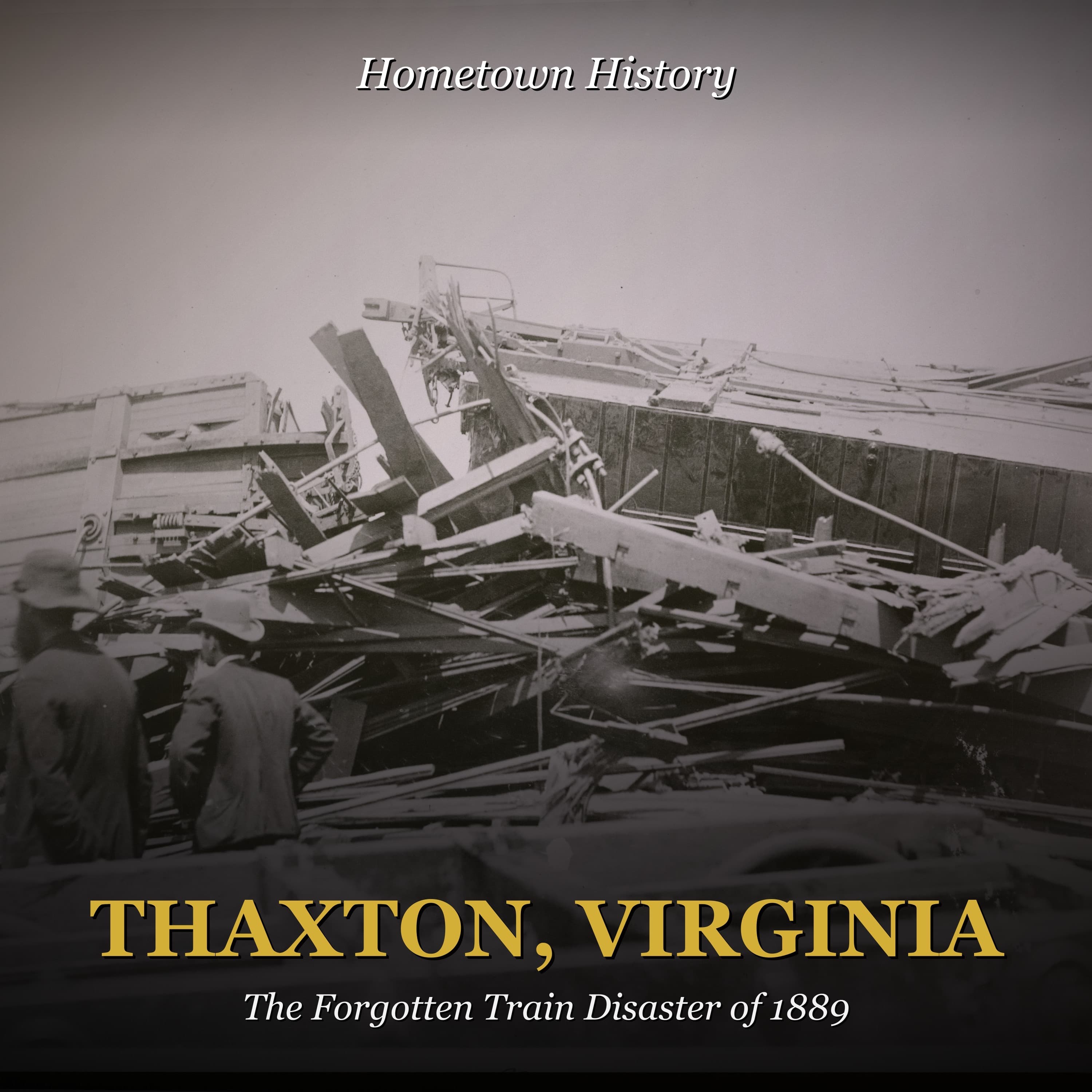
Forgotten stories from America's small towns.Hosted by Shane Waters20 min episode
Thaxton, Virginia: The Forgotten Train Disaster of 1889
Transcript
159 segmentsShow Notes
On the evening of July 1, 1889, Passenger Train Number Two pulled out of Roanoke, Virginia, bound east through the Blue Ridge. It was a through train, New Orleans to New York, already running late, with Engine Number Thirty at the head and 74 people aboard, 56 passengers and a crew of 18. Among them were three young men from Cleveland, Tennessee, in the first-class coach: William Steed, a thirty-year-old druggist, William Marshall, the twenty-two-year-old city recorder, and John Hardwick, thirty-three, whose father founded the Cleveland Woolen Mills. They were bound for New York to board a ship for Paris and the 1889 World's Fair. Their whole town had turned out on the platform to see them off.
That night a storm turned Wolf Creek into a churning brown river. At Blue Ridge station Conductor R. P. Johnson took a message off the wire: the track is flooded to Liberty, run with great care, there is great danger. The crew talked it over at Buford and went on east, because there was no easy way to turn a through train around. At about 1:25 in the morning on July 2, Train Number Two reached Newman's Fill, where the line crossed Wolf Creek on packed dirt over a culvert. One survivor called the dark Egyptian blackness. Engineer Patrick Donovan could not have seen the gap where solid ground had been a few hours earlier.
Timeline of Events
July 1, 1889, evening: Train Number Two leaves Roanoke running late, bound east through the mountains.
July 2, 1889, about 12:30 AM: Past Ironville, water is running over the rails. The train stops at Buford, then continues east, twenty-seven minutes behind schedule.
July 2, 1889, about 1:25 AM: Engine Number Thirty hits the washout at Newman's Fill. The locomotive drops into the creek bed and the wooden cars fold in behind it.
July 2, 1889, minutes later: Coal from the firebox and oil from the lamps set the split-open wooden coaches burning. Donovan, scalded by escaping steam, dies in the cab. He never left his post.
July 2, 1889, dawn: Nearly five hours pass before relief reaches the site. The telegraph lines are down and nobody is coming.
Afterward: Commissioner James C. Hill puts the cause on the track, not the crew. The culvert could not carry what the creek was pushing, and Donovan is cleared.
Historical Significance
At least eighteen people died and twenty-one more were hurt. The burning was so complete that most of the dead could never be named; recovery crews counted spinal columns out of the ash, and at least one passenger was never accounted for at all. Section master Tandy Jones, who knew every tie and culvert on his stretch, said afterward that he had been greatly surprised to hear an accident had happened at that culvert, because he regarded it as one of the safest on the line. That is the one the creek took. Major Henry N. Martin, a Civil War veteran who got out alive, said he had stood on the battlefield and watched his comrades fall like leaves in autumn and had never seen anything that curdled his blood the way that night did. W. J. Barksdale escaped and then stayed, working to free trapped passengers, telling the women who begged him to go that he would not leave until they were all safe. Steed, Marshall, and Hardwick never got past the Blue Ridge.
Sources
Lost at Thaxton survivor statements and recovery records
Commissioner James C. Hill's investigation report, 1889
Norfolk and Western Railway records
George C. Davis photograph of the wreck, Virginia Room digital collection
If you liked this: Episode 191, Deal Beach, New Jersey. Another mass-casualty disaster that vanished from public memory almost as fast as it happened.
Hometown History explores forgotten stories from small-town America. The overlooked events, hidden triumphs, and buried tragedies that shaped the country we live in. New episodes every Tuesday. Find every episode at mythsandmalice.com/hometown-history
Episode 207 | Hometown History | Hosted by Shane Waters
Advertising Inquiries: https://redcircle.com/brands
Privacy & Opt-Out: https://redcircle.com/privacy
Credits
Shane Waters, Founder & Host
Produced by Myths & Malice
Listen to Hometown History
Get More from Hometown History
Unlock exclusive content and support the show.
- Ad-free listening
- Early access to episodes
- Bonus episodes
- Support independent podcasting
the M&M Dispatch
Get new Hometown History episodes and the stories behind the towns we visit.
Enjoying Hometown History?
Leave a rating on Apple Podcasts. It takes a few seconds and helps new listeners find the show.