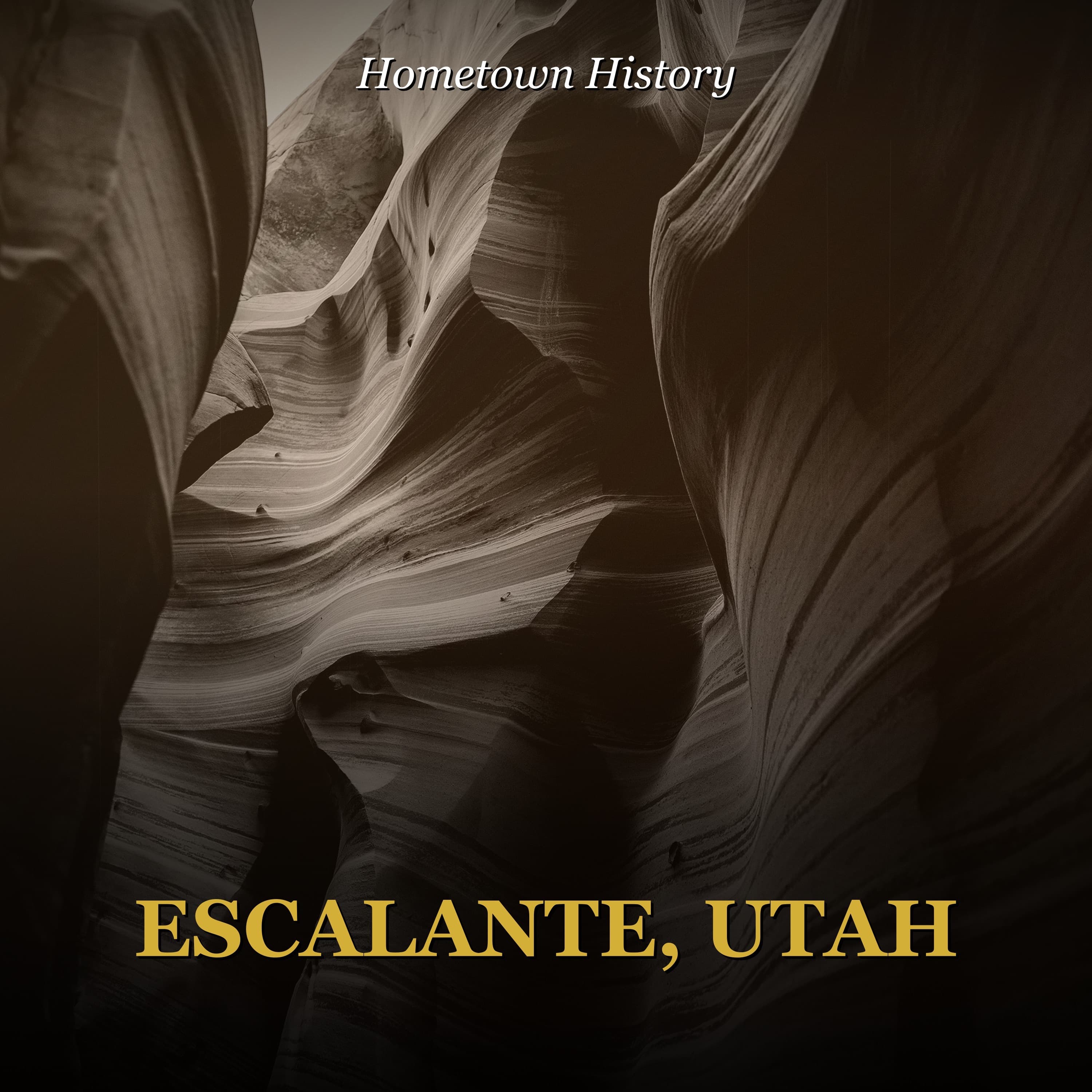
Forgotten stories from America's small towns.Hosted by Shane Waters20 min episode
Escalante, Utah: The Mysterious Disappearance of Everett Ruess
Show Notes
In mid-November 1934, a twenty-year-old artist named Everett Ruess led two burros into the canyon country south of Escalante, Utah. He carried journals, watercolors, and enough provisions for two months. He had spent four years wandering the desert Southwest alone, painting, writing letters that read like poetry, and meeting artists like Ansel Adams and Dorothea Lange along the way. He shared a last camp with two sheepherders, who offered him mutton; he said he had plenty. He never came back.
In March 1935, a search party found his two burros penned behind a brush fence, healthy in Davis Gulch, a side canyon off the Escalante River. His camp was strangely incomplete: bedroll, cookware, paintings, and journals all missing. Carved into the rock wall above it was a single word and a year: NEMO 1934. Nemo is Latin for nobody. No body was ever found, and no conclusive evidence of what happened has ever surfaced. The desert simply closed behind him. In the ninety years since, Everett Ruess has become the patron saint of wanderers, of people who felt the pull of wild country so strongly they followed it past the point of return. His fate remains one of the great unsolved mysteries of the American West.
Timeline of Events
March 28, 1914: Everett Ruess is born in Oakland, California, to Christopher and Stella Ruess.
Summer 1930: At sixteen he takes his first solo wilderness trip in the Sierra Nevada and comes home changed.
1931 to 1934: He makes four extended solo journeys through the desert Southwest and meets Edward Weston, Dorothea Lange, Ansel Adams, and Maynard Dixon.
Mid-November 1934: He writes his last letter to his brother Waldo from Escalante, Utah, telling him he has not tired of the wilderness.
Mid-November 1934: A sheepherder is the last person to see him, heading into canyon country east of Escalante.
March 1935: A search party finds the burros, the camping gear, and NEMO 1934 carved in Davis Gulch. Everett is declared lost and presumed dead.
2009: DNA testing of remains found at Comb Ridge proves they are not Everett Ruess.
Historical Significance
Everett Ruess occupies a singular place in the literature and mythology of the American West. His letters and journals, published after his disappearance in On Desert Trails in 1940, influenced a generation of wilderness writers including Edward Abbey, Wallace Stegner, and Jon Krakauer. The NEMO inscription in Davis Gulch became an icon of the vanishing impulse, the idea that a person could walk into wild country and become part of it. The 2009 DNA investigation, which proved the bones found at Comb Ridge were not his, brought national attention back to the case and confirmed the mystery is still open. Davis Gulch itself was flooded by Lake Powell after Glen Canyon Dam was completed in 1963. The ground where Everett was last seen no longer exists above water.
Sources
Ruess family letters, published in On Desert Trails, 1940
David Roberts, Finding Everett Ruess, 2011
Armed Forces DNA Identification Laboratory findings, 2009
If you liked this: Episode 185, Taos, New Mexico. Another Southwest mystery where the desert kept the answer.
Hometown History explores forgotten stories from small-town America. The overlooked events, hidden triumphs, and buried tragedies that shaped the country we live in. New episodes every Tuesday. Find every episode at mythsandmalice.com/hometown-history
Episode 208 | Hometown History | Hosted by Shane Waters
Advertising Inquiries: https://redcircle.com/brands
Privacy & Opt-Out: https://redcircle.com/privacy
Credits
Shane Waters, Founder & Host
Produced by Myths & Malice
Listen to Hometown History
Get More from Hometown History
Unlock exclusive content and support the show.
- Ad-free listening
- Early access to episodes
- Bonus episodes
- Support independent podcasting
the M&M Dispatch
Get new Hometown History episodes and the stories behind the towns we visit.
Enjoying Hometown History?
Leave a rating on Apple Podcasts. It takes a few seconds and helps new listeners find the show.