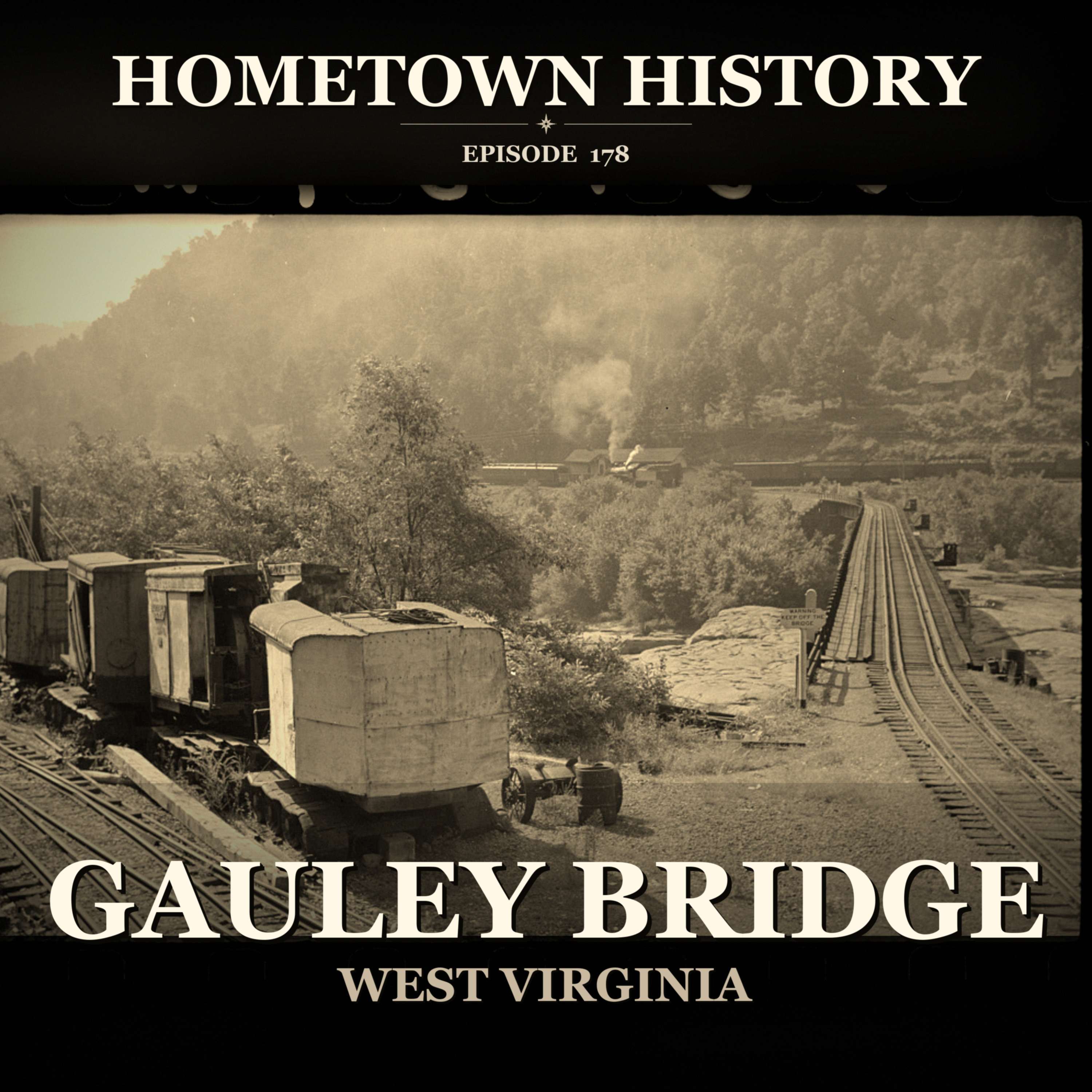
0:05 [SPEAKER_00]: It's 1931. 0:06 [SPEAKER_00]: Do we fly at 17 years old when he steps off the train in Gauly Bridge, West Virginia? 0:14 [SPEAKER_00]: He came from North Carolina, one way ticket in hand, a promise, send home money. 0:24 [SPEAKER_00]: His parents and five younger siblings are counting on him. 0:27 [SPEAKER_00]: It's the worst year of the great depression. 0:35 [SPEAKER_00]: The Tunnel Project in West Virginia, it's paying work, it's hope. 0:41 [SPEAKER_00]: Two weeks later, Dui is dead. 0:46 [SPEAKER_00]: His lungs filled with white silica dust, so pure it turned them to stone. 0:53 [SPEAKER_00]: The death certificate says pneumonia, it's a lie. 0:58 [SPEAKER_00]: They buried his body in a mass grave under cover of darkness. 1:03 [SPEAKER_00]: want about at least 169 workers dumped into trenches like cordwood. 1:10 [SPEAKER_00]: His family back in North Carolina thinks he ran away. 1:15 [SPEAKER_00]: For 88 years, they believed do we abandon them? 1:20 [SPEAKER_00]: Then NPR finally locates his knees. 1:23 [SPEAKER_00]: Sheila Flack Jones in 2019, she weaps. 1:29 [SPEAKER_00]: She says, I'm heartbroken that my family died, thinking that he ran away, and they never knew the real truth. 1:38 [SPEAKER_00]: Welcome back friend to hometown history. 1:42 [SPEAKER_00]: I'm Shane Waters. 1:44 [SPEAKER_00]: Doeie was one of the approximately 764 workers who died at Hawks Nest, most of them were black migrants fleeing unemployment in the segregated south. 1:57 [SPEAKER_00]: A congressional investigation called the conditions hardly conceivable in a democratic government in the present century. 2:06 [SPEAKER_00]: It would be more representative of the Middle Ages. 2:10 [SPEAKER_00]: The company Paymaster had said it plainly. 2:14 [SPEAKER_00]: I knew they was going to kill them within five years, but I didn't know they was going to kill them so quick. 2:22 [SPEAKER_00]: This is the story of Hawks Nest Tunnel Disaster, America's worst industrial catastrophe deliberately buried for generations. 2:33 [SPEAKER_00]: Tonight we're bringing it back to light. 2:36 [SPEAKER_00]: Golly Bridge is in Fayette County, West Virginia. 2:40 [SPEAKER_00]: The town sits where the Golly River meets the Conno-Wall River. 2:45 [SPEAKER_00]: Population in 1927, fewer than 1,000 people. 2:50 [SPEAKER_00]: That year, Union Carbide, one of America's largest chemical companies, creates a subsidiary called New Conno-Wall Power Company. 3:00 [SPEAKER_00]: their plan, drill a three-mile tunnel through Golly Mountain to divert the river and generate hydroelectric power. 3:10 [SPEAKER_00]: But here's what makes this project different. 3:13 [SPEAKER_00]: Core samples show the sandstone is 99% pure silica, a valuable commodity for union carbides manufacturing process. 3:24 [SPEAKER_00]: They're not just building a power plant. 3:27 [SPEAKER_00]: They're mining a fortune in silica, while the tunnel gets dug. 3:33 [SPEAKER_00]: Two projects for the price of one. 3:37 [SPEAKER_00]: Union carbide, hires, rine heart, and Dennis company, a contractor from Charlottesville, Virginia. 3:45 [SPEAKER_00]: Official groundbreaking happens March 31, 1930, just six months after the stock market crash. 3:55 [SPEAKER_00]: To understand what happens next, you need to know what the Great Depression did to America. 4:01 [SPEAKER_00]: block unemployment in the south is double or triple white rates. 4:07 [SPEAKER_00]: In northern cities it hits 50 to 60 percent. 4:11 [SPEAKER_00]: The congressional report later captures it perfectly. 4:15 [SPEAKER_00]: Workers were driven by despair in the stark fear of hunger to work for a mere existence wage. 4:23 [SPEAKER_00]: When ride heart and dentist, send recruiters through Virginia, North Carolina, and the Deep South, promising work on a tonal project, men come, 3,000 workers make the journey. 4:38 [SPEAKER_00]: Three quarters of them are black. 4:41 [SPEAKER_00]: They come with one way train tickets and letters to send money home. 4:47 [SPEAKER_00]: They come because their families are hungry. 4:49 [SPEAKER_00]: Any parent would understand that desperation. 4:55 [SPEAKER_00]: What they find in Golly Bridge isn't hope. 4:59 [SPEAKER_00]: It's hell with a paycheck. 5:02 [SPEAKER_00]: The company houses workers and segregate a camps in nearby Veneta. 5:07 [SPEAKER_00]: Black workers sleep 12 to a room and 8 by 10 foot box cars. 5:12 [SPEAKER_00]: White workers get 4 to a room and better housing. 5:17 [SPEAKER_00]: pay starts at 40 cents an hour, then it drops to 25 cents. 5:23 [SPEAKER_00]: Black workers are paid in company's grip, only redeemable at company stores, white workers get cash, picture yourself in one of these box cars, 12 men, 8 by 10 feet, that's smaller than most bathrooms. 5:42 [SPEAKER_00]: You're sleeping in shifts because there's no room for everyone to lie down at once. 5:48 [SPEAKER_00]: The walls wet, condensation, the air is thick with body odor and carousene fumes. 5:56 [SPEAKER_00]: This is home. 5:59 [SPEAKER_00]: The men work 10 to 15 hour shifts, six days a week. 6:04 [SPEAKER_00]: They need to advance 250 to 300 feet per week. 6:10 [SPEAKER_00]: It's brutal pace, but they're steady work, and that's more than most of America has in 1931. 6:19 [SPEAKER_00]: Then the drilling starts. 6:23 [SPEAKER_00]: The tunnel cuts through 99% pure silica. 6:28 [SPEAKER_00]: The contractors use dry drilling methods, no water to keep down the dust. 6:34 [SPEAKER_00]: Imagine being inside that tunnel, you're drilling through the crystalline quartz, and every strike releases microscopic particles of silica into the air. 6:46 [SPEAKER_00]: The dust is so thick, workers later testify. 6:50 [SPEAKER_00]: They could not see an electric light 10 feet away. 6:53 [SPEAKER_00]: One survivor says you could practically chew the dust. 6:58 [SPEAKER_00]: Medical journals, documented cellicosis by 1910. 7:03 [SPEAKER_00]: The federal Bureau of Minds had issued warnings. 7:07 [SPEAKER_00]: There's no mystery here. 7:10 [SPEAKER_00]: The companies know exactly what they're doing. 7:14 [SPEAKER_00]: But by early 1931, just months after work begins, dozens of men are dying. 7:22 [SPEAKER_00]: Workers emerge from the tunnel covered in white dust, ghostly pale, stumbling, gauly bridge earns a nickname, the town of the living dead. 7:35 [SPEAKER_00]: In February 1931, the local Fayette Tribune reports a great deal of comment regarding the unusually large number of deaths among the collared laborers, deaths totaled around 37 in the past two weeks, a local judge issues a gag order, the story disappears, but the dying doesn't stop. 8:02 [SPEAKER_00]: The silica particles are crystallizing in their lungs, every breath is drowning in sand. 8:10 [SPEAKER_00]: The tissue hardens, the lungs turn to stone. 8:15 [SPEAKER_00]: Death comes slowly, over weeks or months, suffocating, exhausted, unable to breathe. 8:24 [SPEAKER_00]: Men are literally drowning in their own hardened lungs. 8:30 [SPEAKER_00]: When workers start collapsing in the tunnel, Ryan Hart and Dennis fires them. 8:36 [SPEAKER_00]: No severance, no medical care. 8:39 [SPEAKER_00]: Men too sick to work are simply dismissed. 8:43 [SPEAKER_00]: Many die before they can leave town. 8:45 [SPEAKER_00]: Some make it home and die there. 8:49 [SPEAKER_00]: Be wildered families watch strong men, waste away and weeks. 8:55 [SPEAKER_00]: The company hires a local undertaker named FM Faulkner. 9:01 [SPEAKER_00]: He's paid $55 per body, but not to provide proper burials. 9:07 [SPEAKER_00]: His job is disposal. 9:09 [SPEAKER_00]: He buries workers and mass graves. 9:12 [SPEAKER_00]: Three pits, crude trenches, body stacked like cordwood. 9:18 [SPEAKER_00]: Sometimes, in wooden crates, often just wrapped in cloth or burlap, most graves are unmarked. 9:28 [SPEAKER_00]: At night, under cover of darkness, they bury the bodies, 169 workers that we know of, end up in these mass graves. 9:39 [SPEAKER_00]: The actual number is almost certainly higher. 9:44 [SPEAKER_00]: Many men simply disappeared into the Appalachian soil without record. 9:51 [SPEAKER_00]: The death certificates lie, pneumonia, tuberculosis, acute bronchitis, anything but silicosis, anything to avoid questions, anything to keep the project moving forward. 10:08 [SPEAKER_00]: back home, families wait for letters that never come. 10:13 [SPEAKER_00]: They wait for money that never arrives. 10:16 [SPEAKER_00]: They don't know their sons, fathers, brothers, or dead. 10:22 [SPEAKER_00]: They think they've been abandoned. 10:26 [SPEAKER_00]: In May 1931, barely a year into construction, a doctor named Leonidas Harlus, 10:39 [SPEAKER_00]: He recognizes Cylicosis immediately. 10:42 [SPEAKER_00]: The death rate is catastrophic. 10:47 [SPEAKER_00]: He writes to Union Carbides' main office detailing the conditions. 10:52 [SPEAKER_00]: Union Carbide ignores him. 10:56 [SPEAKER_00]: Dr. Harlus writes to the State Health Department, he contacts the contractor, he tries everything he can within the system to stop the deaths. 11:08 [SPEAKER_00]: No one listens, the tunnel keeps drilling, men keep dying. 11:16 [SPEAKER_00]: The tunnel is completed September 1931, 18 months of construction. 11:23 [SPEAKER_00]: Three miles long, hundreds of millions of dollars of silica extracted. 11:30 [SPEAKER_00]: Approximately 764 men dead. 11:35 [SPEAKER_00]: Union Carbide and Ryan Harden Dennis walk away with their profits. 11:40 [SPEAKER_00]: The dying continues for years. 11:43 [SPEAKER_00]: Silicosis has a long tail. 11:47 [SPEAKER_00]: Men who worked in that tunnel keep dying through the 1930s and into the 1940s. 11:53 [SPEAKER_00]: Eventually, families start asking questions. 11:58 [SPEAKER_00]: By the mid-1930s, hundreds of lawsuits begin appearing in the West Virginia courts. 12:05 [SPEAKER_00]: Survivors and families file claims against Union Carbide and Ride Hard and Dennis. 12:12 [SPEAKER_00]: The numbers are staggering, 476 official death certificates for Silicosis. 12:24 [SPEAKER_00]: the companies fight every case. 12:27 [SPEAKER_00]: They drag proceedings out. 12:30 [SPEAKER_00]: They wear families down. 12:32 [SPEAKER_00]: They settle when they settle it all. 12:35 [SPEAKER_00]: For pitens is $130,000. 12:40 [SPEAKER_00]: Total distributed across hundreds of claims. 12:44 [SPEAKER_00]: Most families get nothing. 12:48 [SPEAKER_00]: But one case goes to trial. 12:53 [SPEAKER_00]: A Conno-Walk County jury hears the evidence, the dry drilling, the deaths, the mass graves, the falsified death certificates, and 1936 they were turning verdict, 344,000 dollars. 13:12 [SPEAKER_00]: It's the largest silicosis verdict in American history. 13:17 [SPEAKER_00]: For one brief moment, it looks like accountability might happen. 13:23 [SPEAKER_00]: Then the West Virginia Supreme Court throws it out, statute of limitations. 13:31 [SPEAKER_00]: The companies had deliberately delayed the trial until they could use time against the plaintiffs. 13:39 [SPEAKER_00]: the verdict disappears. 13:42 [SPEAKER_00]: That kills the momentum. 13:44 [SPEAKER_00]: Most other cases settle for almost nothing or get dismissed. 13:50 [SPEAKER_00]: The company's pay less than $1,000 per death on average. 13:55 [SPEAKER_00]: For men who died, building their fortune. 14:00 [SPEAKER_00]: While lawmakers debate, a freshman congressman from East Harlem gets involved. 14:06 [SPEAKER_00]: Vito Markentonio, he's young, progressive, known for taking on corporate power. 14:13 [SPEAKER_00]: He hears about Hock's Nest and demands a congressional investigation. 14:20 [SPEAKER_00]: January 1936, the House Committee on Labor begins hearings 14:27 [SPEAKER_00]: survivors testify, doctors testify, families testify, the undertaker testifies about the mass graves. 14:39 [SPEAKER_00]: Documentary evidence piles up, the dry drilling methods, the death certificates, the company 14:51 [SPEAKER_00]: The committee's report is devastating. 14:55 [SPEAKER_00]: They call the conditions hardly conceivable in a democratic government in the present century. 15:02 [SPEAKER_00]: It would be more representative of the Middle Ages. 15:05 [SPEAKER_00]: They document 476 deaths officially attributed to Selyosis, and acknowledge the real number is almost certainly higher. 15:16 [SPEAKER_00]: The congressional investigation exposes everything. 15:20 [SPEAKER_00]: The truth is finally in the official record. 15:24 [SPEAKER_00]: For the first time, the full scope of the disaster is documented at the federal level. 15:31 [SPEAKER_00]: Nothing changes. 15:32 [SPEAKER_00]: No criminal charges are filed. 15:36 [SPEAKER_00]: no executives go to prison. 15:40 [SPEAKER_00]: Union Carbide continues operating. 15:43 [SPEAKER_00]: Rineheart and Dennis continues taking contracts. 15:47 [SPEAKER_00]: The federal government passes no new workplace safety laws specific to silica exposure. 15:54 [SPEAKER_00]: The congressional report becomes a historical document. 15:59 [SPEAKER_00]: The deaths remain unpunished. 16:08 [SPEAKER_00]: the mass graves are main unmarked. 16:11 [SPEAKER_00]: Families believed they're missing men, abandoned them. 16:16 [SPEAKER_00]: The disaster fades from public consciousness. 16:20 [SPEAKER_00]: Then in the early 2000s, historians began excavating the story. 16:26 [SPEAKER_00]: West Virginia researcher Patricia Spangler, locate survivors and family members, 16:34 [SPEAKER_00]: genealogists, trace descendants. 16:37 [SPEAKER_00]: NPR produces investigations in 2019 that finally reached Dewey Flax family. 16:45 [SPEAKER_00]: When Sheila Flax Jones, Dewey's niece, learns the truth 88 years later, she says that she's heartbroken that her family died thinking he ran away. 16:56 [SPEAKER_00]: And they never knew the truth. 17:00 [SPEAKER_00]: She wanted to make sure people knew his name and knew what happened to him. 17:06 [SPEAKER_00]: September 7, 2012, a historical marker is finally dedicated at Hawks Nest. 17:14 [SPEAKER_00]: It reads, this tunnel was built to produce hydroelectric power. 17:19 [SPEAKER_00]: The work was done in dangerous conditions that caused acute sillyosis and the death of many workers. 17:26 [SPEAKER_00]: In 2015, the West Virginia Division of Culture and History begins formally documenting the mass burial sites, researchers work to identify victims and notify families. 17:41 [SPEAKER_00]: It's not justice, 764 men died building a tunnel for profit and their deaths were deliberately hidden. 17:52 [SPEAKER_00]: no one was ever held accountable in any meaningful way, but at least now, we remember them. 18:02 [SPEAKER_00]: Do we flagged with 17 years old? 18:05 [SPEAKER_00]: He came from North Carolina with a one-way ticket in hand. 18:10 [SPEAKER_00]: A promise to send money home. 18:13 [SPEAKER_00]: Five younger siblings counting on him. 18:16 [SPEAKER_00]: He died two weeks after arriving in Gauly Bridge. 18:20 [SPEAKER_00]: His family thought he abandoned them for 88 years. 18:25 [SPEAKER_00]: 764 men died and hawks nest tunnel. 18:31 [SPEAKER_00]: Most were black immigrants fleeing depression era unemployment. 18:35 [SPEAKER_00]: They came because their families were hungry. 18:39 [SPEAKER_00]: They died because companies valued profit over human life. 18:44 [SPEAKER_00]: They were buried in mass graves, their deaths falsified. 18:54 [SPEAKER_00]: This is America's deadliest industrial disaster. 18:58 [SPEAKER_00]: It happened in Gauly Bridge, West Virginia. 19:02 [SPEAKER_00]: For generations, no one remembered. 19:05 [SPEAKER_00]: Now, we do. 19:09 [SPEAKER_00]: I'm Shane Waters. 19:11 [SPEAKER_00]: Every hometown has a story. 19:13 [SPEAKER_00]: Tonight it's when American workers died for profit and the truth was buried with them. 19:21 [SPEAKER_00]: If you found this story important, share it with someone who should know it happened. 19:28 [SPEAKER_00]: Good night friend.
Show full transcript (191 segments)