How Charles Brush Illuminated a City and Changed America Forever
Show Notes
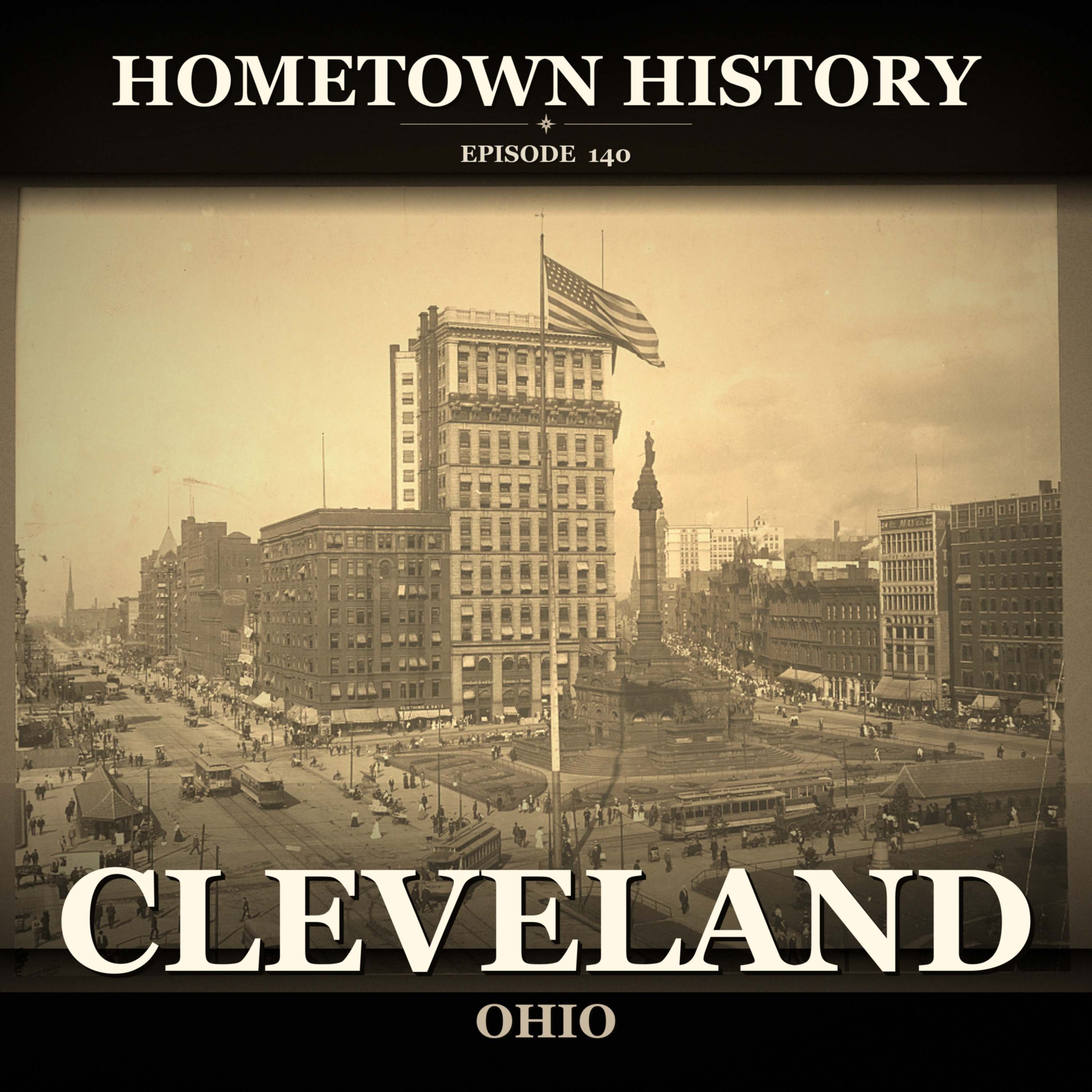
On April 29, 1879, Cleveland, Ohio became the first city in America to install public electric streetlights when Charles Brush's revolutionary arc lamps illuminated Monument Square. While Thomas Edison would later claim fame for the light bulb, it was Brush who first proved electricity could transform urban life. His 12 towering carbon arc lights—each burning with the intensity of 4,000 candles—turned night into day and sparked a revolution that would reshape cities worldwide.
But Brush's innovation went far beyond streetlights. This self-taught Ohio inventor pioneered the dynamo that made it all possible, built America's first wind turbine for home electricity, and demonstrated that one brilliant engineer with determination could illuminate the world. From Cleveland's Monument Square to cities across America and Europe, discover how Charles Brush's "first light" changed everything. New episodes every Tuesday.
The Innovation
On an April evening in 1879, Cleveland's Monument Square transformed from gas-lit gloom to brilliant electric daylight when 12 massive carbon arc lamps flickered to life. Charles Brush's system—powered by a dynamo of his own design—produced light equivalent to 48,000 candles, stunning
the 10,000 spectators who gathered to witness history.
The Inventor
Charles Francis Brush (1849-1929) wasn't your typical inventor:
- Self-taught engineer who built his first electrical device at age 12
- Pioneered the arc light technology that preceded Edison's incandescent bulb
- Designed the dynamo (electrical generator) that made large-scale electric lighting possible
- Built America's first wind turbine for residential electricity (1888)
- Held over 50 patents in his lifetime
Why It Mattered
Before Brush's system, American cities relied on dangerous gas lamps that:
- Required nightly lighting by lamplighters
- Produced dim, flickering light
- Created fire hazards
- Limited urban activity after dark
Brush's arc lights were so bright that Cleveland residents initially complained they couldn't sleep. The system proved electricity's commercial viability and triggered a lighting revolution across America.
The Technology
Arc Lighting Explained:
- Created light by passing electric current between two carbon rods
- Produced intense, bluish-white light (unlike Edison's warmer incandescent glow)
- Required Brush's innovative dynamo to generate sufficient power
- Each light needed daily maintenance to replace consumed carbon rods
Why Arc Lights Came First:
- Technically simpler than incandescent bulbs
- Bright enough for outdoor street lighting
- Didn't require Edison's breakthrough in creating a long-lasting filament
- Better suited for large public spaces than individual homes
The Competition
While Brush was lighting cities, Thomas Edison was developing the incandescent bulb:
- 1879: Brush lights Cleveland streets
- October 1879: Edison perfects practical incandescent bulb
- 1880s: Both systems coexist—arc lights outdoors, incandescent bulbs indoors
- Eventually: Edison's gentler indoor lighting wins for homes and businesses
The Legacy
Cleveland's Electrical Firsts:
- First US city with public electric streetlights (1879)
- Brush's company became a major electrical supplier
- Cleveland established itself as an electrical innovation hub
- The Monument Square demonstration proved commercial electricity's viability
Brush's Later Achievements:
- Built 60-foot wind turbine at his Cleveland mansion (1888)—America's first
- Generated electricity for his home for 20 years using wind power
- Continued inventing in storage batteries and other electrical systems
- Died in 1929 having witnessed electricity transform American life
Key Timeline
- 1849: Charles Brush born in Euclid Township, Ohio
- 1869: Graduates from University of Michigan with engineering degree
- 1876: Begins developing arc light system and dynamo
- 1879: Cleveland becomes first American city with electric streetlights
- 1880s: Brush's company lights streets in New York, Boston, Philadelphia, San Francisco
- 1888: Builds America's first residential wind turbine
- 1929: Brush dies in Cleveland
Sources Consulted
- Cleveland Historical Society - Archives on Charles Brush and city electrical history
- IEEE History Center - Technical documentation of Brush arc lighting system
- Case Western Reserve University Special Collections - Brush family papers
- The Electric Century by Thomas P. Hughes (Smithsonian Institution Press)
- Contemporary newspaper accounts from Cleveland Plain Dealer (1879)
- US Patent Office - Brush's arc light and dynamo patents
- Ohio Historical Society records
- American Inventor, American Icon: Charles F. Brush by Karen A. Schimke
- Technical specifications from Brush Electric Company records
- Western Reserve Historical Society photographic archives
The Modern Connection
Today, LED streetlights have replaced both arc lights and incandescent bulbs, but Brush's Monument Square demonstration site remains a Cleveland landmark. The principles he pioneered—centralized power generation and electrical distribution—still power our cities. And his 1888 wind turbine? It was generating clean energy a century before climate change made renewable power urgent.
Visit the Site: Monument Square (now Public Square) in downtown Cleveland commemorates the spot where American cities first saw electric light. The Western Reserve Historical Society maintains Brush's Cleveland mansion, "The Lighthouse," though the original wind turbine is no longer standing.
Support this podcast at — https://redcircle.com/hometownhistory/exclusive-content
Advertising Inquiries: https://redcircle.com/brands
Privacy & Opt-Out: https://redcircle.com/privacy
Credits
Shane Waters — Founder & Host
Produced by Myths & Malice