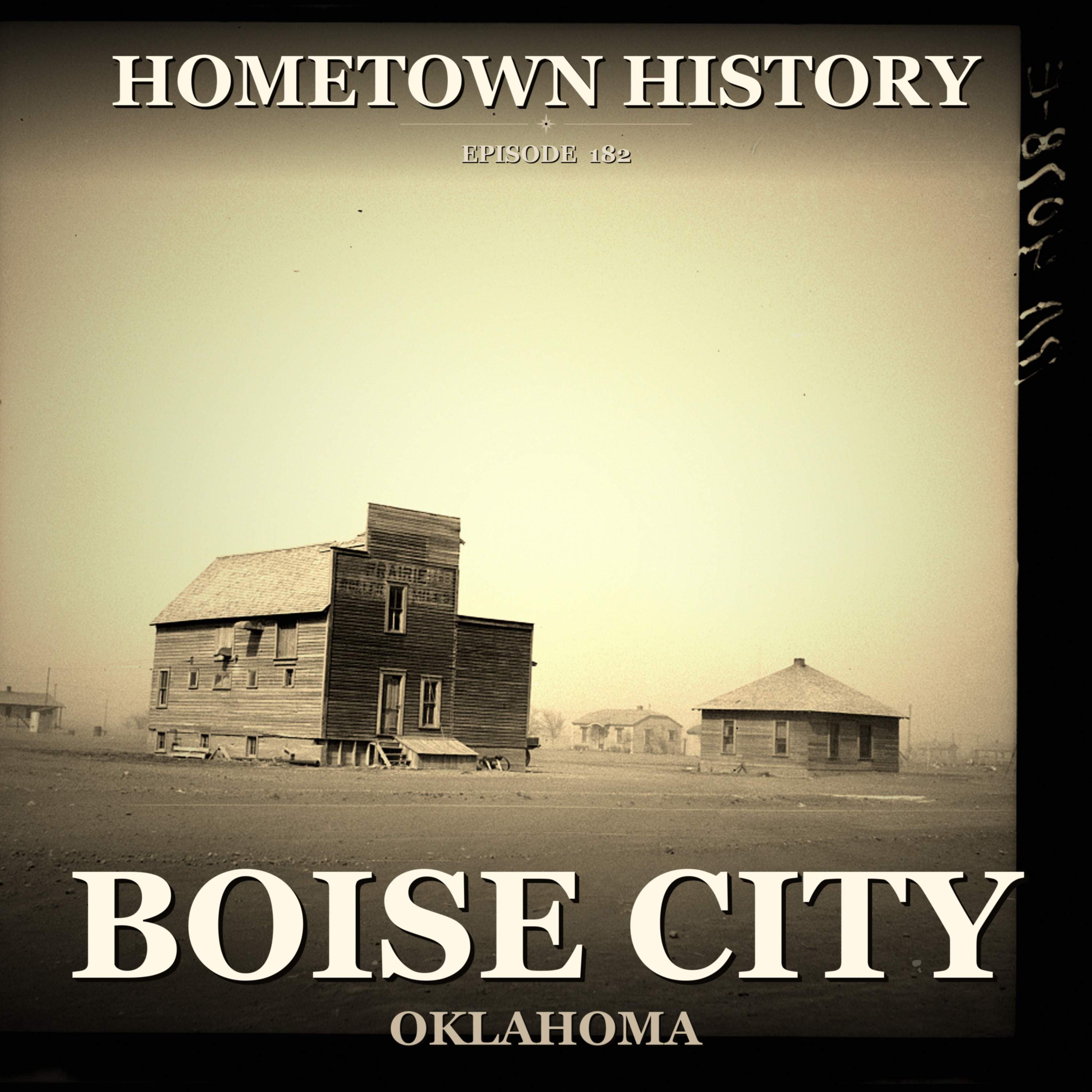
0:00 [SPEAKER_00]: It's just past midnight, on July 5, 1943, in Boise City, Oklahoma. 0:08 [SPEAKER_00]: Enforced Bork is sound asleep above his post office on the courthouse square, when the explosion hits. 0:17 [SPEAKER_00]: The whole building shakes. 0:20 [SPEAKER_00]: Bork jolt to wake, thinking one thing, someone's cracking the safe downstairs. 0:27 [SPEAKER_00]: He creeps to his window in the dark, and there's already a group of men in the alley, staring at his garage across the way. 0:38 [SPEAKER_00]: the doors have been blown clean open. 0:41 [SPEAKER_00]: There's a crater in the dirt three and a half feet deep. 0:46 [SPEAKER_00]: Then it happens again. 0:47 [SPEAKER_00]: Another whistle, another explosion. 0:52 [SPEAKER_00]: This time near the white Baptist church. 0:55 [SPEAKER_00]: And for the next 30 minutes, six more 100 pound bombs are going to rain down on this tiny 1:07 [SPEAKER_00]: The enemy isn't Germany, it isn't Japan, it's us. 1:14 [SPEAKER_00]: welcome back friend to hometown history. 1:16 [SPEAKER_00]: The podcast that takes a stroll down the main streets and back alleys of the past, to uncover how local stories shaped the world. 1:26 [SPEAKER_00]: I'm Shane Waters. 1:28 [SPEAKER_00]: It today works exploring the Oklahoma Panhandle. 1:31 [SPEAKER_00]: For a story that sounds like it couldn't possibly be true, the night the United States military accidentally bombed one of its 1:42 [SPEAKER_00]: On the night of July 5, 1943, right in the middle of World War II, United States military forces accidentally bombed Boise City, Oklahoma. 1:55 [SPEAKER_00]: Six-100-pound bombs fell on this tiny panhandle town. 2:01 [SPEAKER_00]: By all accounts, it was the only time in American history. 2:05 [SPEAKER_00]: The cotton and toy United States was bombed by its own military. 2:10 [SPEAKER_00]: and somehow, miraculously, nobody died. 2:16 [SPEAKER_00]: To understand how something this bizarre could happen, we need to talk about what Boise's city was like in 1943, why the military was flying practice missions nearby, and what it felt like to be an ordinary citizen, waking up to explosions, running down from the sky. 2:40 [SPEAKER_00]: Now to understand how the United States military accidentally bombed one of its own towns during World War II. 2:48 [SPEAKER_00]: We need to go back a few months. 2:52 [SPEAKER_00]: Boise City, Oklahoma sits in Cimmer on County, the very tip of the Oklahoma Panhandle. 2:59 [SPEAKER_00]: And when I say Panhandle, I mean that narrow strip of land that jut's west of Oklahoma, 3:10 [SPEAKER_00]: By all accounts, it's some of the flattest, most isolated country, you'll find anywhere in America. 3:18 [SPEAKER_00]: In 1943, Boise City had roughly 1,200 residents. 3:24 [SPEAKER_00]: The whole town centered around a courthouse square, with a few streets radiating out. 3:31 [SPEAKER_00]: No traffic lights, one movie theater, 3:35 [SPEAKER_00]: the Liberty Cafe that advertised open day and night, which tells you something about how quiet, things normally were. 3:45 [SPEAKER_00]: Your world is wheat fields, cattle ranches, and sky that goes on forever. 3:52 [SPEAKER_00]: At night, when you turn out the lights, the darkness is absolute. 3:57 [SPEAKER_00]: No street lights beyond the courthouse square, no glow from nearby cities. 4:03 [SPEAKER_00]: Just stars. 4:05 [SPEAKER_00]: There's a reason this place was called No Man's Land for decades. 4:09 [SPEAKER_00]: It was literally unclaimed territory until Oklahoma Statehood in 1890. 4:15 [SPEAKER_00]: Nobody really wanted it too flat to remote, too harsh. 4:23 [SPEAKER_00]: But in 1943, that isolation was about to make Boise City extremely vulnerable. 4:33 [SPEAKER_00]: Now 45 miles south, something had changed. 4:38 [SPEAKER_00]: In spring of 1943, the U.S. Army established Dowhart Army Air Base just across the state line in Texas. 4:48 [SPEAKER_00]: The purpose was quite specific, training B-17 flying fortress crews bound for the European theater. 4:56 [SPEAKER_00]: These weren't veteran pilots, these were young men, most barely out of school, learning to fly four-engine bombers in formation, learning to navigate at night, learning to drop bombs on targets from 20,000 feet. 5:14 [SPEAKER_00]: It's believed that thousands of airmen cycled through deathheart during the war. 5:20 [SPEAKER_00]: So the military set up a practice bombing range at Conland, Texas, 5:26 [SPEAKER_00]: about 20 miles northeast of Dalhardt. 5:30 [SPEAKER_00]: Four corner lights, forming an X-Pattern marked the target. 5:35 [SPEAKER_00]: Cruise with fly at night, drop practice bombs, 100 pounds each, mostly sand with just enough explosive to make a flash so they could verify hits, then fly home. 5:54 [SPEAKER_00]: The local paper had announced it back in April. 5:57 [SPEAKER_00]: Most residents didn't think much about it. 6:01 [SPEAKER_00]: After all, the bombing range was 45 miles away. 6:04 [SPEAKER_00]: What could possibly go wrong? 6:09 [SPEAKER_00]: Here's where the pieces start falling into place. 6:13 [SPEAKER_00]: The Conland practice range was marked by four lights arranged in an ex-pattern, visible from thousands of feet up, simple enough, but there was a problem nobody anticipated. 6:26 [SPEAKER_00]: Boise City also had lights. 6:30 [SPEAKER_00]: Specifically the courthouse square had lights at its four corners, and from 10,000 feet 6:44 [SPEAKER_00]: Well, you can see where this is going. 6:48 [SPEAKER_00]: By all accounts, the navigators were trained to look for that expattern. 6:53 [SPEAKER_00]: They were told the range was approximately 45 miles northeast of base. 6:58 [SPEAKER_00]: Boise City was also approximately 45 miles from Dowhart, 7:07 [SPEAKER_00]: And on the night of July 4, 1943, while America celebrated Independence Day, a B-17 crew from Dowhart Army Air Base took off for what they thought would be a routine night training exercise. 7:24 [SPEAKER_00]: They had no idea they were about to bomb their own country. 7:34 [SPEAKER_00]: The B-17 approaches from the south, flying at roughly 10,000 feet. 7:40 [SPEAKER_00]: The bomba deer pierced through his sight, looking for the target. 7:45 [SPEAKER_00]: Below, he sees exactly what he expects. 7:49 [SPEAKER_00]: Four lights arranged in a pattern, surrounded by absolute darkness. 7:55 [SPEAKER_00]: What he doesn't see, can't see from that altitude, 8:03 [SPEAKER_00]: that those are streets between them. 8:06 [SPEAKER_00]: That there are people asleep in their beds, just yards from where he's about to drop his payload. 8:12 [SPEAKER_00]: The first bomb whistles down through the darkness. 8:17 [SPEAKER_00]: It strikes near Forest Burke's garage, just off the courthouse square. 8:23 [SPEAKER_00]: The explosion isn't massive. 8:26 [SPEAKER_00]: These are practice bombs, remember, mostly sand, but it's loud enough to shake every building on the block. 8:34 [SPEAKER_00]: Windows Rattle. 8:36 [SPEAKER_00]: Dogs start barking, and people start waking up. 8:43 [SPEAKER_00]: Over the next 30 minutes, the B-17 made multiple passes over Boise City. 8:49 [SPEAKER_00]: Six-100-pound practice bombs fell on this tiny Oklahoma town. 8:56 [SPEAKER_00]: Your sleep in your bed is the middle of the night. 9:00 [SPEAKER_00]: Suddenly there's an explosion outside your window. 9:03 [SPEAKER_00]: Then another. 9:05 [SPEAKER_00]: Then you hear the drone of aircraft engines overhead, and you realize the bombs are still falling. 9:13 [SPEAKER_00]: Remember, this is July 1943, America is at war. 9:19 [SPEAKER_00]: Every newspaper, every radio broadcast, every news reel at the movies has been warning about the possibility of enemy attack. 9:29 [SPEAKER_00]: Pearl Harbor was less than two years ago, and now bombs are falling on your town. 9:43 [SPEAKER_00]: I knew they'd come eventually. 9:45 [SPEAKER_00]: She said, I just didn't think they'd find us way out here. 9:50 [SPEAKER_00]: She wasn't alone, across town people were grabbing their children, heading for sellers, trying to figure out what to do. 10:00 [SPEAKER_00]: Sheriff Joe Garrett jumped in his car and started driving toward the explosions, not knowing what he'd find. 10:09 [SPEAKER_00]: As Sheriff Garrett approached the courthouse square, he found something unexpected, 10:15 [SPEAKER_00]: There, embedded in the ground, near one of the impact sites, was a fragment of a bomb casing, and stamped on that fragment, clear a stay, where the words, U.S. Army. 10:30 [SPEAKER_00]: It wasn't the Japanese, it wasn't the Germans. 10:35 [SPEAKER_00]: The United States military had just bombed one of its own towns, 10:41 [SPEAKER_00]: Within hours, the phone lines between Boise's city and Dowhart Army airbase were burning up. 10:48 [SPEAKER_00]: Base commanders scrambled to figure out what had happened. 10:52 [SPEAKER_00]: The B-17 crew, who had returned to base thinking they'd completed a successful training run, were pulled aside for immediate questioning. 11:02 [SPEAKER_00]: The navigator, second lieutenant John M. Daily, realized the catastrophic error, almost immediately, when confronted with the reports. 11:13 [SPEAKER_00]: He'd navigated to the wrong set of lights. 11:17 [SPEAKER_00]: He guided his crew to bomb an American town. 11:23 [SPEAKER_00]: When the sun came up on July 5, 1943, the people of Boise City surveyed the damage 11:32 [SPEAKER_00]: By all accounts, it could have been so much worse. 11:36 [SPEAKER_00]: The bombs had struck a garage, a sidewalk near the Baptist church, a vacant lot, and several other locations around the courthouse square. 11:47 [SPEAKER_00]: Windows were shattered. 11:49 [SPEAKER_00]: A few buildings sustained structural damage. 11:53 [SPEAKER_00]: One bomb landed in a garden, leaving a crater, and nothing else. 11:59 [SPEAKER_00]: but nobody died. 12:01 [SPEAKER_00]: Nobody was even seriously injured. 12:04 [SPEAKER_00]: Consider the mathematics of this. 12:07 [SPEAKER_00]: Six bombs fell on a town of 1200 people in the middle of the night. 12:13 [SPEAKER_00]: The courthouse square, the heart of the community, took multiple hits. 12:20 [SPEAKER_00]: And somehow, miraculously, every single bomb landed in a spot where no one happened to be standing 12:30 [SPEAKER_00]: The U.S. Army's response was swift, and by all accounts, genuinely apathetic. 12:37 [SPEAKER_00]: Within days, Army representatives arrived in Boise City to assess the damage and arrange compensation. 12:45 [SPEAKER_00]: Every property owner who suffered damage was paid for repairs. 12:50 [SPEAKER_00]: The Army covered all costs without argument. 12:54 [SPEAKER_00]: The town didn't demand anyone's head. 12:57 [SPEAKER_00]: There were no calls for court marshals, no protests, no demands that the base be shut down. 13:05 [SPEAKER_00]: The boy's city news, the local paper, ran a headline that read, boy's city bombed that the coverage was surprisingly matter of fact. 13:16 [SPEAKER_00]: The war was on. 13:18 [SPEAKER_00]: Mistakes happen. 13:20 [SPEAKER_00]: The boys at Dow Heart were training to fight Hitler. 13:23 [SPEAKER_00]: What good would anger do? 13:27 [SPEAKER_00]: As for the B-17 crew, their fate was mixed. 13:32 [SPEAKER_00]: The navigator John M. Daily was removed from flight duty. 13:37 [SPEAKER_00]: His navigation error had nearly killed American citizens. 13:41 [SPEAKER_00]: That couldn't be ignored. 13:43 [SPEAKER_00]: His career as a combat navigator ended that morning in Boise City, but the rest of the crew continued training. 13:52 [SPEAKER_00]: They went on to fly combat missions over Europe. 13:56 [SPEAKER_00]: Some sources suggested they participated in bombing raids over Berlin. 14:05 [SPEAKER_00]: There's something both tragic and redemptive in that progression. 14:09 [SPEAKER_00]: A crew that accidentally bombed their own country went on to serve with distinction against the actual enemy. 14:18 [SPEAKER_00]: And then there's Jerry Shannon. 14:21 [SPEAKER_00]: Shannon was a young man, living in Boise City that night. 14:25 [SPEAKER_00]: He heard the explosions, ran outside with everyone else, and in the chaos found something in the rubble, a fragment of bomb casing. 14:36 [SPEAKER_00]: He kept it. 14:37 [SPEAKER_00]: For decades, Jerry Shannon held onto that piece of American military hardware that had fallen on his town. 14:45 [SPEAKER_00]: He didn't sell it, didn't throw it away, just kept it as a momento of the night his quiet little town became part of history. 14:55 [SPEAKER_00]: Years later, Shannon donated that fragment to the Semeron Heritage Center Museum, where it remains on display today, a tangible reminder of the strangest night in Boise City's history. 15:13 [SPEAKER_00]: So what do we take from this story today? 15:15 [SPEAKER_00]: On one level, it's absurd. 15:19 [SPEAKER_00]: The only time the Continental United States was bombed by its own military. 15:25 [SPEAKER_00]: And it happened because someone mistook courthouse lights for a practice range. 15:31 [SPEAKER_00]: It's the kind of historical footnote that makes you shake your head. 15:35 [SPEAKER_00]: But there's something more here. 15:38 [SPEAKER_00]: Think about the town's response. 15:40 [SPEAKER_00]: No lawsuits, no outrage, no demands for massive compensation or public hearings. 15:49 [SPEAKER_00]: Just fix our buildings, learn from this, and move on. 15:54 [SPEAKER_00]: In think about the crew, they made a terrible mistake, lives could have been lost. 16:01 [SPEAKER_00]: The navigator paid the price, his career into that morning. 16:06 [SPEAKER_00]: But the crew itself kept training, kept serving, and ultimately flew dangerous missions over Berlin when it truly mattered. 16:24 [SPEAKER_00]: We live in an era where every era becomes a scandal. 16:29 [SPEAKER_00]: Every accident demands someone be destroyed professionally and publicly. 16:35 [SPEAKER_00]: But Boise City in 1943 offers a different model. 16:40 [SPEAKER_00]: Ignorage the mistake, make it right, allow space for redemption. 16:52 [SPEAKER_00]: Sometimes accidents are just accidents. 16:57 [SPEAKER_00]: Sometimes systems fail, not because of malice or negligence, but because humans are imperfect and war is chaos. 17:08 [SPEAKER_00]: And sometimes the most remarkable response to catastrophe is simply grace. 17:16 [SPEAKER_00]: Today, boys' city is smaller than it was in 1943. 17:19 [SPEAKER_00]: The population hovers around 1200, same as it was that night. 17:27 [SPEAKER_00]: The courthouse square still stands. 17:30 [SPEAKER_00]: Some of the buildings that were damaged by those bombs are still there, repaired, and still in use. 17:37 [SPEAKER_00]: The Cimmer on Heritage Center Museum displays Jerry Shannon's bomb fragment, along with photographs from that night, and newspaper clippings documenting the investigation. 17:50 [SPEAKER_00]: Visitors can walk the streets and trace the bomb and pack sites. 17:54 [SPEAKER_00]: They're marked now with small historical markers. 17:59 [SPEAKER_00]: In every July 5th, there's a quiet remembrance. 18:03 [SPEAKER_00]: Nothing big, nothing fancy. 18:06 [SPEAKER_00]: Just folks acknowledging the night their town became part of an extraordinary story. 18:12 [SPEAKER_00]: The night America bombed itself. 18:15 [SPEAKER_00]: The night nobody died. 18:21 [SPEAKER_00]: Ellis Marie, one of the last living residents who remembered that night, passed away in 2021 at age 93. 18:30 [SPEAKER_00]: Before she died, she told a local reporter, I remember the explosions, I remember being frightened. 18:37 [SPEAKER_00]: But mostly, I remember the next morning, everyone checking on each other, making sure everyone was okay. 18:45 [SPEAKER_00]: That's what I remember most. 18:48 [SPEAKER_00]: community, resilience, waste. 18:54 [SPEAKER_00]: That's the story of Boise City, Oklahoma. 18:58 [SPEAKER_00]: The night America accidentally bombed itself, and nobody died. 19:02 [SPEAKER_00]: If you found this story as remarkable as I did, share it with someone who appreciates forgotten history and stories of ordinary communities facing extraordinary circumstances. 19:16 [SPEAKER_00]: I'm Shane Waters. 19:18 [SPEAKER_00]: Every hometown has a story. 19:20 [SPEAKER_00]: Tonight it's the night a small Oklahoma town. 19:24 [SPEAKER_00]: Show to America what grace under fire really means your night friend.
Show full transcript (181 segments)