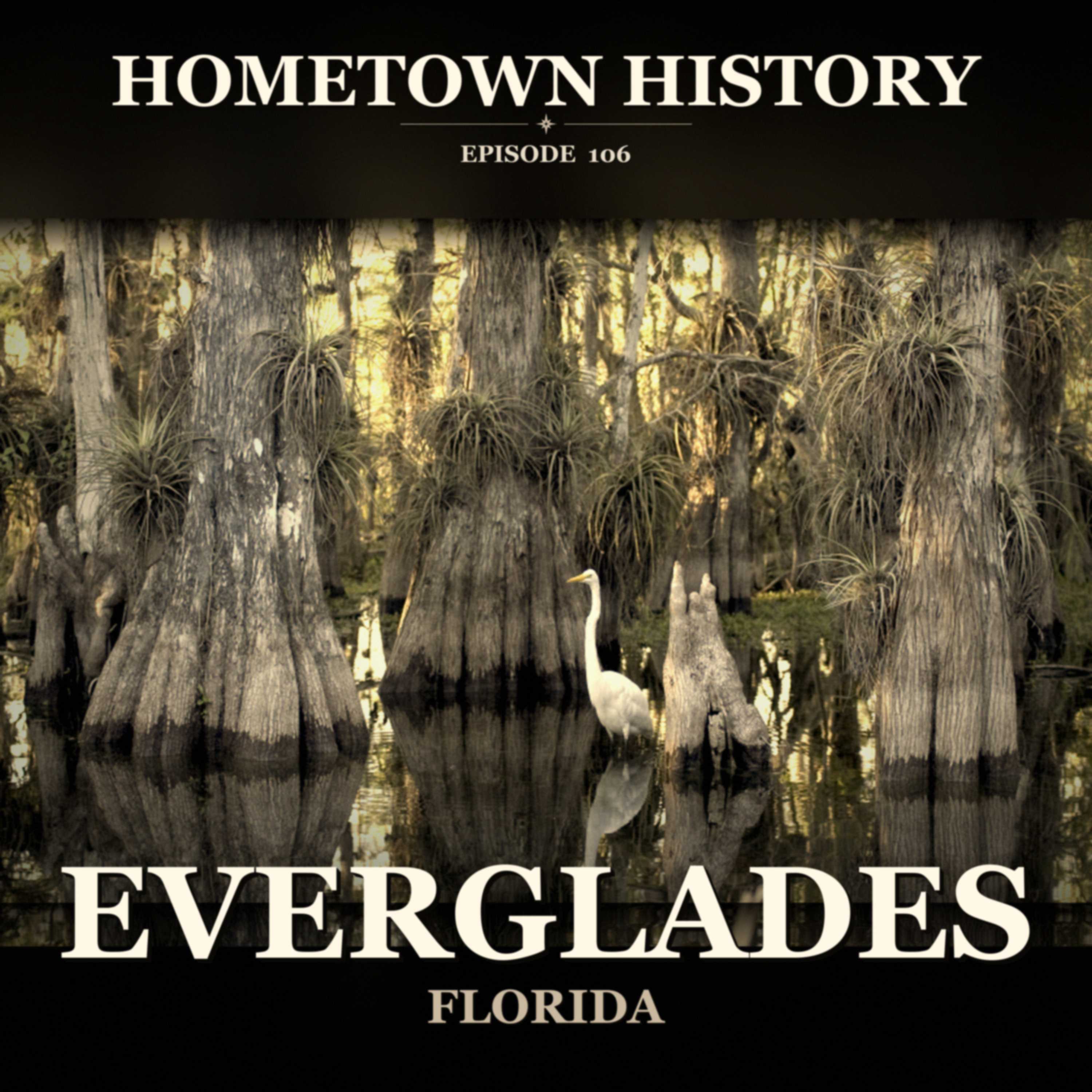
Florida's Unconquered: The Miccosukee Stand in the Everglades
Show Notes
In the heart of the Florida Everglades, one Native American tribe accomplished what no other could: they never surrendered. The Miccosukee people—specifically the Mika-Zuki band of the Seminole Nation—retreated deep into the swamps during the 1800s Seminole Wars and held their ground for over a century. While the U.S. government waged the longest and most expensive Indian wars in American history, the Miccosukee built a civilization in one of the harshest environments on earth.
In 1962, after decades of quiet resistance, the federal government finally recognized them as a sovereign domestic dependent nation—on their terms, not Washington's. Today, their chickee villages, clan systems, and cultural traditions survive as living testimony to an unconquered people. Join me as I visit the Miccosukee reservation, tour a traditional village with guide Troy Sanders, and discover how this remarkable tribe preserved their independence through ingenuity, resilience, and an intimate understanding of the Everglades themselves.
Subscribe to Hometown History for forgotten American stories every week. New episodes release Tuesdays. Every hometown has a story—what's yours?
Episode Overview
This episode takes listeners on a first-person journey through the Miccosukee (Mika-Zuki) reservation in the Florida Everglades, exploring the remarkable story of the only Native American tribe never to surrender to the United States government. Through guided tours of traditional chickee villages, demonstrations of cultural crafts, and conversations with tribal members, the episode reveals how the Miccosukee survived the brutal Seminole Wars and maintained their sovereignty into the modern era.
Key Historical Timeline
- 1800s-1858: Three Seminole Wars—the longest, most expensive Indian wars in U.S. history
- 1800s: Miccosukee people retreat deep into the Everglades, building settlements in the swamps
- 1920s-1930s: Tribe begins incorporating modern hardware into traditional construction
- 1950s: Traditional chickee villages still functioning as primary family residences
- 1962: U.S. government legally recognizes Miccosukee as sovereign domestic dependent nation
- Present Day: Tribe maintains cultural traditions, annual Green Corn Dance ceremony, and reservation tours
Key Cultural Elements
- Chickee Architecture: Open-sided structures with thatched palm roofs, designed to withstand hurricanes
- Cooking Chickee: Heart of family camp where eldest woman (head of household) makes major decisions
- Eating Chickee: Social center and gathering place for each family camp
- Sleeping Chickees: Private quarters with elevated platforms and mosquito netting
- Clan System: Bird Clan, Panther Clan, Otter Clan, Wind Clan, Big Town Clan, and others
- Green Corn Dance (Shibok Shigi): Annual week-long festival and traditional new year celebration
- Pothaky Ball Game: Rough-and-tumble competition between men and women using traditional equipment
Featured Guides and Craftsmen
- Troy Sanders: Tour guide, member of the tribe, great-nephew of Buffalo Tiger
- Leo Jim: Bird Clan woodcarver creating traditional toys, weapons, and tools
- Thomas: Bow and spear maker who learned traditional crafts from his elders
- Cara: Navajo silversmith who has worked with the tribe for 30 years
Cultural Traditions Explored
- Traditional Clothing: Men's turbans and long shirts, women's ground-length dresses with elaborate beadwork
- Patchwork Quilting: Intricate geometric designs incorporating symbols from nature (fire, animals, modern elements like telephone poles)
- Sweet Grass Baskets: Tightly woven containers taking three weeks to create
- Fiber Dolls: Traditional children's toys made from palm tree fibers
- Cypress Woodworking: Waterproof wood used for all construction and tool-making
The Seminole Wars Context
The three Seminole Wars (1817-1818, 1835-1842, 1855-1858) represent the United States government's failed attempt to forcibly relocate Florida's native peoples to western reservations. While many Seminoles were eventually forced west on the Trail of Tears, the Miccosukee band escaped deeper into the Everglades' impenetrable wetlands. Their knowledge of the swamp environment—including poisonous plants they could weaponize (like untreated Kuntah root) and navigation techniques through waist-deep water—made them virtually impossible to defeat militarily.
The wars were characterized by:
- Guerrilla warfare tactics favoring the Seminole defenders
- Extreme difficulty for U.S. Army troops navigating the swamp terrain
- Massive expense (over $40 million in 1800s dollars)
- The highest casualty rate of any U.S.-Indian conflict
Black Seminoles
During the 1800s, escaped slaves fled to Spanish Florida and integrated with Seminole communities, creating the Black Seminole faction. These individuals fought alongside the Seminole and Miccosukee during the wars and contributed to the cultural diversity of these resistant communities. Today, Black Seminole history is recognized as an important part of the tribe's narrative and the broader story of resistance against federal authority in the pre-Civil War South.
Traditional Survival Techniques
The episode highlights ingenious survival methods that enabled the Miccosukee to thrive in the Everglades:
- Fire Log Directional System: Four logs arranged around each cooking fire pointed in cardinal directions; moving a log indicated the direction a family fled during danger
- Poisonous Plant Defense: Leaving untreated Kuntah root (poisonous until properly processed) for raiders to steal and consume
- Hurricane-Resistant Architecture: Open-sided chickees with minimal breakable components that could withstand tropical storms
- Waterproof Cypress Construction: Using locally abundant cypress wood for its natural water resistance
- Solar Panel Scales: Alligators' back scales absorb solar energy, teaching the tribe about passive solar power long before modern technology
Modern Life and Cultural Preservation
Today, the Miccosukee Tribe maintains a delicate balance between preserving ancient traditions and participating in contemporary American life:
- Tribal members watch modern entertainment (Game of Thrones, Harry Potter) while maintaining fluency in Elapongi (Miccosukee language)
- Boys still learn to build chickees by age 12, often through school programs led by tribal elders
- The annual Green Corn Dance (Shibok Shigi) continues as a week-long, private tribal ceremony where boys receive adult names at age 12
- Traditional crafts are practiced and sold, with artisans like Leo Jim creating everything from children's toys to ceremonial weapons
- The reservation offers cultural tours to educate outsiders while maintaining sacred practices in private
Interesting Details
- Alligator Facts: Alligators are conscious breathers (every breath is a deliberate action), practice unihemispheric sleeping (one brain hemisphere asleep at a time), and are the loudest reptiles (reaching 90 decibels vs. humans' 60-70)
- Cypress Knees: Root protrusions that early travelers would stub their toes on while walking through waist-deep water
- Traditional Clothing Cost: A handmade traditional jacket with intricate patchwork can take one month to complete and costs approximately $500
- Game of Thrones Easter Eggs: Contemporary tribal craftsmen create carved wooden dragon eggs and Harry Potter wands for sale, showing cultural adaptation
- Matriarchal Society: The eldest woman in each family makes major decisions; inheritance and clan membership pass through the mother's line
Support this podcast at — https://redcircle.com/hometownhistory/exclusive-content
Advertising Inquiries: https://redcircle.com/brands
Privacy & Opt-Out: https://redcircle.com/privacy
Credits
Shane Waters — Founder & Host
Produced by Myths & Malice