Forgotten stories from America's small towns.Hosted by Shane Waters21 min episode
Frankfort, Kentucky: The Flood That Drowned the Capital | Hometown History
Show Notes
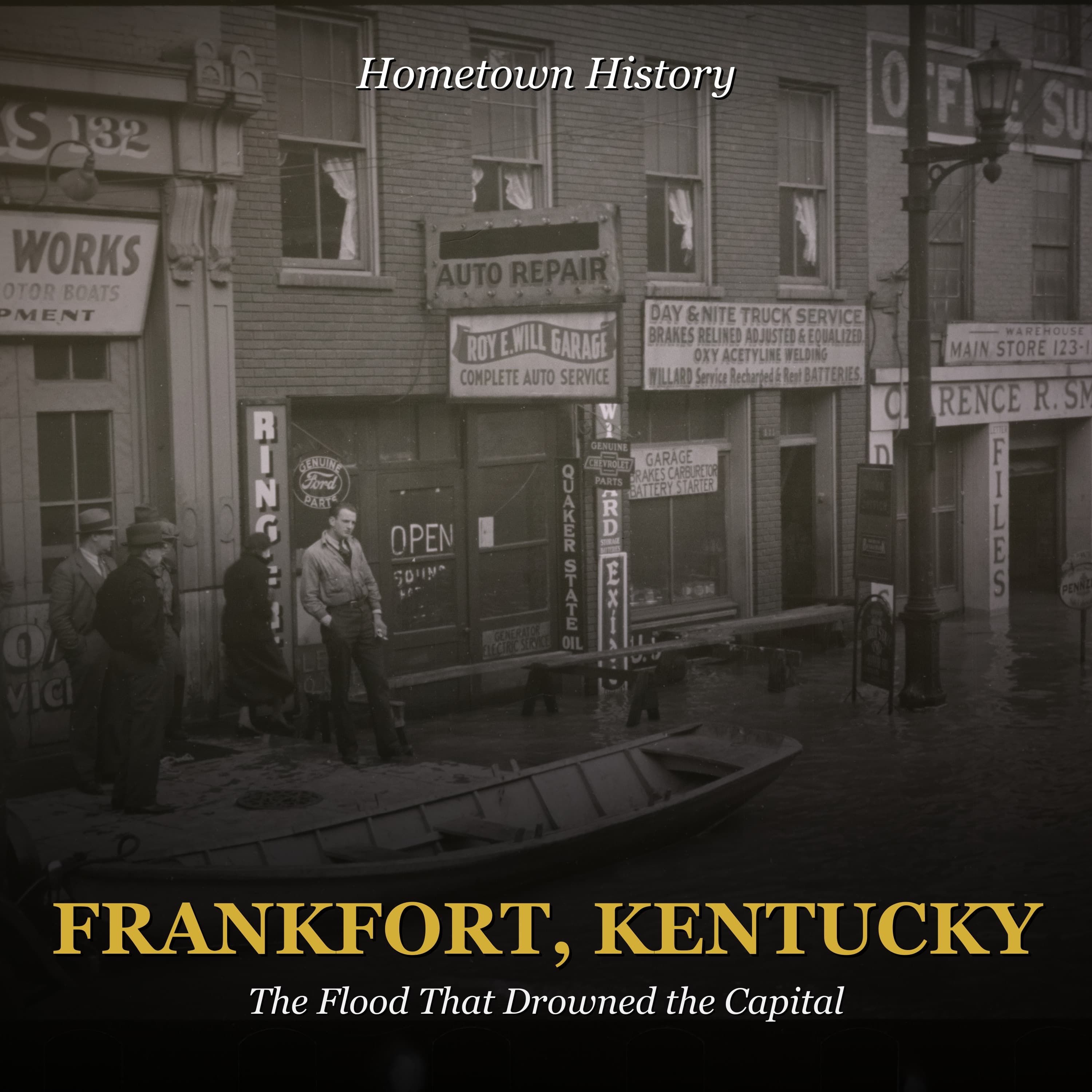
In January 1937, the Kentucky River swallowed its own capital city. Weeks of unrelenting rain pushed the
river to 47.46 feet, more than thirteen feet above flood stage, sending brown water through downtown
Frankfort and into the cellblocks of the Kentucky State Penitentiary. Inside those three-foot-thick stone
walls, 2,906 inmates were trapped as the water climbed the stairwells at two feet an hour. The guards
stayed. Governor A.B. "Happy" Chandler called President Roosevelt directly and ordered a 500-tent emergency
stockade thrown up on high ground.
The prison evacuation happened by boat, with National Guard troops ferrying prisoners in small groups to
a temporary prison that had no walls, only barbed wire and frozen ground. While that was happening, the
Singing Bridge, an iron Pennsylvania truss whose open steel grating deck had hummed under passing tires
since 1893, caught fire when a gas main beneath it exploded, throwing flames forty feet into the rain. The
flood's deepest wound landed somewhere else entirely. The Craw was a fifty-acre Black neighborhood in the
lowest part of the valley, and the families who had built lives there for generations evacuated with what
they could carry and watched the water take the rest.
Timeline of Events
Early January 1937: Weeks of continuous rain saturate the frozen Ohio River Valley and rivers across
Kentucky, Ohio, and Indiana begin rising.
January 21, 1937: The National Guard deploys to Frankfort and Governor Chandler personally directs the
flood response.
January 22, 1937: The Kentucky River crests at 48.45 feet, downtown Frankfort goes under, and the prison
begins to flood.
January 25 to 27, 1937: The emergency stockade is built, 2,906 prisoners are evacuated by boat, and a gas
main explodes beneath the Singing Bridge.
Early February 1937: The water recedes, revealing the total destruction of the Craw and severe damage across
the downtown business district.
Historical Significance
The 1937 flood killed 385 people across the Ohio Valley and displaced hundreds of thousands. In Frankfort
the destruction reshaped the city for good. The Craw, home to an estimated 350 to 400 Black families with
roots going back to the 1870s, flooded and came back; residents rebuilt on the same ground. It was the
city's own 1950s slum-clearance program, not the flood, that erased the neighborhood over the following
decade. The Kentucky State Penitentiary, which had operated since 1800, closed for good and its prisoners
were moved to La Grange. The state salvaged the prison's three-foot-thick limestone walls and reused them
as a flood retaining wall along the riverbank. An eleven-story Art Deco office building went up on the
prison site in 1941. Frankfort eventually built levees and floodwalls rated for 51 feet, and when the
Kentucky River crested at 48.35 feet on April 7, 2025, the downtown protection system held. The low-lying
areas outside that system, where the poorest residents still tend to live, flooded again. It raised the
same question the 1937 flood raised: who gets protected, and who gets left outside the wall.
If you liked this: Episode 203, Jackson, Kentucky. Another Kentucky town where the county courthouse sat
at the center of the trouble.
Hometown History explores forgotten stories from small-town America. The overlooked events, hidden triumphs,
and buried tragedies that shaped the country we live in. New episodes every Tuesday. Find every episode at
mythsandmalice.com/hometown-history
Episode 214 | Hometown History | Hosted by Shane Waters
Advertising Inquiries: https://redcircle.com/brands
Privacy & Opt-Out: https://redcircle.com/privacy
Credits
Shane Waters, Founder & Host
Produced by Myths & Malice
Listen to Hometown History
Get More from Hometown History
Unlock exclusive content and support the show.
- Ad-free listening
- Early access to episodes
- Bonus episodes
- Support independent podcasting
the M&M Dispatch
Get new Hometown History episodes and the stories behind the towns we visit.
Enjoying Hometown History?
Leave a rating on Apple Podcasts. It takes a few seconds and helps new listeners find the show.