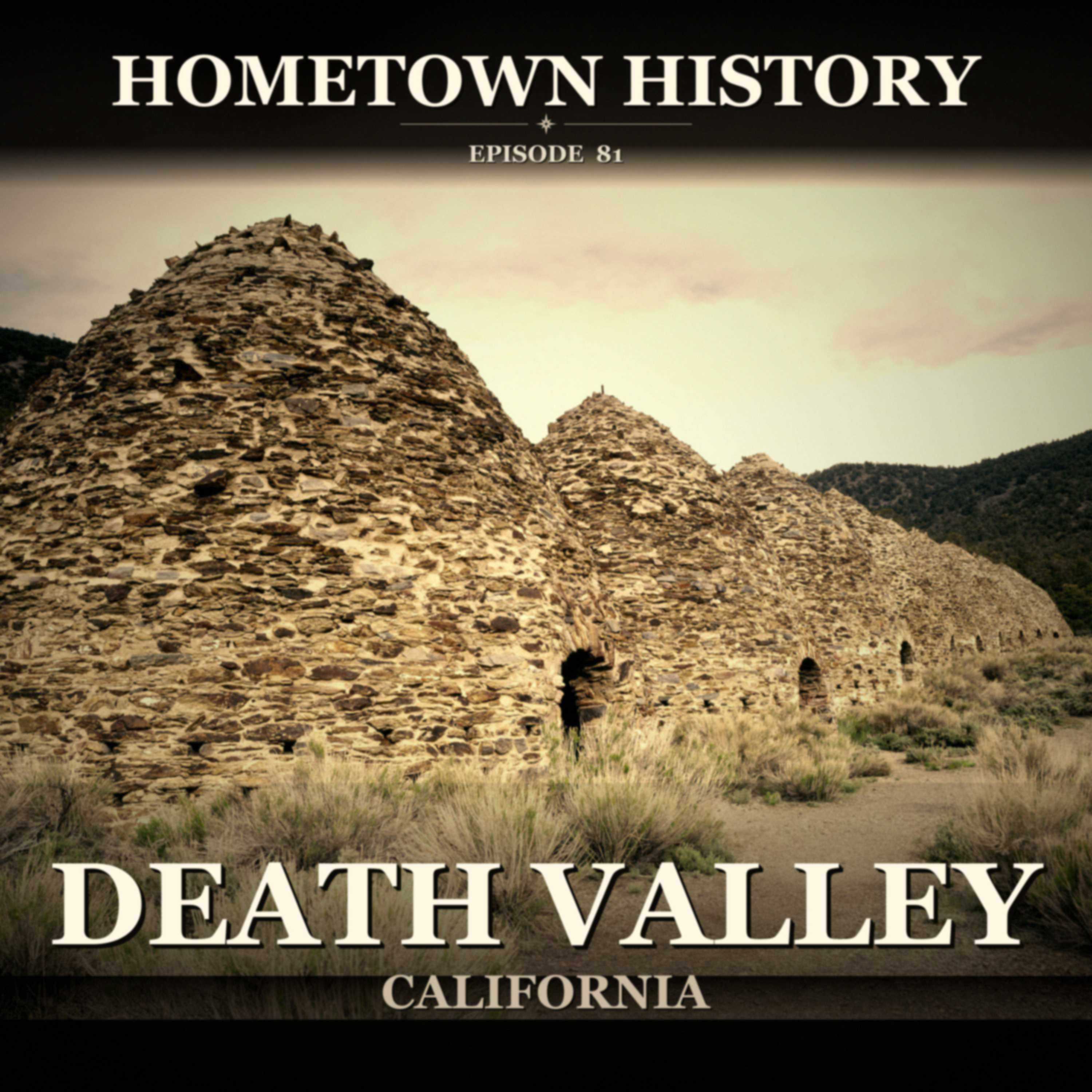
Death Valley, California: The Hottest Park and Scenic Nationalism
Show Notes
In 1820, British writer Sydney Smith mocked the United States for its lack of cultural sophistication, famously asking, "In the four quarters of the globe, who reads an American book?" This taunt, along with similar criticisms from European intellectuals, helped spark a uniquely American response: scenic nationalism. Unable to compete with Europe's ancient castles and cathedrals, Americans realized they possessed something equally impressive—spectacular natural landscapes that predated any human construction by millions of years. Death Valley, which would become a national monument in 1933 and a national park in 1994, exemplifies this shift in American identity. At 1.7 billion years old, the valley's geology makes the 2,000-year-old Roman Colosseum look like yesterday's construction project.
Ferdinand Vandeveer Hayden, the American geologist who surveyed Yellowstone in 1871 and helped establish it as the world's first national park in 1872, captured this sentiment when he declared that Americans would one day point to these remarkable landscapes "with a conscious pride that has not its parallel on the face of the globe." The "See America First" campaign encouraged Americans to spend their tourism dollars at home, celebrating natural wonders instead of European architecture. The movement was so aggressive that Cole Porter even wrote a musical titled simply "See America First," though the show flopped spectacularly—perhaps because America's culture was still developing despite its geographical advantages.
Death Valley earned its designation as a national park through sheer extremes. It holds multiple world records: the hottest place on Earth (with a disputed but official 134°F reading from July 10, 1913), the lowest elevation in North America (Badwater Basin at 282 feet below sea level), the driest national park, and the largest national park in the contiguous United States. From a single viewpoint at Dante's View, visitors can simultaneously see Mount Whitney (the highest point in the lower 48 states) and Badwater (the lowest point). The park's 5,270 square miles contain geological wonders like the sailing stones of Racetrack Playa—massive boulders that leave mysterious trails across the desert floor as they move apparently on their own (scientists believe wind drives them across frozen lake surfaces).
The park's extreme conditions create both danger and unique beauty. Summer temperatures regularly exceed 120°F, making Death Valley one of the most dangerous national parks. The ground can reach 201°F, hot enough to cause third-degree burns. Yet these same harsh conditions support remarkable life, including the critically endangered Devils Hole pupfish—the world's entire population of this species lives in a single small pool, fluctuating seasonally between 200 and 600 individuals. The park also features singing sand dunes that produce deep, resonant sounds as layers slide down their slopes, and during rare wet springs (averaging once per decade), the valley floor explodes with wildflowers in stunning displays of gold, purple, pink, and white.
The creation of Death Valley National Monument by President Herbert Hoover in 1933, and its expansion to a national park in 1994, represents the culmination of America's scenic nationalism movement—proving that while the United States might have lacked ancient human history, it possessed geological wonders that dwarfed anything Europe could offer. Today, Death Valley stands as both a testament to extreme natural conditions and a symbol of American pride in preserving its most exceptional landscapes.
Sources Referenced:
- National Park Service (Death Valley history and statistics)
- Hayden Geological Survey reports (1871-1872)
- Sydney Smith, Edinburgh Review (1820)
- World Meteorological Organization (temperature records)
- UC Berkeley research (Devils Hole pupfish genetics)
- Death Valley Natural History Association publications
Support this podcast at — https://redcircle.com/hometownhistory/exclusive-content
Advertising Inquiries: https://redcircle.com/brands
Privacy & Opt-Out: https://redcircle.com/privacy
Credits
Shane Waters — Founder & Host
Produced by Myths & Malice