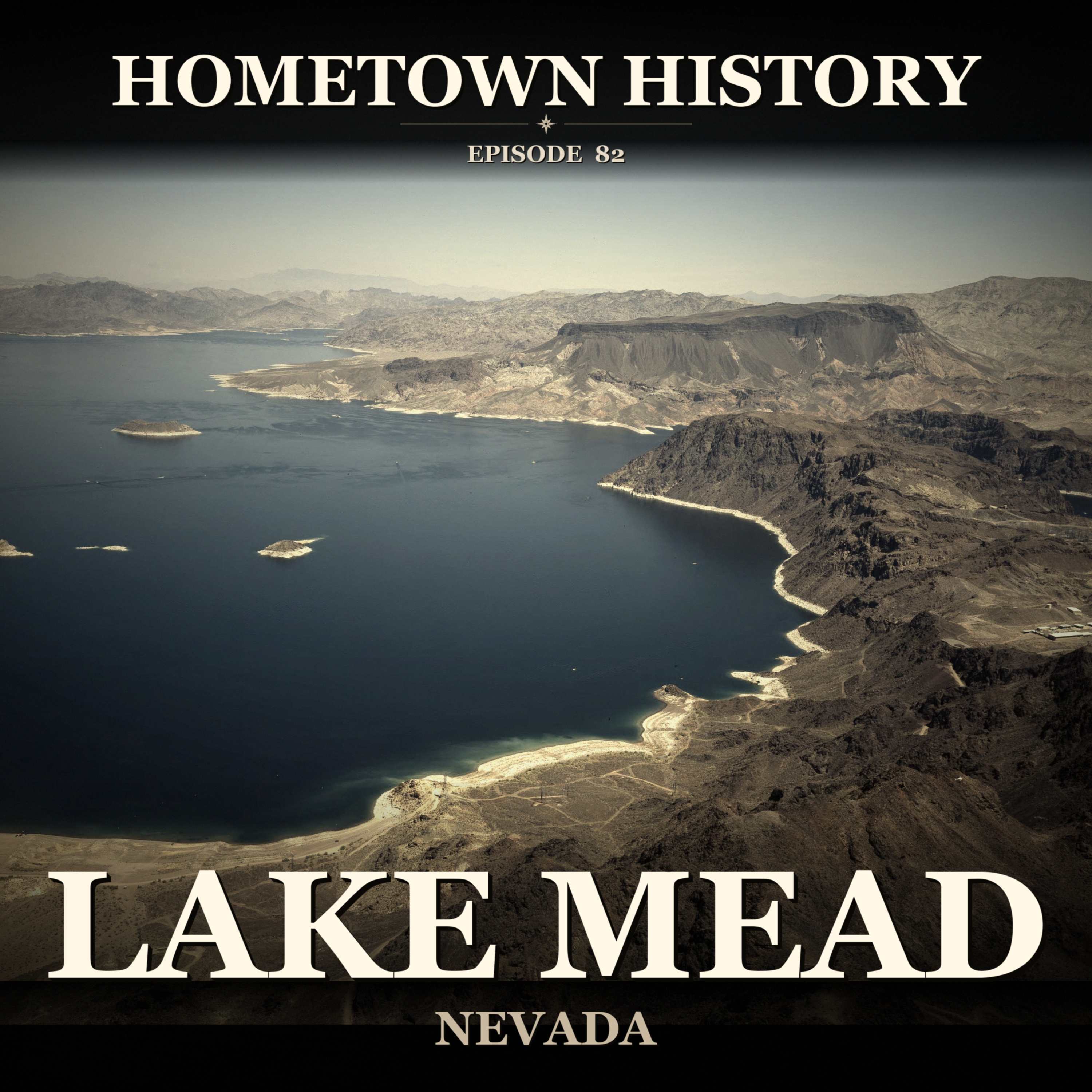
Lake Mead, Nevada: America's Largest Reservoir and Its Shrinking Future
Show Notes
In 1936, the creation of the Hoover Dam resulted in an unexpected gift to the American conservation movement: Lake Mead, a 112-mile-long reservoir that would become the largest in the United States. Unlike Niagara Falls, which fell victim to unchecked commercial exploitation in the 1800s, Lake Mead was immediately placed under National Park Service management as Boulder Dam National Recreation Area—later renamed Lake Mead National Recreation Area in 1947. This episode explores how one engineering marvel created a new natural landscape while learning from the catastrophic mistakes of America's first great natural attraction.
The story begins with a cautionary tale. Niagara Falls, America's first international tourist destination, was systematically destroyed by private development throughout the early 1800s. Hotels, mills, museums, and eventually massive power plants crowded the landscape. At least sixteen power plants have operated at Niagara Falls over the years, transforming the natural wonder into an industrial complex surrounded by tourist shops. The fear of repeating this disaster fueled the entire National Park movement. When construction began on the Hoover Dam in 1930, federal authorities were determined not to make the same mistakes.
The Hoover Dam stands sixty stories tall with a base more than 220 yards thick—nearly four times the height of Niagara Falls. Each spillway can handle the full volume of water that passes over Niagara. The dam created Lake Mead, which quickly became one of the most-visited units in the National Park System, consistently ranking in the top ten for annual visitation with six to eight million visitors annually. The lake attracts millions of boaters, fishermen, and water sports enthusiasts seeking recreation in the desert landscape of Nevada and Arizona. But Lake Mead holds some surprises: while surface water temperatures vary seasonally from the 50s to the 80s, the narrow Black Canyon downstream from Hoover Dam draws cooler deep water and has become a premier destination for kayaking and canoeing on the Black Canyon National Water Trail.
Lake Mead's companion reservoir, Lake Mojave, sits sixty-seven miles downstream from Hoover Dam and maintains approximately 90 percent capacity even as Lake Mead has dropped to historic lows. The ongoing twenty-five-year drought has reduced Lake Mead to its lowest level since it was first filled in the late 1930s and early 1940s, closing several major marinas and resort areas including Echo Bay. On July 28, 2022, the lake reached its lowest point ever recorded at 1,040 feet elevation—approximately 31 percent of maximum capacity.
The shrinking waterline has revealed unexpected artifacts. The remains of a World War II B-29 bomber rest at the bottom of the lake following a 1948 crash during atmospheric research, now accessible to permitted scuba divers. The abandoned Mormon farming settlement of St. Thomas, Nevada, submerged in 1938 as the lake filled, has periodically re-emerged during drought periods and has been accessible to visitors since 2004. The Pueblo Grande de Nevada, a thousand-year-old Ancestral Puebloan settlement discovered in 1924, was partially excavated before the rising waters submerged the sites. Artifacts from these ruins are preserved at the Lost City Museum in Overton, Nevada. Most disturbingly, human remains have surfaced as water levels recede. On May 1, 2022, a body was discovered inside a corroded barrel at Hemenway Harbor—a victim of an apparent mob-style execution from the 1970s or early 1980s who remains unidentified.
Despite the drought crisis, Lake Mead National Recreation Area continues to offer world-class fishing, including a Colorado River record 67-pound striped bass caught at Willow Beach, along with hiking during cooler months and the chance to spot desert bighorn sheep in Black Canyon. Rangers recommend visiting Lake Mojave for more reliable water access and checking the park's official alerts before planning any water-based activities at Lake Mead itself.
Sources & Further Reading:
- National Park Service: Lake Mead National Recreation Area (nps.gov/lake)
- Bureau of Reclamation: Hoover Dam Historical Records (usbr.gov/lc/hooverdam)
- Black Canyon National Water Trail Information
- Lost City Museum, Overton, Nevada
Support this podcast at — https://redcircle.com/hometownhistory/exclusive-content
Advertising Inquiries: https://redcircle.com/brands
Privacy & Opt-Out: https://redcircle.com/privacy
Credits
Shane Waters — Founder & Host
Produced by Myths & Malice