America's Utopian Communes: The Rise and Fall of Radical Communities
Show Notes
In the decades before the Civil War, America became a laboratory for radical social experiments. From the factories of New Harmony, Indiana to the communal dining halls of Brook Farm, Massachusetts to the controversial practices of Oneida, New York, thousands of Americans abandoned conventional society to build utopian communities based on shared property, reformed labor, and revolutionary ideas about marriage, religion, and human nature. This episode concludes our three-part series by exploring the actual lived experiences of these utopian communes—their remarkable achievements, internal contradictions, and ultimate transformations that left lasting marks on American society.
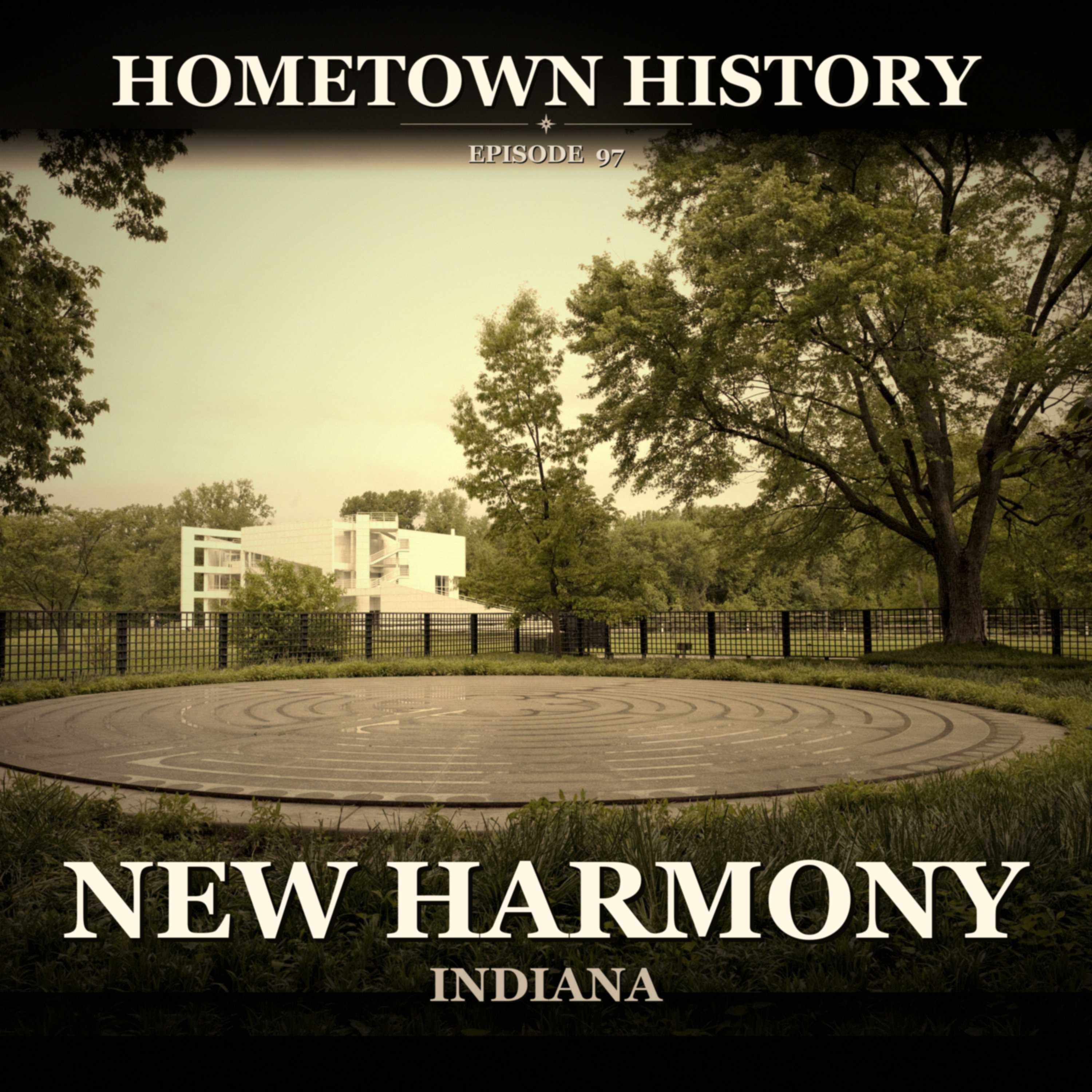
Robert Owen's New Harmony represented secular utopia's boldest American experiment. The Welsh industrialist purchased an entire Indiana town in 1825, envisioning a community where education, science, and cooperative labor would create a "New Moral World." Owen attracted brilliant minds—scientists, educators, reformers—but the community collapsed within two years. The problem wasn't Owen's vision but its execution: no clear leadership structure, no membership requirements, no shared commitments beyond vague idealism. As one resident observed, New Harmony welcomed "a heterogeneous collection of radicals, enthusiastic devotees to principle, honest latitudinarians, and lazy theorists, with a sprinkling of unprincipled sharpers thrown in." Yet despite its failure, New Harmony pioneered co-educational schools, kindergartens, and scientific research institutions that influenced American education for generations.
Brook Farm offered a different model: transcendentalist intellectuals attempting communal living. Founded in 1841 in West Roxbury, Massachusetts by Unitarian minister George Ripley, Brook Farm promised to combine manual labor with intellectual pursuits. Members spent mornings farming and afternoons discussing philosophy, literature, and reform. Nathaniel Hawthorne joined briefly, later satirizing the experience in his novel "The Blithedale Romance." The community attracted New England's literary elite—Ralph Waldo Emerson visited, Margaret Fuller taught classes—but never solved its fundamental economic problem: intellectual labor couldn't pay agricultural bills. After converting to Fourierism and attempting to build an elaborate communal building called the Phalanstery, a catastrophic fire in 1846 destroyed the structure and bankrupted the community. Brook Farm dissolved in 1847, but its members carried transcendentalist values into mainstream American reform movements.
The Oneida Community lasted longest and generated the most controversy. Founded in 1848 in central New York by John Humphrey Noyes, a Yale-educated minister who believed Christ's return had already occurred in 70 A.D., Oneida practiced "Bible Communism" including shared property and "complex marriage"—a system where all members were considered married to each other, with sexual relationships regulated by the community. Oneida also pioneered eugenics through "stirpiculture," controlling which members could reproduce to improve the community's genetic stock. These practices attracted fierce criticism from surrounding towns and the press. Yet Oneida achieved remarkable economic success through manufacturing animal traps and later silverware, products still sold today. The community lasted until 1881, when external pressure and internal disagreements forced Noyes to flee to Canada. Members reorganized as a joint-stock company, abandoning complex marriage but continuing the silverware business.
These communities shared common patterns: charismatic founding leaders, economic instability, tension with surrounding society, and internal conflicts over authority, property, sexuality, and work distribution. Most failed within five years. But their failures taught important lessons that later movements absorbed: the importance of clear membership criteria, realistic economic planning, mechanisms for conflict resolution, and balance between individual freedom and communal goals.
Timeline of Key Events:
- 1825: Robert Owen purchases New Harmony, Indiana for his secular utopian experiment; community attracts 900 residents but collapses by 1827 due to lack of shared commitment and organizational structure
- 1841: George Ripley founds Brook Farm in West Roxbury, Massachusetts as a transcendentalist communal experiment combining manual labor with intellectual pursuits; Nathaniel Hawthorne joins briefly
- 1846: Brook Farm converts to Fourierism and attempts to build an elaborate communal building called the Phalanstery; catastrophic fire destroys the structure and bankrupts the community, leading to dissolution in 1847
- 1848: John Humphrey Noyes establishes the Oneida Community in central New York, practicing "Bible Communism" including shared property and "complex marriage" where all adult members are considered married to each other
- 1881: Facing external pressure from neighboring communities and internal conflicts, Oneida abandons complex marriage and reorganizes as a joint-stock silverware company that continues operating today
Historical Significance:
America's utopian communes failed as self-contained societies but succeeded as social laboratories. New Harmony pioneered educational innovations including co-educational schools and kindergartens that became mainstream American practice. Brook Farm's transcendentalist ideals influenced reform movements from abolitionism to women's rights. Oneida demonstrated that communal economics could succeed even as its sexual practices generated controversy, and its business transformation into Oneida Limited proved that communal experiments could evolve into conventional enterprises.
These communities tested radical ideas about property, labor, gender, sexuality, and social organization that later movements adapted in modified forms. Their failures taught important lessons about balancing individual autonomy with collective goals, the necessity of realistic economic planning, and the challenges of maintaining idealism while managing practical daily life. The utopian impulse they represented—the belief that human society could be deliberately reformed and perfected—continued through later movements from Progressive Era social reform to 1960s communes to modern intentional communities. Their legacy lies not in creating lasting alternative societies but in demonstrating that ordinary people could question fundamental social arrangements and attempt to live by different values, even when those experiments ultimately proved unsustainable.
Sources & Further Reading:
- Pitzer, Donald E. (ed.), "America's Communal Utopias" (1997) - comprehensive survey of 19th-century communal experiments
- Guarneri, Carl J., "The Utopian Alternative: Fourierism in Nineteenth-Century America" (1991) - detailed analysis of Fourierist movements including Brook Farm
- Fogarty, Robert S., "All Things New: American Communes and Utopian Movements, 1860-1914" (1990) - examination of post-Civil War communalism
- Robertson, Constance Noyes, "Oneida Community: An Autobiography, 1851-1876" (1970) - primary source accounts from Oneida members
- Sutton, Robert P., "Communal Utopias and the American Experience: Secular Communities, 1824-2000" (2004) - long-term historical analysis
- Leopold, Richard William, "Robert Dale Owen: A Biography" (1940) - Owen family influence on American reform
- Delano, Sterling F., "Brook Farm: The Dark Side of Utopia" (2004) - critical examination of transcendentalist communalism
Support this podcast at — https://redcircle.com/hometownhistory/exclusive-content
Advertising Inquiries: https://redcircle.com/brands
Privacy & Opt-Out: https://redcircle.com/privacy
Credits
Shane Waters — Founder & Host
Produced by Myths & Malice