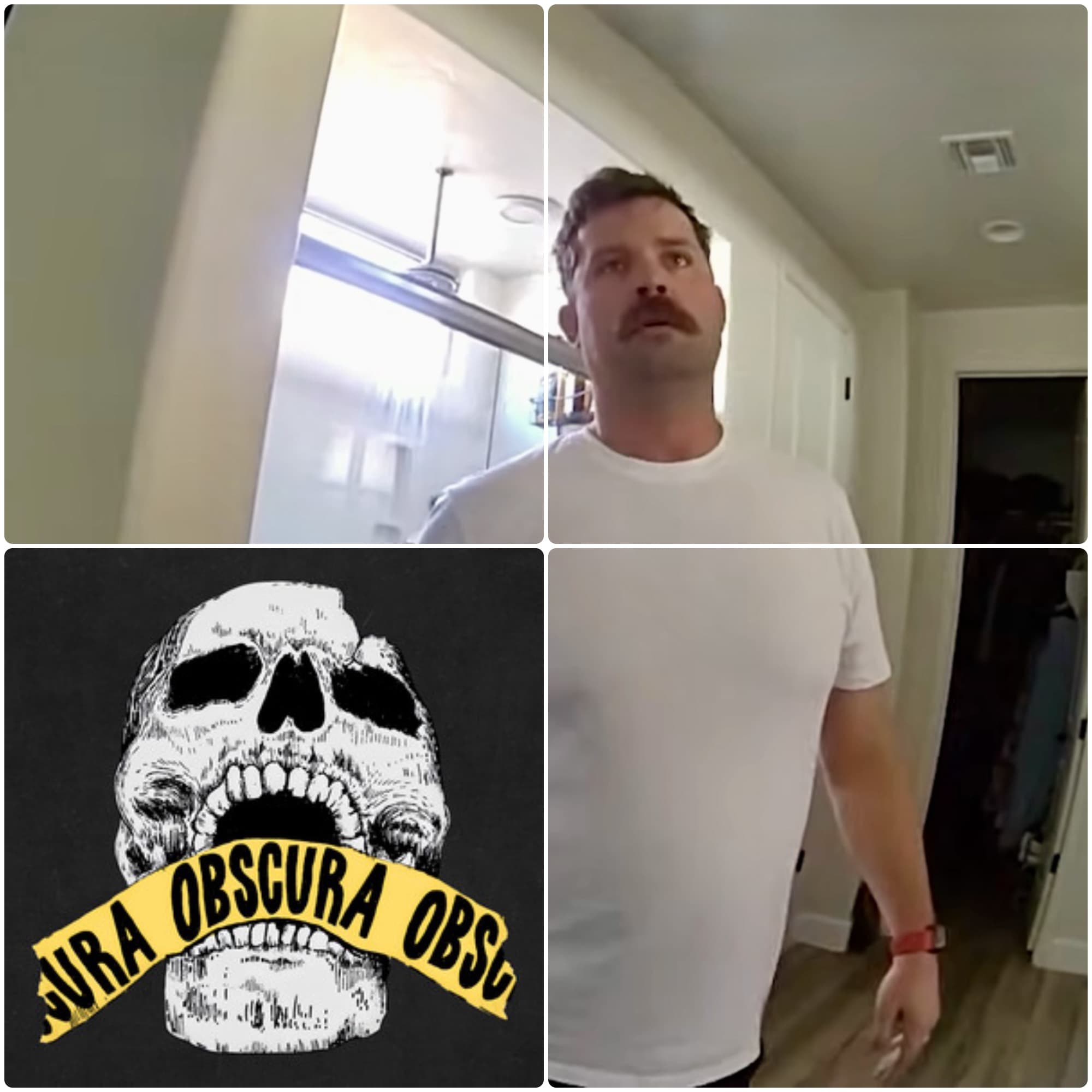
0:00 [SPEAKER_09]: a little before one in the afternoon, on the 9th of July, 2024, a silver acura pulled into a driveway in Mariana, Arizona, and a man got out of it alone. 0:12 [SPEAKER_09]: He had a bag of groceries, salsa, tortilla chips. 0:16 [SPEAKER_09]: ahead of lettuce, and two cans of beer, he'd spent the late morning driving around the northwest edge of Tucson, running small errands in the heat, and now he was home, and his two older girls were just arriving back from a morning at the trampoline park. 0:31 [SPEAKER_09]: And the house was about to fill up with the ordinary noise of a summer afternoon. 0:36 [SPEAKER_09]: He went inside, he sat down in the living room, in the air conditioning, and he picked up a game controller, and he opened one of the beers. 0:44 [SPEAKER_09]: His wife was at the hospital, and would be for hours yet. 0:47 [SPEAKER_09]: The afternoon was his. 0:49 [SPEAKER_09]: It was 190 degrees outside. 0:51 [SPEAKER_09]: The acuar sat in the driveway, where he had left it, 1:00 [SPEAKER_09]: The man in the living room played his game, the hours went by. 1:03 [SPEAKER_09]: He would say later that he walks track of time. 1:06 [SPEAKER_09]: That part, at least, was true. 2:11 [SPEAKER_09]: Long before the afternoon in the driveway, there was a pattern, and the pattern had a paper trail. 2:17 [SPEAKER_09]: Christopher Schultes was 37 years old in the summer of 2024, a husband and the father of three daughters, his wife Erica was a physician, an anesthesiologist at a Tucson Hospital. 2:30 [SPEAKER_09]: A job that demands long hours and steady nerves, and the ability to hold a stranger's life still on a table, without your own hand shaking. 2:39 [SPEAKER_09]: She was the one holding the household up. 2:41 [SPEAKER_09]: She got up and went to the hospital. 2:43 [SPEAKER_09]: She got the family a phone. 2:45 [SPEAKER_09]: And she came home to whatever the day had left for her. 2:48 [SPEAKER_09]: Christopher stayed home. 2:49 [SPEAKER_09]: On paper, he was the out-home parent. 2:52 [SPEAKER_09]: The one with the children during the hours, his wife was at work. 2:55 [SPEAKER_09]: In practice, what he was at home doing is the center of the entire case, but the pattern goes back further than the marriage to Erica. 3:05 [SPEAKER_09]: It goes back to his first daughter, a child from an earlier relationship, now a teenager who did not grow up in his house. 3:12 [SPEAKER_09]: Between June of 2014 and December of 2020, Arizona Department of Child Safety investigated Christopher Schultes nine separate times, nine. 3:24 [SPEAKER_09]: The allegations over those six years can turn that whole to slaughter. 3:28 [SPEAKER_09]: and they were not minor, they included neglect, they included physical abuse, reports that he slapped and spanked the child hard enough to leave bruises, that on one occasion, he struck her hard enough as she lost her breath. 3:42 [SPEAKER_09]: They included the allegation that he left the child to manage a serious medical condition, diabetes, without the parental oversight. 3:50 [SPEAKER_09]: A diabetic child requires nine investigations over six years. 3:54 [SPEAKER_09]: A steady drum beat of the same kind of concerns raised again and again by people in that child's life who saw something felt they had to report it. 4:04 [SPEAKER_09]: What comes next is the first of several institutional failures stacked under this story. 4:10 [SPEAKER_09]: And every one of those nine investigations, the allegations were deemed unsubstantiated, not disproven, but unsubstantiated. 4:18 [SPEAKER_09]: The case notes that the era, which later surfaced in legal proceedings, include the assessment that the child was safe in Mr. Schultes' home, that the family was given information about community services, and that the case was closed. 4:33 [SPEAKER_09]: Close nine times over six years. 4:35 [SPEAKER_09]: The oldest daughter did not end the end, grow up with him. 4:39 [SPEAKER_09]: She lived free years with her biological mother, away from her father. 4:43 [SPEAKER_09]: When the mother died in 2024, 4:46 [SPEAKER_09]: The girl became, for a period, a ward of the state, and went to live with her guardian by the summer of 2024, the teenager was a strange former father, almost completely, and had been for a long time. 4:59 [SPEAKER_09]: In the reasons for that strange man were written all over six years of case files. 5:04 [SPEAKER_09]: That is a pattern in miniature, a man the alarms kept going off about, in a system and a family that kept finding reasons the alarm did not require someone to act. 5:14 [SPEAKER_09]: Christopher Schulte as was, by his own admission and addict, this is not a characterization invented after the fact, by a prosecutor looking for a motive, it comes from his own mouth and his own thumbs, from text messages he exchanged with his wife, messages that later became part of court record, and those messages he admitted to the things he did, he drank, he drank heavily, and consistently, and he did it while he was the only adult responsible for three small children, 5:41 [SPEAKER_09]: He played video games for hours, with an absorption that shut out the world around him. 5:47 [SPEAKER_09]: He watched pornography, and he did all those things by his own admission, while the children were still in his care. 5:53 [SPEAKER_09]: The video games are not detailed a skip past because they're central to what's coming. 5:58 [SPEAKER_09]: This was not a man who unwelled with a game after the kids were asleep. 6:01 [SPEAKER_09]: This was a man whose engagement with a screen could swallow whole afternoons, who could lose three hours inside a playstation without surfacing, who had built a wife in which the demands of three children were the interruption in the game was the main event. 6:16 [SPEAKER_09]: The drinking was woven throughout all of it. 6:19 [SPEAKER_09]: It's surviving daughters, six and nine years old at the time, told investigators and separate interviews that their father drank too much beer. 6:27 [SPEAKER_09]: Erica Schulte has new, this is the hardest thing about her, and it has to be said, because it's true, because it's part of how this happened. 6:35 [SPEAKER_09]: She knew, we know she knew because she wrote it down, and the text messages that became part of the record. 6:41 [SPEAKER_09]: Erica is now a woman in the dark. 6:43 [SPEAKER_09]: She's a woman who has been fighting the same fight for a long time and she's been exhausted by it. 6:49 [SPEAKER_09]: She had managed her husband repeatedly in writing for the exact behaviors that frightened her most. 6:55 [SPEAKER_09]: She told him to stop leaving the children in the car. 6:58 [SPEAKER_09]: She told him to stop driving with them when he had been drinking. 7:01 [SPEAKER_09]: She raised it and raised it and she raised it. 7:04 [SPEAKER_09]: The thing about a fight you have a hundred times is it stops sounding 7:11 [SPEAKER_09]: The words were smooth, listener. 7:13 [SPEAKER_09]: You can write stop leaving them in the car only so many times, it becomes a phrase you both skate over, a piece of household furniture. 7:21 [SPEAKER_09]: This is the burnout that sits under so many of these cases, these catastrophes. 7:26 [SPEAKER_09]: America's shoulders was a capable woman, a physician who managed crises for a living, married to a man who was slowly drowning their 7:35 [SPEAKER_09]: She had been managing him the way you manage a chronic illness with diminishing energy and diminishing hope and a grim adaptation that looks from the outside like a enabling three weeks before the 9th of July Erica bought Christopher a treadmill for Father's Day. 7:51 [SPEAKER_09]: It was a Peloton, a large expensive piece of exercise equipment. 7:55 [SPEAKER_09]: The kind of thing a wife buys a husband when she is still trying, when she still believes that the right gift, the right gesture, the right nudge toward health, might shift something. 8:05 [SPEAKER_09]: It was in a way, an act of hope, and is the reason the car was in the driveway, instead of the garage on the 9th of July. 8:12 [SPEAKER_09]: The treadmill was big, and needed a home. 8:15 [SPEAKER_09]: The home of God was that garage. 8:17 [SPEAKER_09]: The space where the family's vehicles were normally parked, with the peloton taking up the garage, the accurate had to go outside, so for three weeks in the worst of an Arizona summer, the family car sat in the driveway, exposed, instead of in the shaded enclosure. 8:33 [SPEAKER_09]: A father's day present, an active, attired wife's lingering hope, had moved the car into the sun. 8:39 [SPEAKER_09]: On the morning of July 9th, 2024, the two older girls, the nine-year-old in the six-year-old went out. 8:46 [SPEAKER_09]: They spent the morning at a vocal trampoline park with friends, the ordinary summer morning of ordinary kids. 8:52 [SPEAKER_09]: They left Christopher with Parker, the two-year-old, the baby of the family. 8:57 [SPEAKER_09]: He took her with her to run errands, and the errands are documented. 9:00 [SPEAKER_09]: Minute by minute, because Mariana in 2024 is a town full of cameras and investigators later walked Christopher Schulte as entire morning through the lens of convenience stores and grocery stores and the doorbell cameras of neighbors, the pictures those cameras assembled is its own small portrait of the man and it's not flattering. 9:21 [SPEAKER_09]: He drove around town with Parker in the backseat. 9:24 [SPEAKER_09]: He stopped at a convenient store, stopped at a grocery store, where a camera caught him entering a loan at 1240 in the afternoon. 9:32 [SPEAKER_09]: A loan, because Parker was in the car. 9:35 [SPEAKER_09]: He spent about 7 minutes inside. 9:37 [SPEAKER_09]: He went to the self-checkout and paid for two jars of salsa. 9:41 [SPEAKER_09]: Some tortillas, tortilla chips, a head of lettuce. 9:44 [SPEAKER_09]: Molly was at it on the same camera. 9:46 [SPEAKER_09]: He shopped at two cans of beers, slipping them out without paying. 9:51 [SPEAKER_09]: A small grubby crime layered on top of the larger one. 9:55 [SPEAKER_09]: He did not yet know he was committing. 9:57 [SPEAKER_09]: This was not the only theft that morning. 9:59 [SPEAKER_09]: At a second location, another store, he had done the same thing. 10:03 [SPEAKER_09]: Lifting Beerwall's daughter waited in the car. 10:06 [SPEAKER_09]: The man assembling his afternoon's drinking, was stealing him, and increments, with his two-year-old strapped in the back seat in the heat each time he went inside. 10:16 [SPEAKER_09]: Each store visit was its own small abandonment. 10:18 [SPEAKER_09]: He parked, he left her, he went in, he came out, he drove to the next one and he left her again. 10:24 [SPEAKER_09]: They earned themselves were a series of little rehearsals for the larger thing he was about to do. 10:30 [SPEAKER_09]: In morning spent treating a sleeping child as a fixed object in the back scene, a piece of cargo that did not require checking on, at 12.53 in the afternoon, he pulled the Akira into the driveway of the house in Mariana. 10:44 [SPEAKER_09]: Arriving just as the two older girls were getting home from the trampoline park, Parker was asleep in her car seat in the back. 10:51 [SPEAKER_09]: That decision is the one the whole case turns on. 10:54 [SPEAKER_09]: The morning everything before it had been building toward. 10:58 [SPEAKER_09]: The air conditioning was not on. 10:59 [SPEAKER_09]: The engine was not running. 11:01 [SPEAKER_09]: We know this because how the afternoon ended. 11:04 [SPEAKER_09]: In 2003, Ankira had an automatic shut-off, after a period of idling, roughly 30 minutes, the engine would turn itself off. 11:12 [SPEAKER_09]: This is a feature, not a malfunction, a piece of engineering meant to save fuel, and prevent the dangers of a car theft. 11:19 [SPEAKER_09]: Christopher Schultes, knew the car did this. 11:22 [SPEAKER_09]: He admitted to investigators that he was aware of the auto shut-off feature. 11:26 [SPEAKER_09]: He knew that a car left idling in the driveway, when a idle forever. 11:30 [SPEAKER_09]: He knew that about a half an hour in, the engine would cut off, and with it the air conditioning. 11:35 [SPEAKER_09]: This is what separates Christopher Schultes from a genuinely tragic case, the parents who forget in the trueest sense, who carry a sleeping infant out of their normal routine, and lose them in the gap of memory, and live destroyed forever after. 11:50 [SPEAKER_09]: He did not forget that the car turned itself off, and this was a repeated pattern. 11:55 [SPEAKER_09]: He knew this, and he left a sleeping two-year-old in that car, and he went inside, and he sat down in the living room, and he picked up that controller. 12:04 [SPEAKER_09]: What he did for the next three hours is established by the same console he was doing it on. 12:08 [SPEAKER_09]: He searched for video games, he looked at clothing, he searched for pornography, he drank beer. 12:14 [SPEAKER_09]: He sat in an air-conditioned living room, 40 feet in one wall away from his daughter. 12:19 [SPEAKER_09]: And he disappeared into the screen, the way he had disappeared into in a thousand times before. 12:25 [SPEAKER_09]: The way his children had learned to shout through. 12:28 [SPEAKER_09]: Except this time, the child was outside. 12:30 [SPEAKER_09]: She was too. 12:32 [SPEAKER_09]: She was asleep. 12:33 [SPEAKER_09]: The engine ran, then around 30 minutes in. 12:36 [SPEAKER_09]: By the design, he knew about it shut off. 12:39 [SPEAKER_09]: Their conditioning died, and the car knows to the west, passenger side to the sun. 12:44 [SPEAKER_09]: The young child's body is not built to survive heat, the way an adult is, children heat up faster, several times faster, because they are small and their surface area is large relative to their mass, and their ability to regulate their own temperature is not fully developed. 13:01 [SPEAKER_09]: A two-year-old in a hot car does not have an hour's, and temperatures like the inside of that acura just a fraction of that. 13:09 [SPEAKER_09]: The interior of the car that afternoon, investigators determine 13:13 [SPEAKER_09]: reached his high as around 149 degrees. 13:16 [SPEAKER_09]: The window beside her faced west and took the direct sun, she was strapped into a car scene, restrained, unable to free herself, and temperatures that would drop and adult. 13:27 [SPEAKER_09]: He stroking a small child, moves through stages, and none of them are gentle. 13:32 [SPEAKER_09]: As the core temperature rises, the body throws everything it has that cooling itself, and then those systems begin to fail one by one. 13:40 [SPEAKER_09]: The skin flushes, and then as the body loses the ability to sweat, goes dry and hot. 13:46 [SPEAKER_09]: The heart races, trying to move blood to the surface to shed heat that has nowhere to go in the air that is hotter than the body itself. 13:55 [SPEAKER_09]: The child 13:57 [SPEAKER_09]: Then confused, then lethargic, the brain, when it does not tolerate heat, begins to swell, the organs begin to break down. 14:06 [SPEAKER_09]: Somewhere in the process, the suffering is total, and then, mercifully, consciousness goes. 14:13 [SPEAKER_09]: But the body's core keeps climbing, even after awareness is fled. 14:17 [SPEAKER_09]: The medical literature on pediatric hypothermia is precise about the timeline, and it is merciless. 14:25 [SPEAKER_09]: A child's core temperature can rise three to five times faster than in adults, but once the core passes about 100 and 4 degrees, the territory is called heat stroke. 14:35 [SPEAKER_09]: In the clock that matters, it's no longer measured in hours, but in minutes, above roughly 100 and 6, the proteins that hold cells together begin to come apart. 14:44 [SPEAKER_09]: The blood itself starts to clot abnormally, and the brain swells against the inside of the skull. 14:50 [SPEAKER_09]: Parker's core reached 108.9. 14:53 [SPEAKER_09]: There's no medical reading of that number that is anything but a description of a small body destroyed by degrees while cabin around her went on getting hotter than the surface of a stove top. 15:04 [SPEAKER_09]: We no Parker did not simply sleep through it. 15:07 [SPEAKER_09]: We know this because of the marks. 15:09 [SPEAKER_09]: When investigators processed the vehicle, they documented signs of struggle, the small physical evidence of a toddler who'd woken into a nightmare, and tried with everything a two-year-old has to get out. 15:21 [SPEAKER_09]: There were marks on the cars interior consistent with a child who had been moving, reaching, fighting the restraint, and the door and the glass. 15:30 [SPEAKER_09]: Beneath the car, investigators found a pink iPad, and a single tiny pink sandal she had not gone quietly into the heat. 15:38 [SPEAKER_09]: She had fought it, and around four in the afternoon, Erica Schultes came home from the hospital. 15:44 [SPEAKER_09]: Parker was not in the house. 15:45 [SPEAKER_09]: She asked, she looked, and then somewhere, in that rising parental panic, she went outside to the car, and that panic did not resolve. 15:54 [SPEAKER_09]: Parker was still in her car seat, limb, unresponsive. 15:58 [SPEAKER_09]: She had been in the vehicle since before one in the afternoon, more than three hours in the worst heat of the day. 16:05 [SPEAKER_09]: Erica, a physician trained exactly for the worst moments, pulled her daughter from the car, and began CPR in the driveway, her medical training colliding with the one patient, no training prepares you for. 16:17 [SPEAKER_09]: She called 911. 16:18 [SPEAKER_11]: You guys, what are you reporting? 16:22 [SPEAKER_11]: She was in the car, three things, she's on the spot of okay, and who is she? 16:26 [SPEAKER_10]: Please, please, please, my daughter, my daughter, please, please, please, 16:34 [SPEAKER_11]: And this was out in the driveway? 16:36 [SPEAKER_10]: Yes. 16:38 [SPEAKER_11]: Is she still breathing? 16:40 [SPEAKER_11]: No, she's not breathing, I know. 16:41 [SPEAKER_11]: Okay, we need to start CPR right now. 16:44 [SPEAKER_05]: Yes, we are. 16:44 [SPEAKER_05]: We're starting to be on yes. 16:49 [SPEAKER_10]: Oh my God. 16:49 [SPEAKER_10]: What's on? 16:50 [SPEAKER_11]: How far? 16:54 [SPEAKER_11]: It was, but it turned off. 16:57 [SPEAKER_11]: I've been checking my God. 16:58 [SPEAKER_11]: Okay, is she breathing yet? 17:04 [SPEAKER_09]: No. 17:05 [SPEAKER_09]: They're menics arrived. 17:06 [SPEAKER_09]: They took over. 17:08 [SPEAKER_09]: Arkers measured body temperature. 17:09 [SPEAKER_09]: Was still over 100 in eight degrees when they reached her. 17:12 [SPEAKER_09]: The AC was long. 17:14 [SPEAKER_09]: The AC was long. 17:14 [SPEAKER_09]: The AC was long. 17:15 [SPEAKER_09]: The AC was long. 17:15 [SPEAKER_09]: The AC was long. 17:16 [UNKNOWN]: The AC was long. 17:17 [UNKNOWN]: The AC was long. 17:18 [SPEAKER_05]: The AC was long. 17:21 [SPEAKER_05]: The AC was long. 17:23 [SPEAKER_05]: The AC was long. 17:23 [SPEAKER_05]: The AC was long. 17:23 [SPEAKER_05]: The AC was long. 17:24 [SPEAKER_05]: The AC was long. 17:24 [SPEAKER_05]: The AC was long. 17:25 [SPEAKER_05]: The AC was long. 17:26 [SPEAKER_05]: The AC was long. 17:26 [SPEAKER_05]: The AC was long. 17:28 [SPEAKER_05]: The AC was long. 17:28 [SPEAKER_05]: The AC was long. 17:32 [SPEAKER_05]: Thank you so much for me. 17:34 [SPEAKER_05]: Thank you. 17:34 [SPEAKER_05]: Thank you. 17:35 [SPEAKER_05]: Yeah. 17:36 [SPEAKER_05]: We really want to do it. 17:37 [SPEAKER_04]: Thank you. 17:38 [SPEAKER_04]: Thank you. 17:39 [SPEAKER_04]: Thank you. 17:39 [SPEAKER_04]: Thank you. 17:40 [SPEAKER_04]: Thank you. 17:40 [SPEAKER_05]: Thank you. 17:45 [SPEAKER_05]: Thank you. 17:46 [SPEAKER_09]: Thank you. 17:47 [SPEAKER_09]: They transported her to Banner University Medical Center in Tucson, the same hospital where her mother worked, and around a quarter past four, or shortly after on the hospital clock, Archer Schultz has was pronounced dead, two years old, heat exposure. 18:04 [SPEAKER_09]: The cause of death on the medical examiner's report would read like the simplest thing in the world, and it described one of the most preventable deaths imaginable. 18:12 [SPEAKER_09]: When the Miranda police arrived, Christopher Schultes was performing distress. 18:17 [SPEAKER_09]: The body camera footage exists and it shows what it shows, he paced, he moved anxiously around the property. 18:24 [SPEAKER_09]: He told the officers that this was his worst nightmare and running underneath the visible distress from the very first conversation was the thing that would define the investigation and ultimately define him, which is that he lied. 18:38 [SPEAKER_09]: He lied about the time. 18:40 [SPEAKER_09]: He told investigators he had gone home around 230 in the afternoon which would have shrunk the window. 18:46 [SPEAKER_09]: would have made it a terrible, but smaller ones, 30 minutes an hour. 18:51 [SPEAKER_09]: The camera said 1253, he'd been home for over three hours, no one, and he had reduced it by wine because he understood even in the middle of his worst nightmare, that the true numbers were indefensible. 19:04 [SPEAKER_05]: Half hours were independence, 45 minutes, so the car's been on. 19:05 [SPEAKER_05]: Shoot that's in the car. 19:06 [SPEAKER_05]: Oh no, no, no, no, no, no, no, no, no, no, no, no, no, no, no, no, no, no, no, no, no, no, no, no, no, no, no, no, no, no, no, no, no, no, no, no, no, no, no, no, no, no, no, no, no, no, no, no, no, no, no, no, no, no, no, no, no, no, no, no, no, no, no, 19:13 [SPEAKER_12]: But I definitely don't know, right? 19:15 [SPEAKER_05]: Chris, I only have to say some more of that now. 19:19 [SPEAKER_05]: I don't know, why are you with me? 19:21 [SPEAKER_05]: Because we have the first responders in the world, or I'm still in the world, I don't know. 19:25 [SPEAKER_05]: Oh, just, I don't say anything. 19:27 [SPEAKER_05]: So I can't be sitting down, I don't know. 19:29 [SPEAKER_05]: I don't understand. 19:30 [SPEAKER_12]: I can't be sitting down, I can't be sitting down, I can't be sitting down. 19:32 [SPEAKER_05]: Please. 19:34 [SPEAKER_05]: Anything. 19:35 [SPEAKER_12]: Okay, I don't know. 19:36 [SPEAKER_12]: I think we need to be there. 19:37 [SPEAKER_12]: I think we need to be there. 19:38 [SPEAKER_12]: I think we need to be there. 19:39 [SPEAKER_12]: I think we need to be there. 19:41 [SPEAKER_12]: I think we need to be there. 19:42 [SPEAKER_12]: I think we need to be there. 19:43 [SPEAKER_12]: I think we need to be there. 19:44 [SPEAKER_10]: We need to be there. 19:45 [SPEAKER_10]: We need to be there. 19:47 [SPEAKER_10]: We need to be there. 19:48 [SPEAKER_10]: We need to be there. 19:49 [SPEAKER_10]: We need to be there. 19:52 [SPEAKER_10]: We need to be there. 19:53 [SPEAKER_10]: We need to be there. 19:53 [SPEAKER_10]: We need to be there. 19:54 [SPEAKER_10]: We need to be there. 19:55 [SPEAKER_05]: We need to be there. 19:56 [SPEAKER_10]: We need to be there. 19:58 [SPEAKER_10]: We need to be there. 19:59 [SPEAKER_10]: We need to be there. 20:00 [SPEAKER_10]: We need to be there. 20:00 [SPEAKER_05]: We need to be there. 20:01 [SPEAKER_05]: We need to be there. 20:02 [SPEAKER_05]: We need to be there. 20:03 [SPEAKER_05]: We need to be 20:04 [SPEAKER_10]: Don't worry, you can't talk to her, you can't talk to her, you can't talk to her, you can't talk to her, you can't talk to her, you can't talk to her, you can't talk to her, you can't talk to her, you can't talk to her, you can't talk to her, you can't talk to her, you can't talk to her, you can't talk to her, you can't talk to her, you can't talk to her, you can't talk to her, you can't talk to her, you can't talk to her, you can't talk to her, you can't talk to her, you can't talk to her, you can't talk to her, you can't talk to her, you can't talk to her, you can't talk to her, you can't talk to her, you can't talk to her, you can't talk to her, you can't talk to her, you can't talk to her, you can't talk to her, you can 20:34 [SPEAKER_05]: She wants me to try and get her right into the hospital. 20:36 [SPEAKER_04]: Hey, we will, we'll accommodate that for you, all right? 20:40 [SPEAKER_04]: We're just getting you to get a statement from you about what happened, what's been going on. 20:46 [SPEAKER_04]: Obviously, I know this is an easy for you. 20:49 [SPEAKER_04]: OK, it's not easy for anyone around right now. 20:51 [SPEAKER_03]: Mom, so the anesthesiologist, who I was working, Mama Rye Dast for the daughter was, Dad, came out here and brought the kid in. 20:58 [SPEAKER_03]: It was like Dad, and I'll start working on the kid. 21:02 [SPEAKER_03]: That boy. 21:03 [SPEAKER_03]: That's how the kid had been in the car for 45 minutes. 21:06 [SPEAKER_03]: AC was running. 21:07 [SPEAKER_00]: So this car wasn't running when he passed that? 21:10 [SPEAKER_03]: No, that was not. 21:10 [SPEAKER_03]: It felt like he was aware. 21:13 [SPEAKER_03]: As he said, he left the 80 of the car to sleep and left the car off. 21:16 [SPEAKER_03]: No, that actually took a lot of rigor in there already. 21:20 [SPEAKER_09]: He claimed he had left the air conditioning running. 21:22 [SPEAKER_09]: The car was off and the air conditioning was not on. 21:25 [SPEAKER_09]: He claimed he thought Parker had come inside with her sisters and was playing in the house. 21:30 [SPEAKER_09]: Even as the record showed, he had been the one to leave her in the car and never went back. 21:34 [SPEAKER_09]: The story shifted and shrink and adjusted itself to the contours of what could be disproven. 21:40 [SPEAKER_05]: My daughters were at L.O.V. 21:41 [SPEAKER_05]: with my friend next door. 21:44 [SPEAKER_05]: They got home about to 21:50 [SPEAKER_05]: 45 or so, it just been hanging out of home. 21:55 [SPEAKER_05]: She was sleeping at the car and I had the car on it. 21:59 [SPEAKER_05]: But it has a sensor where every 30 minutes or so it'll turn off if you haven't moved. 22:06 [SPEAKER_05]: I swore she was in the house. 22:08 [SPEAKER_05]: I'm playing with her sisters. 22:09 [SPEAKER_05]: Like she always does, I don't have anything else really on the house. 22:15 [SPEAKER_10]: And like, like, like, like, like, 22:21 [SPEAKER_05]: I would tell him, we never do this anywhere, but on the home, you're home, you're safe, you're like, you're cancer home. 22:34 [SPEAKER_04]: I'm sorry, this is all going on. 22:36 [SPEAKER_05]: We've always parked that door in the garage, usually, but I just kind of palatown recently in the Palatown, so that's why it's not even in the garage. 22:43 [SPEAKER_04]: And how long was she sleeping in the car out there? 22:46 [SPEAKER_05]: I want to say it was no more than 30, 45 minutes. 22:51 [SPEAKER_04]: Just to let you know, I don't want to feel like we're intruding, but we're going to have to stand by with you for a while. 22:57 [SPEAKER_04]: All right. 22:58 [SPEAKER_04]: There's a reason why. 22:59 [SPEAKER_04]: So any thing that we have to treat like the crime scene? 23:03 [SPEAKER_10]: Oh, wait. 23:05 [SPEAKER_04]: Oh, wait. 23:06 [SPEAKER_10]: He said, yeah. 23:08 [SPEAKER_04]: I know this is extremely difficult for you. 23:11 [SPEAKER_04]: This is an older process that we have to follow through with. 23:15 [SPEAKER_04]: I don't want you to be blindsided by me, but that's what's going to be going on for I know, okay? 23:22 [SPEAKER_05]: So I'm being treated like a murderer? 23:24 [SPEAKER_05]: No. 23:24 [SPEAKER_05]: I just want to find it better. 23:26 [SPEAKER_04]: I knew it. 23:27 [SPEAKER_04]: And I know this isn't even before you let's, that's why I'm trying to be straightforward and honest with you. 23:31 [SPEAKER_04]: Okay? 23:32 [SPEAKER_04]: I don't want to keep any spirits. 23:33 [SPEAKER_04]: I don't want to hide anything for you. 23:35 [SPEAKER_04]: Someone's going to talk to you about what happened though, all right? 23:44 [SPEAKER_04]: and we will keep you updated with everything. 23:50 [SPEAKER_05]: Oh, damn it. 23:50 [SPEAKER_05]: Like we're whole family is going to be ruined. 23:59 [SPEAKER_04]: So we can't let you do that right now. 24:01 [SPEAKER_04]: We have to stand by with you. 24:02 [SPEAKER_04]: Okay. 24:03 [SPEAKER_04]: As soon as you can, we'll let you know. 24:04 [SPEAKER_09]: You don't stand the room if you walk down the ramp up. 24:07 [SPEAKER_04]: I know this isn't easy for you, but the quicker we get this time, it's going to show it to us as soon as you can do it with your wife. 24:16 [SPEAKER_04]: All right, we're not going to stand by. 24:21 [SPEAKER_04]: I don't understand why. 24:22 [SPEAKER_04]: Please. 24:24 [SPEAKER_04]: I don't understand why. 24:24 [SPEAKER_04]: I try to explain that to you. 24:29 [SPEAKER_04]: We just need to stand by. 24:30 [SPEAKER_04]: I'm standing by. 24:31 [SPEAKER_05]: Why can't I take a shower while you stand by? 24:33 [SPEAKER_05]: What is. 24:35 [SPEAKER_04]: It's not on this, but I'm not going to stand here and watch you shower. 24:38 [SPEAKER_02]: If you can walk me through the events starting from obviously this morning and then to eventually you guys reaching out calling 9-1-1, the normal warning, it will soak up. 24:53 [SPEAKER_05]: and other friends that asked them to do what they're doing with the L.A. 24:57 [UNKNOWN]: But they're like, like, they're moms, friends. 25:01 [SPEAKER_05]: They're best friends who look next door. 25:03 [SPEAKER_05]: Grandma was supposed to come get them and then she's showing up around 10, 30 years something that happened to L.A. And I looked at the clock and I remember thinking, oh, I got to get you home because the girls are going to probably head back soon. 25:18 [SPEAKER_05]: She said we got home and the girls were in the home yet. 25:23 [SPEAKER_05]: Baby was sleeping in the car and so I had taken some stuff at the side and I came back out and the girls were there They just pulled up So they came inside and I checked on the baby. 25:36 [SPEAKER_05]: She was still sleeping and Then came back inside 25:42 [SPEAKER_05]: That's where I just kind of, like, I don't know, thinking that she was playing with her sisters. 25:48 [SPEAKER_05]: I think that me coming home and thinking that, you know, the girl we're going to be home, so I got to like come back in and out, kind of thing. 25:54 [SPEAKER_02]: You said the girls came home. 25:55 [SPEAKER_02]: You remember about what time that was? 25:56 [SPEAKER_02]: I want to say it was like, two, three. 26:00 [SPEAKER_02]: And then, you remember what time you left to go to the clinic? 26:04 [SPEAKER_02]: You remember roughly about what time you got to the clinic, and saw their clothes. 26:08 [SPEAKER_05]: Probably about two. 26:09 [SPEAKER_05]: Thank you. 26:09 [SPEAKER_02]: So the girls get home. 26:13 [SPEAKER_05]: about 2.30, you checked the car was still on. 26:17 [SPEAKER_02]: Okay. 26:18 [SPEAKER_05]: I think it's like every 30 minutes or something. 26:21 [SPEAKER_05]: Like, we'll turn off if you haven't moved to the car. 26:23 [SPEAKER_05]: I don't know. 26:24 [SPEAKER_05]: I think you'll walk up here with a car. 26:25 [SPEAKER_12]: It's 20 minutes. 26:26 [SPEAKER_02]: It's something that's happened before that you've noticed the car. 26:30 [SPEAKER_12]: I've noticed the car stopping before just because I was sitting in it one time, and not like having the... 26:36 [SPEAKER_12]: like anything going on in it just turns off. 26:38 [SPEAKER_12]: So I know that it does that at some point. 26:39 [SPEAKER_02]: And then you go inside, you guys are doing things as normal, uh, then then what's next? 26:46 [SPEAKER_05]: girls were playing in their room on their iPads, that could actually do. 26:49 [SPEAKER_05]: That's where I thought that the baby was. 26:51 [SPEAKER_05]: We'll sit high, but the baby didn't come say hi to her, so that's when she was like, there's the baby. 26:55 [SPEAKER_05]: I was like, I don't know, I think she's sleeping. 26:56 [SPEAKER_05]: And my daughter started looking for her first. 26:58 [SPEAKER_05]: And the girl said that she was sleeping in a toy room, but when I got up the way from the toy room, she wasn't in there. 27:03 [SPEAKER_05]: And then we were like, when there was a spot in her on the house, like, check on the rooms and stuff, because I figured she was in one of the other rooms. 27:09 [SPEAKER_05]: I went out with a driveway and shook her car. 27:11 [SPEAKER_02]: And as far as letting leave in the car, you could've done that before with the kids. 27:16 [SPEAKER_12]: No, it's not that I'm aware of. 27:18 [SPEAKER_02]: And then had you done anything like this before where you just let her sleep in the car, everything like that? 27:24 [SPEAKER_05]: No, that's normally, I mean, I have the girls but they usually, and their girls are always, you know, good about like, dad get the baby, you know, like, on the one side together. 27:31 [SPEAKER_02]: Oh, me to be in sense. 27:32 [SPEAKER_02]: So to have to ask these questions any issues at home, be problems. 27:36 [SPEAKER_12]: No, we have to prove it tonight. 27:39 [SPEAKER_12]: Like I'm not even kidding. 27:41 [SPEAKER_12]: Like, we have a day where just, and all of, just, how much we love each other, how perfect our girls are. 27:50 [SPEAKER_12]: Just how full everything is. 27:52 [SPEAKER_12]: It's just, it's like, battling. 27:55 [SPEAKER_12]: I don't know, it's battling that, this happened. 27:58 [SPEAKER_09]: He was arrested on July 12th. 28:00 [SPEAKER_09]: Three days after Parker died, on charges of second-degree murder and child abuse. 28:05 [SPEAKER_13]: So, based off of our investigation at this point, right? 28:09 [SPEAKER_13]: I have to determine that there's a couple of costs going and charging for what happened. 28:15 [SPEAKER_12]: Let's come out here, Christopher. 28:17 [SPEAKER_12]: No, it's okay. 28:19 [SPEAKER_12]: No. 28:19 [SPEAKER_13]: Okay, so listen. 28:21 [SPEAKER_13]: Listen. 28:22 [SPEAKER_13]: Listen. 28:23 [SPEAKER_13]: Okay. 28:24 [SPEAKER_13]: This doesn't change. 28:27 [SPEAKER_13]: This doesn't change. 28:28 [SPEAKER_13]: What's going on? 28:30 [SPEAKER_13]: Okay. 28:31 [SPEAKER_13]: What happens at this point? 28:32 [SPEAKER_13]: It's simple. 28:34 [SPEAKER_13]: Okay. 28:35 [SPEAKER_13]: What happens at this point is you are going to be taking the custody. 28:39 [SPEAKER_13]: Now you will be booked, and then after you are booked, you have an initial parents with a judge within the first 24 hours. 28:46 [SPEAKER_13]: Okay. 28:47 [SPEAKER_13]: After the first 24 hours, the judge will determine law and things like that as far as what happens next. 28:55 [SPEAKER_13]: At that point, the case goes to the courts. 28:57 [SPEAKER_13]: It'll be between you, it'll be between your attorneys. 29:01 [SPEAKER_13]: and it'll be between the county prosecutor. 29:05 [SPEAKER_13]: So, again, I can't change the consequences of what happened, all right? 29:12 [SPEAKER_13]: But what I'm gonna ask if you want to make sure that's the whole thing. 29:18 [SPEAKER_12]: Can you grab these some shoes? 29:20 [SPEAKER_12]: No, no, no, no, no, no, no, no, no, no, no, no, no, no, no, no, no, no, no, no, no, no, no, no, no, no, no, no, no, no, no, no, no, no, no, no, no, no, no, no, no, no, no, no, no, no, no, no, no, no, no, no, no, no, no, no, no, no, no, no, no, no, no, no, no, no, no, no, no, no, no, no, no, no, no, no, no, no, no, no, no, no, no, no, no, no, no, no, no, no, no, no, no, no, no, no, no, no, no, no, no, no, no, no, no, no, no, 29:49 [SPEAKER_13]: I don't want the kids to see that get hold on. 29:51 [SPEAKER_13]: Seriously? 29:51 [SPEAKER_13]: That's going to be between you. 29:56 [SPEAKER_13]: Okay. 29:56 [SPEAKER_12]: Can I get my chance? 29:57 [SPEAKER_12]: Christ, I'm going to be here and I'll take care of everything. 30:03 [SPEAKER_12]: I love you. 30:16 [SPEAKER_09]: No words, no f**k hard at all. 30:20 [SPEAKER_09]: Well, followed was 15 months of a justice system moving slowly. 30:23 [SPEAKER_09]: One of the people around Christopher Schultes formed their verdicts about who he really was. 30:29 [SPEAKER_09]: The legal case escalated. 30:31 [SPEAKER_09]: A grand jury looked at the evidence and elevated the charge from secondary murder to first degree murder. 30:37 [SPEAKER_09]: the implications of that elevation matters here. 30:39 [SPEAKER_09]: Listener, first-degree murder is not the charge you bring for a tragic accident. 30:44 [SPEAKER_09]: It is the charge you bring when you believe the conduct was so reckless, so indifferent to a known and obvious risk that it crosses the line from negligence into something the wall treats as the equivalent to intent. 30:57 [SPEAKER_09]: While the case moved through the courts, Christopher Schulte has lived his life, he was never held. 31:02 [SPEAKER_09]: He never spent a day behind bars 31:05 [SPEAKER_09]: And in the spring of 2025, his defense team successfully petitioned a judge for a temporary modification of his release conditions so that he could take a family vacation to Hawaii. 31:17 [SPEAKER_09]: Over the prosecutions objection, a judge granted a man charged with murdering his daughter. 31:22 [SPEAKER_09]: Permission to find a Maui. 31:24 [SPEAKER_09]: with his wife and surviving children for more than a week. 31:27 [SPEAKER_09]: The optics of that, a man awaiting trial for his child's death, lying on a beach in Hawaii, and raged a public that had been following the case, and, frankly, it should have the accounts of his behavior in this period, given by relatives to investigators and later to the press. 31:44 [SPEAKER_09]: Are the accounts of people who would stop giving him the benefit of the doubt? 31:48 [SPEAKER_09]: His mother-in-law, who stayed with the family after Parker's death, hoping to offer comfort, pulling investigators she saw me and going about his business, unbothered and not grieving. 31:58 [SPEAKER_09]: She said that less than a week after his daughter died, he asked his wife to have another baby. 32:03 [SPEAKER_09]: Relatives described him as more upset by his confiscated PlayStation, then about the child he had helped him ignore to death. 32:11 [SPEAKER_09]: Words were used like a sociopath in narcissists, and his oldest daughter, the teenager from the first marriage, the one who had grown up away from him, inside those six years of case files, was watching too, and the final weeks before the case resolved. 32:26 [SPEAKER_09]: She sued him, and she sued Erica, alleging abuse, alleging the two of them had to use to her financially, under a false conservatorship to collect government benefits in her name. 32:37 [SPEAKER_09]: She was 17 with a small child of her own by then, living with a guardian. 32:41 [SPEAKER_09]: She accused him of abuse in one form or another, and she was not surprised how things ended. 32:47 [SPEAKER_09]: The case was scheduled more than once to go to trial. 32:51 [SPEAKER_09]: Christopher Schultes faced first-degree murder. 32:53 [SPEAKER_09]: In the prospect of a jury hearing all of it, the cameras, the console, the auto shut off, the marks inside the car, twice the system offered him a way to take responsibility short of a trial. 33:05 [SPEAKER_09]: And the first time he refused it, in March of 2025, prosecutors offered a plea to second-degree murder, which carried a sentence in the range of 10 to 25 years he rejected it. 33:17 [SPEAKER_09]: He wanted us, his attorney spoke of developing new evidence that would argue for wider punishment. 33:23 [SPEAKER_09]: On the 22nd of October 2025, with trial bearing down on him, Christopher Schultes accepted a deal. 33:30 [SPEAKER_09]: He pleaded guilty to second-degree murder and intentional child abuse. 33:35 [SPEAKER_09]: The agreement capped his exposure at no more than 30 years across both counts. 33:40 [SPEAKER_09]: He admitted it, he admitted leaving his sleeping daughter in the vehicle. 33:44 [SPEAKER_09]: He admitted he knew about the auto shut off, he admitted his other children had been left in the car before. 33:50 [SPEAKER_09]: He was to be sentenced on the 21st of November, and before that on the 5th of November, he was to surrender himself to begin serving his time after 16 months of freedom of sleeping in his own bed of Hawaii. 34:04 [SPEAKER_09]: The morning was finally coming when the door would close behind him, but it never did. 34:09 [SPEAKER_09]: On the night of the 4th of November 2025, the night before he was due to turn himself in. 34:15 [SPEAKER_09]: Christopher Schult has went to his garage and he killed himself. 34:19 [SPEAKER_01]: This afternoon, we're also learning new details about a father who played guilty in the hot car death of his two-year-old daughter. 34:25 [SPEAKER_08]: Christopher Schultes found dead last night. 34:28 [SPEAKER_08]: The night before he was supposed to turn himself in to authorities for this crime, 12 news journalists, Trisha Hendrix. 34:34 [SPEAKER_08]: live with what we know. 34:36 [SPEAKER_08]: So what's going on here, Trisha? 34:37 [SPEAKER_06]: This is a difficult case all the way around Troy Tram. 34:40 [SPEAKER_06]: Christopher Schultes was supposed to appear for a hearing in Pima County Superior Court to be taken into custody this morning. 34:47 [SPEAKER_06]: That was as part of his plea agreement, but he didn't show up. 34:50 [SPEAKER_06]: This video captured an aprevious hearing, but today when Schultes failed to appear his attorney and prosecutors appeared to be concerned and emotional. 35:00 [SPEAKER_09]: The method is in the medical examiner's report. 35:03 [SPEAKER_09]: He ran a hose from the tailpipe of a vehicle to the driver's side window, sealed himself in, and let the engine run, and died of carbon monoxide poisoning. 35:13 [SPEAKER_09]: He died in a car, and a close space, from the exhaust of an idling engine, which is effect with terrible symmetry. 35:21 [SPEAKER_09]: There was more in the garage. 35:23 [SPEAKER_09]: Investigators found a rope in a ladder, and the rope had been tied into a hanging loop. 35:27 [SPEAKER_09]: He had prepared more than one method. 35:30 [SPEAKER_09]: this was not an impulse of act. 35:32 [SPEAKER_09]: It was not aiming an overcome by a sudden moment. 35:35 [SPEAKER_09]: It was planned out. 35:36 [SPEAKER_09]: He was 38 years old. 35:38 [SPEAKER_09]: He died roughly 16 months after Parker, almost to the season. 35:42 [SPEAKER_09]: He died the night before the first day. 35:45 [SPEAKER_09]: He was ever going to spend in custody for what he did to her. 35:48 [SPEAKER_09]: The medical examiner's file noted a history of depression, of PTSD, of ADHD, and that cocaine 35:58 [SPEAKER_09]: There's a question this case leaves on the table. 36:01 [SPEAKER_09]: It's not a comfortable one, and it doesn't have a clean answer. 36:04 [SPEAKER_09]: Is there forgiveness in death? 36:06 [SPEAKER_09]: When Christopher Schult has ran that hose from the tailpipe to the window, he added his own life the night before he was finally going to be held accountable for ending his daughters. 36:16 [SPEAKER_09]: And the culture has an old and mostly decent reflex about death. 36:20 [SPEAKER_09]: The one that says we do not speak ill of them, that death settles accounts, that whatever a person did, their own dying is a kind of payment, a closing of the books. 36:30 [SPEAKER_09]: There is a pool when a man kills himself, and obvious anguish, to read that anguish as remorse, and to read the remorse as a kind of partial redemption. 36:41 [SPEAKER_09]: and a feel that the final self-inflicted punishment somehow balances against the crime. 36:46 [SPEAKER_09]: He suffered too, the reflexes. 36:49 [SPEAKER_09]: He's gone too. 36:50 [SPEAKER_09]: Let it rest. 36:51 [SPEAKER_09]: But his death has to be read for what it actually was, because the timing is not incidental. 36:57 [SPEAKER_09]: He did not kill himself in the raw days after Parker died, drowning in guilt. 37:03 [SPEAKER_09]: He lived for 16 months. 37:05 [SPEAKER_09]: He went to Hawaii. 37:06 [SPEAKER_09]: He asked for another baby. 37:09 [SPEAKER_09]: He killed himself on one specific night when the alternative was no longer freedom, on the eve of the first morning he would have ever spent in a cell. 37:19 [SPEAKER_09]: His suicide was not an act of a man surrendering to remorse. 37:23 [SPEAKER_09]: No, listener. 37:25 [SPEAKER_09]: He took the easy way out. 37:27 [SPEAKER_09]: Death did not absolve him, and it should not. 37:30 [SPEAKER_09]: His daughter spent three hours fighting a car seat in heat that cooked her brain. 37:35 [SPEAKER_09]: While he leveled up 40 feet away, and she did not get an easy way out, should not get 16 months in a beach vacation. 37:43 [SPEAKER_09]: In a choice about the hour of her death, yes, he was broken, depressed, addicted, howled out, failed by people and systems that should have stomped him, all that is true, but none of it is a defense. 37:57 [SPEAKER_07]: This world is a better place without Christopher Schultes. 38:01 [SPEAKER_07]: He abused my niece for years. 38:07 [SPEAKER_07]: This is justice.
Show full transcript (497 segments)