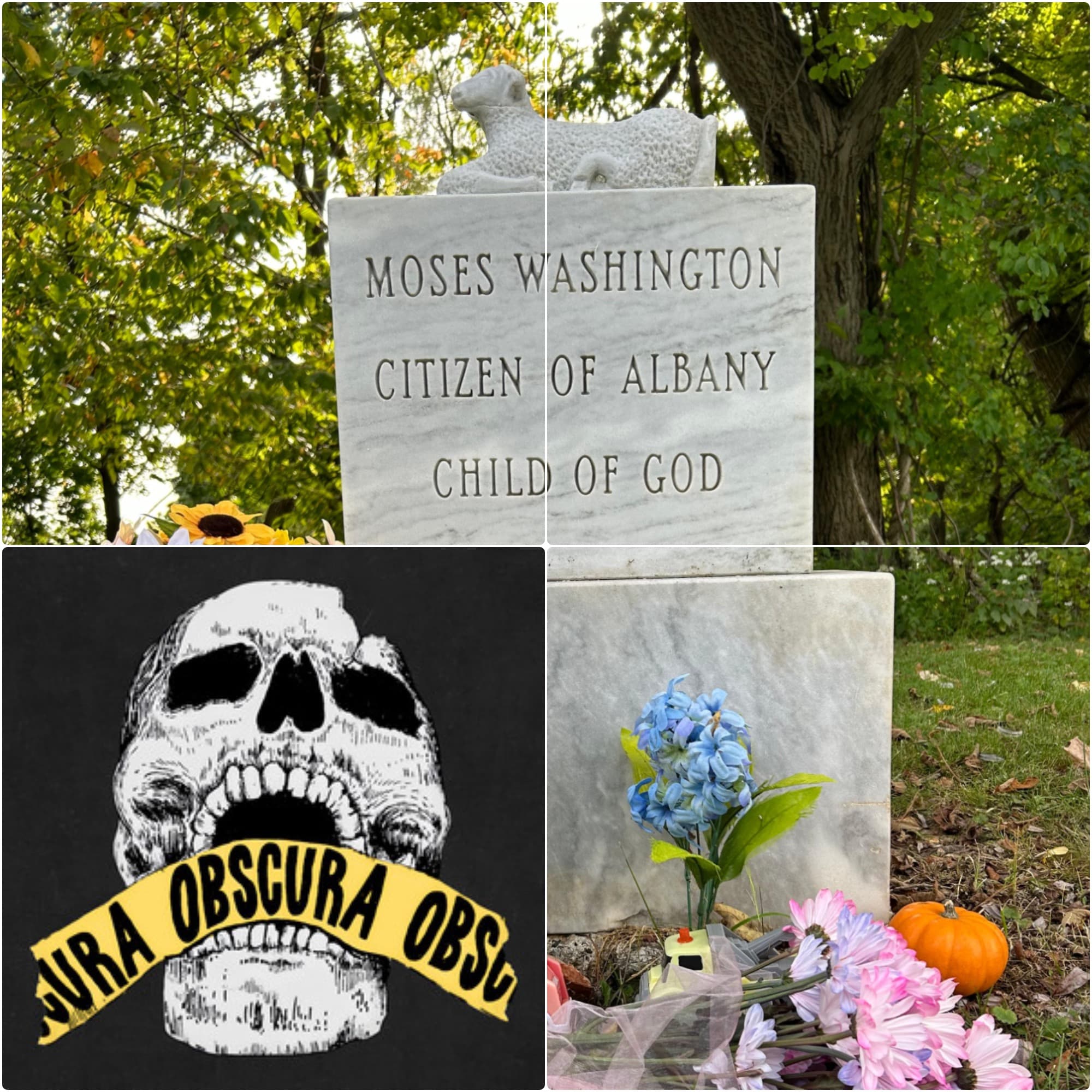
0:02 [SPEAKER_01]: There is a small stone on a rise in Graceland Cemetery, where the mode grass runs out, and the hardwoods begin, and the woods stand behind in every weather. 0:12 [SPEAKER_01]: They're in gray in the long-up state winter, green and full in the summer, rust at the edges in September. 0:19 [SPEAKER_01]: September is the month he was born, and the month he was found. 0:24 [SPEAKER_01]: The two of them only a few hours apart. 0:26 [SPEAKER_01]: On top of the stone is a lamb. 0:28 [SPEAKER_01]: It is the oldest marker a person can set over a grave, and it has meant the same for a thousand years. 0:35 [SPEAKER_01]: Here, why is one who was small and harmless and did nothing to deserve this? 0:40 [SPEAKER_01]: People have carved the lamb over their smallest dead since long before the cemetery existed, in country church yards and city plots. 0:49 [SPEAKER_01]: Wherever a child went into the ground ahead of its parents, it asked for nothing, and it explains nothing. 0:56 [SPEAKER_01]: It only marks, in the plainest language stone can speak, that the one below was a child. 1:02 [SPEAKER_01]: Under the lamp are three lines, Moses Washington, citizen of Albany, child of God, not one word of it is his. 1:11 [SPEAKER_01]: He came into the world with no name, so a name was cut for him in the stone. 1:15 [SPEAKER_01]: He belonged to no city, no county, no family that would claim him, so a city claimed him and carve the claim were anyone could read it. 1:24 [SPEAKER_01]: And the last line could be set over him, without knowing a single fact about who he was, it does not require a birth certificate. 1:32 [SPEAKER_01]: or mother's name, or an answer to any of the questions that stayed unanswered for 27 years, it requires only that he existed, and he did, for a handful of hours, and that was enough to make it true. 1:45 [SPEAKER_01]: Everything written on that stone, the city gave to him. 1:49 [SPEAKER_01]: The one thing it could not give to him, was the name of the person who left him in the dark. 1:53 [SPEAKER_01]: are the truth of what she did before she walked away. 1:56 [SPEAKER_01]: That was carried for 27 years, by exactly one person, 12 miles west of the grave, in the hills. 2:56 [SPEAKER_01]: It was seven in the morning on the first Sunday in September, and Washington Park, Albany. 3:02 [SPEAKER_01]: The white comes in low through the old hoax and alms, and it lies long across the still wet. 3:07 [SPEAKER_01]: From the night, the paths are empty, the benches are empty. 3:11 [SPEAKER_01]: The wake at the bottom of the park sits flat and gray. 3:15 [SPEAKER_01]: 90 acres of lawn and water and monument sit in the middle of a working city. 3:20 [SPEAKER_01]: And at that hour, they belong to almost no one, a jogger passes. 3:25 [SPEAKER_01]: A dog goes by with the person walking it. 3:27 [SPEAKER_01]: A park's crew came on early to beat the heat, because the heat in upstate New York and early September, still has a little summer in it. 3:35 [SPEAKER_01]: The crews knew the park as only the people who tend to place no it. 3:39 [SPEAKER_01]: Every drain and root and soft spot they came on at first light on the weekends, when the paths were empty, and the work would bother no one. 3:48 [SPEAKER_01]: It was good quiet work. 3:49 [SPEAKER_01]: Two men from the crew were digging an irrigation line near the south end, in the formal section where the flower beds are kept in the statue stand. 3:58 [SPEAKER_01]: It was ordinary work on a quiet Sunday. 4:01 [SPEAKER_01]: They were working near the big bronze grouping that had stood there for a hundred years. 4:05 [SPEAKER_01]: The one that children climb in the summer. 4:07 [SPEAKER_01]: the one everyone in Albany knows. 4:10 [SPEAKER_01]: And one of them saw something in the flower bed at its base. 4:13 [SPEAKER_01]: It was small. 4:15 [SPEAKER_01]: It was wrapped. 4:16 [SPEAKER_01]: It had been burned. 4:17 [SPEAKER_01]: For a few seconds before they understood, the morning was still just a morning. 4:22 [SPEAKER_01]: Then they understood what was lying in the flowers. 4:25 [SPEAKER_01]: And one of them went to find a phone. 4:27 [SPEAKER_01]: And the quiet went out of that corner of the park. 4:30 [SPEAKER_01]: did not come back to it for a very long time. 4:32 [SPEAKER_01]: It was a newborn hours old. 4:35 [SPEAKER_01]: Left in the dark at the foot of a statue of Moses. 4:38 [SPEAKER_01]: The man who was himself said a drift as an infant and pulled from the water and saved. 4:44 [SPEAKER_01]: This one was not saved. 4:46 [SPEAKER_01]: Steve Riley was driving. 4:48 [SPEAKER_01]: He was a detective with the Albany Police Department. 4:51 [SPEAKER_01]: And on the morning of September 7th. 4:53 [SPEAKER_01]: He was in his unit with his colleague Ron, working the early shift in the area of Washington Park when the call came over, a report of a dead infant in the park. 5:03 [SPEAKER_01]: By 1997, Steve Riley had heard most of what the work has to offer, but dead infant cones are in its own category. 5:11 [SPEAKER_01]: And every officer who has ever taken one says the same thing, it does not get forgotten, it does not get filed away with the others, it always comes back. 5:23 [SPEAKER_01]: The ordinary handholds of the work are gone. 5:26 [SPEAKER_01]: A grown person who was killed leaves a life a detective can climb. 5:30 [SPEAKER_01]: There are people who love the dead and the people who did not. 5:34 [SPEAKER_01]: The money and the grudges, the last phone calls, the place they worked, the door they came home through. 5:41 [SPEAKER_01]: A detective pulls on those strings, and the case gives, 5:45 [SPEAKER_01]: Newborn leaves none of that. 5:46 [SPEAKER_01]: A newborn a few hours old has been loved or harmed by usually one set of hands. 5:52 [SPEAKER_01]: It's spoken to no one. 5:54 [SPEAKER_01]: Cross no one. 5:55 [SPEAKER_01]: O's no one. 5:56 [SPEAKER_01]: The only thread leading away from the body leads straight to the person the police are trying to find, who has every reason on earth to have cut that thread before it was ever laid down. 6:08 [SPEAKER_01]: The hardest case is, 6:09 [SPEAKER_01]: are not the ones with too many suspects. 6:12 [SPEAKER_01]: They are the ones where a victim never knew a single living soul who might be able to answer for them. 6:18 [SPEAKER_01]: They drove to the southern end of the park down the drives past the empty benches in the lake and pulled up near the formal plantings. 6:26 [SPEAKER_01]: The crew stood well back from their own equipment, a shovel was still in the ground where the digging had stopped. 6:32 [SPEAKER_01]: One of the men pointed, and did not walk over with them, and no one made him. 6:37 [SPEAKER_01]: Riley and Ron crossed the wet grass to the bed at the foot of the statue, and there, among the red flowers, was the small burn bundle. 6:46 [SPEAKER_01]: The crew had uncovered. 6:47 [SPEAKER_01]: The child was a boy. 6:49 [SPEAKER_01]: He was full-term, 6:53 [SPEAKER_01]: Nine pounds and three ounces. 6:55 [SPEAKER_01]: The weight of a pregnancy carried successfully. 6:58 [SPEAKER_01]: All the way to it's end. 6:59 [SPEAKER_01]: His umbilical cord was still attached. 7:01 [SPEAKER_01]: The cord had not been clamped or tied in any medical way. 7:05 [SPEAKER_01]: It had been cut or torn. 7:07 [SPEAKER_01]: By someone working without instruments, and that's small fact what's set in a file for years. 7:12 [SPEAKER_01]: As one of the only physical traces of the hands that had handled 7:16 [SPEAKER_01]: It told the detective something, though not enough, this had not been a hospital birth, no doctor, no men wife, no record. 7:24 [SPEAKER_01]: He had been born somewhere private, a bathroom, or a bedroom, by a woman who had told no one, and then he was carried out into the night. 7:33 [SPEAKER_01]: The search for his mother could not begin in any ordinary place, a birth leaves its mark. 7:39 [SPEAKER_01]: He had been born less than 12 hours before he was found. 7:42 [SPEAKER_01]: On Saturday night, while the city slept, he had been alive somewhere inside it. 7:47 [SPEAKER_01]: He had been wrapped in cloth, a pillowcase or a towel, the plain stuff of every linen closet in America. 7:54 [SPEAKER_01]: In the cloth had been set on fire, the burning had charred the ramping and reached the body. 7:59 [SPEAKER_01]: Though it had not consumed it, the fire had gone out, or been left to go out. 8:05 [SPEAKER_01]: At some point in the dark hours, the small wrapped thing had been laid down in the flower bed, aside the statue and left there. 8:13 [SPEAKER_01]: The detective secured the scene and called the medical examiner, that itself was in bloom that week, a formal planting of red flowers, and the small burn bundle, made among them. 8:24 [SPEAKER_01]: And the other remains lay a box of wooden matches, whoever had set the fire had brought the means with them, and had either dropped the box or not troubled to take it away. 8:34 [SPEAKER_01]: It was a common kitchen box. 8:35 [SPEAKER_01]: The kind sold in every grocery in the state, strike anywhere matches in a slide drawer, and it lay in the mulch a few feet from the child. 8:44 [SPEAKER_01]: A photographer worked the bed while the light came up over the park. 8:47 [SPEAKER_01]: The medical examiner's people came, and the small bundle was lifted with care. 8:52 [SPEAKER_01]: The red flowers were left standing. 8:54 [SPEAKER_01]: By the time the joggers and the dog walkers began to fill the path again, the corner near the statue had been marked off, and the ordinary Sunday had been quietly amputated. 9:04 [SPEAKER_01]: Even in those first hours, they began trying to understand what happened, which broke immediately into two questions. 9:11 [SPEAKER_01]: What happened to this child? 9:12 [SPEAKER_01]: And who is this child? 9:14 [SPEAKER_01]: Riley would carry this case through much of his career. 9:17 [SPEAKER_01]: He rose through the department over the decades. 9:20 [SPEAKER_01]: All the way up to Deputy Chief. 9:22 [SPEAKER_01]: He was there when the child came out of the flower bed, and then he spent much of the rest of his working life trying to find out who that child was. 9:30 [SPEAKER_01]: And he was not alone. 9:32 [SPEAKER_01]: The baby Moses' case got into the people who worked it and did not come out. 9:36 [SPEAKER_01]: Since the child had no name, because the child had no one, the city gave him both. 9:42 [SPEAKER_01]: He had been found beside one of the great monuments of Washington Park, the bronze grouping known as the Moses fountain, properly the King Memorial fountain, a large sculptural arrangement, that stood near the south end of the park since 1893. 9:57 [SPEAKER_01]: The central figure is Moses, striking a rock, an old testament scene in which Moses leading a people dying of thirst in the wilderness, strikes a stone with his staff, and brings water out of it to save them. 10:11 [SPEAKER_01]: It is a monument about deliverance, about water brought to the dying, and it presides over a corner of the park that has been, for more than a century, a place of ordinary 10:26 [SPEAKER_01]: A newborn without a name was found at its base, so they called him Moses, for the statue that had stood over him through the night, the figure who in the story draws life out of stone to save the dying people in the wilderness. 10:39 [SPEAKER_01]: Washington came from the park in the child had his name, baby Moses Washington. 10:45 [SPEAKER_01]: It was a name assembled out of bronze in geography, because the people who found him had nothing else to give. 10:51 [SPEAKER_01]: When word of the discovery went out, Albany did not look away. 10:55 [SPEAKER_01]: The city took the child in. 10:57 [SPEAKER_01]: A memorial fund set up through the police department, drew more than 2,000 dollars, in a working city like Albany. 11:04 [SPEAKER_01]: That was a real sum, given by people who didn't have much to spare. 11:09 [SPEAKER_01]: For the burial of a baby, none of them had ever met. 11:11 [SPEAKER_01]: The donations arrived in envelopes at the police department, small checks and folded bills, some with notes, some without, from people who gave their five or their $20, it did not leave a name. 11:24 [SPEAKER_01]: A city that is often written about for its hard winters and its hard politics turned out. 11:29 [SPEAKER_01]: And that one autumn, to be a soft place at the center, though donations came faster than the cost of the burial, and local businesses and funeral directors donated much of what the service required. 11:40 [SPEAKER_01]: The surplus was directed by the people organizing it. 11:44 [SPEAKER_01]: To charities that helped children, the burial was on Friday, September 19th, 1997, 12 days after the discovery at Graceland Cemetery in Albany. 11:54 [SPEAKER_01]: More than 100 people came, they were not family. 11:58 [SPEAKER_01]: The child had no family. 11:59 [SPEAKER_01]: A rather, he had a family who were precisely the people, not in attendance. 12:04 [SPEAKER_01]: They were strangers. 12:06 [SPEAKER_01]: They were Albany residents who had read the newspaper and could not stand the idea of a child going into the ground, unmorned, and they came, a hundred of them in more, and they stood at the graveside and weft. 12:18 [SPEAKER_01]: One of them, a man named Marshall Stone, took the day off work to be there and stopped at his own father's grave in the same cemetery. 12:26 [SPEAKER_01]: This was a life that has gone and never had a chance he said. 12:30 [SPEAKER_01]: He could not understand how a person could leave a child out in the park. 12:34 [SPEAKER_01]: The police worked the funeral even as they mourned at it. 12:37 [SPEAKER_01]: Officers photographed everyone at the grave site that morning. 12:41 [SPEAKER_01]: Every face. 12:42 [SPEAKER_01]: on the theory that the mother might be among them, drawn back to see the burial of the thing she had done. 12:48 [SPEAKER_01]: Somewhere in the files of the Albany Police Department, there is a set of photographs of a hundred grieving strangers taking on the chains that one of them was not a stranger and was not exactly grieving. 13:00 [SPEAKER_01]: The Catholic DSEs donated the burial clothes. 13:03 [SPEAKER_01]: The funeral home dressed him in a white sleeper, cotton and silk, with a matching bonnet and booties, and wrapped him in a pale blue blanket. 13:12 [SPEAKER_01]: The police placed a teddy bear in the casket, a small bear bearing the logo of the police athletic week. 13:18 [SPEAKER_01]: mourners brought flowers and stuffed animals and cards and laid them next to the tiny white coffin. 13:25 [SPEAKER_01]: The coffin was very small. 13:27 [SPEAKER_01]: The size funeral homes keep in the back room and hope never to sound. 13:31 [SPEAKER_01]: It looks smaller still under the pile of soft, bright things. 13:35 [SPEAKER_01]: The strangers kept adding to it. 13:37 [SPEAKER_01]: A woman named Charlotte Lowe volunteered to sing and she stood over the small casket in sun. 13:43 [SPEAKER_01]: This babe is not a motherless child, to a child whose mother had left him in a park in the dark. 13:49 [SPEAKER_01]: It was a wish sung over a fact, at the time of the funeral. 13:53 [SPEAKER_01]: The death had not yet even been ruled a homicide, officially the question was still open. 13:58 [SPEAKER_01]: No one standing on that grass believed it was open. 14:01 [SPEAKER_01]: They had come to bury a murder child, whatever the paperwork said yet, and they buried him as one. 14:07 [SPEAKER_01]: It was a bright cool morning at Graceland that Friday. 14:10 [SPEAKER_01]: A hundred strangers standing on grass still wet at the roots, a stone would come later, and what the city chose to carve on it belongs to part two. 14:20 [SPEAKER_01]: That Friday, there was only the small coffin, the open earth. 14:24 [SPEAKER_01]: in the crowd that would not let him go into it unattended, then they went back to their cars in their ordinary days, and the leaves kept turning and winter came on. 14:34 [SPEAKER_01]: The plot the city chose for him was not random. 14:37 [SPEAKER_01]: Baby Moses was laid down beside another child, a girl who had been in the ground at Graceland for 74 years. 14:44 [SPEAKER_01]: In 1923, a newborn girl had arrived at the Albany post office in a 14:51 [SPEAKER_01]: Dead, hacked in a box with a $5 bill, no one ever learned who mailed her. 14:57 [SPEAKER_01]: The Albany of the era did what the Albany of 1997 would do all over again, it gave her a name, taken from how she arrived, parcel up post, and it buried her, and her mother was never found. 15:10 [SPEAKER_01]: Two abandoned newborns, 74 years of heart, side by side, under the same grass. 15:16 [SPEAKER_01]: two mothers who had walked away into their own lives, and who, as far as anyone at that graveside could know, would never be found. 15:25 [SPEAKER_01]: The city had been here before, and waited out one of these secrets already, waited it out to nothing, and the people lowering the second small coffin into that ground. 15:35 [SPEAKER_01]: At every reason to believe this one, when in the same silent unanswered way, the city comes to know its own silences. 15:42 [SPEAKER_01]: It had one already, 74 years deep, and it made room beside it for another. 15:47 [SPEAKER_01]: Outside the season was turning, the first hard cold of the year was moving down out of Canada, and the trees in the city went from rust to bear in the space of a week. 15:58 [SPEAKER_01]: Inside the examiner's room, none of it reached the table. 16:01 [SPEAKER_01]: The autopsy was the first place the case both opened and closed at the same time. 16:07 [SPEAKER_01]: It opened because the medical examiner can establish a great deal about the child. 16:11 [SPEAKER_01]: It was a boy. 16:12 [SPEAKER_01]: It was full-term and well-developed. 16:14 [SPEAKER_01]: It had been born alive. 16:16 [SPEAKER_01]: That finding is one that turns a tragedy into a homicide, and the proof of it was in his lungs, a child who was still born, who never draws breath, as long as they have never been inflated, dense and airless. 16:28 [SPEAKER_01]: A child who breaves, even once, even for a few minutes, leaves a permanent record of it. 16:34 [SPEAKER_01]: Intissue that has filled will never fully collapse again. 16:37 [SPEAKER_01]: That change of pathologists can read, he had breathed, he'd been out in the world, a healthy nine pound boy, drawn the ordinary air of an Albany night into a body that worked exactly as it was built to work, and then within a matter of hours he had stopped, and in that same stroke the case closed again, because the cause of death 16:58 [SPEAKER_01]: could not be cleanly established from what remained. 17:01 [SPEAKER_01]: The body had been burned, and the fire, whatever else had accomplished, degraded the evidence, which may have been part of the point. 17:09 [SPEAKER_01]: The forensic pathologists, Michael Bodden, who consulted on the case, described the autopsy results as inconclusive. 17:17 [SPEAKER_01]: The fire had taken away the very thing a pathologist looks for. 17:21 [SPEAKER_01]: Whoever had burned him may or may not have known that, the effect either way was to rob the examination of the certainty might have otherwise reached, and to leave how he died, standing on inference, where it would rather have stood on evidence. 17:35 [SPEAKER_01]: There was a bruise on the crown of the child's head, and the investigators considered it carefully, because a bruise on a dead infant's skull can mean a blow. 17:44 [SPEAKER_01]: The assistant police chief at the time, John 17:50 [SPEAKER_01]: The ordinary trauma of a head passing through a birth canal, and that assessment stood, there were no other signs of injury, there was no natural illness, no congenital condition, no defect of the heart or lungs or the brain, nothing in the child's own body that explained why a healthy newborn was dead within hours of a healthy birth. 18:10 [SPEAKER_01]: So the medical examiner was left with a child who had been born alive and healthy, who had died within hours for no reason his own body could explain, whose remains had been burned and who had been left in a public park. 18:22 [SPEAKER_01]: No cause of death finding is needed to read that. 18:25 [SPEAKER_01]: A healthy baby does not die in its first hours and then wrap itself in a pillowcase and set itself on fire and walk to the washton park. 18:34 [SPEAKER_01]: Someone did each of those things. 18:36 [SPEAKER_01]: The death, whatever the specific mechanism was homicide, and everyone who looked at the case understood that from the beginning, what they did not have, and would not have for 27 years, was the mechanism, the hand, and the name. 18:51 [SPEAKER_01]: The hair told them one small thing, analysis of the child's hair, indicated he was of Caucasian or Latino descent. 18:59 [SPEAKER_01]: At the time, that was nearly the limit of what biology can offer. 19:03 [SPEAKER_01]: They narrowed the search hardly at all. 19:05 [SPEAKER_01]: It was a single thin fact in a case that had almost none. 19:09 [SPEAKER_01]: And the investigators wrote it down and capped it. 19:12 [SPEAKER_01]: In a case like this, everything fact gets capped. 19:15 [SPEAKER_01]: There is no town which will matter in a future. 19:18 [SPEAKER_01]: No one can yet imagine. 19:19 [SPEAKER_01]: the biology of the case would be the thing that broke it, just not that piece and not for a very long time. 19:27 [SPEAKER_01]: What follows is the hardest kind of story for me to tell, because it's the story of absence, for years almost nothing happened. 19:35 [SPEAKER_01]: Not because no one was trying, but because there was nothing to push against, a homicide file is supposed to grow, interviews accumulate, leads branch, the paper thickens as the investigation moves, the file thickens too, but with the wrong kind of paper. 19:51 [SPEAKER_01]: The tips that led nowhere, the hospital records that ruled people now, the calls from people who were certain they knew something, and did not. 19:59 [SPEAKER_01]: It grew heavier every year without getting any closer. 20:02 [SPEAKER_01]: A box filled with proof of how hard people had tried and how little there was to find. 20:08 [SPEAKER_01]: The problem that detectives faced that autumn was close to unworkable. 20:12 [SPEAKER_01]: They had a victim with no identity, an ordinary homicide, the victim is the beginning of the threat. 20:19 [SPEAKER_01]: The dead person has a name, and from there the work runs outward to the people who knew them, the people who wanted them gone, the last people to see them alive. 20:28 [SPEAKER_01]: With baby Moses, the victim had been alive only a few hours and had met no one. 20:33 [SPEAKER_01]: The detectives were left with the one move, the case aloud, working outward from the mother they could not name. 20:39 [SPEAKER_01]: They came with hospitals for a woman who would come in bleeding, are not coming at all. 20:44 [SPEAKER_01]: When she should have, they chased tips that the neighbor had seen pregnant, and then suddenly was not. 20:50 [SPEAKER_01]: Every lead was the same lead. 20:52 [SPEAKER_01]: A woman visibly carrying a child, and then visibly not. 20:56 [SPEAKER_01]: In a metro area of nearly a million people, 20:59 [SPEAKER_01]: There were more of those innocently explained that any squad could run to the ground. 21:04 [SPEAKER_01]: He had no school, no friends, no enemies, no coworkers, no debts, a relationship. 21:10 [SPEAKER_01]: The only person on earth who had any connection to him was the person the police were looking for. 21:15 [SPEAKER_01]: and that person had planned it precisely so, because the investigators understood something early, something that makes the case colder than the ordinary run of tragedy. 21:24 [SPEAKER_01]: This was not a moment of panic by a frightened girl who did not know what to do, or was not only that, someone had carried a pregnancy to full-term, a nine-pound baby, all the way to healthy birth and secret, someone had given birth a wound and managed it, someone had then made a series of decisions and sequence, 21:43 [SPEAKER_01]: each one requiring more resolve than the last, and someone had taken the body out of wherever the birth had happened into the city to a public park and chose in that spot. 21:54 [SPEAKER_01]: The crime and its cover-up are the same act carried out over the months of careful hiding and then one night of disposable. 22:02 [SPEAKER_01]: By the time the body surfaced into the flower bed, the trail the police needed had not gone cold, so much as they had never existed. 22:10 [SPEAKER_01]: The detectives put out the call that runs through every case like this, the public appeal that is half investigation and half plea. 22:18 [SPEAKER_01]: If you know of a woman who was visibly pregnant that summer and suddenly not contact us, if you know of a woman who said she was pregnant, and then she said she gave the baby up for adoption. 22:28 [SPEAKER_01]: Contact us. 22:30 [SPEAKER_01]: They worked the records of women who had sought prenatal care and then vanished from the system. 22:35 [SPEAKER_01]: They followed the tips that came in. 22:37 [SPEAKER_01]: The trouble was that the person they were looking for had never entered the system at all. 22:41 [SPEAKER_01]: She had not sought prenatal care under her own name. 22:44 [SPEAKER_01]: She had not delivered in a hospital. 22:46 [SPEAKER_01]: She had carried the pregnancy and secret and delivered in secret. 22:50 [SPEAKER_01]: Years passed. 22:51 [SPEAKER_01]: The case did not close. 22:53 [SPEAKER_01]: cases like this rarely do, but it did go cold, which is a different thing. 22:58 [SPEAKER_01]: Cold means the active leads are exhausted. 23:01 [SPEAKER_01]: Cold means the final goes into a drawer and comes out on anniversaries and when a new detective rotates in and reads at fresh and feels the same thing the last one felt. 23:12 [SPEAKER_01]: The detectives who had worked it, moved on to other cases, and were promoted, and some of them even retired. 23:19 [SPEAKER_01]: And one of them, the former Chief Kevin Tuffy, who had spoken at the surface, died in 2019 without ever learning any answers. 23:28 [SPEAKER_01]: At the funeral in 1997, Tuffy had sent aloud what everyone in the department was thinking, which was a direct appeal to the woman out there. 23:37 [SPEAKER_01]: Somewhere, who knew, he said he would hope that whoever it was would have the common decency to come forward and say that was my child, and I want to do the right thing. 23:47 [SPEAKER_01]: The years in Albany are not general ones to mark time by. 23:51 [SPEAKER_01]: The long grey upstate winners came down, snow bearing the small stone at Graceland from Monsetta stretch, the park walked under ice, the lake froze in hard enough to walk on, then 24:04 [SPEAKER_01]: the mud, the brieffilot green of the upstate spring, the heavy summers, and September again, every September, the anniversary coming back around with the cool mornings and the rusting maples, in the case no closer to an answer than the morning the park crew found him. 24:21 [SPEAKER_01]: What these men were waiting for, although they could not yet have named it, was a tool that did not exist. 24:28 [SPEAKER_01]: The whole case was waiting on a technology to be invented. 24:31 [SPEAKER_01]: Everything the detectives could do with the methods of the day, they had already done, and exhausted, and it had not been enough. 24:39 [SPEAKER_01]: It never would be. 24:40 [SPEAKER_01]: The answer was locked inside a few cells of biological material and an evidence locker, and the key to reading them had not been billed yet. 24:49 [SPEAKER_01]: The detectives had the answer in the building the entire time. 24:52 [SPEAKER_01]: They just could not read it. 24:54 [SPEAKER_01]: No one could. 24:55 [SPEAKER_01]: strange that the solution to a murder can sit in a labeled envelope in the property room for a quarter century, while everyone who needs it stands around it, unable to read it. 25:05 [SPEAKER_01]: The thing that would eventually break the case was sitting in storage the whole time, which is the quiet miracle and the quiet agony of it both. 25:14 [SPEAKER_01]: When the body was recovered, the medical examiner and the investigators followed the practice of the time and preserved the biological evidence, and then the years began to pass over it. 25:24 [SPEAKER_01]: DNA analysis existed then, but it was a bonter instrument then it would become, to get a usable DNA profile from a sample, and the weight 90s took a large quantity of material, and then that profile could then be compared to a known suspect. 25:40 [SPEAKER_01]: are to a database of profiles already on file. 25:43 [SPEAKER_01]: For Baby Moses, the DNA science of the day could establish a profile of the child himself, but that was an answer to a question no one was asking. 25:52 [SPEAKER_01]: They knew who the child was, and the only sense DNA could then tell them what they needed was to use the child's DNA to find someone else. 26:01 [SPEAKER_01]: A parent, so the evidence went into preservation, and it waited, and while it waited, in laboratories and university departments, and a handful of private companies around the country, the field of forensic genetics went through a revolution, two revolutions really stacked on top of each other. 26:19 [SPEAKER_01]: The first was the steady improvement of the ability to extract usable profiles from smaller, older, more degraded samples. 26:27 [SPEAKER_01]: The second and the one that changed everything was the arrival of forensic genetic genealogy. 26:33 [SPEAKER_01]: The idea behind it is both simple and the longer it sits in the mind, staggering. 26:39 [SPEAKER_01]: Traditional forensic DNA matching is a one-to-one comparison, a profile from a crime scene 26:48 [SPEAKER_01]: or a wall enforcement database of known offenders, and either matches or does not. 26:53 [SPEAKER_01]: Forensic genetic genealogy works differently. 26:57 [SPEAKER_01]: It takes a much richer DNA profile that kind used by consumer ancestry services, and it searches not for the person themselves, but for that person's relatives, the cousins and second cousins and more distant kin who have uploaded their own DNA to genealogy databases. 27:15 [SPEAKER_01]: The suspect need not be in any database at all. 27:18 [SPEAKER_01]: It is enough for a third cousin to have spitting a tube to find out about their heritage. 27:23 [SPEAKER_01]: From that distant relative, a genealogist builds the family tree out and back, cross-referencing public records, birth and marriage and death. 27:32 [SPEAKER_01]: until the branches converge, on the one person who fits all the constraints, the right age, the right place, the right line of descent. 27:42 [SPEAKER_01]: It is the technology that found the Golden State Killer, the former police officer Joseph DeAngelo. 27:47 [SPEAKER_01]: who had alluded to California investigators for over 40 years until his distant relatives DNA, sitting in a public genealogy database drew the net close around him in 2018, and in 2020, the Albany Police Department decided to point it at the oldest and coldest and most painful case in the building. 28:08 [SPEAKER_01]: The department partnered with the Cold Case Analysis Center at the College of St. Rose, a small college in Albany that ran a program in exactly this kind of work. 28:18 [SPEAKER_01]: The patient re-examination of cases that the passage of time had rendered it newly solvable. 28:24 [SPEAKER_01]: By then the case had outlived the careers of the men who commented, some of the youngest detectives who'd work it, and its final years had not been born on the September morning. 28:34 [SPEAKER_01]: The parks crew called it in. 28:36 [SPEAKER_01]: They inherited it, the file and the weight of it together, from the officers who had inherited themselves. 28:42 [SPEAKER_01]: By then the physical file had grown into boxes, a quarter century of tips, and dead ends, and forensic reports, and the photographs from the grave side. 28:52 [SPEAKER_01]: every detective who took custody of it, read back through the whole thing, as a person reads the diary of someone they never met, learning the case the slow way from the beginning, so they could carry it correctly. 29:04 [SPEAKER_01]: The premise of that partnership was that the science had moved far enough that the preserved evidence might finally yield something it could not yield before. 29:14 [SPEAKER_01]: The first step was the profile. 29:16 [SPEAKER_01]: Forensic specialists went back to the biological evidence that had been preserved for more than two decades and worked to extract a usable DNA profile from it. 29:25 [SPEAKER_01]: The profile went to the FBI's forensic genetic genealogy team and the FBI did the thing the technology makes possible. 29:32 [SPEAKER_01]: They ran the child's profile against the genealogical databases. 29:36 [SPEAKER_01]: They did not find the child's mother, because the child's mother had never uploaded her DNA anywhere. 29:42 [SPEAKER_01]: But they found relatives. 29:44 [SPEAKER_01]: They found the distant kin, the cousins, whose DNA was in the system. 29:49 [SPEAKER_01]: And from those relatives, the genealogists began to build the trees. 29:53 [SPEAKER_01]: The work is stranger and more patient than the television version. 29:57 [SPEAKER_01]: There is no single database match than lights up red. 30:02 [SPEAKER_01]: Then another, people who share a sliver of DNA with the dead child who have no idea that they're spitting a two-band-sister kid has been folded into a homicide. 30:12 [SPEAKER_01]: A genealogist takes those slivers and builds outward, whole family trees from public record, obituary's, marriage licenses, old newspaper notices, census data. 30:23 [SPEAKER_01]: Eventually the trees of several unrelated matches overlap, and the overlap points at a shared set of ancestors. 30:30 [SPEAKER_01]: From there, the genealogist works back down the branches, pruning everyone who does not fit the wrong sex, the wrong age, the wrong place. 30:39 [SPEAKER_01]: What is left after months is a short list of people who could be the parent of a child born in Albany in September of 1997. 30:49 [SPEAKER_01]: Then, the list is won. 30:50 [SPEAKER_01]: Her name was Carrie Spielman. 30:53 [SPEAKER_01]: By 2024, she went by her married name, Carrie Mazuka, and she was living in Ultimond, a small village in the hills of West Albany, a little over a dozen miles from the park. 31:05 [SPEAKER_01]: She was in her early 50s, 25 years old in the September the child was found. 31:10 [SPEAKER_01]: She was to all appearances in ordinary woman, living an ordinary life, a wife, 31:17 [SPEAKER_01]: The science had reached across 27 years and put its finger on her, and as the summer of 2024, turn towards its end, she had no idea what was coming.
Show full transcript (302 segments)