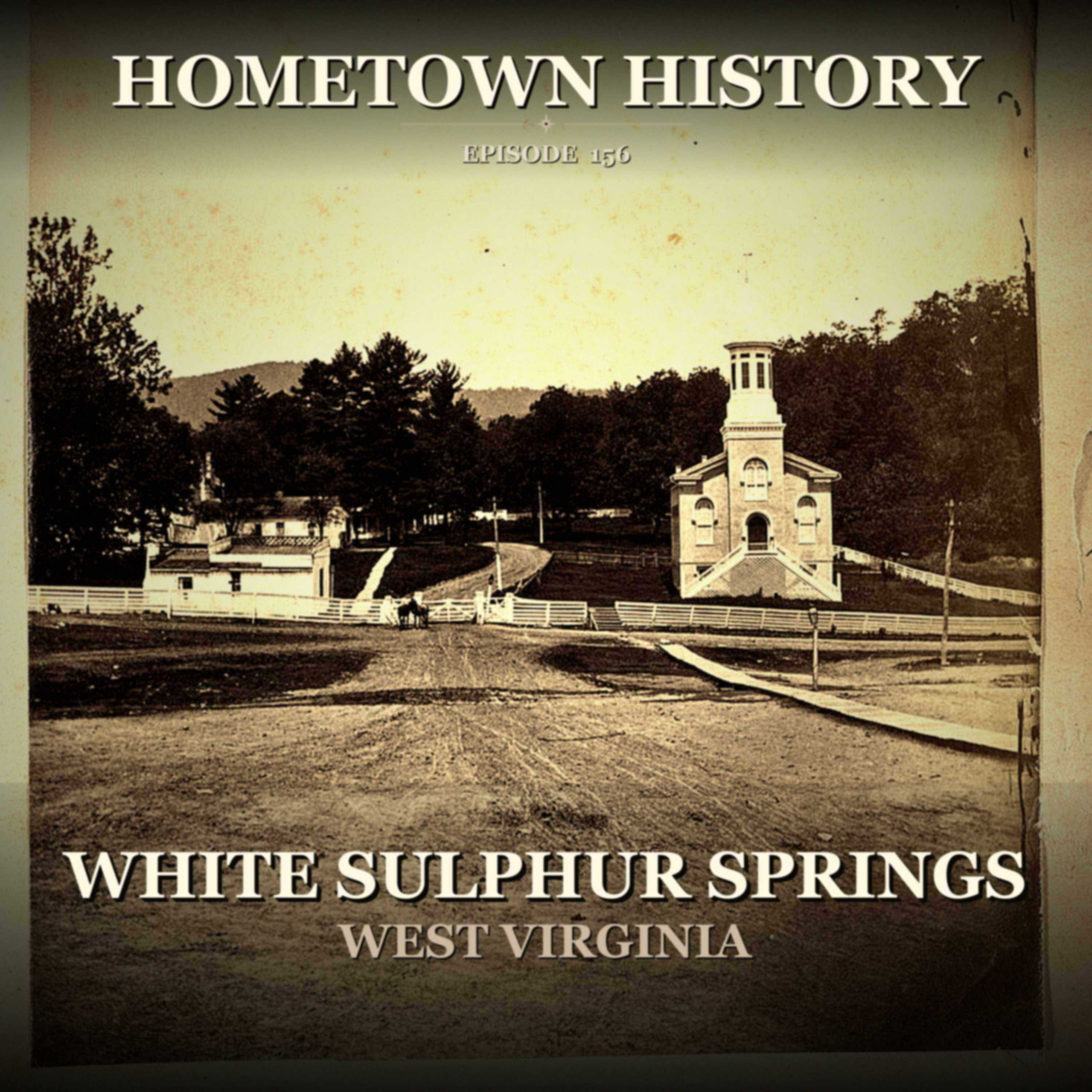
0:02 [SPEAKER_00]: Here on Home Town History, we've covered our fair share of government projects and cover-ups. 0:09 [SPEAKER_00]: Governments are known for their secrets. 0:12 [SPEAKER_00]: From covert operations to hidden facilities, they usually keep their most important plans out of public sight. 0:20 [SPEAKER_00]: Think about Area 51, long rumored to be the site of UFO research, or the secret of Manhattan Project, a developed the atomic bomb. 0:32 [SPEAKER_00]: It's almost like an open secret. 0:34 [SPEAKER_00]: We know they exist, but we don't know everything. 0:38 [SPEAKER_00]: Which is when conspiracy theories start cropping up. 0:43 [SPEAKER_00]: Today we will explore one such secret. 0:52 [SPEAKER_00]: Welcome back, friend, to hometown history. 0:55 [SPEAKER_00]: Today's episode is all about secrecy, loyalty, and a hidden world beneath one of America's most luxurious resorts. 1:05 [SPEAKER_00]: This is Project Greek Island. 1:12 [SPEAKER_00]: Our story begins in West Virginia at the Green Breyer Resort. 1:17 [SPEAKER_00]: This looked joyous, getaway, has been a favorite of princes and politicians since it opened in 1778. 1:24 [SPEAKER_00]: Hidden in the Allegheny Mountains, in the town of White Sulphur Springs, the Green Breyer started as a series of summer cottages, and grew into the Grand Hotel, you see today, surrounded by beautiful gardens, and golf courses, 1:42 [SPEAKER_00]: At the height of the Cold War in the late 1950s, the threat of nuclear attacks sent the world into a panic. 1:50 [SPEAKER_00]: So fearing that an invasion might happen at any moment, both the Soviet Union and the United States built up their military capabilities and constructed vast nuclear arsenals. 2:04 [SPEAKER_00]: And with that, any event of a national emergency, they also get to the task of building 2:13 [SPEAKER_00]: The U.S. government tasked the Army Corps of Engineers with finding places to build an underground bunker, where members of Congress could stay safe during a nuclear attack. 2:25 [SPEAKER_00]: The Green Breyer Resort was selected because it was close to Washington, D.C. and its prior relationship with the U.S. government, having already served as a military hospital during World War II. 2:40 [SPEAKER_00]: At the time, it would spread over 11,000 acres, a vast West Virginia Hill. 2:47 [SPEAKER_00]: So it was kind of the perfect location for a project like this. 2:55 [SPEAKER_00]: Constructing the bunker, codenamed Project Greg Island, was a huge task in itself. 3:02 [SPEAKER_00]: the government drew what they called the federal arc, a series of emergency relocation centers within 300 miles of Washington, DC. 3:12 [SPEAKER_00]: It wasn't just about protecting certain individuals, it was about keeping the constitutional framework of the government intact. 3:21 [SPEAKER_00]: the leadership would be moved to these facilities to ensure continuity of government operations. 3:29 [SPEAKER_00]: Construction on the bunker began in 1958, nearly two centuries after the resorts opening. 3:37 [SPEAKER_00]: To keep the plans under wraps, the resorts came up with a cover story that they were adding a new wing to the hotel. 3:45 [SPEAKER_00]: The green briar didn't have air conditioning at the time. 3:49 [SPEAKER_00]: So they used that as an excuse to build the West Virginia wing with air-conditioned rooms. 3:56 [SPEAKER_00]: This cover story worked perfectly. 3:58 [SPEAKER_00]: And neither the hotel staff nor the locals suspected the real reason behind the major addition. 4:06 [SPEAKER_00]: The new wing provided the perfect cover for the real work, being done and a ground. 4:13 [SPEAKER_00]: The bunker roughly the size of two football fields stacked on top of each other was a giant concrete box with two foot thick concrete walls reinforced with steel buried 20 feet underground. 4:29 [SPEAKER_00]: It took 50,000 tons of concrete to build and a massive crew to construct it. 4:36 [SPEAKER_00]: The green briar bunker was built to accommodate 1,100 people and divided into 3 groups, 435 representatives, 100 senators, and their respective support staff. 4:51 [SPEAKER_00]: Obviously, this was no small project. 4:54 [SPEAKER_00]: The bunker was designed to protect its entrances and exits with blast doors, including an 18-ton blast door hidden behind a cover door that fit perfectly into the hotel's decor. 5:10 [SPEAKER_00]: Since this was going to be the hiding place, meant for Congress members to stay in for 5:21 [SPEAKER_00]: The dorms consisted of 18 rooms, each built to house 60 people in metal bunk beds. 5:30 [SPEAKER_00]: The bunker was stocked with enough food and water to last for 60 days. 5:35 [SPEAKER_00]: And it had its own secure water supply and generators to maintain power. 5:42 [SPEAKER_00]: The construction of the bunker was completed in 1962, and since it was an elaborate setup, 5:49 [SPEAKER_00]: that meant it would require constant maintenance to be reliable enough for an emergency situation. 5:59 [SPEAKER_00]: After it was built, the Green Breyer bunker was taken care of by 12 to 15 government employees. 6:06 [SPEAKER_00]: They pretended to work for a TV repair company called Forsythe Associates, 6:12 [SPEAKER_00]: Every Wednesday night for 30 years, the Green Breyer staff fired up the bunker's generators to keep them in a constant state of operational readiness. 6:23 [SPEAKER_00]: They also had to ensure all the filters were replaced, and the medications were current, and all the food supplies were prepared. 6:34 [SPEAKER_00]: The government employees also had to keep their plans updated, based on who the current members of Congress were. 6:41 [SPEAKER_00]: because for 30 years, every one of these 1100 beds was assigned to someone. 6:49 [SPEAKER_00]: The staff who maintained the bunker had signed strict non-disclosure agreements and were serious about keeping the secret. 6:58 [SPEAKER_00]: But as it turns out, they were not the only ones who knew. 7:02 [SPEAKER_00]: The locals started noticing something strange about the construction. 7:09 [SPEAKER_00]: The foundation hole was enormous and trucks delivered huge amounts of concrete daily. 7:16 [SPEAKER_00]: And to add to the suspicions, among the deliveries were puzzling items, such as a huge quantity of urinals, bunk beds, and steel doors. 7:28 [SPEAKER_00]: Even guards were stationed outside during this construction, and that made it a bit obvious 7:39 [SPEAKER_00]: Pretty soon, people started talking, and theories were brewing up. 7:46 [SPEAKER_00]: These stayed limited to within the Green Breyer County. 7:50 [SPEAKER_00]: People mainly talked to each other, but not to any outsiders. 7:56 [SPEAKER_00]: Secrecy was a part of life. 7:59 [SPEAKER_00]: The Green Breyer was the biggest employer in the area, and multiple generations of families worked there. 8:06 [SPEAKER_00]: This also helped create a sense of loyalty, and fear of losing a good job. 8:13 [SPEAKER_00]: As described by Ann Tate Bell, a resident of Green Breyer for almost 35 years, everyone just agreed to be in on the secret. 8:24 [SPEAKER_00]: This is how an open secret works. 8:26 [SPEAKER_00]: The locals knew a little bit about what was there, but the truth about the new wing remained hidden from the rest of the world. 8:36 [SPEAKER_00]: this secret state intact for a long time. 8:41 [SPEAKER_00]: Parents warned their children against loose talk and tape Bell's father, for example, ran the Green Breyer Valley Airport and took his government security clearance seriously. 8:56 [SPEAKER_00]: One day Bell's brother and his friends saw a new elevator being 9:05 [SPEAKER_00]: And at dinner that night, Bell's brother excitedly, shared the story. 9:12 [SPEAKER_00]: In Bell mentioned, my father was horrified. 9:16 [SPEAKER_00]: He said, this is top secret. 9:18 [SPEAKER_00]: You should call your friends in, and I will give them the same lecture I'm giving you. 9:22 [SPEAKER_00]: This must never be mentioned. 9:26 [SPEAKER_00]: the town was serious about keeping the secret. 9:30 [SPEAKER_00]: Surprisingly enough, the bunker remained a complete secret to the outside world for more than 30 years. 9:37 [SPEAKER_00]: But it did not go on forever. 9:42 [SPEAKER_00]: In April of 1992, reporter Ted Gup received an anonymous tip about the bunker. 9:55 [SPEAKER_00]: Conti was the Green Briar's official historian, having worked at the resort for over 40 years. 10:02 [SPEAKER_00]: Conti gave him the official line. 10:04 [SPEAKER_00]: Rumors about the Green Briar were just that. 10:07 [SPEAKER_00]: Rumors. 10:09 [SPEAKER_00]: There was nothing else going on there. 10:12 [SPEAKER_00]: But, Gup didn't believe him. 10:15 [SPEAKER_00]: Apparently, he investigated these rumors several years following this. 10:21 [SPEAKER_00]: And finally, he persuaded someone to talk. 10:25 [SPEAKER_00]: had a map of the facility, and it was clear he had good sources. 10:31 [SPEAKER_00]: The Washington Post debated whether to publish the story, and they finally decided it would not affect national security in any way. 10:41 [SPEAKER_00]: So they went ahead with the article. 10:45 [SPEAKER_00]: The article was titled The Ultimate Congress Hydro-A, and it was published on May 31, 1992, 10:55 [SPEAKER_00]: a part of it said, the green briar was different, and that it relied more on the element of secrecy than on any mountain of rock to shield it from incoming bombs. 11:06 [SPEAKER_00]: Yet despite the discretion of the resort staff, the existence of some kind of hidden government installation there was widely known. 11:16 [SPEAKER_00]: Gupp's article contained clear details of the classified bunker. 11:21 [SPEAKER_00]: And obviously, the government immediately reacted. 11:25 [SPEAKER_00]: The next day, the speaker of the house announced that the bunker would be shut down. 11:30 [SPEAKER_00]: The legal relationship between the Grand Breyer and the government was dissolved, and the bunker was decommissioned. 11:39 [SPEAKER_00]: In the word to Bob Conti, the bunker was prepared for everything, except an article in the Washington Post. 11:49 [SPEAKER_00]: When the truth came out, many of the green-dryer locals were angry with Gup and the post. 11:56 [SPEAKER_00]: And you can understand why. 11:57 [SPEAKER_00]: This was a secret they were proud of maintaining for years now, not to mention the pride of being the safety space for some of America's most powerful people. 12:10 [SPEAKER_00]: And now, Gup had essentially betrayed them. 12:15 [SPEAKER_00]: The anonymous tipster who alerted Gop to the bunker was never identified. 12:20 [SPEAKER_00]: Conti believes they were a federal government employee who didn't like that money was being spent on an outdated bunker in the post-Cold War era. 12:31 [SPEAKER_00]: The story also led to political backlash, with questions about spending taxpayer dollars on a bunker for Congress, while ordinary citizens were left unprotected. 12:44 [SPEAKER_00]: On the other hand, there wasn't a plan for how to shut it down. 12:48 [SPEAKER_00]: Equipment from inside the bunker was removed and transferred to other government properties. 12:55 [SPEAKER_00]: And on August 1st, 1995, the bunker officially became the property of the Green Breyer. 13:02 [SPEAKER_00]: In the very first thing they started doing was giving tours. 13:07 [SPEAKER_00]: The staff that worked on this bunker were given the first tours as a token of appreciation for their work and their discretion. 13:16 [SPEAKER_00]: Today, the Green Breyer bunker offers a unique and slightly terrifying reminder of how close the world came to nuclear war. 13:26 [SPEAKER_00]: It gives us a peek into what life would have been like for the chosen few. 13:31 [SPEAKER_00]: Shelter deep below, a post-apocalyptic world. 13:38 [SPEAKER_00]: and that's it for today's episode. 13:42 [SPEAKER_00]: This story is one of the most fascinating secrets in American history. 13:47 [SPEAKER_00]: It shows how an entire town kept a huge secret without letting the rest of the world find out. 13:55 [SPEAKER_00]: It's actually a rare example of true loyalty and discretion. 14:01 [SPEAKER_00]: But the question is, now that the green blyer bunker has been exposed, if there'd be a new undiscovered bunker somewhere else, if one has ever found, you'll know about it, for me. 14:14 [SPEAKER_00]: Thanks for listening to Home Town History. 14:18 [SPEAKER_00]: Be sure to follow along for more interesting stories from the past.
Show full transcript (117 segments)