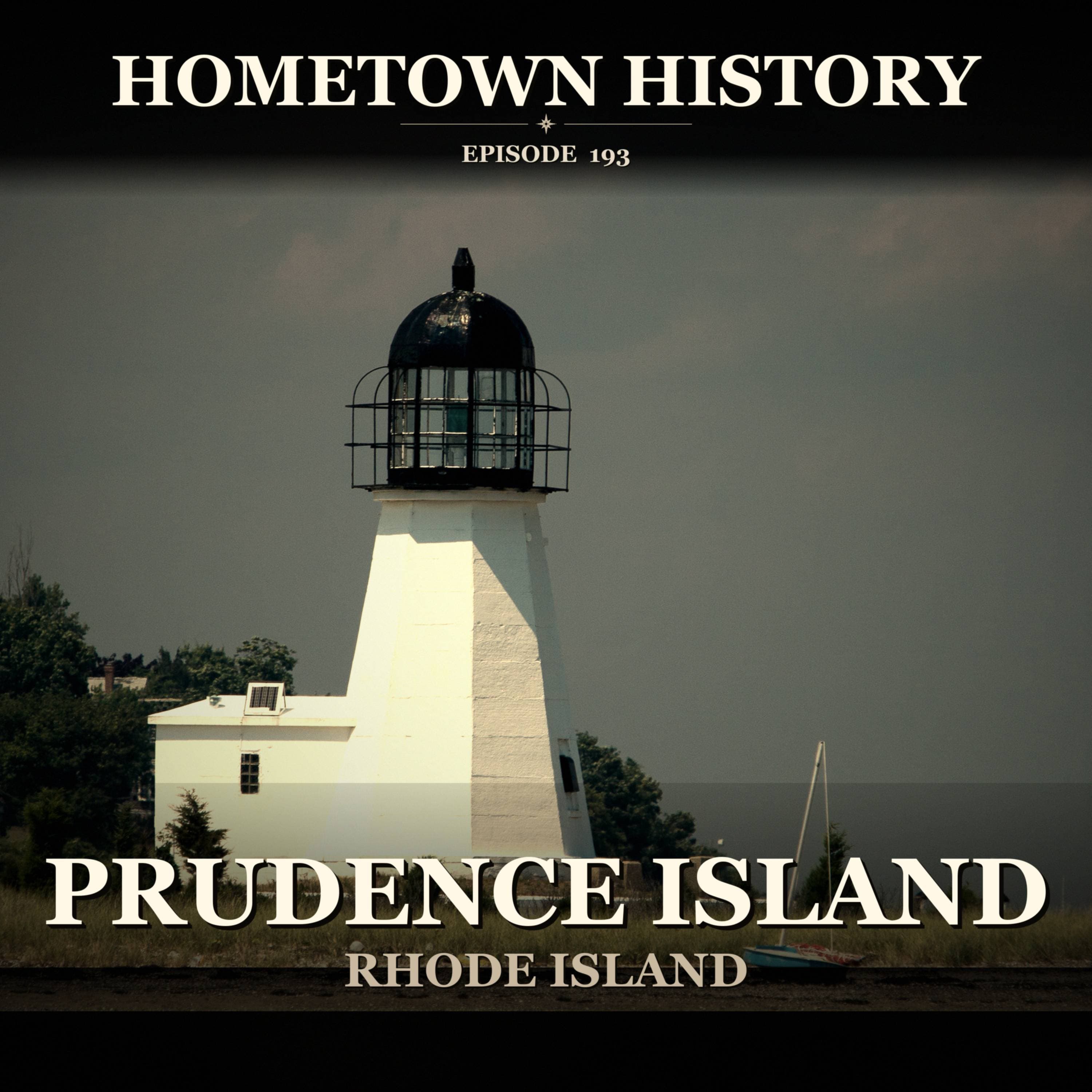
0:03 [SPEAKER_00]: in a lighthouse keeper's cottage, on Prudence Island, Rhode Island. 0:08 [SPEAKER_00]: Six people huddle on the floor. 0:11 [SPEAKER_00]: It's September 21st, 1938. 0:14 [SPEAKER_00]: Outside, a wall of gray green water is racing across Narraganset Bay. 0:20 [SPEAKER_00]: 16 feet of churning ocean pushed by winds exceeding 100 miles per hour. 0:27 [SPEAKER_00]: George Gustavus, the lighthouse keeper, stands with his wife Mabel, his 12-year-old son Edward, and three neighbors who came seeking shelter. 0:39 [SPEAKER_00]: They'd climbed upstairs when the water started rising. 0:43 [SPEAKER_00]: They believed the house would hold. 0:47 [SPEAKER_00]: It doesn't. 0:48 [SPEAKER_00]: The search hits, like a freight train, walls explode, glass, shatters, and in an instant all six people are swept into the bay, tumbling through debris, fighting for air, clinging to whatever wreckage they can find. 1:08 [SPEAKER_00]: When the water finally 1:15 [SPEAKER_00]: pulled from the water half a mile from where his home once stood will do something almost unimaginable. 1:23 [SPEAKER_00]: That very night, still soaking wet, still grieving his wife in youngest son. 1:28 [SPEAKER_00]: He will climb the lighthouse tower and help restore the beacon. 1:34 [SPEAKER_00]: The light must burn. 1:39 [SPEAKER_00]: Welcome back friend to hometown history, the podcast that takes a stroll down the main streets and back alleys of the past to uncover how local stories shaped the world. 1:51 [SPEAKER_00]: I'm Shane Waters and today we're exploring how one road island lighthouse keeper survived losing everything and then climbed back up the tower that same night to tend his light. 2:06 [SPEAKER_00]: Its 1937, George Gustavus, has finally arrived at his new posting. 2:13 [SPEAKER_00]: He's 53 years old. 2:15 [SPEAKER_00]: He spent 27 years climbing lighthouse towers for Massachusetts to Rhode Island. 2:22 [SPEAKER_00]: And now he's keeper of Prudence Island, an octagonal granite tower on Sandy Point, overlooking Narraganset Bay. 2:31 [SPEAKER_00]: The tower itself has quite the history. 2:34 [SPEAKER_00]: Originally built in 1823 on Goat Island in Newport Harbor, it was dismantled and moved stone by stone to Prudence Island in 1851. 2:47 [SPEAKER_00]: It's the oldest lighthouse tower in Rhode Island. 2:50 [SPEAKER_00]: In George Gustavus takes his responsibilities seriously. 2:55 [SPEAKER_00]: Every evening before sunset, he climbs the tower to light the fifth order for now lens. 3:02 [SPEAKER_00]: Hulling heavy five gallon carousene cans up the spiral stairs. 3:07 [SPEAKER_00]: Throughout the night, he trims wicks, clean glass panels, winds the clockwork mechanism that rotates the beacon. 3:17 [SPEAKER_00]: The U.S. Lighthouse Service demands perfection from its keepers. 3:22 [SPEAKER_00]: George Gustavus, with nearly three decades of experience, knows the standards well. 3:29 [SPEAKER_00]: He lives in the keepers dwelling, about 200 feet from the tower, connected by an elevated wooden walkway. 3:38 [SPEAKER_00]: His wife, Mabel, age 50, manages the household. 3:42 [SPEAKER_00]: They have 10 children, seven grown and scattered, two young daughters attending school on the mainland, and 12-year-old Edward, who helps his father with lighthouse chores. 3:56 [SPEAKER_00]: These folks live a quiet life on an isolated island. 4:00 [SPEAKER_00]: Prudence Island sits in the center of Narraganset Bay, about seven miles long, one mile wide, 4:12 [SPEAKER_00]: Once a thriving farming community, the depression had hollowed out its agricultural economy. 4:19 [SPEAKER_00]: By 1938, it's become a summer colony, though the year-round folks remain tight-knit. 4:26 [SPEAKER_00]: Everyone knows everyone. 4:29 [SPEAKER_00]: George Gustavus tints his light. 4:32 [SPEAKER_00]: Mabel keeps the house. 4:34 [SPEAKER_00]: Edward helps where he can. 4:38 [SPEAKER_00]: And no one, not the keepers, not the families, not the weather forecasters in Washington. 4:45 [SPEAKER_00]: Has any idea what's coming? 4:49 [SPEAKER_00]: September 21st, 1938 begins as what Islanders would later describe as a breezy fall day. 5:04 [SPEAKER_00]: around the island, residents go about their routines, the weather seems fine. 5:11 [SPEAKER_00]: A category three hurricane is racing towards New England at over 45 miles per hour. 5:19 [SPEAKER_00]: Days earlier, the US Weather Bureau forecasters had detected it near Puerto Rico. 5:26 [SPEAKER_00]: They assumed as hurricanes typically did, it would curve out to sea, at Cape 5:33 [SPEAKER_00]: but one forecaster disagreed. 5:36 [SPEAKER_00]: Charles Pierce, a 28-year-old rookie correctly predicted the storm would hit New England. 5:44 [SPEAKER_00]: his superiors overruled him. 5:47 [SPEAKER_00]: By the time warnings went out at nine in the morning, they were inadequate and too late. 5:54 [SPEAKER_00]: At 10 o'clock, the bureau actually downgraded the hurricane to a tropical storm. 6:00 [SPEAKER_00]: New England had experienced no major hurricanes since 1869, 69 years earlier, 6:08 [SPEAKER_00]: Nobody alive remembered what such a storm could do. 6:11 [SPEAKER_00]: There was no radar, no satellites, no television, weathermen. 6:17 [SPEAKER_00]: For seven critical hours, the weather bureau received by their own admission, not a scrap of information about the hurricane's location. 6:26 [SPEAKER_00]: Approed its island light, conditions deteriorate as afternoon arrives, winds pick up, swells, row violent, and three people besides the Gustavus family, gather at the keeper's dwelling. 6:43 [SPEAKER_00]: Among them is Martin Thompson, the former keeper. 6:47 [SPEAKER_00]: A 70-year-old Norwegian immigrant, who'd served at this very station from 1905 to 1933, 6:55 [SPEAKER_00]: 28 years he'd spent here. 6:59 [SPEAKER_00]: He'd twice won the efficiency flag for maintaining a model lighthouse. 7:04 [SPEAKER_00]: He knew storms. 7:07 [SPEAKER_00]: Also seeking shelter, James Lynch, age 75, and his wife Ellen Lynch, age 68. 7:15 [SPEAKER_00]: These folks believed the keepers dwelling would be the safest structure on the island. 7:25 [SPEAKER_00]: As conditions worsen, he persuades everyone to take refuge on the second floor. 7:30 [SPEAKER_00]: His confidence, born of decades of experience, would prove tragically misplaced. 7:39 [SPEAKER_00]: The hurricane makes landfall on Long Island at 230 in the afternoon, then strikes Connecticut 7:53 [SPEAKER_00]: It's not just wind, a massive storm surge, amplified by the abdominal equinoxes, astronomical high tide. 8:02 [SPEAKER_00]: It's funneling up near Ganset Bay. 8:06 [SPEAKER_00]: Sometime between four and five o'clock, 17 feet and five inches of water reaches sandy point. 8:14 [SPEAKER_00]: Six people huddled on the second floor of the wooden house, 8:23 [SPEAKER_00]: then impact. 8:26 [SPEAKER_00]: George Gustavus would later describe it to author Edward Rosno. 8:32 [SPEAKER_00]: These folks, my wife and son, and I were caught inside the tidal wave. 8:37 [SPEAKER_00]: And after two 17-foot seas of water, along with plenty of wind hit, we were caught like rats in a trap. 8:45 [SPEAKER_00]: We all rushed up the stairs, when the house broke up, we were thrown into the rushing 8:52 [SPEAKER_00]: The keepers dwelling, the structure, Martin Thompson, had been so certain would withstand the storm, disintegrates in an instant. 9:02 [SPEAKER_00]: One moment, six people are huddled upstairs. 9:06 [SPEAKER_00]: The next, a wall of water smashes through the building. 9:11 [SPEAKER_00]: Splintering wood, shattering glass, tearing the structure from its foundation. 9:18 [SPEAKER_00]: all six are swept into the Narragansit Bay. 9:22 [SPEAKER_00]: George Gustavus tumbles through violent water, surrounded by wreckage. 9:29 [SPEAKER_00]: I happened to catch a wave going in the right direction. 9:32 [SPEAKER_00]: He would later recount. 9:34 [SPEAKER_00]: The current carries him roughly half a mile from where his home once stood. 9:39 [SPEAKER_00]: He clings to the remains of a flood of cottage, whether swimming to it or simply carried there. 9:46 [SPEAKER_00]: He never clarified 9:48 [SPEAKER_00]: Onshore 18-year-old George Taver, Seize Gustavus, struggling near the shoreline. 9:56 [SPEAKER_00]: Taver grabs a piece of lumber, extends it into the turning bay. 10:01 [SPEAKER_00]: George Gustavus seizes it, and what he later described as a deathgrip. 10:08 [SPEAKER_00]: George Taver pulls him to safety. 10:11 [SPEAKER_00]: But when George Gustavus looks back toward Sandy Point, toward the place where his home had stood, there is nothing. 10:21 [SPEAKER_00]: The keeper's dwelling has vanished entirely. 10:25 [SPEAKER_00]: His wife, Mabel, gone. 10:28 [SPEAKER_00]: His son, Edward, gone. 10:31 [SPEAKER_00]: Martin Thompson, James Lynch, Ellen Lynch, all gone. 10:38 [SPEAKER_00]: Five of the six people who sought shelter in that house would die. 10:44 [SPEAKER_00]: Four bodies washed ashore in the following days, only Edward was never found. 10:52 [SPEAKER_00]: What George Gustavus did next defies comprehension. 10:56 [SPEAKER_00]: At same night, September 21st, 1938, still soaking wet, still grieving, having just been pulled from the water after his wife and youngest son drowned. 11:09 [SPEAKER_00]: George Gustavus climbed the lighthouse tower. 11:14 [SPEAKER_00]: The granite structure had survived the hurricane, but the keepers dwelling, which housed the electrical generator. 11:22 [SPEAKER_00]: Let's go on. 11:24 [SPEAKER_00]: a light, a gone dark. 11:27 [SPEAKER_00]: Then a man named Hamilton Chase, General Manager of HomeStead Utility Company, the island's power provider, arrived at the devastated lighthouse. 11:39 [SPEAKER_00]: Chase rigged and improvised electrical connection, running cable from surviving structure to the tower. 11:46 [SPEAKER_00]: For the first time in the lighthouse's history, the beacon would burn with electricity instead of carousine. 11:55 [SPEAKER_00]: George Gustavus helped restore the light. 11:59 [SPEAKER_00]: The same hands that had clung to wreckage in the bay. 12:02 [SPEAKER_00]: Now work to help guide ships safely through the darkness. 12:07 [SPEAKER_00]: Think about that. 12:09 [SPEAKER_00]: His home was gone. 12:11 [SPEAKER_00]: His wife was dead. 12:12 [SPEAKER_00]: His 12-year-old son was dead. 12:14 [SPEAKER_00]: Five people he tried to shelter with were dead. 12:19 [SPEAKER_00]: He'd been swept half a mile through a hurricane surge, barely escaping with his life. 12:30 [SPEAKER_00]: The beacon at Prudence Island light, shown that night, and every night afterward, it has never gone dark since. 12:41 [SPEAKER_00]: Prudence Island's tragedy was part of a regional disaster of unprecedented scope. 12:47 [SPEAKER_00]: The 1938 Hurricane struck New England with sustained winds of 111 miles per hour. 12:55 [SPEAKER_00]: gusts reached 186 miles per hour at blue hill observatory. 13:01 [SPEAKER_00]: The highest wind speed ever recorded there. 13:05 [SPEAKER_00]: Storm surges of 12 to 25 feet combined with astronomical high tides created tsunami-like walls of water. 13:15 [SPEAKER_00]: Downtown Providence saw water 13 feet above mean high tide exceeding any hurricane on record 13:24 [SPEAKER_00]: Other Rhode Island light keepers face their own horrors that day. 13:28 [SPEAKER_00]: At Whale Rock Light, a cast iron lighthouse in Narragans at Bay. 13:34 [SPEAKER_00]: The top two stories were torn completely off the structure. 13:39 [SPEAKER_00]: Assistant Keep Walter Eberley, aged 40 and father of six, was killed. 13:45 [SPEAKER_00]: His body was never recovered. 13:48 [SPEAKER_00]: At Beaver Tail Lighthouse, keeper Charles Chelus battled to protect the beacon, amid flying rocks and debris. 13:56 [SPEAKER_00]: His daughter drowned when the school bus bringing her home was caught by the surge. 14:02 [SPEAKER_00]: Assistant keeper Edward Donahoo, believing death was certain through himself into the ocean, thinking it was the easiest way to die. 14:11 [SPEAKER_00]: Remarkably, both he and his son survived. 14:15 [SPEAKER_00]: Across New England, the hurricane destroyed 4,500 homes, damaged 25,000 more, killed 682 people, left 63,000 homeless, property damage reached 308 million dollars in 1938, equivalent to billions today. 14:40 [SPEAKER_00]: The failures of September 21, 1938, the overruled forecasters, the inadequate warnings, the primitive tracking, would fundamentally change how American monitors hurricanes. 14:55 [SPEAKER_00]: The catastrophe led directly to the National Hurricane Center, satellite monitoring, aerial reconnaissance, and the sophisticated forecasting that prevents such surprises today. 15:10 [SPEAKER_00]: George Gustavus never stopped being a lighthouse keeper. 15:13 [SPEAKER_00]: In 1939, he returned to Nopska Light, on Cape Cod. 15:20 [SPEAKER_00]: A station where he'd previously served. 15:23 [SPEAKER_00]: When the U.S. lighthouse service merged with the Coast Guard that same year, Gustavus continued his work. 15:30 [SPEAKER_00]: He remarried in 1943. 15:33 [SPEAKER_00]: He 15:36 [SPEAKER_00]: retiring in 1945 after 35 years, tending lights. 15:42 [SPEAKER_00]: He lived another 31 years after that, dying in 1976 at age 92. 15:50 [SPEAKER_00]: Today, Prudence Island light still stands at Sandy Point. 15:55 [SPEAKER_00]: The octagonal granite tower, painted white, rises 30 feet above the rocky shore. 16:02 [SPEAKER_00]: It still carries its 1851 Burkage-style cast iron lantern. 16:08 [SPEAKER_00]: One of very few such lanterns still in use in America. 16:18 [SPEAKER_00]: The White House was automated in 1961. 16:22 [SPEAKER_00]: No keeper has lived there since George Gustaveus departed in 1938. 16:27 [SPEAKER_00]: The site where the keeper's dwelling once stood remains empty. 16:32 [SPEAKER_00]: A grassy space beside the tower where six people once took shelter from a storm that none of them saw coming. 16:41 [SPEAKER_00]: Visitors who take the 25-minute ferry from Bristol and walk south to Sandy Point find the lighthouse standing centenal over the bay. 16:53 [SPEAKER_00]: A site appears peaceful. 16:55 [SPEAKER_00]: There's no visible evidence of the violence that occurred here, 86 years ago, but the story indoors. 17:04 [SPEAKER_00]: And every night, just as George Gustavus insisted on that terrible September evening, a light still burns. 17:14 [SPEAKER_00]: That's the story of George Gustavus, in the 1938 Hurricane, at Prudence Island Light, of a man who lost his wife, his son, and his home in a single afternoon. 17:28 [SPEAKER_00]: Then climbed a lighthouse tower to make sure the beacon would guide ships safely through 17:34 [SPEAKER_00]: If you found this story as extraordinary as I did, share it with someone who understands that duty and grief can exist in the same moment. 17:45 [SPEAKER_00]: I'm Shane Waters, every hometown has a story. 17:49 [SPEAKER_00]: Tonight it's a light that refused to go dark. 17:53 [SPEAKER_00]: Good night friend.
Show full transcript (162 segments)