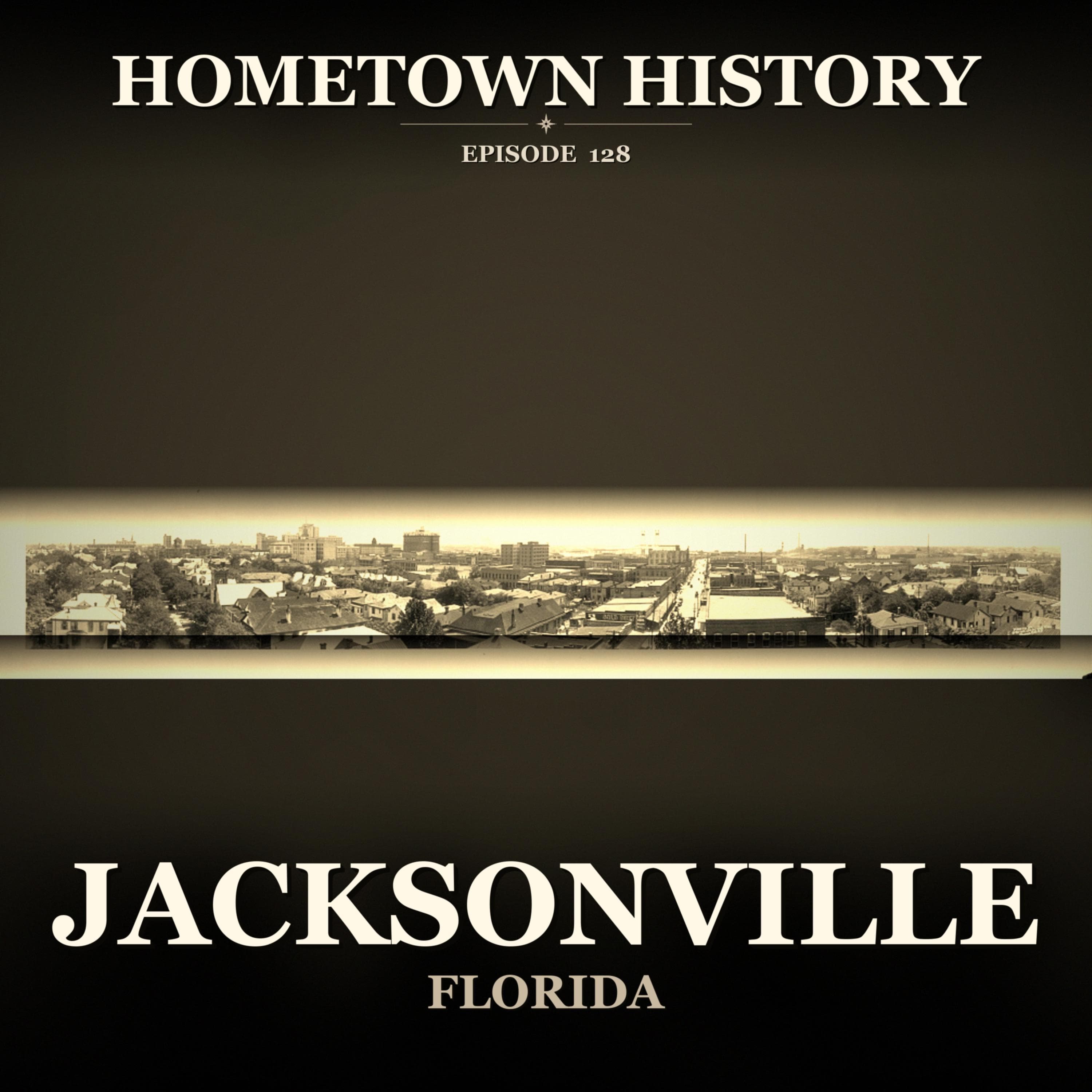
0:05 [SPEAKER_00]: Hello friend, and welcome back to hometown history. 0:10 [SPEAKER_00]: Today I've got something quite unusual. 0:13 [SPEAKER_00]: Something a majority of the world have no idea about. 0:16 [SPEAKER_00]: The movie making capital of the world, as we know, is Hollywood, located in California. 0:25 [SPEAKER_00]: And it's become a reference point for the American film industry, and the people associated with it. 0:33 [SPEAKER_00]: But had Los Angeles not lowered these filmmakers and stars toward itself. 0:39 [SPEAKER_00]: We'd be seeing red carpet events and major studios and soundstages brought casted from River City, located in Jacksonville, Florida. 0:50 [SPEAKER_00]: Because this is exactly where Hollywood used to be. 0:58 [SPEAKER_00]: Jacksonville was once the hub of the movie world in the early 1900s, and it even carried the title of Winter Film Capital of the world. 1:09 [SPEAKER_00]: So what happened? 1:11 [SPEAKER_00]: Let's journey back. 1:14 [SPEAKER_00]: In the early 20th century, the motion picture industry was primarily based in New York City. 1:21 [SPEAKER_00]: Thomas Edison was the person in control of most of the industry's patents, 1:27 [SPEAKER_00]: and the patents on raw stock film were owned by Eastman Kodak. 1:33 [SPEAKER_00]: But in 1902, Edison started to notify the distributors and exhibitors that they would be looking at legal action if they did not exclusively use Edison machines and films. 1:47 [SPEAKER_00]: And in 1908, Edison and his principal competitors 1:52 [SPEAKER_00]: including Eastman Kodak, reached an agreement called the Edison Trust. 1:58 [SPEAKER_00]: This agreement created a sort of virtual monopoly on all aspects of filmmaking. 2:06 [SPEAKER_00]: This included where films could be screened, the content of films, and methods of cost control. 2:14 [SPEAKER_00]: It used federal law enforcement officials and even thugs to prevent any unauthorized use 2:23 [SPEAKER_00]: So, with all these regulations and policies, what were filmmakers to do, except work for new locations, and start leaving this toxic and restrictive filmmaking bubble? 2:38 [SPEAKER_00]: And the filmmakers chose Jacksonville. 2:41 [SPEAKER_00]: The one climate, exotic locations, diverse architectures, excellent rail access, local political support, and cheap labor certainly made this corner of America insanely attractive. 2:59 [SPEAKER_00]: But there was another factor, light. 3:04 [SPEAKER_00]: If you look at any pictures of old filming studios in Jacksonville, you'll see they 3:11 [SPEAKER_00]: with glass walls in a glass roof. 3:15 [SPEAKER_00]: Physical film strips at the time needed a ton of light in New York City had the money to build artificial lights in illuminate a studio. 3:27 [SPEAKER_00]: But you know what's cheaper than artificial lights? 3:31 [SPEAKER_00]: The sun. 3:33 [SPEAKER_00]: It's free, in fact. 3:35 [SPEAKER_00]: Filmmakers wouldn't have to splurge on lights because the glass walls allowed in as much 3:42 [SPEAKER_00]: And in sunny Jacksonville, they would never be without light. 3:51 [SPEAKER_00]: Calam Studios was the first to open a permanent studio here, and over 30 silent film companies followed suit within 10 years. 4:03 [SPEAKER_00]: These studios went on to produce and release 18 films in the first winter, and the content included stories of the Civil War. 4:12 [SPEAKER_00]: In several sensational tales, about people they called Florida Crackers, drinking, killing, and cheating. 4:22 [SPEAKER_00]: The industry was booming, and just like Hollywood today, Jacksonville became a popular tourist destination, complete with luxury resorts, and high-rise buildings. 4:35 [SPEAKER_00]: In 1914, Oliver Babe Hardy, a character who later became a part of the comedic film duo, Laurel and Hardy, started his motion picture career in Jacksonville, 4:49 [SPEAKER_00]: Silent Film stars such as Lionel and Ethel Barrymore, Rudolph Valentino, and Mary Pickford also made their way to the city to make their name. 5:03 [SPEAKER_00]: In 1915, Theta Barra, aka The Vamp, filmed the movie of Fool There Was, almost entirely in St. Augustine, 5:14 [SPEAKER_00]: In the same year, Joseph Engel established Metro Studio, which later merged with another production company. 5:23 [SPEAKER_00]: You may know them better, as Metro Goldwyn Mayor, or MGM. 5:30 [SPEAKER_00]: Later, in 1917, the very first feature-length movie made in Technicolor, called The Golf Between, was filmed in Jacksonville. 5:42 [SPEAKER_00]: All together, more than 300 silent films, mostly short, one-wheel movies, were produced on the banks of the St. John's River, over a 10-year period. 5:55 [SPEAKER_00]: The establishment of all these massive studios led to Florida becoming the filmmaking capital of America. 6:03 [SPEAKER_00]: It was a time of success for the industry, as they captured the attention and admiration 6:11 [SPEAKER_00]: And one key player became an integral part of this success, Norman Studios. 6:20 [SPEAKER_00]: If you didn't know, Norman Studios was originally Eagle Studios. 6:26 [SPEAKER_00]: Eagle Studios was a Jacksonville native studio, and when it had to close, Richard Norman bought it and made it into an iconic silent film studio, creating positive lead roles 6:42 [SPEAKER_00]: while the rest of the industry was still using white actors and blackface for their films. 6:48 [SPEAKER_00]: In fact, Norman Studios and Jacksonville played a huge role in bringing the film industry to African Americans. 6:58 [SPEAKER_00]: Richard Norman, who was white, was bothered by the way black movie actors, always appeared in sub-serving at roles. 7:06 [SPEAKER_00]: And he saw an untapped market for segregated black audiences 7:12 [SPEAKER_00]: He started creating movies that portrayed black actors in a more positive light, and utilized black crew in all stages of production. 7:23 [SPEAKER_00]: Enorming continued making these movies, which the public called Race Movies throughout the 1920s. 7:31 [SPEAKER_00]: It was one of only a few film studios back then that actually focused on meaning for stories, featuring black characters. 7:41 [SPEAKER_00]: Just imagine, if filmmakers never moved out of the restrictive bubble of New York City to make their own art, what our film industry would have looked like today. 7:53 [SPEAKER_00]: Our culture would have been shaped by an entirely different set of stories. 8:02 [SPEAKER_00]: The most iconic movie to come out of Norman Studios was probably the flying ace, made 8:11 [SPEAKER_00]: The inspiration was Bicycleman, America's first ever African American female pilot. 8:18 [SPEAKER_00]: Norman had actually wanted to collaborate with Coleman on the making of this film, but she died in an airplane crash at Jacksonville's Paxon Airfield, but that didn't stop Norman from paying tribute to her. 8:34 [SPEAKER_00]: The movie is set on the historic old Arlington neighborhood of Jacksonville, and the Quaint Fishing Village of Mayport. 8:43 [SPEAKER_00]: The story goes that Captain Billy Stokes, a World War I aviator, returns to his job as a railroad detective, and how his homecoming is marred by a new mission, unraveling the mystery of 9:03 [SPEAKER_00]: It's an all-black cast, and it was shot in the most genius way. 9:09 [SPEAKER_00]: The movie is called The Greatest Airplane Thriller Ever-Filmed, but the actual production featured only one airplane, filmed from different angles to depict aerial flights. 9:22 [SPEAKER_00]: The film not only honored Coleman's memory, but also had a huge impact on a generation of future aviators. 9:31 [SPEAKER_00]: In fact, historian specializing in World War II have said that the flying ace was a source of inspiration for many young men who became part of the Tuskegee Airmen. 9:44 [SPEAKER_00]: It goes to show the sheer power of movies and representation in film. 9:50 [SPEAKER_00]: Norman Studios contribution to the filmmaking industry during its time of Florida shaped the industry as we know it today. 9:58 [SPEAKER_00]: Even after the decline in this industry, Norman Studios continue to operate for another 10 years. 10:07 [SPEAKER_00]: They never made the transition to talkies, which is probably what led to the studio fading over time. 10:14 [SPEAKER_00]: In fact, all of Jacksonville's silent film productions 10:23 [SPEAKER_00]: The question here is, what led to this decline? 10:28 [SPEAKER_00]: A decline that ultimately resulted in the filmmaking industry moving on to a new city altogether. 10:36 [SPEAKER_00]: Well, it all came down to politics again. 10:42 [SPEAKER_00]: The political climate of Jacksonville initially was in favor of the growing film industry. 10:47 [SPEAKER_00]: It created jobs and generated money, 10:52 [SPEAKER_00]: But things started changing after the great fire of 1901. 10:58 [SPEAKER_00]: This fire damaged over 2,000 buildings scorched around 140 city blocks, and rendered nearly 10,000 individuals homeless in under 8 hours. 11:11 [SPEAKER_00]: It didn't help that Jacksonville City consisted mainly of wooden buildings, with wood shingled roofs. 11:18 [SPEAKER_00]: And by that point, the city was already suffering a drought, leaving building exterior strife and extremely vulnerable to fire. 11:29 [SPEAKER_00]: This was the third largest urban fire in U.S. history. 11:33 [SPEAKER_00]: Next to the Great Chicago Fire in San Francisco Fire in 1906. 11:39 [SPEAKER_00]: It was so bad that you could see the smoke from Raleigh in North Carolina. 11:45 [SPEAKER_00]: And residents in Georgia said they could see the glow from the flames. 11:50 [SPEAKER_00]: So it's safe to say Jacksonville wanted to use any means possible to rebuild the city. 11:56 [SPEAKER_00]: In the film industry would stimulate their economy and make that possible. 12:02 [SPEAKER_00]: The cinema industry had lost its initial grammar. 12:06 [SPEAKER_00]: By 1915, it needed jet-bode and successful re-election as mayor during the great fire to ensure the survival of the film industry, in Jacksonville, for at least another two years. 12:20 [SPEAKER_00]: Bowdoin was pretty supportive of the film industry, and even held several events hosted by Oliver Hardy, so things seemed to be getting better. 12:31 [SPEAKER_00]: But by 1917, even Bowdoin could not save the industry in North Florida. 12:40 [SPEAKER_00]: It turns out the relatively conservative residents of Florida had had enough of disruption 12:48 [SPEAKER_00]: The number of dark-skinned people showing up, the never-ending film crews, and the far-to-risk gay nature of the filmmakers and their stars, became too much for them. 13:02 [SPEAKER_00]: Not to mention, their activities were now costing the state. 13:08 [SPEAKER_00]: For example, some of the filmmakers pulled fire alarms so they could record speeding fire trucks on film. 13:18 [SPEAKER_00]: This was a blatant misuse of the state's resources, but it was only the beginning. 13:24 [SPEAKER_00]: Another one tried to draw a large crowd by advertising a parachute jump from a tall building. 13:31 [SPEAKER_00]: There was another who drove a car into the river and did not let on that it was part of the movie. 13:38 [SPEAKER_00]: Housing widespread panic. 13:41 [SPEAKER_00]: And on Sundays, when everyone was at church, and the streets appeared empty, the directors decided it was time to film the shootout at the OK Coral. 13:53 [SPEAKER_00]: But at that time the church windows were kept open, and the mayhem could clearly be heard by the people trying to understand, if this was real, or just another stunt orchestrated by the movie makers. 14:07 [SPEAKER_00]: And on top of that, the filming of mob scenes would often get out of hand, feeling all too real to any innocent passerby. 14:16 [SPEAKER_00]: Things were getting out of hand, and the industry that had once been at the center of everyone's fascination and admiration was turning out to be frustrating in a new sense. 14:30 [SPEAKER_00]: Imagine this happening in your city. 14:32 [SPEAKER_00]: a mob of more than 1,000 almost destroying a beloved restaurant, while shooting for their movie. 14:40 [SPEAKER_00]: As bizarre as it may sound, this is exactly what happened during the shooting of the Claryon. 14:48 [SPEAKER_00]: Simply put, it was too much. 14:51 [SPEAKER_00]: By the mid-1910s, Jacksonville residents had had enough. 14:57 [SPEAKER_00]: so emboed and stood for reelection in 1917, hoping to bring a new era to Jacksonville by reviving support for the film industry. 15:07 [SPEAKER_00]: He lost. 15:09 [SPEAKER_00]: White badly, in fact. 15:12 [SPEAKER_00]: John well-born Martin became the new mayor, and he promised the public that he would not be ruled by the shady filmmakers. 15:23 [SPEAKER_00]: but the debauchery and draining of the public's resources weren't the only reasons filmed a client in Jacksonville. 15:32 [SPEAKER_00]: Some reasons include the mismanagement of companies in Jacksonville, the onset of the first World War, and an influence outbreak. 15:43 [SPEAKER_00]: World War I went from 1914 to 1918, and it changed a lot of things around the world. 15:51 [SPEAKER_00]: Much had changed in the global atmosphere, and the filmmaking industry was no different. 15:57 [SPEAKER_00]: Some filmmakers started making movies to support the war, while others had trouble, because of the lack of money and resources. 16:07 [SPEAKER_00]: And of course, 1918 brought with it the Spanish flu, which was a worldwide problem. 16:20 [SPEAKER_00]: A lot of people get sick, and things were starting to get chaotic. 16:26 [SPEAKER_00]: Businesses and events were shut down to stop the flu from spreading, and like all other industries that hurt the film industry in Jacksonville, both the flu and the war caused financial problems, which became the root of further problems. 16:44 [SPEAKER_00]: The war needed a lot of money, 16:50 [SPEAKER_00]: Funding the arts wasn't exactly a priority during this time. 16:55 [SPEAKER_00]: So a combination of these factors caused the film industry in Jacksonville to decline. 17:02 [SPEAKER_00]: And it was not a loss for America because Florida's loss of the silent film industry was Hollywood's gain. 17:10 [SPEAKER_00]: But there was something that was lost along the way. 17:24 [SPEAKER_00]: So, as we know today, Hollywood is now in Los Angeles, and this shift provided the industry with certain upgrades that had once made Florida an attractive choice. 17:36 [SPEAKER_00]: California, for example, had better weather compared to Jacksonville. 17:42 [SPEAKER_00]: It was almost always sunny there, making it easier for filmmakers because they didn't have to worry about bad weather, messing up their lighting. 17:52 [SPEAKER_00]: Adding to that, California had a lot of diversity and landscapes all close together, like deserts, beaches, and mountains, allowing them to shoot in any kind of location, without spending too much on travel and accommodations. 18:10 [SPEAKER_00]: The setup in California was also a big deal. 18:14 [SPEAKER_00]: There was more than enough empty space to set up studios, sound stages, and entire fake cities to film their movies. 18:25 [SPEAKER_00]: All in all, this was a sweeter deal than what Jacksonville had to offer. 18:30 [SPEAKER_00]: It was also more welcoming for businesses as industry. 18:35 [SPEAKER_00]: and Hollywood also seemed quick to adopt new technologies and ideas of movie making, making it a delightful candy store for directors and cinematographers. 18:47 [SPEAKER_00]: The entertainment scene in Hollywood wasn't just about movies, it attracted all kinds of creative minds, from artists and musicians to performers. 18:59 [SPEAKER_00]: This concentration of talent made California, especially Hollywood, the go-to spot for entertainment. 19:08 [SPEAKER_00]: But don't worry, there's a happy ending for Florida as well. 19:13 [SPEAKER_00]: Despite the industry's transition towards the West, Jacksonville did enjoy something of a film industry Renaissance beginning in the middle of the last century. 19:25 [SPEAKER_00]: In the 1950s, Jacksonville hosted the filming of several movies, which included the gritty film under the gun. 19:33 [SPEAKER_00]: The infamous horror flick, creature from the black lagoon, and the science fiction cult favorite film, Zat. 19:42 [SPEAKER_00]: Later, in 1979, the Governor of Florida, Bob Graham, created a politically favorable environment for the development of film and TV production, and shortly after that, the Mayor of Jacksonville, Jake Godbold, authorized the creation of a film office, which was aimed at attracting movie crews to the town. 20:06 [SPEAKER_00]: With that, Jacksonville once again became a hotspot for high-profile productions of commercials, movies, and TV shows. 20:16 [SPEAKER_00]: This includes G.I. 20:17 [SPEAKER_00]: Jane starring Demi Moore, Tigerland starring Colin Farrell, and the Devil's Advocate starring Al Pacino and Keanu Reeves. 20:29 [SPEAKER_00]: More recently, Jacksonville has hosted several major productions, including Basic, 20:35 [SPEAKER_00]: The year of getting to know us, lonely hearts, and the Emmy Award-winning recount. 20:43 [SPEAKER_00]: The Florida Film Office, the local film offices, and other various industry organizations are currently trying to secure additional tax benefits, and other aventages tax treatments. 20:57 [SPEAKER_00]: The aim is to help secure Jacksonville's continued place in the pages of Motion Picture 21:05 [SPEAKER_00]: So, while some of its glory was lost, Florida does remain associated with the film industry of America. 21:15 [SPEAKER_00]: Coming back to today, the conversation paints a hopeful picture for Norman Studios in Jacksonville. 21:23 [SPEAKER_00]: They're fixing up the old studios, and there's a plan for a film history museum as well. 21:29 [SPEAKER_00]: The idea isn't to make the museum just a way to capture a moment in history, but also to act as a hub for artists. 21:38 [SPEAKER_00]: So Jacksonville's film history isn't stuck in the past. 21:44 [SPEAKER_00]: It's a story that keeps going with each fix up and come back. 21:51 [SPEAKER_00]: Thank you for listening.
Show full transcript (154 segments)