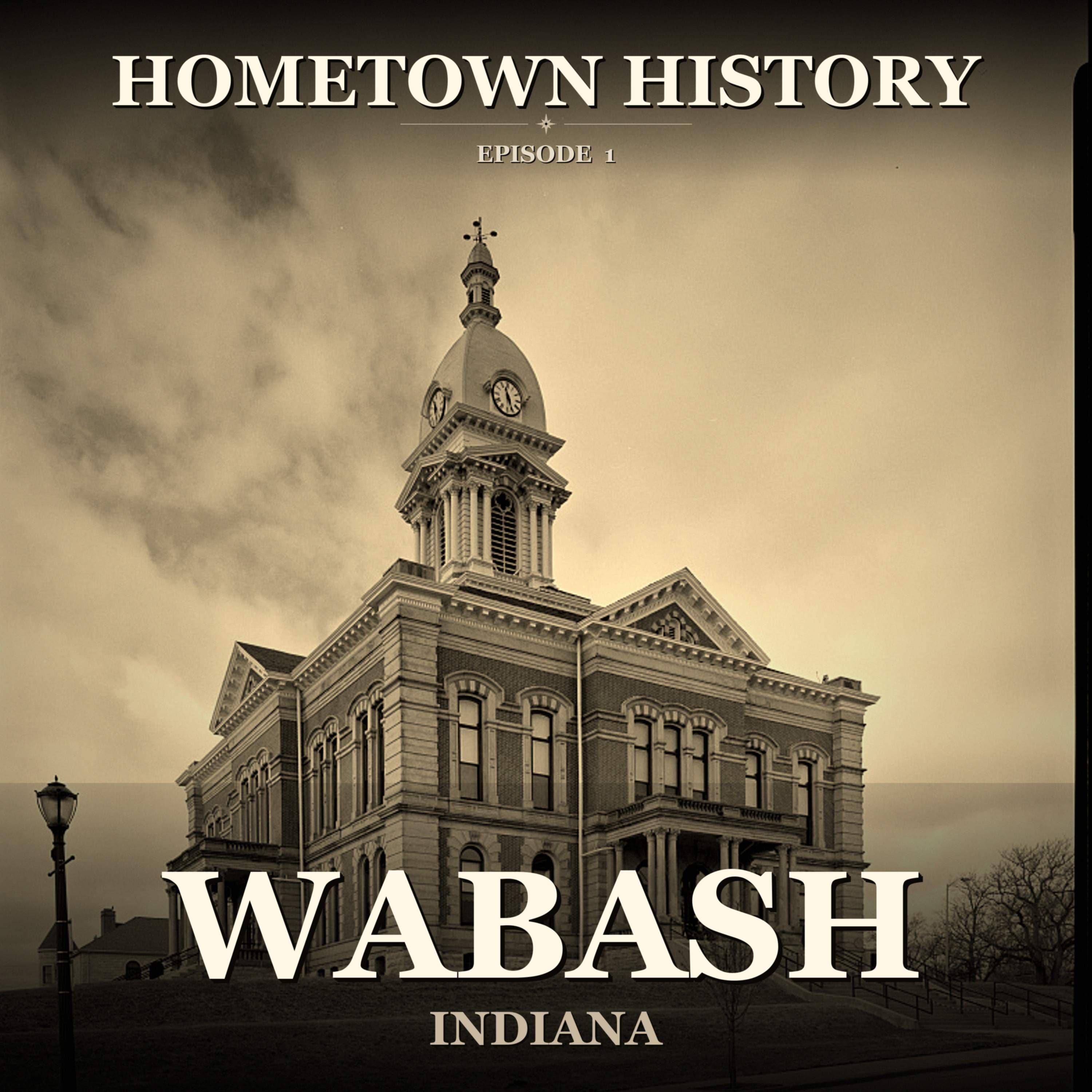
0:10 [SPEAKER_01]: Today we're going to discuss how we became the first electrically-lighted city in the world. 0:17 [SPEAKER_00]: This is TJ Honeycutt. 0:19 [SPEAKER_00]: He is the collections assistant at the Wavash County Historical Museum in Wavash, Indiana. 0:25 [SPEAKER_01]: If you go to our Wikipedia page, whoever edited it, declares that it's a pharseical notion, and that it is not the case. 0:34 [SPEAKER_01]: But I'm going to show you some evidence to the contrary. 0:39 [SPEAKER_00]: The year was 1870 in Wallbash, when the original courthouse burned down. 0:44 [SPEAKER_00]: The county got together and built a new one. 0:47 [SPEAKER_00]: It was taller, wider, fireproof, and better in just about every way you can imagine. 0:54 [SPEAKER_00]: They even installed a clock that still works to this day. 0:57 [SPEAKER_00]: They wanted this one to last a while. 1:00 [SPEAKER_00]: As you drive into the city of Wallbash, from just about any direction, you will see the 1:11 [SPEAKER_01]: It was 1880. 1:12 [SPEAKER_01]: The town was growing quite rapidly. 1:15 [SPEAKER_01]: The population of the city itself was around what it is today, actually at 15,000. 1:21 [SPEAKER_01]: And they said we need lighting at night. 1:25 [SPEAKER_01]: the streets are dangerous because you can't see anything and we got to figure something out. 1:31 [SPEAKER_01]: So the county commissioners city council get together and they have some different meetings and contentious debates. 1:37 [SPEAKER_01]: If you live in a place where you can go to a city council or commissioners meeting, 1:43 [SPEAKER_01]: you should go at least once, even if you don't have a horse in the race, because it people get nasty with each other over this stuff. 1:51 [SPEAKER_01]: And usually they're debating something like should we fix road A or B first. 1:57 [SPEAKER_01]: So it seems like pretty innocuous stuff. 2:00 [SPEAKER_01]: So what they say is we need lighting at night how are we gonna do it, how much is it gonna cost? 2:05 [SPEAKER_01]: And a huge fight breaks out over how they're gonna do it either with torches, like some kind of medieval look or gas lighting, which was very popular at the time. 2:17 [SPEAKER_01]: and how many posts there would be and how much it would cost and how much the gas would cost and where would we even get the gas from or the post and there's this massive fight. 2:29 [SPEAKER_00]: At the same time, a man by the name of Dr. Charles Brush was looking at places to test out a light he invented. 2:36 [SPEAKER_00]: Thomas Edison, whom you won't need an introduction to, was known for his incandescent light bulb, which uses a heated piece of tungsten to create light. 2:47 [SPEAKER_00]: Then you can soften it with a painted glass to diffuse the light. 2:51 [SPEAKER_00]: Dr. Brush's light was called an arc light. 2:54 [SPEAKER_00]: An arc light is essentially two pieces of solid carbon, that look like pencils. 3:00 [SPEAKER_00]: When you run an electric current through them, an electric arc jumps from one carbon pencil to the other. 3:07 [SPEAKER_01]: Now, unlike Edison's kind of soft white light that's produced, Charles Brushes, 3:19 [SPEAKER_01]: or an arc welder, because an arc welder is operating if you've ever seen one of those or you can look it up on YouTube, I suppose, an arc welder operates on the same principle, so the light is incredibly hot, it can fuse metal together, and it will also damage your eyes if you look at it. 3:39 [SPEAKER_01]: So if we lived in a world where Charles Brush's light had taken over, you tell the little kids, don't look at the sun, it'll hurt your eyes. 3:46 [SPEAKER_01]: We'd also have to include all of the light bulbs in the house. 3:50 [SPEAKER_01]: So you can see why Charles Brush is ideal, though. 3:54 [SPEAKER_01]: Brilliant who would have come up with that? 3:57 [SPEAKER_01]: Maybe that's why I didn't catch on because the lights were pretty big and they were dangerous and you also had to change periodically your carbon pencils because they would burn and so you would have to have some machine that would bring the pencils back together or change out the Ron completely. 4:17 [SPEAKER_00]: Dr. Charles Brush and his company based out of Cleveland, Ohio started traveling around the United States looking for a place to test out his arcite as a municipal lighting solution. 4:29 [SPEAKER_00]: He wanted to find a town that didn't already have a lighting system set up because he knew they would be unlikely to buy into his. 4:36 [SPEAKER_01]: Andy wanted to town that had a very tall building in it so they could put the lights up on top of it. 4:42 [SPEAKER_01]: That it would cover a wide area so you'd want to make like a cone of light from the high place. 4:48 [SPEAKER_01]: And they found Wabash right in the heated period of municipal lighting debate where there were actually fights that broke out at the meetings over how this lighting was going to get done and people didn't want the light posts in there windows at night and stuff so there were all kinds of intentions there and each light post was estimated to cost $17 a piece and how's the county ever going to afford this and 5:14 [SPEAKER_01]: so on and so forth. 5:15 [SPEAKER_01]: So Charles brush comes in with an offer and he offers, I'm going to test the slide on your courthouse and I will pay you to do it. 5:24 [SPEAKER_01]: So they say great and he says, then, if it works, I'll sell it to you for 1,300 bucks and we'll even install the generator in the 5:41 [SPEAKER_01]: And so they say, okay, and he says, I need some help doing it, so I need 300 bucks ought to do and we'll get it all set up and swear it away. 5:51 [SPEAKER_01]: That starts a major fight because not only were they upset before it, city council and county commissioners about spending money on gas lighting, they were even more upset about spending money on this wacky experimental 6:09 [SPEAKER_01]: That sounded even more stupid than the gaslight. 6:12 [SPEAKER_01]: At least, you could go to another town and see, oh, look, they have gas lights. 6:17 [SPEAKER_01]: It works. 6:18 [SPEAKER_01]: Fort Wayne, for example, at the time, had a gas light system. 6:22 [SPEAKER_01]: So you could go there and see that it more or less lit the streets and you wouldn't die to buy horse cart. 6:27 [SPEAKER_01]: When you tried to cross the street at night, but here we are the only town trying to try this arc like thing and they're like, is that really right? 6:35 [SPEAKER_01]: What if it doesn't work? 6:36 [SPEAKER_01]: Well, wasted all this money that could have gone on gas lights. 6:40 [SPEAKER_01]: And they essentially have a vote on it and it wins out the arc like, wins out by an extremely tight margin. 6:49 [SPEAKER_01]: And so they decide to do it. 6:53 [SPEAKER_00]: There were rumors that the vote was fixed to ensure the arc light would be voted through. 6:57 [SPEAKER_00]: However, any proof to that allegation is lost to history. 7:03 [SPEAKER_01]: So then they decide they're gonna set this slide all up and they're gonna test it eight o'clock on March 31st, eight o'clock at night. 7:12 [SPEAKER_01]: So yeah, we have daylight savings time now, but generally in March and Indiana, if you don't know, it's typically pretty dark, maybe completely dark, and also rather cold usually. 7:24 [SPEAKER_00]: A large crowd of thousands of people came out to Wavash to see the arc white in action that night. 7:31 [SPEAKER_00]: Dr. Brush had tested the light in public before, but it had never been tested as a municipal lighting solution until now. 7:39 [SPEAKER_00]: This crowd wanted to see exactly how it would work. 7:42 [SPEAKER_00]: People came in from all around using the railroad that was very well established at the time. 7:48 [SPEAKER_00]: The Chicago Tribune even sent reporters down to report on this light being flipped on. 7:53 [SPEAKER_01]: I'll share some quotes. 7:55 [SPEAKER_01]: They split the light on at 8 o'clock, and this is how it is described, by an unknown person in the plain dealer. 8:05 [SPEAKER_01]: From the towering dome of the courthouse at 8 p.m. on March 31, 1880, burst a flood of lights that made world history. 8:12 [SPEAKER_01]: For a mile around, houses and yards were distinctly visible, while far away the Wabash River glowed like a band of molten silver. 8:23 [SPEAKER_01]: So, there's another setup that I have that's the quotation is too long to read here, because I would essentially be reading a small pamphlet to you. 8:33 [SPEAKER_01]: What happened was this gentleman took notes for the local paper, and he started on the courthouse lawn, which is all that's still the same as it was then. 8:44 [SPEAKER_01]: That it was daylight bright under the, with there were four arc lights 8:53 [SPEAKER_01]: In those four lights were two arc lights, so you essentially ate arc lights with a system of mirrors to point the light to the ground. 9:03 [SPEAKER_01]: He said that it was daylight bright in the courthouse square, now on Wikipedia it says a font further investigation, it only lit the courthouse square, and now it was incredibly bright light. 9:14 [SPEAKER_01]: and so he then walks down to market street to a building that is still there today through the plain dealer building itself and he reported that he could still read his watch, still read all the advertisements around and he could make out forms on the street pretty distinctly. 9:32 [SPEAKER_01]: He then walked down to Canal Street, the next street down to the Bradley Building, which is still there as well. 9:40 [SPEAKER_01]: The Bradley Building featured a very large advertisement, which you can still see to this day on humid days. 9:47 [SPEAKER_01]: The paint will seat out of the brick, and you can see the advertisement for the Bradley Brothers drugstore. 9:54 [SPEAKER_01]: And he says that he can still read the advertisement on all the shops around and that the light was reflecting off of the river quite brightly as well. 10:06 [SPEAKER_01]: And it's a bright white light. 10:08 [SPEAKER_00]: For miles around, people reported being able to see the arc lights fixed to the top of the courthouse. 10:15 [SPEAKER_00]: Part of the controversy around the time, with a light being such a new thing, was the question, what would it do to form animals? 10:23 [SPEAKER_00]: Farmers were worried the light would cause cows to get sick because they would never sleep, or the chickens would stop laying eggs. 10:32 [SPEAKER_00]: even wild editorials in the newspapers popped up, where farmers questioned if they could experiment growing a double crop, thinking maybe the crops would grow twice as fast because of the extra light, back to the reporting though at the time. 10:48 [SPEAKER_00]: Although many letters notes and articles survive, describing that night in great detail, one big thing is missing. 10:57 [SPEAKER_00]: There are no photographs. 11:00 [SPEAKER_00]: The light was too bright to look out with your eyes, and no camera at the time would have been able to take a photograph of that brightness. 11:09 [SPEAKER_01]: so there is no photographic evidence of it, so I'll finish off here with a quote from the Chicago Tribune, which is the lighting of an entire city by means of electricity seems to have been accomplished. 11:24 [SPEAKER_01]: Over 10,000 witness the test. 11:26 [SPEAKER_01]: The crown spread over the suburbs making tests by looking at watches and reading newspapers. 11:32 [SPEAKER_01]: In short, the brush system of electric lighting for cities is a success, and Wabash enjoys the distinction of being the first city in the whole world to be lighted by electricity. 11:43 [SPEAKER_01]: So, if you'd trust the Chicago Tribune, I think that pretty much settles the Wikipedia question. 11:49 [SPEAKER_00]: The Arquite stayed fixed top of the Wavash County Courthouse for a decade, remaining the only municipal lighting source for the city. 11:58 [SPEAKER_00]: After that time, the Charles Brush Company faded out, in favor of other municipal lighting solutions. 12:05 [SPEAKER_00]: but the arc light didn't go away entirely. 12:08 [SPEAKER_00]: It did find success in movie theaters, in arc projectors, as they were called. 12:14 [SPEAKER_00]: It was the same Charles brush arc light that was used to light up the film, projecting the light through, onto the silver screen. 12:23 [SPEAKER_00]: And that was mainly where it survived. 12:27 [SPEAKER_01]: There were other towns also that bought into his arc light, Winnipeg actually in Canada. 12:33 [SPEAKER_01]: I believe had quite a number of arc lights as well. 12:36 [SPEAKER_01]: And we have one such arc light that was used in Canada in the museum itself. 12:43 [SPEAKER_01]: We do have one of the original courthouse lights that were used that night in 1880 in the courthouse still to this day. 12:51 [SPEAKER_00]: I'd like to thank TJ for sitting down with me for this episode. 12:55 [SPEAKER_00]: If you find yourself traveling through Indiana, I highly recommend traveling to Wallbash to see the very courthouse where this history happened. 13:04 [SPEAKER_00]: The museum is located not far from the courthouse, go inside and let them know I sent you. 13:10 [SPEAKER_00]: Thanks for listening.
Show full transcript (107 segments)