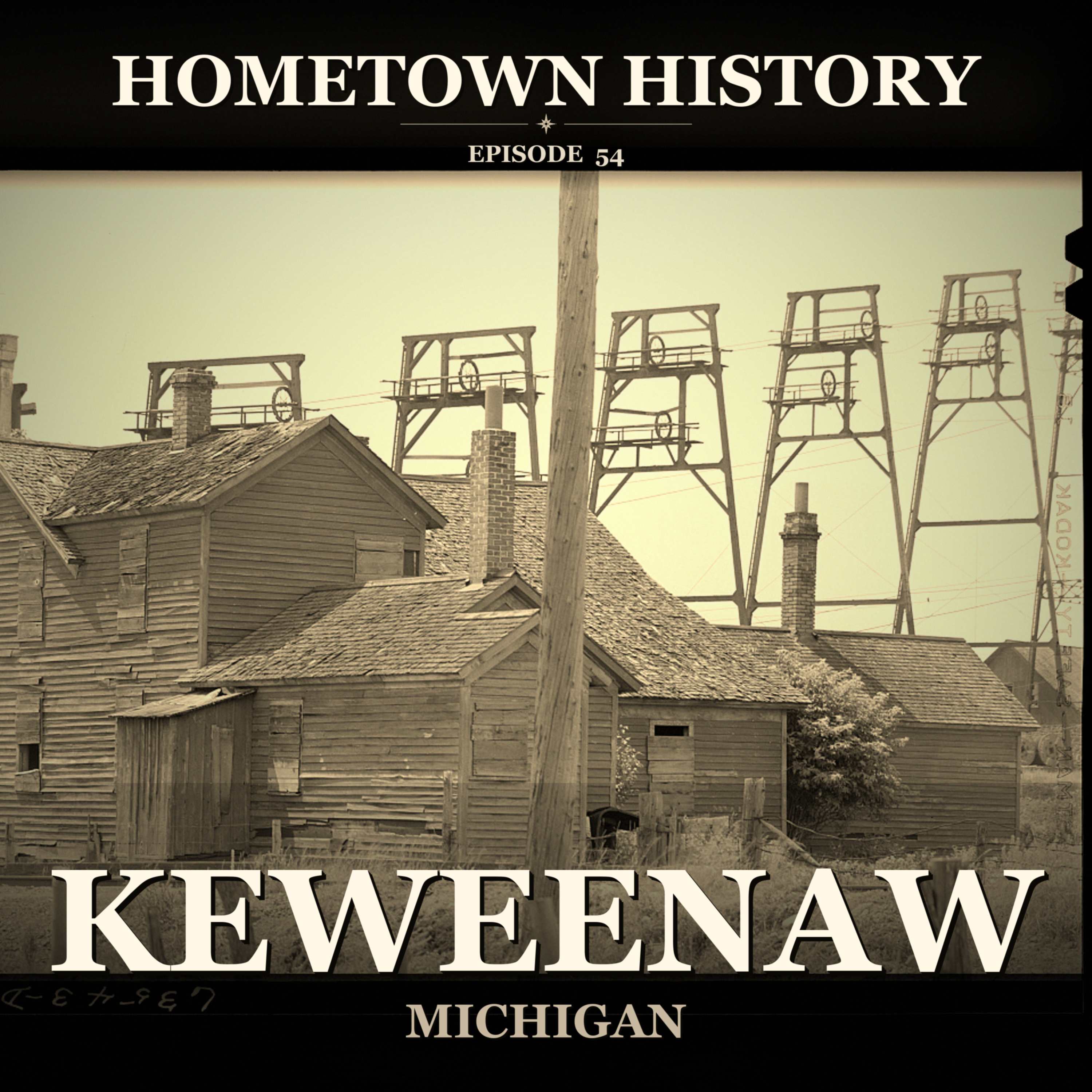
0:10 [SPEAKER_00]: The first mining boom in American history was not the California Gold Rush, the Klantik Gold Rush, or any other Gold Rush. 0:19 [SPEAKER_00]: The first mining boom in American history was the copper rush of the uppermost part of the Upper Peninsula, the Kiemunop Peninsula. 0:28 [SPEAKER_00]: And by the time it was over, this boom actually had a greater economic impact than either of those gold rushes. 0:35 [SPEAKER_00]: In fact, from the 1860s to the 1920s, this part of Michigan supplied over 90% of the world's copper. 0:44 [SPEAKER_00]: But like all booms, this one ended. 0:47 [SPEAKER_00]: And when it did, it left a trail of ghost towns throughout this region. 0:51 [SPEAKER_00]: When the copper ran out or the price per pound dropped too low for too long, the companies that had driven the boom now drove back to the east coast where they came from. 1:02 [SPEAKER_00]: In many cases the entire plant was scrapped. 1:05 [SPEAKER_00]: Even train tracks laid throughout company grounds were picked up, sold off, and reused. 1:11 [SPEAKER_00]: Houses were sold, salvaged, or just abandoned. 1:15 [SPEAKER_00]: churches emptied, stores closed, and city parks, and sometimes cemeteries, grew lush, with weeds and trees, and the northern Great Lakes region is not the southwest. 1:27 [SPEAKER_00]: It's so hot and dry in places like Arizona and New Mexico that buildings and former boom towns that are left to rot, never actually do. 1:38 [SPEAKER_00]: Northern Michigan is wet and often cold. 1:41 [SPEAKER_00]: Temperatures hover are run zero in winter, and the snowfall is something straight out of game of thrones. 1:48 [SPEAKER_00]: When winter comes, it really comes. 1:51 [SPEAKER_00]: The all-time low is 15 feet of snow, and key in our county. 1:56 [SPEAKER_00]: The average is 20 feet, a abandoned buildings don't stand a chance. 2:02 [SPEAKER_00]: Once the roof goes, the walls go, the floors go, and everything goes. 2:07 [SPEAKER_00]: And after seeing Fayette, I was encouraged to visit some of the ghost towns of the Q&A, and see what was left. 2:15 [SPEAKER_00]: But just south of the canal that forms the south border of that county. 2:19 [SPEAKER_00]: I found a place called the Adventure Mine, and against my better instincts. 2:24 [SPEAKER_00]: I pulled in. 2:25 [SPEAKER_00]: My better instincts were wrong again, of course, and I had a really good time. 2:30 [SPEAKER_00]: The Adventure Mine was actually the original 2:36 [SPEAKER_00]: run by the adventure mining company. 2:39 [SPEAKER_00]: Honestly, the first thing that struck me was how much the people who worked here genuinely loved their jobs and they really, really like rocks. 2:48 [SPEAKER_00]: I do not like rocks particularly, but I enjoyed their passion. 2:52 [SPEAKER_00]: And if you do love rocks, like these people, why wouldn't you love it here? 2:57 [SPEAKER_00]: Again, the upper peninsula has the most diverse geology in the country. 3:02 [SPEAKER_00]: and it's the only place in the world where you find raw copper and silver, both 99.9% pure in the same place. 3:11 [SPEAKER_00]: They sell small pieces in the gift shop. 3:15 [SPEAKER_00]: What's the first thing you think of when you imagine going underground? 3:19 [SPEAKER_00]: The dark, slightly damp air, the strange indescribable smell of wet, open prehistoric rock, 3:27 [SPEAKER_00]: I thought of all of that. 3:29 [SPEAKER_00]: I did not think about the cold. 3:31 [SPEAKER_00]: It's 43 degrees down there, year round. 3:34 [SPEAKER_00]: Because it was 85 degrees outside, and I had been sweating more and less, uninterrupted for the last three days. 3:41 [SPEAKER_00]: Approaching the entrance to the mine, seriously, felt like walking into Narnia. 3:46 [SPEAKER_00]: This Arctic gust hits you right outside of the entrance to the mine, and continues for maybe 20 or 30 feet, until it stabilizes, in the low 40s. 3:56 [SPEAKER_00]: Everyone else in the group was wearing a hoodie and a jacket. 3:59 [SPEAKER_00]: I went in wearing a fishnet shirt, held up by two tent poles, where my nipples used to be. 4:05 [SPEAKER_00]: Not really, but it felt like it. 4:08 [SPEAKER_00]: I was wearing a wet t-shirt about a stick as tissue paper. 4:12 [SPEAKER_00]: In some respects, being hundreds of feet underground is just as unnatural as being hundreds of feet above the ground in an airplane, and there are some experiences in life, you just can't simulate. 4:26 [SPEAKER_00]: This one is difficult to describe. 4:28 [SPEAKER_00]: It's kind of an assault of novelties on your senses, the smell, the damp, the dark, and you can't help but feel that you're in a place 4:39 [SPEAKER_00]: And just as I'm thinking of all of this, in the first tonal of the adventure mine, I look up and see Dwarf script, literal Dwarf script, above the first threshold, like something out of Lord of the Rings, across from that script was a pillar, and I learned from the guide that it was between these two landmarks that three dwarves named Ben, Odrid, and Kalas, 5:08 [SPEAKER_00]: In the year 332, granted, this only happened in the steam punk fantasy realm of the independent film dwarves of Dragon Mountain. 5:18 [SPEAKER_00]: Shot here 2018, but the aura of that drama lives on, however much of that there may or may not have been. 5:26 [SPEAKER_00]: Never mind the fact that it has a 7.7 rating on IMDB, or all the heavy breathing at the end of the movie trailer. 5:33 [SPEAKER_00]: The adventure mine is the mine where they found a 25-time lump of pure copper that took 10 people six months to remove, but you can't blow it up or break it apart. 5:45 [SPEAKER_00]: The only way to get it out is to chisel gaps into it, creating smaller lumps large enough to carry out. 5:52 [SPEAKER_00]: By the time they were done, the Adventure Mining Company actually lost money on this gigantic lump of copper. 6:00 [SPEAKER_00]: And over the course of the life of this mine, which operated on an industrial scale from 1850 to 1920, they pulled 11 million pounds of copper out of the ground, with a total profit of $0. 6:14 [SPEAKER_00]: None of the three companies that owned the Adventure Mine, over that span, made any money, why? 6:22 [SPEAKER_00]: The copper was too pure, and too large. 6:27 [SPEAKER_00]: As I mentioned in the first episode, you can't drill into pure copper, and it's too soft to pull up into smaller, more manageable pieces. 6:35 [SPEAKER_00]: Copper ore, or copper rock, as locals refer to it, is actually easier to work with, and more profitable. 6:43 [SPEAKER_00]: You have to crush and separate ore, once you get it up to the surface, by getting it there, is so, so much easier. 6:51 [SPEAKER_00]: Partly on account of all of this, there are still 11 to 13 million pounds of pure copper, stuffed inside the adventure mine. 7:00 [SPEAKER_00]: I saw some of it myself in a drill hole in one of the tunnels, where the bit had dead ended. 7:06 [SPEAKER_00]: Near the end of the tour, the guide took us to this huge cavern, called the cathedral room. 7:12 [SPEAKER_00]: where the former owners of the mine used to throw parties in the 70s. 7:16 [SPEAKER_00]: She then had a shut off all of our headsets and stand in the light of a single candle, a simple exercise but sort of chilling and revealing of what it actually felt like to be so isolated and enveloped. 7:31 [SPEAKER_00]: by darkness, 300 feet underground. 7:34 [SPEAKER_00]: They worked like this for 10 hours at a time, 6 days a week, for a dollar a day. 7:39 [SPEAKER_00]: If your candle went out and you were unable to relide it with your tinder box, you simply set down in the dark and waited for the next minor to come along. 7:49 [SPEAKER_00]: If that someone was your supervisor, you forfeit it that day's pay. 7:53 [SPEAKER_00]: If you tried to walk to another candle, you rest falling down a connecting shaft. 7:58 [SPEAKER_00]: In which it might be hundreds of feet before you hit another floor. 8:02 [SPEAKER_00]: I can't believe I didn't ask this But I'm wondering right now Where did they go to the bathroom? 8:09 [SPEAKER_00]: I sent a text to Dillon a guide from the Quincy mine a few hours north and he said Solid waste went in empty powder or candle boxes anything else They just went where they were 8:23 [SPEAKER_00]: So, apparently you carried your lunch down into the mine, then you carried it back home again when you were through with it. 8:30 [SPEAKER_00]: I don't know what I expected, one last thing about the Adventure Mine. 8:35 [SPEAKER_00]: There's a bike race down here, 300 feet underground, called the Miners Revenge. 8:41 [SPEAKER_00]: I can't even imagine it. 8:43 [SPEAKER_00]: We walked through the one stretch of the tunnel where the ceiling drops to about three feet, and it's part of the race track. 8:49 [SPEAKER_00]: Apparently, every year a few writers insist on attempting to write through it, rather than walking, as they were encouraged to do. 8:57 [SPEAKER_00]: And to be fair, the bikes themselves do sometimes make it all the way to the other side. 9:01 [SPEAKER_00]: They hire an EMS team, each year, to wait at this tunnel, in the darkness, watching and listening, for the inevitable smacking of bike helmets, as new participants try to shave a few seconds off their times. 9:13 [SPEAKER_00]: This is the official race website. 9:15 [SPEAKER_00]: The miners revenge, takes you deep into the mountain. 9:18 [SPEAKER_00]: and through the pits of ancient miners who spent their lives chasing the red metal. 9:23 [SPEAKER_00]: Some say the men who died still live in the mine, protecting their claim. 9:27 [SPEAKER_00]: We can't say that's true, but we can't say that anything can happen when you are 300 feet below the surface, and there's nobody to hear your screen. 9:36 [SPEAKER_00]: Heart Pass. 9:38 [SPEAKER_00]: But to all of you mountain bikers out there, where else are you going to find an experience like this? 9:44 [SPEAKER_00]: Steer clear of the 250 pot holes, and you'll have a great time. 9:49 [SPEAKER_00]: The air in the mine with surprisingly clean and clear, I expected it to be stuffy in humid, but there is natural ventilation through some of the shafts and breathing was easy. 9:59 [SPEAKER_00]: After the mine, I drove an hour north to Houghton, stopping for a pasty at a place called Roy's, overlooking the portage bridge, where I was directed to a campground just across the river. 10:12 [SPEAKER_00]: As far as that goes, let me just start by saying, Hancock City Park Campground 5 stars. 10:19 [SPEAKER_00]: They had cell phone service and Park Wi-Fi. 10:22 [SPEAKER_00]: To ensure that I could catch up on what has turned into a fairly 10:28 [SPEAKER_00]: and also to prevent a family of four from Central Ohio, from being stranded on the deck of our rental cottage, while I wondered the balmy banana belt of Southern North Michigan without service, smiling and oblivious. 10:41 [SPEAKER_00]: Somewhere in the year 1873, it was too late for that last one, but I appreciated the thought. 10:48 [SPEAKER_00]: Also, it cost $16 a night, less than half of state parks. 10:53 [SPEAKER_00]: The camp 10:57 [SPEAKER_00]: So weary traveler, if you are trapped out of service, out of Wi-Fi, and looking for a place with both fast food and local fish shorts, come to these rocky, forgotten shores, and the good people of Hancock will give you rest.
Show full transcript (98 segments)