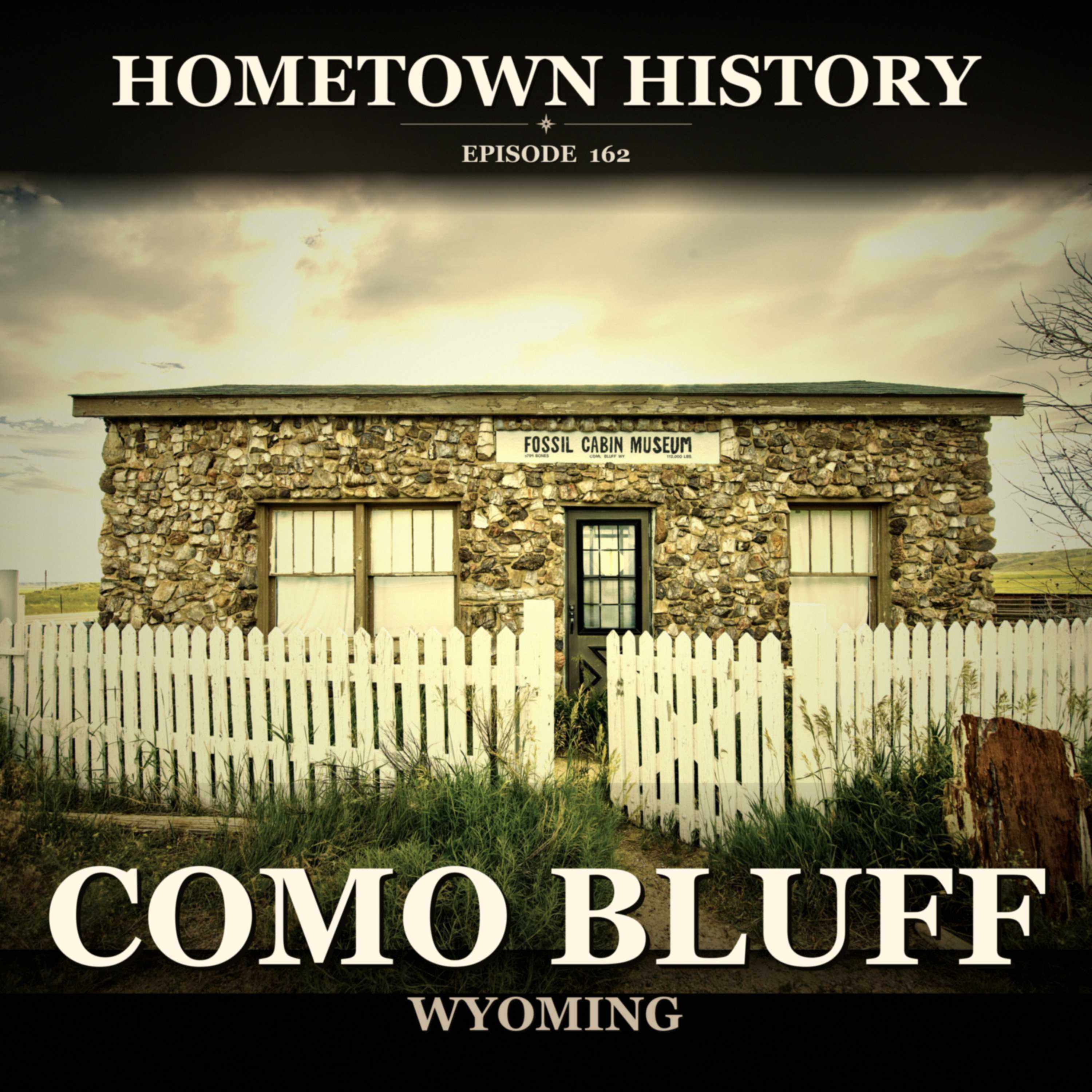
0:02 [SPEAKER_00]: There is nothing wrong with a bit of healthy competition. 0:06 [SPEAKER_00]: It encourages people to do better and it can lead to innovation. 0:11 [SPEAKER_00]: Just like the one between Apple and Microsoft, that has resulted in countless technological advancements for us. 0:21 [SPEAKER_00]: or the space race between the United States and the Soviet Union, which has led to major developments in space exploration, but competition can sometimes take a dark turn, evolving into a rivalry. 0:37 [SPEAKER_00]: Things get ugly and can lead to personal animacities, unethical behavior, and even sabotage 0:51 [SPEAKER_00]: Welcome back, friend, to Home Town History. 0:54 [SPEAKER_00]: In today's episode, we will explore one of the most infamous examples of such a rivalry. 1:02 [SPEAKER_00]: One between off-neal Charles Marsh, an Edward Trinker cop, the warring paleontologists. 1:13 [SPEAKER_00]: Let's start from the beginning. 1:16 [SPEAKER_00]: Early on in his life, Authneal Charles Marsh inherited a substantial amount of wealth from his uncle, George Peabody, and this financial boon allowed him to attend proper toy school where he excelled. 1:32 [SPEAKER_00]: Even though he was older than most of his classmates, it was clear from his time at school that he was more academically advanced than his peers. 1:42 [SPEAKER_00]: and this excellence eventually led him to Yale College, where he graduated as valedictorian. 1:51 [SPEAKER_00]: He then convinced his uncle to fund his further education and earned a master's degree from Yale's 2:01 [SPEAKER_00]: Finally, in 1866, Marsh became the first professor of paleontology in North America, which was the starting point of a rather successful career. 2:14 [SPEAKER_00]: On the other hand, was Edward Drinker-Cope. 2:18 [SPEAKER_00]: He also showed signs of academic excellence from a young age, focusing on his passion for paleontology. 2:27 [SPEAKER_00]: By the age of six, he was recording his impressions of fossils. 2:32 [SPEAKER_00]: In by 18, he had published his first scientific paper. 2:38 [SPEAKER_00]: Copes' education was less formal than marshes. 2:42 [SPEAKER_00]: He briefly attended the University of Pennsylvania, studied abroad, and worked at the Academy of Natural Sciences in Philadelphia. 2:52 [SPEAKER_00]: Then, his father, a Quaker, sent him to Europe to further his education and to prevent him from joining the Civil War. 3:02 [SPEAKER_00]: And this is where it all began. 3:05 [SPEAKER_00]: Cope met Marsh in 1863 at Berlin University, and at first they became friends. 3:14 [SPEAKER_00]: Sure, both men had their flaws. 3:18 [SPEAKER_00]: Marsh was known for his autocratic behavior and financial stingingess. 3:23 [SPEAKER_00]: While Cope was often described as argumentative, it was widely known amongst their colleagues and friends that they were difficult people to work with, but somehow they bonded well with each other. 3:39 [SPEAKER_00]: That did not last for long. 3:44 [SPEAKER_00]: In 1868, Cope gave Marsh a guided tour of a fossil excavation site, located in hadn't field New Jersey, just as they usually worked. 3:57 [SPEAKER_00]: But things were different this time. 4:00 [SPEAKER_00]: Marsh went behind Cope's back, and secretly arranged with a sideowner to send any new fossil finds to his office at Yale. 4:11 [SPEAKER_00]: when he found out, Cope was understandably upset at Marsha's underhanded deal, but he chose to ignore it and just concentrate on his work. 4:22 [SPEAKER_00]: But it seems that the rivalry was inevitable. 4:26 [SPEAKER_00]: That same year, Cope published a paper on a newly discovered dinosaur relative, a last 4:35 [SPEAKER_00]: Unfortunately, he made a rather noticeable mistake in his recognition by placing the skull at the end of the tail instead of the neck. 4:46 [SPEAKER_00]: And when Marsh pointed out this mistake, Cope was deeply embarrassed and tried to buy up all the copies of the journal that featured the flawed article. 4:56 [SPEAKER_00]: This incident destroyed any remaining goodwill between them. 5:01 [SPEAKER_00]: Probably because all of those bottled up feelings, from Marsh's portrayal, came back to him. 5:08 [SPEAKER_00]: Marsh himself noted, When I informed Professor Cope of his error, his wounded vanity received a shock from which it has never recovered. 5:18 [SPEAKER_00]: It he has sensed in my bitter enemy. 5:22 [SPEAKER_00]: that was pretty accurate. 5:24 [SPEAKER_00]: They were bitter enemies from that point on. 5:29 [SPEAKER_00]: The first confrontation happened in 1872, cop attempted to search for fossils in Wyoming territory, which Marsh apparently considered his domain. 5:41 [SPEAKER_00]: So the two exchanged heated ladders, the things just continued to escalate from that point. 5:49 [SPEAKER_00]: Marsh was also particularly furious, when Cope lured away one of his field collectors, and somehow acquired some of Marsh's fossils. 5:59 [SPEAKER_00]: Later, in 1877, a mining teacher named Arthur Lakes discovered fossil bones near Morrison, 6:09 [SPEAKER_00]: Initially, Lakes contacted Marsh, but when Marsh did not respond promptly, he sent the samples to cope. 6:19 [SPEAKER_00]: And this news convinced Marsh to jump into action. 6:24 [SPEAKER_00]: He quickly secured Lake's loyalty with a financial offer, and that was not acceptable to cope. 6:32 [SPEAKER_00]: He was frustrated that Marsh had caused him a good opportunity in his career, and he wasn't going down without a fight. 6:41 [SPEAKER_00]: Around the same time as the Lake's discovery, another teacher found fossil bones near 6:51 [SPEAKER_00]: This time, Cope was quick to respond, and that led to the discovery of Camaro Soros. 6:59 [SPEAKER_00]: The problem was, Marsh had already named a creature similar as Titanic Soros, so the conflict over naming rights fueled this further. 7:11 [SPEAKER_00]: are the late 1880s public attention to the feud between Cope and Marsh decreased significantly because international stories took a spotlight over the quote Wild West. 7:25 [SPEAKER_00]: As for both of them, life looked quite different. 7:30 [SPEAKER_00]: John Wesley Powell, head of the U.S. Geological Survey, used his connections with the wealthy and powerful in Washington to place Marsh at the head of his Consolated Government Survey. 7:44 [SPEAKER_00]: And Marsh was happy to step out of the sensationalist spotlight of the last few years. 7:51 [SPEAKER_00]: Cope, on the other hand, was not as fortunate. 7:55 [SPEAKER_00]: He had spent most of his money purchasing copies of the American naturalist after the mistake in his research paper, adding to his troubles he struggled to find employment, which was probably because of marshes allies in higher education and his own difficult temperament. 8:15 [SPEAKER_00]: Eventually, his financial situation deteriorated, to the point to where his fossil collection was his only significant asset. 8:25 [SPEAKER_00]: But soon enough, he got his chance to fight back. 8:30 [SPEAKER_00]: Copes saw an opportunity to exploit marshes vulnerabilities when Congress began investigating the proceedings of the consolidated geological survey in 1884. 8:43 [SPEAKER_00]: Cope had become friends with Henry Fairfield Osborn, a professor of anatomy at Princeton University, who approved to be a damaging influence on Mars. 8:55 [SPEAKER_00]: Cope searched for workers who were unhappy with John Wesley Powell in the geological survey, and was ready to speak against them. 9:06 [SPEAKER_00]: Initially, Powell and Marsh successfully refuted Cope's charges and his allegations did not reach the mainstream press. 9:16 [SPEAKER_00]: Cope turned to William Josev Baloo, a newspaperman from New York. 9:21 [SPEAKER_00]: When that didn't work to remove Marsh from his presidency of the National Academy of Sciences, Cope wasn't furyated, again. 9:31 [SPEAKER_00]: But then his luck changed. 9:34 [SPEAKER_00]: Coper received a financial boost when the University of Pennsylvania offered him a teaching job. 9:41 [SPEAKER_00]: This was his chance to strike a critical blow at Marsh. 9:46 [SPEAKER_00]: Over the years he had kept a detailed journal of Marsh and Powell's mistakes and misdeeds. 9:53 [SPEAKER_00]: And Baloo, the newspaperman, even planned a series of articles for a newspaper debate between 10:02 [SPEAKER_00]: While the scientific community was already aware of their feud, the public became scandalized when the New York Harold published a story with the headline, Scientist Wager Better Warfare. 10:17 [SPEAKER_00]: The articles caused a stir, with cope attacking Marsh for plagiarism and financial mismanagement, 10:32 [SPEAKER_00]: Marsh Empower countered with their own charges against Cope, and this back and forth went on for a while before the public just lost interest. 10:43 [SPEAKER_00]: Maybe warring paleontologists weren't as exciting as warring celebrities or monarchies. 10:51 [SPEAKER_00]: So the story faded from newspapers, leaving Cope and Marsh still in their bubble, fighting endlessly. 11:00 [SPEAKER_00]: As for the after-effects of this public stunt, Powell's misallocation of funds was never investigated, and neither coped nor marsh were held accountable for their mistakes. 11:12 [SPEAKER_00]: It was considered petty rivalry, and baseless insults to hurt the other party. 11:18 [SPEAKER_00]: But that isn't really the end of the story. 11:22 [SPEAKER_00]: Of course not. 11:25 [SPEAKER_00]: The loose charges against Marsh got people thinking a bit more seriously about the geological survey. 11:33 [SPEAKER_00]: The anti-survey sentiment was intense, which led the committee to demand that the survey's budget be stricter and itemized, so people could see exactly where all that money was going. 11:46 [SPEAKER_00]: Eventually, in 1892, Powell sent Marsh a telegram, emphasizing that he must send in his resignation. 11:55 [SPEAKER_00]: This led to a big financial blow to him as well, especially with so many of his allies, retired or dead, and Cope was in the same boat. 12:07 [SPEAKER_00]: And even though both of them did manage to improve their social standing after this, not much could be done. 12:15 [SPEAKER_00]: Their rivalry lasted until Cope's death in 1897, by which time both men were financially 12:24 [SPEAKER_00]: Copes suffered from an illness, which significantly impaired a person's ability to live a normal life. 12:32 [SPEAKER_00]: He had a self-part of his fossil collection and rent out his house to make ends meet. 12:38 [SPEAKER_00]: Marsh and turn, mortgageed his residents, and asked Yale for a salary to live on for the remaining years. 12:47 [SPEAKER_00]: But the rivalry remained strong until the end, even as he was dying, cope issued a final challenge to Marsh, to donate his skull to science, to compare brain sizes, to prove who is superior, waterway to be dramatic, but it wasn't all bad. 13:11 [SPEAKER_00]: Despite the personal rivalry, both Marsh and Cope made significant contributions to the field of paleontology. 13:20 [SPEAKER_00]: In fact, their rivalry motivated them to do their most. 13:25 [SPEAKER_00]: Marsh's work at Yale and his support from the U.S. Geological Survey allowed him to hire many collectors, some of whom became notable paleontologists and their own right. 13:39 [SPEAKER_00]: When in 1877, railway workers William Reed and Carlin discovered fossils near Komobloff, Wyoming, they contacted Marsh. 13:51 [SPEAKER_00]: This site proved to be a gold mine of Jurassic period dinosaur bones. 13:56 [SPEAKER_00]: Marsh's team shipped 30 tons of fossils east, including those of Alessoris, 14:07 [SPEAKER_00]: Marsh named several new species from this discovery, including the famous Brontosaurus. 14:14 [SPEAKER_00]: Cop had over 1,400 published works, which contributed to the literature of the field and served as the basis of future work. 14:24 [SPEAKER_00]: Collectively, there worked between 1870 and the late 1890s, resulted in the classification of 136 new species of North American dinosaurs, which was a major step forward, considering 14:46 [SPEAKER_00]: The extinct creatures that cope and marsh introduce to the scientific world include some of the most well-known dinosaurs today, including the triceratops and that's not all. 15:00 [SPEAKER_00]: Beyond dinosaurs, they also catalogued numerous extinct species of mammals, fish and birds. 15:08 [SPEAKER_00]: They were the front runners and the development of the field at the time in North America, gripping the whole world's fascination. 15:20 [SPEAKER_00]: And that wraps up today's episode. 15:23 [SPEAKER_00]: There is no doubt about the fact that the rivalry between Marsh and Cope led to some remarkable discoveries and advancements in paleontology. 15:33 [SPEAKER_00]: But does that really make up for the problems that they created for each other? 15:39 [SPEAKER_00]: It is something to think about. 15:40 [SPEAKER_00]: Thank you for listening to Home Town History. 15:44 [SPEAKER_00]: Be sure to follow along for more interesting stories from the past.
Show full transcript (108 segments)