Forgotten stories from America's small towns.Hosted by Shane Waters20 min episode
Picher, Oklahoma: The Mining Town That Poisoned Its Own Children
Transcript
150 segmentsShow Notes
In the far northeastern corner of Oklahoma, a town called Picher was once the most productive mining site
in the entire Tri-State Lead and Zinc District. It was founded in 1913, after prospectors struck ore on
land belonging to Harry Crawfish of the Quapaw Nation, and by 1926 it held more than 14,000 residents.
Some 248 mills processed lead and zinc around the clock, supplying more than half the zinc and forty-five
percent of the lead the country used in World War I, according to the Oklahoma Historical Society.
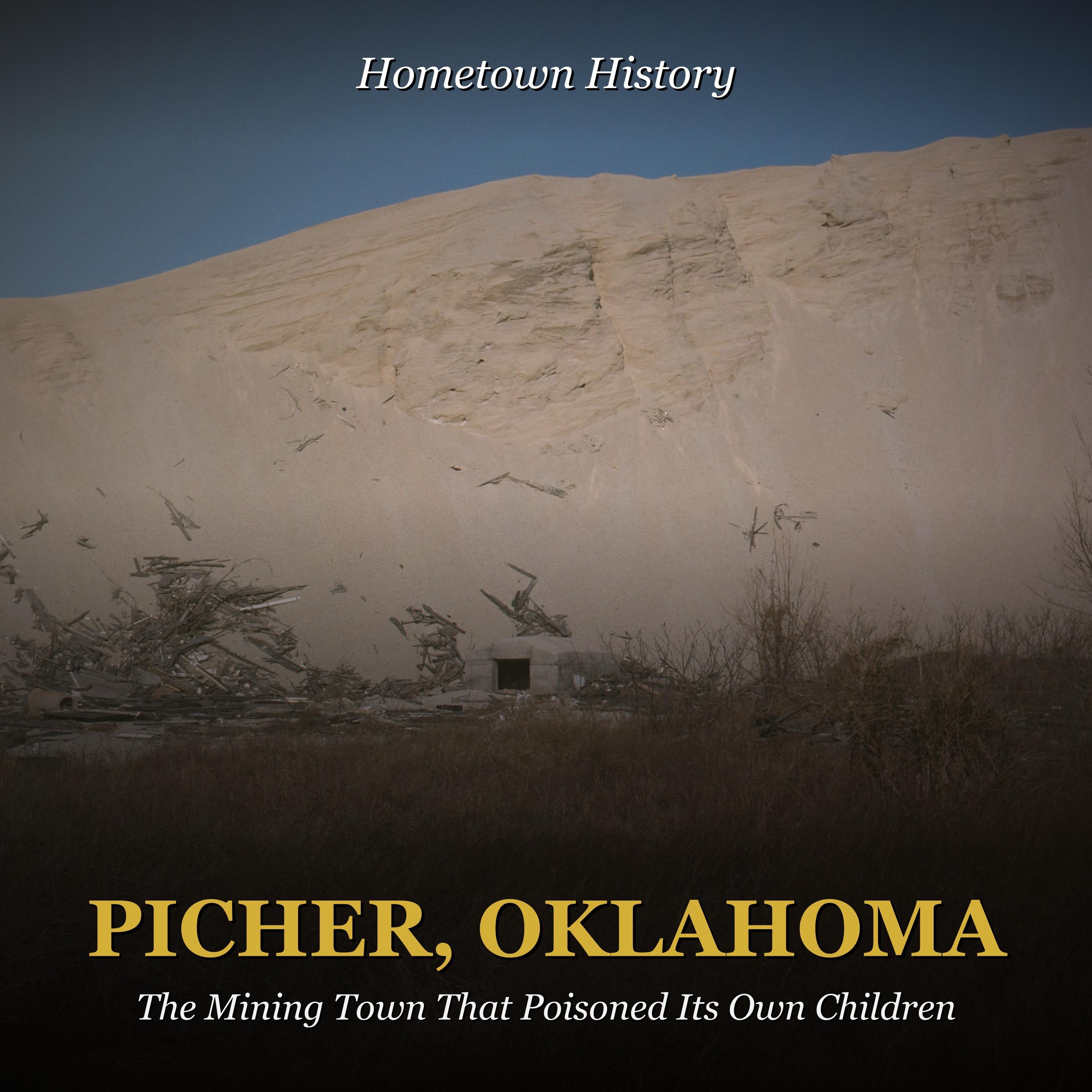
Every ton of ore left behind pulverized waste rock called chat, and the chat went into piles that reached
200 feet high. Children played on them, rode bikes up their slopes, and swam in the contaminated ponds at
their base. Studies in the 1990s found that roughly a third of Picher's youngest children carried blood
lead levels above the federal danger threshold, many times the state average. School counselor Rebecca Jim
watched the damage arrive in her office: learning disabilities, behavioral problems, and kidney trouble,
all of it traced back to the gray dust those kids had been breathing their whole lives.
Timeline of Events
1913: Prospectors strike lead and zinc ore in Ottawa County, Oklahoma.
1918: The town of Picher is officially incorporated.
1926: The population peaks at 14,252.
1967: The last mines close in the Pitcher field.
1979: Tar Creek turns orange from acid mine drainage running at a million gallons a day.
1983: The EPA designates the Tar Creek Superfund Site.
1994: A study finds 34 percent of Picher children have lead poisoning.
1997: Rebecca Jim co-founds the LEAD Agency.
2006: The Army Corps finds about a third of Picher's studied acreage undermined, with 286 locations flagged
and 54 of them under or beside a house or business.
2008: An EF4 tornado kills 6 people and destroys more than 150 homes.
2009: Picher ceases operating as a municipality on September 1; the 2010 census records a population of
20. Formal dissolution follows in November 2013.
2015: Gary Linderman, the last holdout, dies at 60.
Historical Significance
Picher is one of the most complete cases of environmental sacrifice in American history. The town gave its
ore, its labor, and its children's health to fuel two world wars, and the district generated more than
$310 million in minerals between 1908 and 1930 alone. When the ground itself was condemned, the federal
government funded a buyout through the state relocation trust. The Tar Creek Superfund Site is still one
of the most contaminated locations in the country, with acid mine drainage running at a million gallons a
day into waterways that feed Grand Lake O' the Cherokees, a regional drinking-water reservoir. The Quapaw
Nation now holds an EPA cleanup contract, but full remediation is decades out.
Sources
Oklahoma Historical Society Encyclopedia
EPA Tar Creek Superfund records
National Weather Service Tulsa tornado documentation
Rebecca Jim and the LEAD Agency reporting
U.S. Army Corps of Engineers study, 2006
If you liked this: Episode 178, Gauley Bridge, West Virginia. Another company town where the people doing
the work were the last to learn what it was doing to them.
Hometown History explores forgotten stories from small-town America. The overlooked events, hidden triumphs,
and buried tragedies that shaped the country we live in. New episodes every Tuesday. Find every episode at
mythsandmalice.com/hometown-history
Episode 217 | Hometown History | Hosted by Shane Waters
Word count: 543. This same text publishes to the episode page on mythsandmalice.com, so it is the SEO copy
for the website too.
Advertising Inquiries: https://redcircle.com/brands
Privacy & Opt-Out: https://redcircle.com/privacy
Credits
Shane Waters, Founder & Host
Produced by Myths & Malice
Listen to Hometown History
Get More from Hometown History
Unlock exclusive content and support the show.
- Ad-free listening
- Early access to episodes
- Bonus episodes
- Support independent podcasting
the M&M Dispatch
Get new Hometown History episodes and the stories behind the towns we visit.
Enjoying Hometown History?
Leave a rating on Apple Podcasts. It takes a few seconds and helps new listeners find the show.