Forgotten stories from America's small towns.Hosted by Shane Waters21 min episode
Boston, Massachusetts: The Great Molasses Flood That Changed American Law
Show Notes
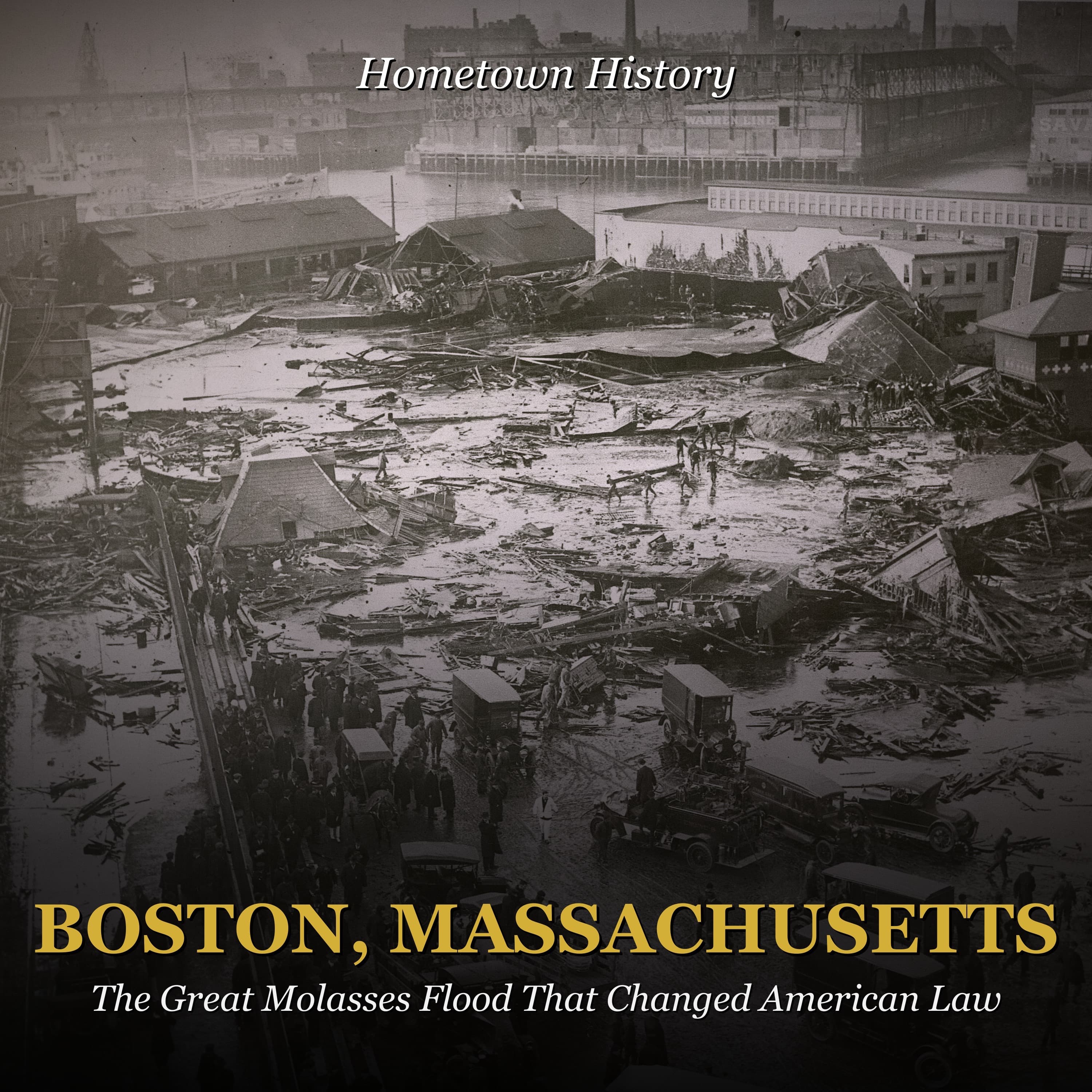
On January 15, 1919, at about 12:30 in the afternoon, a massive steel storage tank at 529 Commercial Street
in Boston's North End ruptured and released 2.3 million gallons of molasses in a wave fifteen to twenty-five
feet high moving at thirty-five miles an hour. The Purity Distilling Company tank stood fifty feet tall
and ninety feet across and held twelve thousand tons, and it had been leaking since the day it was first
filled in December 1915.
Company treasurer Arthur P. Jell, who had no engineering background at all, oversaw its construction with
steel roughly fifty percent too thin and low enough in manganese to turn brittle in cold weather. When
the neighborhood complained about the leaking, the company painted the tank brown to hide the seepage.
Twenty-one people died and roughly 150 were injured. The lawsuit that followed, one of the largest class
actions the country had seen, ran five and a half years, with 341 days of testimony, before auditor Hugh
W. Ogden ruled United States Industrial Alcohol completely liable.
Timeline of Events
Spring 1915: Hammond Iron Works fabricates the steel panels in Brooklyn and the tank goes up at 529 Commercial
Street.
December 1915: The tank is filled for the first time and begins leaking immediately. The company paints it
brown.
1915 to 1918: Neighbors complain, no structural repairs are made, and children collect the leaking molasses
in cans and pails.
January 13, 1919: A steamer arrives from the Caribbean with warm molasses, and the tank is filled to
capacity.
January 15, 1919, about 12:30 PM: The tank ruptures. Twenty-one people are killed and roughly 150 injured.
January 16, 1919: The Eighteenth Amendment is ratified the day after the disaster. It did not outlaw
industrial alcohol, but the timing coincidence gets told wrong constantly.
1920: Hearings begin in the consolidated class-action lawsuit.
April 28, 1925: auditor Hugh W. Ogden rules United States Industrial Alcohol completely liable and awards
$628,000 in damages, about $11 million today.
After 1925: Massachusetts passes laws requiring engineering stamps on plans for industrial structures.
Historical Significance
The Great Molasses Flood changed how America regulates industrial construction. Massachusetts passed
the first laws requiring professional engineers to certify plans for industrial structures, which ended
the era when a company treasurer with no engineering background could make structural decisions about
infrastructure sitting in a residential neighborhood. Boston wrote its first comprehensive building codes
covering industrial and residential structures alike. The five-and-a-half-year lawsuit set precedent for
corporate accountability in industrial disasters, and the case is still cited as an engineering teaching
example. Metallurgist Ronald Mayville's 2014 analysis confirmed what the victims' lawyers argued in 1920:
the steel was fifty percent too thin and dangerously low in manganese. The North End rebuilt, and Langone
Park stands near the tank site today.
Sources
Massachusetts Superior Court records, 1920 to 1925
Ronald Mayville metallurgical analysis, 2014
WPA Guide to Boston
Boston Globe and Boston Post accounts, 1919
Engineering case-study literature on the disaster
If you liked this: Episode 179, Gay Head, Massachusetts. Another Massachusetts disaster where the death
toll came down to decisions made long before anyone drowned.
Hometown History explores forgotten stories from small-town America. The overlooked events, hidden triumphs,
and buried tragedies that shaped the country we live in. New episodes every Tuesday. Find every episode at
mythsandmalice.com/hometown-history
Episode 216 | Hometown History | Hosted by Shane Waters
Advertising Inquiries: https://redcircle.com/brands
Privacy & Opt-Out: https://redcircle.com/privacy
Credits
Shane Waters, Founder & Host
Produced by Myths & Malice
Listen to Hometown History
Get More from Hometown History
Unlock exclusive content and support the show.
- Ad-free listening
- Early access to episodes
- Bonus episodes
- Support independent podcasting
the M&M Dispatch
Get new Hometown History episodes and the stories behind the towns we visit.
Enjoying Hometown History?
Leave a rating on Apple Podcasts. It takes a few seconds and helps new listeners find the show.