Forgotten stories from America's small towns.Hosted by Shane Waters21 min episode
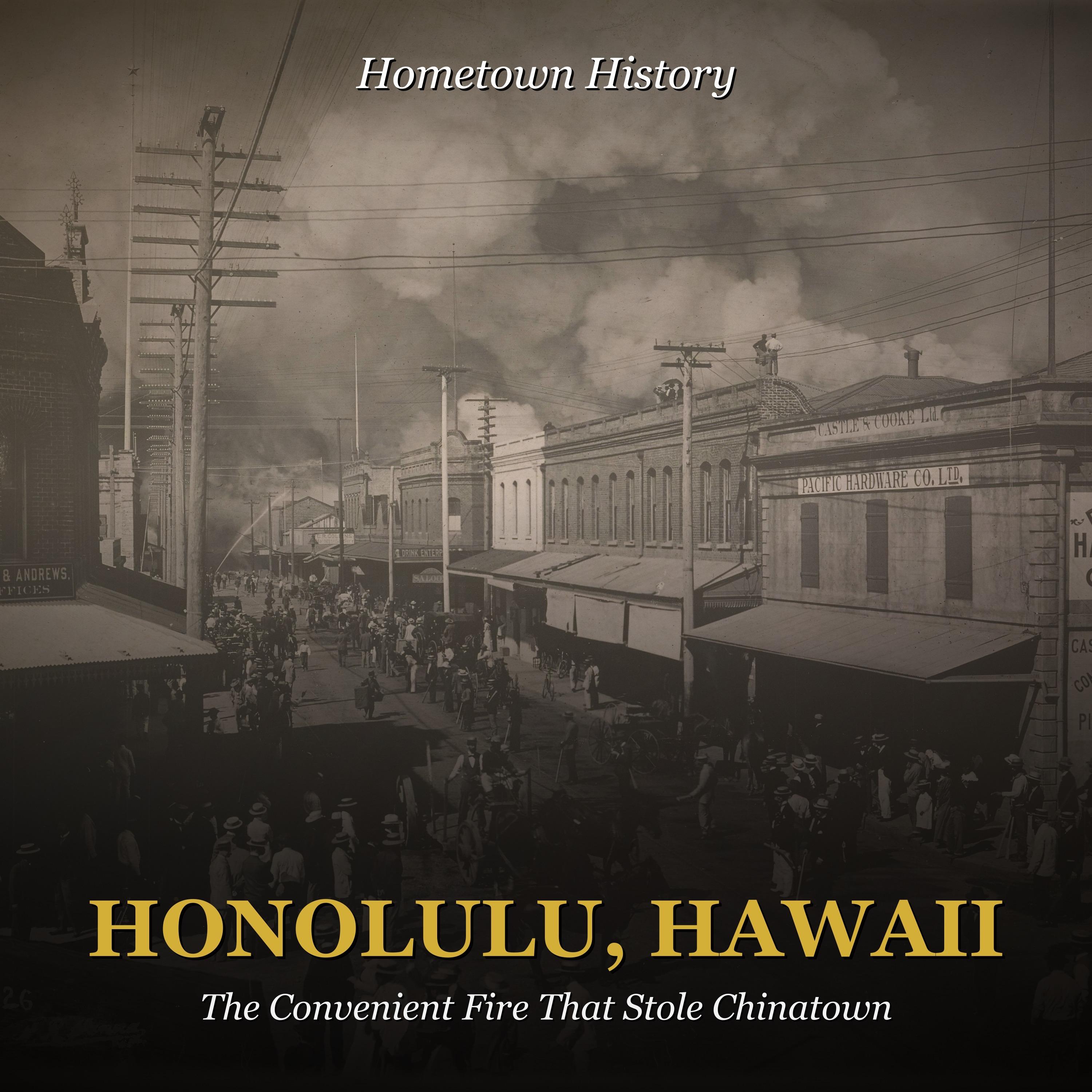
Honolulu, Hawaii: The Convenient Fire That Stole Chinatown
Show Notes
In December 1899, a twenty-two-year-old Chinese bookkeeper named You Chong fell ill at the Wing Wo Tai
import house in Honolulu's Chinatown. His death confirmed what the Board of Health had been dreading.
Bubonic plague had reached the newly annexed Territory of Hawaii. What followed was more than a public
health response. It was the calculated destruction of one of the oldest Chinese communities in the Pacific.
Under Sanford Dole's government, the Board of Health set 41 controlled fires across Chinatown between
January 1 and January 19, 1900. On January 20, during the burning of Block 15, the wind shifted. The worst
of it came on January 20, when the fire spread out of control and consumed 38 acres of the city; the Board
of Health kept setting smaller fires in the emptied district for weeks afterward. Between 5,000 and 8,000
people were displaced. Armed guards marched residents to the Kalihi detention camp and held them there for
more than three months. The Chinese families who built Chinatown never got their neighborhood back.
Timeline of Events
1850s: Chinese laborers begin arriving in Hawaii to work the sugar plantations.
1893: American businessmen overthrow Queen Liliuokalani and Sanford Dole takes power.
1898: The United States annexes Hawaii by joint congressional resolution.
December 12, 1899: You Chong is confirmed as the first bubonic plague case in Honolulu.
January 1 to 19, 1900: The Board of Health sets 41 controlled fires across Chinatown.
January 20, 1900: A wind shift during the Block 15 burn turns the fire uncontrollable.
January 20, 1900: The worst of the fire burns out of control, consuming 38 acres; the Board keeps setting
smaller fires in the district into February.
January to April 1900: Displaced residents are held at the Kalihi detention camp.
March 1900: The plague outbreak ends with 71 cases and 61 deaths.
1901: The Fire Claims Commission awards less than half of the losses claimed.
Historical Significance
The 1900 Honolulu Chinatown fire is one of the clearest examples of a public health crisis turned against
a community of color. How much of that ground changed hands, and to whom, is a question historians are
still working through the surviving records to answer. Claims to the Fire Claims Commission topped three
million dollars in 1900 currency, and the commission awarded a little under half of that. When Chinatown
was rebuilt, the businesses came back; the homes largely did not, and how much of the ground itself changed
hands is a question historians are still working through.
Sources
Board of Health official records, Territory of Hawaii
Fire Claims Commission records, 1901 to 1903
Historical accounts of Dr. Li Khai Fai
Kalihi detention camp records
Honolulu Chinatown historical documentation
If you liked this: Episode 173, Kalaupapa, Hawaii. Another Hawaii story about who gets moved, and who gets
to decide.
Hometown History explores forgotten stories from small-town America. The overlooked events, hidden triumphs,
and buried tragedies that shaped the country we live in. New episodes every Tuesday. Find every episode at
mythsandmalice.com/hometown-history
Episode 218 | Hometown History | Hosted by Shane WatersHonolulu, Hawaii: The Convenient Fire That Stole ChinatownHonolulu, Hawaii: The Convenient Fire That Stole Chinatown
Advertising Inquiries: https://redcircle.com/brands
Privacy & Opt-Out: https://redcircle.com/privacy
Credits
Shane Waters, Founder & Host
Produced by Myths & Malice
Listen to Hometown History
Get More from Hometown History
Unlock exclusive content and support the show.
- Ad-free listening
- Early access to episodes
- Bonus episodes
- Support independent podcasting
the M&M Dispatch
Get new Hometown History episodes and the stories behind the towns we visit.
Enjoying Hometown History?
Leave a rating on Apple Podcasts. It takes a few seconds and helps new listeners find the show.