Forgotten stories from America's small towns.Hosted by Shane Waters20 min episode
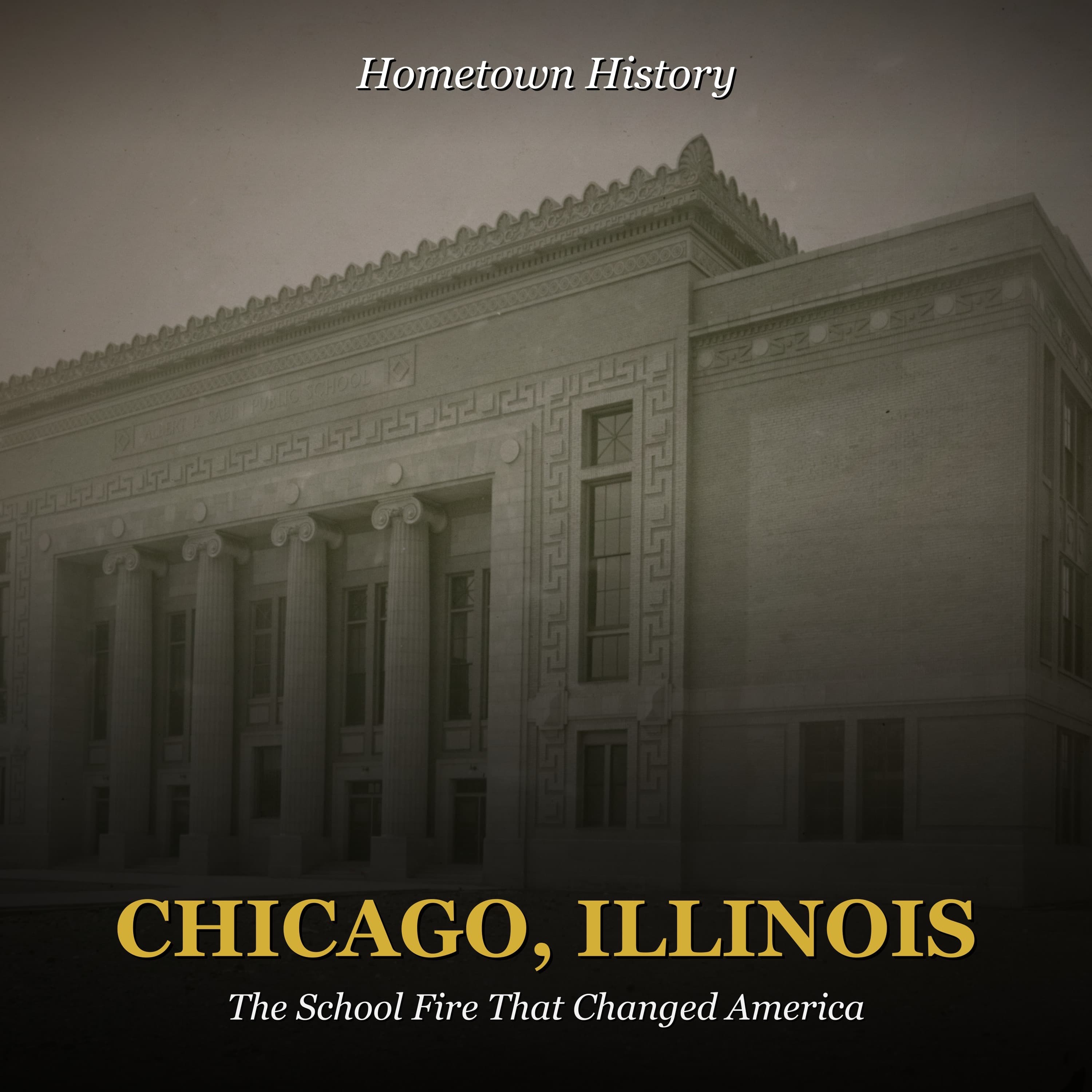
Chicago, Illinois: The School Fire That Changed America
Show Notes
On December 1, 1958, in Chicago's Humboldt Park neighborhood, ninety-five people died in a school that
was breaking no law at all. Our Lady of the Angels was a Catholic parish school running kindergarten
through eighth grade at 909 North Avers Avenue, with roughly 1,600 children enrolled. The fire started in
a cardboard trash barrel at the foot of a basement stairwell sometime between two and two-twenty in the
afternoon, and it burned for about twenty minutes before anyone upstairs knew. There were no heat detectors
to find it and nobody down there to see it.
The building had one fire escape, no sprinklers, and four extinguishers mounted seven feet off the floor.
Its two manual alarm switches sat in the far wing, and neither was wired to the fire department. Pulling
one rang a bell inside the building and nothing else. All of that was legal, because a grandfather clause
in Chicago's fire code exempted schools built before 1949 and the wing that burned went up in 1910. A city
inspector had walked through eight weeks earlier and signed off on everything. He was not wrong.
Timeline of Events
1903, 1910, and 1951: Our Lady of the Angels is built in pieces. The north wing, the one that burns, goes
up in 1910.
December 1, 1958, between about 2:00 and 2:20 PM: A fire starts in a trash barrel at the foot of the
northeast basement stairwell.
December 1, 1958, shortly after: A basement window shatters, oxygen rushes in, and the varnished wooden
staircase catches. With no fire door at the second-floor landing, the stairwell funnels smoke and flame
into the north wing.
December 1, 1958, about 2:25 PM: Three eighth-grade girls carrying wastebaskets hit a wall of smoke and
run to tell their teacher. That is the school's alarm system.
December 1, 1958, 2:42 PM: The alarm reaches the fire department. Companies are on the block in four minutes,
then lose time to a misdirected address and a locked iron gate.
That evening: Eighty-seven children and three nuns are dead.
August 9, 1959: The last of five more children dies of injuries, bringing the toll to 92 children and 3
nuns.
1960: A new school opens on the same ground at 3814 West Iowa Street, with sprinklers throughout.
Historical Significance
More than three hundred children were on the second floor, twenty-five feet above the pavement, with the
corridor gone. In one fourth-grade room of fifty-seven, twenty-eight children and their teacher died. In
a room at the far end of the hall that flame never reached, twenty-six children and their teacher died
of smoke and heated gas. In another, a nun had her students pack their textbooks into the gap under the
door, and it held long enough. The National Fire Protection Association came to Chicago and blamed the
city and the archdiocese for letting fire traps operate legally. Percy Bugbee, who ran the association
then, said there were no new lessons in this fire, only old ones that had gone unheeded. Within a year
roughly 16,500 older school buildings were brought up to modern codes. Chicago and Illinois rewrote theirs
outright: alarms wired to the fire department, sprinklers, fire doors, enclosed stairwells, class-size
limits, lockers instead of coats on a hallway hook. Nobody was ever charged. The official cause is still
undetermined.
Sources
National Fire Protection Association investigation report, 1958
Chicago Fire Department records
Cook County and Archdiocese of Chicago accounts of the December 1, 1958 fire
Contemporary Chicago newspaper coverage
If you liked this: Episode 206, Bath, Michigan. Another school tragedy that forced the country to rewrite
the rules for keeping children safe.
Hometown History explores forgotten stories from small-town America. The overlooked events, hidden triumphs,
and buried tragedies that shaped the country we live in. New episodes every Tuesday. Find every episode at
mythsandmalice.com/hometown-history
Episode 215 | Hometown History | Hosted by Shane Waters
Advertising Inquiries: https://redcircle.com/brands
Privacy & Opt-Out: https://redcircle.com/privacy
Credits
Shane Waters, Founder & Host
Produced by Myths & Malice
Listen to Hometown History
Get More from Hometown History
Unlock exclusive content and support the show.
- Ad-free listening
- Early access to episodes
- Bonus episodes
- Support independent podcasting
the M&M Dispatch
Get new Hometown History episodes and the stories behind the towns we visit.
Enjoying Hometown History?
Leave a rating on Apple Podcasts. It takes a few seconds and helps new listeners find the show.