Brown County, Indiana: How T.C. Steele Created an American Art Colony
Show Notes
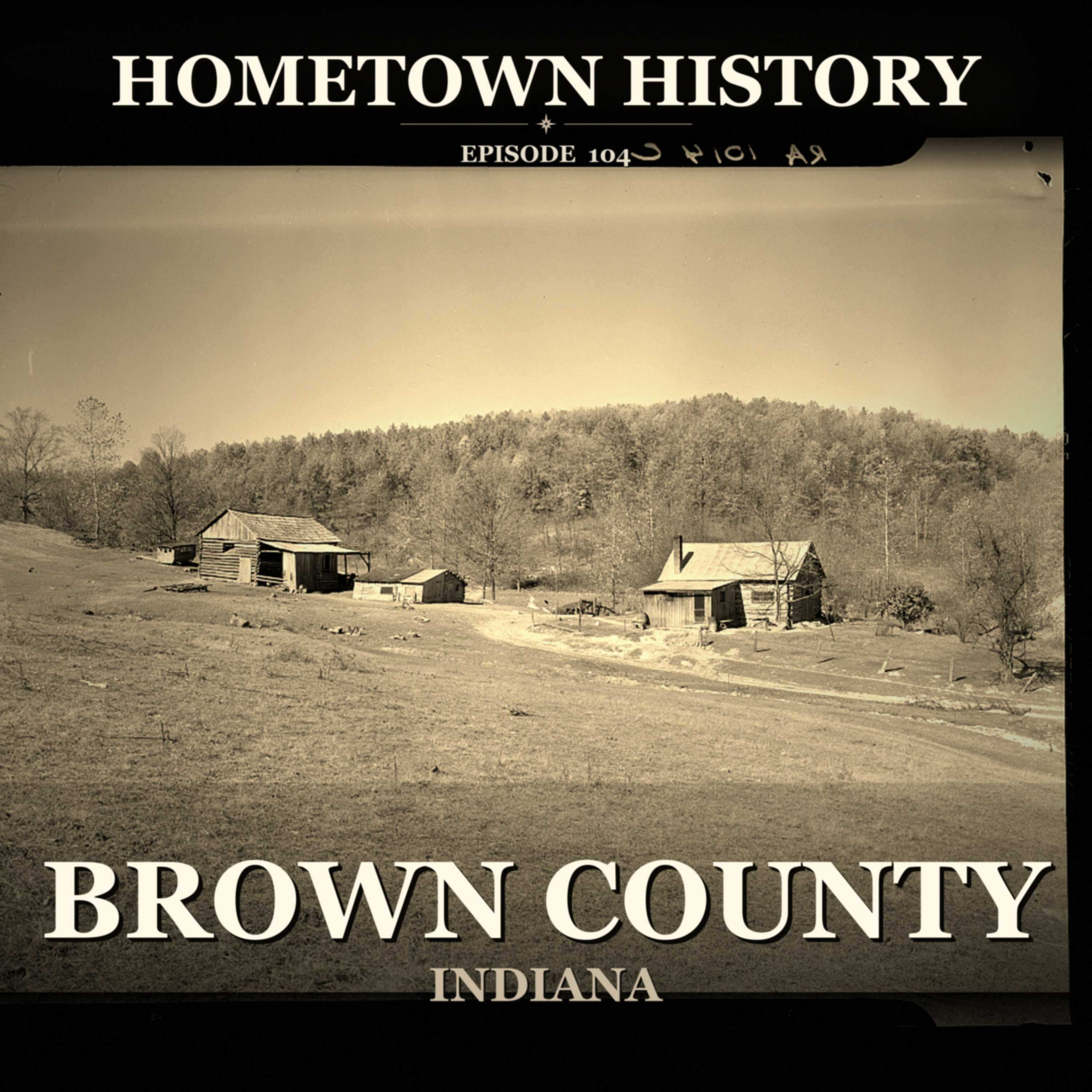
In 1907, when renowned portrait painter T.C. Steele and his wife Selma moved to Brown County, Indiana, locals thought they were insane. Brown County was considered "the ends of the earth"—a punchline in a nationally syndicated cartoon featuring the backwards character Abe Martin. With its clear-cut hills, terrible farmland, and families living in 1840s-era log cabins, the county represented everything Indiana had left behind. No water infrastructure, no electricity, no grocery stores. Just subsistence farmers scratching out survival from unwanted land rejected by surrounding counties.
But T.C. Steele, at age 60, saw something no one else could see: beauty in those rolling hills. His new bride Selma, a 35-year-old professional art educator and assistant superintendent of art for Indianapolis public schools, reluctantly agreed to spend summers in what would become the House of the Singing Winds—named for the sound wind made hitting the metal porch screens. What followed was nothing short of a cultural transformation that would reshape Brown County's identity for generations to come.
The Steeles brought the 20th century to Brown County. They built the first modern house on a hilltop (everyone else built in hollows), stained it barn-red (scandalous), installed the county's first built-in closet, and powered everything with a basement generator decades before Brown County got electricity in the 1940s. Neighbors came by the wagonload—not to admire the paintings at first (farming was "real work"), but to see the factory-made furniture, the mechanical closet, the player piano, and that strange electric light glowing from the hill.
But the real revolution was in those paintings Brown County neighbors initially dismissed. As T.C. Steele's plein air landscapes of Indiana hills began appearing in galleries and exhibitions—culminating in his showing at the 1893 World's Fair—people finally understood what he'd seen all along. Brown County wasn't backwards; it was breathtaking. Artists began following Steele to Brown County, establishing studios in Nashville and creating what became one of America's most significant regional art colonies. First Lady Eleanor Roosevelt herself would shop the Nashville galleries during her husband's presidency.
Timeline of Events
- 1847 - Theodore Clement Steele born in Indiana
- 1880s - Steele trains at Royal Academy of Munich, falls in love with Impressionist landscape painting over German realist portraiture
- 1893 - Steele exhibits Indiana landscapes at World's Fair, drawing national attention to Hoosier art
- 1907 - T.C. (age 60) and Selma (age 37) move to Brown County, build House of the Singing Winds
- 1922 - Steele appointed first artist-in-residence at Indiana University
- 1926 - T.C. Steele dies; Selma continues managing the property
- 1945 - Selma Steele deeds 211 acres, the house, and 350 paintings to State of Indiana
- Today - Brown County is one of Indiana's most popular tourist destinations, drawing millions annually
Historical Significance
Brown County's transformation represents a rare case where art—not industry or infrastructure—drove economic development. What began as one painter's controversial decision to build on a hilltop became the catalyst for an entire regional economy based on beauty and tourism. The House of the Singing Winds survives as one of America's most authentically preserved historic homes, with original furnishings down to half-used paint tubes on T.C.'s desk. Selma Steele's gift to Indiana ensured future generations could experience the place where one couple proved that perceived worthlessness and extraordinary value are sometimes separated only by a fresh perspective.
Sources & Further Reading
- T.C. Steele State Historic Site (https://www.in.gov/dnr/state-parks/parks-lakes/t-c-steele-state-historic-site/) - Official site with visiting information
- Rachel Berenson Perry, "The Indiana School of Impressionism"
- William H. Gerdts, "Art Across America: Regional Painting in the United States"
- Martin Krause, "The Passage: Return of Indiana Painters from Germany, 1880-1905"
Support this podcast at — https://redcircle.com/hometownhistory/exclusive-content
Advertising Inquiries: https://redcircle.com/brands
Privacy & Opt-Out: https://redcircle.com/privacy
Credits
Shane Waters — Founder & Host
Produced by Myths & Malice