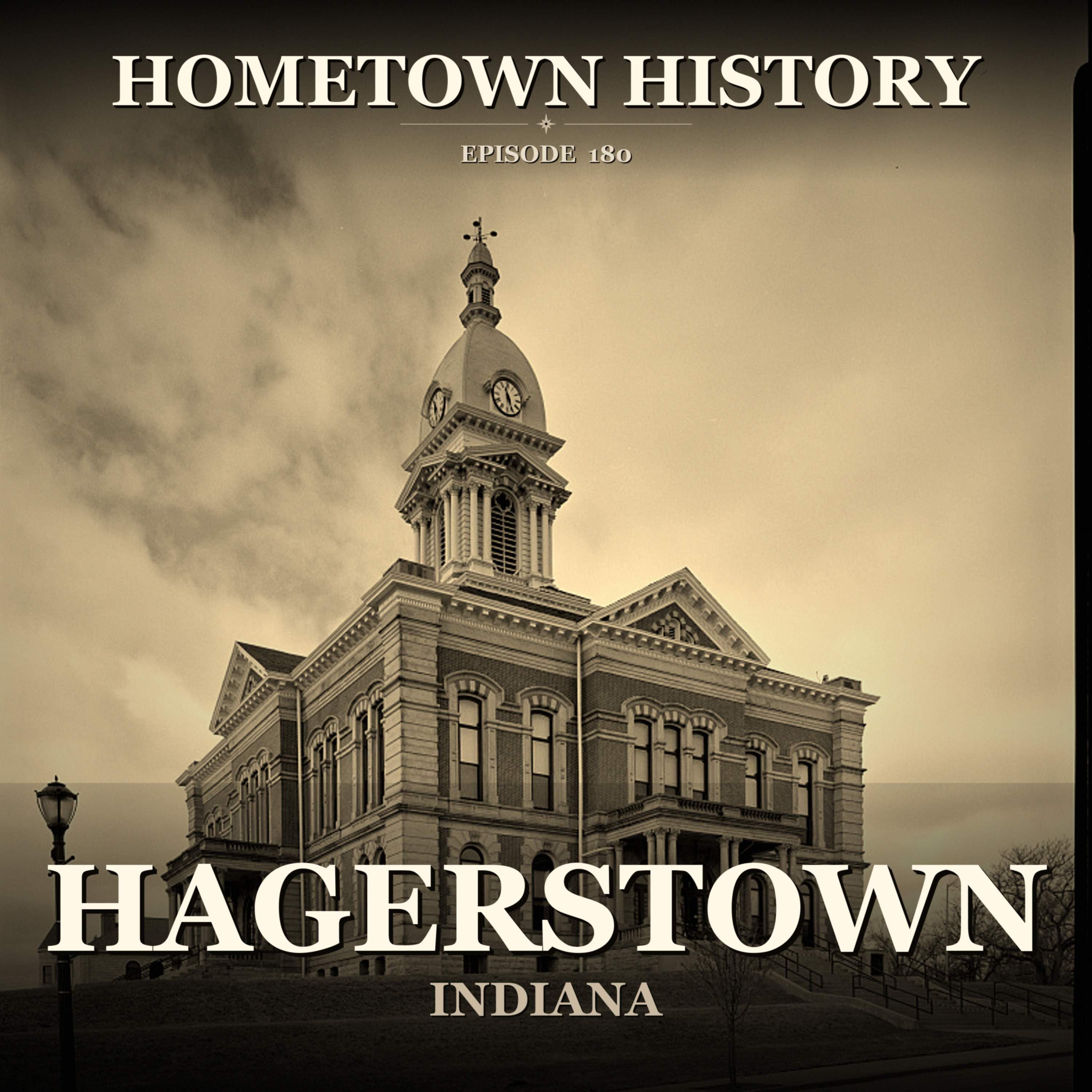
Hagerstown, Indiana: The Blind Engineer Who Invented Cruise Control
Show Notes
In 1896, a five-year-old boy in Hagerstown, Indiana, lost his sight in a workshop accident. Doctors couldn't save his vision, and by age seven, Ralph Teetor would never see again. What happened next defied every expectation of that era—an age when blind children were typically institutionalized and trained only for basket-weaving.
Instead, Ralph's parents raised him as if nothing had changed. They let him explore the machines in his family's factory. They sent him to public school. They refused to let anyone else define what was possible for their son.
By age twelve, Ralph had built his own automobile—before Henry Ford even founded Ford Motor Company. He went on to become America's first blind engineer, graduating from the University of Pennsylvania in 1912 after memorizing every textbook and constructing three-dimensional mental models of every diagram. He tuned Indianapolis 500 race cars by sound alone. He ran a company with 6,500 employees. And when a lawyer's jerky driving made him carsick one too many times, he invented cruise control.
This episode explores how a small-town Indiana boy who spent 86 years in darkness saw possibilities that others couldn't imagine—and created technology that now helps vehicles see the road for themselves.
Timeline of Key Events
The invention of cruise control spans nearly a century of innovation, beginning with a childhood tragedy and culminating in technology that became foundational to self-driving vehicles.
- March 20, 1896: Five-year-old Ralph Teetor injures his eye in a knife accident at his uncles' machine shop in Hagerstown, Indiana
- 1897: Sympathetic ophthalmia causes complete blindness in both eyes
- 1902: At age twelve, Ralph builds his first gasoline-powered automobile capable of 12 mph
- 1912: Graduates from University of Pennsylvania as America's first blind engineer
- 1936: Becomes president of the Society of Automotive Engineers; begins developing cruise control concept
- August 22, 1950: Receives U.S. Patent 2,519,859 for his "Speedostat" speed control device
- 1958: Chrysler introduces the technology as "Auto-Pilot" on luxury models
- 1959: Cadillac brands the technology "Cruise Control"—the name that stuck
- February 15, 1982: Ralph Teetor dies at age 91 in Hagerstown
- 1988: Posthumously inducted into the Automotive Hall of Fame
- 2024: Inducted into the National Inventors Hall of Fame
Historical Significance
Ralph Teetor's story matters beyond the convenience of highway driving. His life represents a fundamental challenge to how disability was understood in early twentieth-century America.
In 1896, the eugenics movement was gaining momentum across the United States. Thirty-two states would eventually pass forced sterilization laws targeting disabled people. "Ugly Laws" barred disabled individuals from public spaces. Eighty to eighty-five percent of blind Americans had no employment. The standard approach to childhood blindness was institutionalization and segregation from sighted children.
Against this backdrop, Ralph Teetor's achievements were revolutionary. He didn't just overcome personal obstacles—he redefined what was considered possible. His invention of cruise control became foundational to technologies he never lived to see: adaptive cruise control, lane-keeping systems, and autonomous vehicles. In 2012, when Google's self-driving car project conducted its first public road test, the passenger was a legally blind man named Steve Mahan. The vehicle used technology descended directly from Teetor's original patent.
The circle completed. A blind man's invention enabling other blind people to experience independent transportation.
Sources & Further Reading
This episode drew from primary historical sources and biographical accounts documenting Ralph Teetor's remarkable life and inventions.
- Marjorie Teetor Meyer, "One Man's Vision: The Life of Automotive Pioneer Ralph R. Teetor" (1995) — Biography written by Teetor's daughter, containing family records and firsthand accounts
- U.S. Patent No. 2,519,859 — "Speed Control Device for Resisting Operation of the Accelerator" (August 22, 1950), available through USPTO.gov
- National Inventors Hall of Fame Profile — Ralph Teetor's 2024 induction documentation at invent.org
- Smithsonian Magazine, "The Sightless Visionary Who Invented Cruise Control" (2018) — Feature article with grandson Ralph Meyer's recollections
- Hagerstown Exponent Archives (1896) — Contemporary newspaper accounts of Ralph's accident and subsequent treatment
Support this podcast at — https://redcircle.com/hometownhistory/exclusive-content
Advertising Inquiries: https://redcircle.com/brands
Privacy & Opt-Out: https://redcircle.com/privacy
Credits
Shane Waters — Founder & Host
Produced by Myths & Malice