Mystery, paranormal, and the unexplained.Hosted by Shane Waters, Josh Waters and Kim Morrow29 min episode
Moon Mining Mystery | Why We're Really Going Back
Transcript
449 segmentsShow Notes
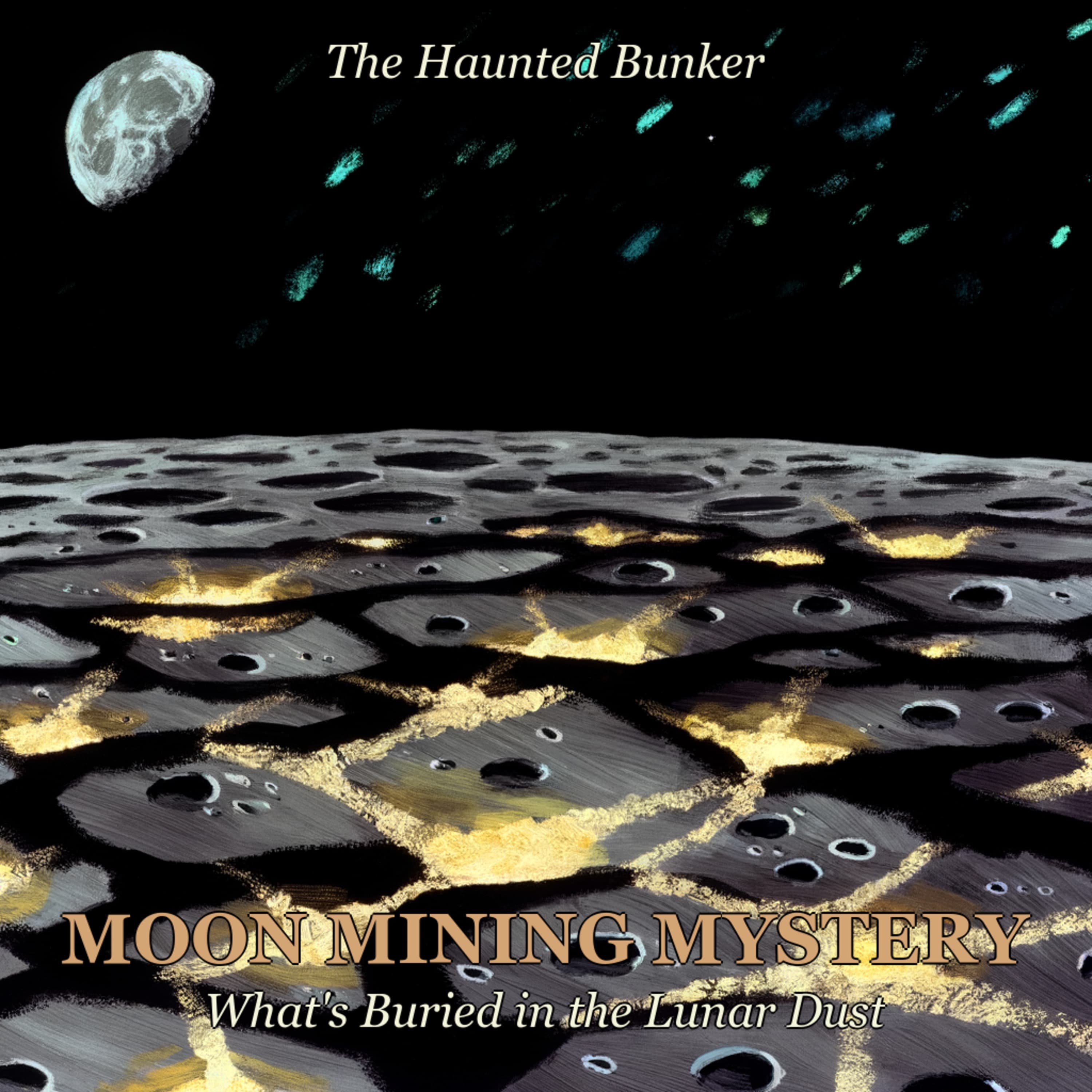
The gang investigates a mystery hiding in plain sight. Humanity is headed back to the moon, and while the Artemis 2 crew circles our closest neighbor for reconnaissance photos and crater naming ceremonies, the real question might not be about exploration at all. It might be about what is buried in the lunar dust.
Helium-3 is one of the rarest minerals on Earth. A single kilogram costs roughly $18.7 million, and the entire global supply is valued at around $125 million. That is about seven kilograms total. On Earth, the only way to produce it is through the decay of nuclear stockpiles. But the surface of the moon is covered in the stuff, embedded in the fine dust by billions of years of solar wind bombardment with no atmosphere to block it.
If Helium-3 can be mined, transported back to Earth, and used in fusion reactors, the payoff would reshape civilization. A few kilograms could power a major city for a year. One million tons could theoretically supply the planet with energy for thousands of years. The energy produced would generate minimal radiation and drastically reduce radioactive waste. There is one catch: fusion using Helium-3 requires temperatures around one trillion degrees Fahrenheit. Essentially a microstar created here on our planet's surface.
Zoinks! Multiple nations are already staking their claims. China is reportedly planning on building mining operations on the far side of the moon. The United States is planning a permanent base in ancient volcanic tubes beneath the lunar surface. Russia, India, Japan, the United Arab Emirates, Israel, Luxembourg, and the European Space Agency have all claimed lunar territories. A company called Interlune is developing autonomous solar-powered excavators capable of processing hundreds of tons of lunar soil per hour.
Space has its own set of laws, similar to old maritime codes. Whoever claims territory first owns it, flag planted and all. The Outer Space Treaty prohibits sovereign claims on celestial bodies but does not clearly regulate resource extraction. The Artemis Accords and national laws are scrambling to catch up, but when trillions of dollars are at stake, the rules tend to follow the money.
The trail leads to an even stranger question. If mining begins in earnest and crews start digging deep into the lunar surface, they may stumble into one of the moon's oldest conspiracies: that the moon itself is hollow. Some believe it is an ancient satellite, possibly even a monitoring station, sent to orbit our planet long before recorded history. Mining operations could finally put that theory to rest or crack it wide open.
We could see permanent structures on the moon in our lifetime. The ISS is being decommissioned and eventually sunk into the ocean. Its replacement may not orbit Earth at all. It may sit inside a volcanic tunnel on the lunar surface. What was once science fiction is becoming budget line items and mining contracts.
What you'll hear in this episode:
Why Helium-3 is the most expensive mineral on Earth and how the moon is covered in it
The nations racing to claim and mine the lunar surface
What it takes to create a microstar and why fusion is the ultimate energy prize
The connection between moon mining and the hollow moon conspiracy
How space law works and why it might not be enough
Our Sponsors:
* Check out BetterHelp: https://www.betterhelp.com
Advertising Inquiries: https://redcircle.com/brands
Privacy & Opt-Out: https://redcircle.com/privacy
Credits
Shane Waters, Founder & Host
Josh Waters, Co-Host
Kim Morrow, Co-Host & Lead Editor
Produced by Myths & Malice
Listen to The Haunted Bunker: Paranormal Mysteries & the Unexplained
Get More from The Haunted Bunker: Paranormal Mysteries & the Unexplained
Unlock exclusive content and support the show.
- Ad-free listening
- Early access to episodes
- Bonus episodes
- Support independent podcasting
the M&M Dispatch
Get new The Haunted Bunker: Paranormal Mysteries & the Unexplained episodes and new investigations from across the network.
Enjoying The Haunted Bunker: Paranormal Mysteries & the Unexplained ?
Leave a rating on Apple Podcasts. It takes a few seconds and helps new listeners find the show.