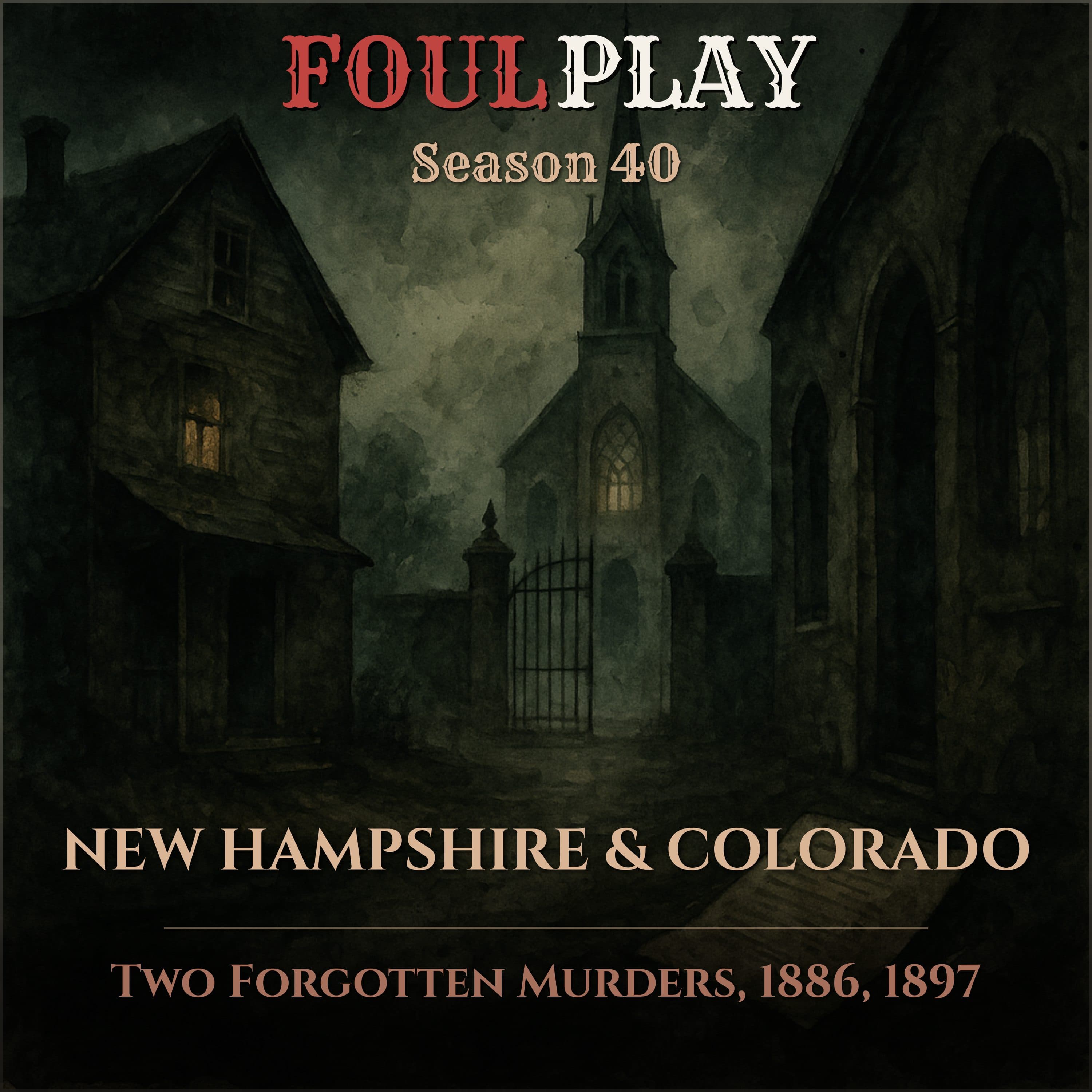
0:03 [SPEAKER_01]: Good Friday morning, April 16th, 1897, a 68-year-old man walks through the empty streets of Summersworth, New Hampshire, past the brick storefronts, past the locked mill gates, past the church where the bell has already told for morning service. 0:25 [SPEAKER_01]: The air smells like the river, cold and green, 0:32 [SPEAKER_01]: The way a mill town smells, only when the mills stop running. 0:37 [SPEAKER_01]: The textile mills along the salmon falls river are closed for the holiday. 0:44 [SPEAKER_01]: No looms running, no waterwheel roar. 0:49 [SPEAKER_01]: The river sounds different when the mills are off. 0:53 [SPEAKER_01]: you can hear it moving. 0:55 [SPEAKER_01]: French Canadian families are at a morning mass. 0:59 [SPEAKER_01]: The streets are quiet in a way they almost never are. 1:03 [SPEAKER_01]: An town built on factory noise and falling water. 1:08 [SPEAKER_01]: A company town on a holy day. 1:11 [SPEAKER_01]: Nothing open. 1:13 [SPEAKER_01]: Nothing moving. 1:15 [SPEAKER_01]: Joseph A. Stickney unlocks the front door of the Great Falls National Bank. 1:21 [SPEAKER_01]: He has done this thousands of times. 1:24 [SPEAKER_01]: He is the cashier. 1:26 [SPEAKER_01]: The sole employee on duty today. 1:30 [SPEAKER_01]: Behind him, the vault stands open. 1:33 [SPEAKER_01]: $150,000 in money and securities. 1:39 [SPEAKER_01]: The savings of mill families, the payroll that keeps this town running. 1:46 [SPEAKER_01]: Stikney sits down at his desk, same chair, same window, same quiet. 1:54 [SPEAKER_01]: He waits for whatever business a holiday may bring. 1:59 [SPEAKER_01]: Before the morning is over, a man will walk into this bank. 2:04 [SPEAKER_01]: He will beat Joseph Stickney with a blackjack. 2:08 [SPEAKER_01]: He will cut his throat. 2:11 [SPEAKER_01]: He will leave Stickney dying on the floor in a pool of his own blood, on the holiest day of the Christian calendar. 2:20 [SPEAKER_01]: And when the law catches up with him, the killer will be sitting in a Montreal brothel. 2:26 [SPEAKER_01]: wearing a woman's dress, claiming he has a contract with the devil. 2:34 [SPEAKER_01]: Hello friend, welcome to foul play. 2:38 [SPEAKER_01]: I'm Shane Waters. 2:40 [SPEAKER_01]: This is season 40, 50 states, 50 forgotten crimes, for America's 250th anniversary. 2:57 [SPEAKER_01]: Two states, two men killed, where they worked, a bank cashier in a mill town, a street car driver in a boom town. 3:09 [SPEAKER_01]: One killer claimed the devil made him do it. 3:13 [SPEAKER_01]: The other was 25 years old, and nearly 20,000 people watched him die. 3:21 [SPEAKER_01]: Both cases have been forgotten. 3:24 [SPEAKER_01]: They have slipped out of the history books, 11 years apart, 2000 miles apart. 3:32 [SPEAKER_01]: They deserve better than that. 3:35 [SPEAKER_01]: This is the story of how they ended. 3:39 [SPEAKER_01]: Tonight we begin a new Hampshire. 3:41 [SPEAKER_01]: In summers worth on a quiet holiday morning in a bank that held the savings of an entire town 3:52 [SPEAKER_01]: Summersworth New Hampshire sits on the same fall river, where the water drops 100 feet in a mile. 4:00 [SPEAKER_01]: The Falling Water built the town. 4:03 [SPEAKER_01]: The Great Falls Manufacturing Company ran seven textile mills along the banks. 4:10 [SPEAKER_01]: 2100 workers at its peak. 4:14 [SPEAKER_01]: Irish immigrants first, arriving in the 1840s in 1850s, then waves a French Canadians from Quebec. 4:25 [SPEAKER_01]: They filled company owned brick tenement rows, climbing the hill above the factories. 4:31 [SPEAKER_01]: They filled the pews at the Catholic churches. 4:35 [SPEAKER_01]: They filled the payroll at the bank, 4:39 [SPEAKER_01]: The town had incorporated as a city just four years earlier, in 1893. 4:46 [SPEAKER_01]: It was still learning what that meant, building civic institutions, establishing trust. 4:54 [SPEAKER_01]: The Great Falls National Bank was one of those institutions. 4:59 [SPEAKER_01]: Its president was David H. Buffham. 5:02 [SPEAKER_01]: Joseph Sticney was the cashier. 5:10 [SPEAKER_01]: The bank was a family operation inside a community operation. 5:16 [SPEAKER_01]: The man behind the counter was the president's brother-in-law. 5:20 [SPEAKER_01]: When you handed your savings to Joseph Stickney, you were handing them to a man whose family name backed the institution in more ways than one. 5:31 [SPEAKER_01]: Stickney was 68 years old. 5:34 [SPEAKER_01]: He must have been one of the most familiar faces 5:40 [SPEAKER_01]: Every male family who opened an account saw him, every payroll that moved through that bank passed across his desk. 5:49 [SPEAKER_01]: His sister married to the bank president, his name, woven into the institution, a man whose daily presence was so routine that his absence would be the thing people noticed. 6:05 [SPEAKER_01]: The routine of good Friday would have been familiar, no line at the counter, no factory foreman picking up payroll, no depositors, just the vault, the ledger, and the empty lobby. 6:23 [SPEAKER_01]: A 68-year-old man sitting behind his desk in a quiet building on a quiet street, he was alone. 6:33 [SPEAKER_01]: Between 1 o'clock and 1-15 in the afternoon, someone entered the Great Falls National Bank. 6:41 [SPEAKER_01]: One man, the city marshal later believed a second man waited outside, with a horse and wagon. 6:50 [SPEAKER_01]: But inside the bank, one man walked up to Joseph Stickney at his desk, knocked him to the floor with a blackjack, and cut his throat. 7:01 [SPEAKER_01]: Then he opened the vault. 7:04 [SPEAKER_01]: The town's entire savings were inside. 7:08 [SPEAKER_01]: He took 6,000 in cash, the portable money. 7:13 [SPEAKER_01]: He left the securities, left the bonds, left the rest. 7:20 [SPEAKER_01]: He walked out the front door, brought daylight, a Friday afternoon in April. 7:33 [SPEAKER_01]: Nobody saw him enter. 7:35 [SPEAKER_01]: Nobody saw him leave. 7:38 [SPEAKER_01]: Nearly an hour passed before anyone knew something was wrong. 7:43 [SPEAKER_01]: Around two o'clock, Parti Swazzy returned from her midday break. 7:48 [SPEAKER_01]: She walked through the front door of the bank expecting the quiet of a holiday afternoon. 7:55 [SPEAKER_01]: The lobby would have looked the same. 7:58 [SPEAKER_01]: The counter, the ledger, the vault door, but stick knee was not at his desk. 8:06 [SPEAKER_01]: He was on the floor behind it. 8:09 [SPEAKER_01]: The blood had spread across the wood. 8:13 [SPEAKER_01]: His throat had been cut. 8:16 [SPEAKER_01]: He was dead near the spot where he had sat for years. 8:21 [SPEAKER_01]: nearly an hour on the floor alone on Good Friday. 8:27 [SPEAKER_01]: In a town of 7,000, word spread fast, this was not a city where violence happened behind closed doors and stayed there. 8:38 [SPEAKER_01]: The bank was where French Canadian workers cashed their pay, where Irish laborers opened accounts, where Ganky merchants deposited receipts. 8:50 [SPEAKER_01]: Every one of them knew the man now dead on the floor. 8:54 [SPEAKER_01]: Good Friday. 8:56 [SPEAKER_01]: The most solemn day on the Catholic calendar, in a town that was overwhelmingly Catholic, 9:07 [SPEAKER_01]: The town was supposed to be celebrating resurrection, was bearing its banker instead. 9:15 [SPEAKER_01]: And then, the second fear, the vault, every dollar the mill family had saved, was the money gone, had the killer cleaned it out, a murderer was a horror, a murderer and an empty 9:36 [SPEAKER_01]: the answer came back quickly. 9:39 [SPEAKER_01]: Most of it was still there. 9:42 [SPEAKER_01]: The town still had its savings, but the man who had guarded them was dead on the floor of the building that held them. 9:51 [SPEAKER_01]: to every family who handed Joseph's technique their wages and watched him write the figure in a ledger. 9:58 [SPEAKER_01]: The murder felt personal. 10:01 [SPEAKER_01]: It felt like an attack on the town itself. 10:06 [SPEAKER_01]: The investigation had a lead within days and a name. 10:12 [SPEAKER_01]: Joseph E. Kelly 24 years old 10:17 [SPEAKER_01]: from Amzabari, Massachusetts, one of 10 children, his family described themselves as bright and smart, but Kelly had not been bright, not after what happened at age four. 10:33 [SPEAKER_01]: He fell, a rusty nail pierced his skull. 10:37 [SPEAKER_01]: He was unconscious for three days. 10:40 [SPEAKER_01]: When he woke, the fits started. 10:44 [SPEAKER_01]: convulsions as a child sleepwalking as he grew. 10:50 [SPEAKER_01]: The neighbors and Amesbury gave him a name. 10:53 [SPEAKER_01]: Foolish Joe. 10:56 [SPEAKER_01]: By ten his family said he had turned wild. 11:00 [SPEAKER_01]: By his teens he was stealing. 11:04 [SPEAKER_01]: A bicycle first. 11:06 [SPEAKER_01]: Then a conviction for breaking and entering. 11:10 [SPEAKER_01]: Seven months at the Concord Reformatory, and then in 1892, another breaking and entering conviction, and Summersworth itself, he knew the town, he knew its buildings, he knew its routines. 11:29 [SPEAKER_01]: Here's the detail that matters. 11:32 [SPEAKER_01]: Kelly had lived in a boarding house, directly across the street from the Great Falls National Bank. 11:39 [SPEAKER_01]: He could see the front door from his window. 11:42 [SPEAKER_01]: He knew when the bank opened. 11:44 [SPEAKER_01]: He knew when it closed. 11:47 [SPEAKER_01]: He knew that on good Friday, Joseph Stickney would be alone. 11:53 [SPEAKER_01]: Here is where the evidence starts to build. 11:56 [SPEAKER_01]: The first physical lead came from a horse and wagon. 12:01 [SPEAKER_01]: On the morning of the murder, Kelly had rented a team from Whitton's stable. 12:06 [SPEAKER_01]: He told the owner he was going fishing. 12:10 [SPEAKER_01]: Nobody goes fishing on good Friday in a Catholic meltdown. 12:15 [SPEAKER_01]: But the stable owner let it go. 12:18 [SPEAKER_01]: The team matched descriptions of one scene near the bank on the day of the killing. 12:24 [SPEAKER_01]: It was found the next day at the Phoenix Stables, abandoned. 12:29 [SPEAKER_01]: The city marshal worked the case for 13 days, interviews, witnessed descriptions. 12:37 [SPEAKER_01]: Kelly's old room was empty. 12:40 [SPEAKER_01]: He had cleared out, but the investigation kept building. 12:46 [SPEAKER_01]: Contemporary newspaper accounts, from that week, described deputies working two states, canvassing train stations and stables, tracking where the money went. 12:59 [SPEAKER_01]: The trail pointed to a second boarding house in Burwick, Maine. 13:04 [SPEAKER_01]: On April 29, Deputies searched it. 13:08 [SPEAKER_01]: Inside, they found what no innocent man would possess. 13:14 [SPEAKER_01]: The keys of the Great Falls National Bank. 13:18 [SPEAKER_01]: Not copies, the originals. 13:21 [SPEAKER_01]: The keys Joseph Stickney had been carrying in his pocket when he was killed. 13:28 [SPEAKER_01]: Kelly had taken them off the body, off a dying man, on the floor of a bank, and kept them. 13:38 [SPEAKER_01]: by then, Kelly was long gone. 13:42 [SPEAKER_01]: He had planned to escape as carefully as the crime. 13:46 [SPEAKER_01]: After the murder, he walked back to his room. 13:50 [SPEAKER_01]: Eight dinner, as if nothing had happened, paid his landlady. 13:55 [SPEAKER_01]: The twenty dollars he owed her. 13:58 [SPEAKER_01]: No debts, no loose ends. 14:01 [SPEAKER_01]: He packed the remaining 14:07 [SPEAKER_01]: is route out, a Boston and main train to Union Main, another train to Cook Shire Junction, Quebec, then the Halifax Express, across the border to Montreal. 14:21 [SPEAKER_01]: The three trains, three jurisdictions, gone, and Montreal, the trail turns strange. 14:34 [SPEAKER_01]: Kelly paid a hotel keeper $10 in gold for a woman's dress. 14:41 [SPEAKER_01]: He told the man it was for his wife. 14:44 [SPEAKER_01]: He left the hotel wearing it. 14:49 [SPEAKER_01]: When police found him, he was in a Montreal brothel, sitting between two prostitutes, still wearing the dress. 14:59 [SPEAKER_01]: Over $3,000 of the stolen bank money was recovered from his person, and from a culvert where he had hidden the silver. 15:10 [SPEAKER_01]: The trial opened on November 8th, 1897, in Dover, New Hampshire. 15:17 [SPEAKER_01]: On the first day, the jury was taken by train to Summersworth to view the murder scene. 15:28 [SPEAKER_01]: They looked across the street at the boarding house window. 15:32 [SPEAKER_01]: The proximity pulled a story the prosecution did not need to narrate. 15:38 [SPEAKER_01]: Then Kelly broke. 15:40 [SPEAKER_01]: Mid trial in front of the court is composure collapsed. 15:46 [SPEAKER_01]: According to the newspaper account, he broke down completely. 15:57 [SPEAKER_01]: Whatever wall he had built between himself and what he had done in that bank came down in a courtroom in Dover. 16:06 [SPEAKER_01]: He withdrew his plea of not guilty. 16:09 [SPEAKER_01]: He entered a plea of guilty. 16:13 [SPEAKER_01]: The jury was discharged. 16:16 [SPEAKER_01]: The question of guilt was no longer in dispute. 16:20 [SPEAKER_01]: The only question left was degree. 16:24 [SPEAKER_01]: With the plea change, the determination of degree fell to two judges, chief justice carpenter and associate justice Mason. 16:34 [SPEAKER_01]: First degree meant death, second degree meant prison. 16:41 [SPEAKER_01]: This is where the case turned strange. 16:44 [SPEAKER_01]: Kelly told the court he had a contract with the devil. 16:50 [SPEAKER_01]: He said the contract expired on January 15th, 1898. 16:56 [SPEAKER_01]: Whether this was a genuine delusion or a calculated theater, the court never resolved. 17:03 [SPEAKER_01]: A Boston physician named Dr. Walton Channing testified about Kelly's mental condition. 17:10 [SPEAKER_01]: Channing was not a small town doctor. 17:14 [SPEAKER_01]: He was a tough professor in the leading forensic psychiatrist in New England. 17:19 [SPEAKER_01]: He ran the private hospital for mental diseases and Brookline Massachusetts. 17:25 [SPEAKER_01]: He had testified in the insanity evaluation of Charles Guido, the man who had shot President Garfield. 17:34 [SPEAKER_01]: His presence in a new Hampshire courtroom, over a bank robbery, told the court something about how seriously the defense took the insanity question. 17:45 [SPEAKER_01]: Channing found the case significant enough to publish. 17:50 [SPEAKER_01]: Four months after the trial, his paper appeared in the Boston Medical Insurgical Journal. 17:56 [SPEAKER_01]: The same publication that would become the new England Journal of Medicine. 18:02 [SPEAKER_01]: The childhood injury. 18:05 [SPEAKER_01]: The convulsions, the erratic behavior, documented across two decades, he laid out his 18:16 [SPEAKER_01]: the judges agreed. 18:18 [SPEAKER_01]: Kelly bore only a limited responsibility that his mind was diseased on account of injuries received in his youth. 18:28 [SPEAKER_01]: Second degree murder, 30 years in state prison. 18:34 [SPEAKER_01]: Kelly was reportedly disappointed. 18:37 [SPEAKER_01]: He had expected to hang 18:40 [SPEAKER_01]: He may have wanted to. 18:43 [SPEAKER_01]: A man who acclaimed a contract with the devil told the sentence was 30 years, and was disappointed it was not death. 18:53 [SPEAKER_01]: Whatever was happening inside that mind, it was not, or the court expected. 19:00 [SPEAKER_01]: The town of Somersworth was not disappointed, they were furious, approximately 20 men 19:10 [SPEAKER_01]: They wanted to take Kelly out of his cell, and hang him themselves. 19:17 [SPEAKER_01]: Twenty men who had decided that the 30 years was not enough for Joseph Stigny's life. 19:24 [SPEAKER_01]: The sheriff held the door. 19:27 [SPEAKER_01]: They did not get in, but they tried. 19:31 [SPEAKER_01]: Thirty years for Joseph Stigny's life, this is how New Hampshire closed the file. 19:39 [SPEAKER_01]: Now we need to go to Colorado. 19:43 [SPEAKER_01]: Two men killed where they worked. 19:46 [SPEAKER_01]: That is the thread. 19:49 [SPEAKER_01]: Not how they died. 19:51 [SPEAKER_01]: Not who killed them. 19:53 [SPEAKER_01]: Where? 19:55 [SPEAKER_01]: The desk, the platform, the routine that killed them. 20:01 [SPEAKER_01]: There is something about dying in the place you showed up to every day. 20:06 [SPEAKER_01]: The place where the work was ordinary and the hours were long. 20:11 [SPEAKER_01]: But you knew the light and the sounds and the distance between the door in your chair. 20:18 [SPEAKER_01]: And then one afternoon, it is the last room you will ever see. 20:24 [SPEAKER_01]: I think about that, how the familiar becomes the final, the same route, the same counter, the same turn at the end of the line. 20:36 [SPEAKER_01]: You stop noticing the danger, because the danger was always there, and nothing happened until it did. 20:47 [SPEAKER_01]: We go west, eleven years before the bank murder, to a city that smelled like sulfur, and horse-dong, and silver money, a city that had tripled in a decade, and had no intention of slowing down, Denver, Colorado, 1886. 21:10 [SPEAKER_01]: A street car driver is finishing his last run of the night on the Broadway line. 21:17 [SPEAKER_01]: He has $14 in fares in a 10 cash box and a pregnant wife waiting at home. 21:25 [SPEAKER_01]: The evening is warm. 21:27 [SPEAKER_01]: The streets are getting quiet. 21:44 [SPEAKER_01]: Didn't work Colorado in 1886. 21:48 [SPEAKER_01]: This is the city where Joseph C. Whitna drove a street car. 21:53 [SPEAKER_01]: The city had 35,000 people in 1880. 21:55 [SPEAKER_01]: By 1890, it would have 106,000. 22:02 [SPEAKER_01]: In May of 1886, it was somewhere between those poles, 60, 70,000 souls, a city building faster than it could plan itself, new brick going up on Lairmare Street, while the side roads were still dirt. 22:22 [SPEAKER_01]: The engine was silver. 22:26 [SPEAKER_01]: The leadville district strikes had flooded Colorado with prospectors and their money. 22:33 [SPEAKER_01]: And Denver was where that money got processed, spent, baked, and fought over. 22:40 [SPEAKER_01]: A dozen smelters burned day and night, along the South Platt north of downtown. 22:48 [SPEAKER_01]: Cool furnaces, melting silver and light ore into bars. 22:53 [SPEAKER_01]: The smoke carried sulfur dioxide and led dust south across the city on still days. 23:00 [SPEAKER_01]: You could see it hanging over the rooftops for miles. 23:10 [SPEAKER_01]: At street level the smell was different. 23:14 [SPEAKER_01]: Unpaved side roads turned to mud by horse traffic and spring rain. 23:22 [SPEAKER_01]: The Denver City Railway ran 45 horse cars along 16 miles of iron rail, 45 coaches pulled by horses and mules, hundreds of animals stabbled across the city. 23:39 [SPEAKER_01]: That met Dong and Yurin mixing with Colesmoke in the Then Dry Air at 5,280 feet of altitude. 23:50 [SPEAKER_01]: the light up there was hard. 23:54 [SPEAKER_01]: The sky, a deeper blue than anything at sea level. 23:59 [SPEAKER_01]: The sun hit the unpaved streets and the brick facades and the smelter haze and turned all of it sharp and strange and bright. 24:10 [SPEAKER_01]: That was Denver, a boom town with confidence and sulfur on its breath. 24:17 [SPEAKER_01]: The Denver City Railways horse cars ran on fixed routes to the center of it. 24:24 [SPEAKER_01]: The man who drove those cars set exposed on open platforms at the front, no glass, no enclosure, no protection, alone with the horses and the passengers and the cash box and 24:48 [SPEAKER_01]: came west as a young man. 24:51 [SPEAKER_01]: In his early thirties by the spring of 1886, he had a wife, mid-tilda, gross clothes. 24:59 [SPEAKER_01]: She was pregnant with their first child. 25:03 [SPEAKER_01]: Whitnoth must have been making the turnaround at Broadway in Alameda for the hundredth time when it happened. 25:12 [SPEAKER_01]: the end of the line. 25:15 [SPEAKER_01]: The farthest point from downtown, where the car reversed direction in the driver set alone with the cash box, in the horses, and the dark. 25:27 [SPEAKER_01]: The last stop, the loneliest point on the route. 25:33 [SPEAKER_01]: May 19th, 1886, night, two shots, a 38 caliber revolver, close range. 25:46 [SPEAKER_01]: Green later said, with no screened when the gun came up, but the screen startled him, that the first shot was not deliberate. 26:04 [SPEAKER_01]: he fired before he meant to, then the second shot. 26:09 [SPEAKER_01]: That one was intentional. 26:12 [SPEAKER_01]: It penetrated Whitna's heart. 26:15 [SPEAKER_01]: He died, where he set, on the platform of his own street car. 26:21 [SPEAKER_01]: The horses stood in harness. 26:24 [SPEAKER_01]: The car did not move. 26:27 [SPEAKER_01]: The $14 in the 10 cash box was not taken. 26:33 [SPEAKER_01]: Whoever did this had come to Robust Street car driver and then laughed without the money. 26:40 [SPEAKER_01]: no motive that made sense. 26:43 [SPEAKER_01]: A robbery with no robbery, a dead man on a street car, at the end of the line, with his fares untouched. 26:54 [SPEAKER_01]: Investigators had a crime scene, and a body, into 38 caliber bullet, and no explanation for why the money was still there. 27:05 [SPEAKER_01]: Six weeks later, on July 1, 1886, Whitna's son was born. 27:12 [SPEAKER_01]: Joseph Chester Whitna, named for the father he never met. 27:18 [SPEAKER_01]: Matilda raised him alone. 27:21 [SPEAKER_01]: She eventually remarried a doctor in Eagle County. 27:26 [SPEAKER_01]: The boy lived until 1962. 27:31 [SPEAKER_01]: Two days after the murder, a private detective received a tip. 27:36 [SPEAKER_01]: A man at the G.A.R. 27:38 [SPEAKER_01]: Solone, on Leirmeir Street, had been overheard talking about the shooting. 27:45 [SPEAKER_01]: The man's name was not the one they were looking for. 27:47 [SPEAKER_01]: It was an accomplice. 27:50 [SPEAKER_01]: John Whithers, known as Kansas, Whithers gave police a statement. 27:58 [SPEAKER_01]: He named the shooter. 28:01 [SPEAKER_01]: Andrew Green, 25 years old, black, living in Denver's five-point neighborhood, a community of roughly 2,000 black residents in a city that had tripled in a decade, but had not broadened 28:26 [SPEAKER_01]: He said withers and he had planned a street car robbery. 28:30 [SPEAKER_01]: They went to the Broadway Alameda turnaround and waited hours, sitting in the dark at the end of the line, waiting for the right car. 28:42 [SPEAKER_01]: The plan was the money, $14 in the cash box. 28:48 [SPEAKER_01]: That was all they came for. 28:51 [SPEAKER_01]: And then it went wrong. 28:57 [SPEAKER_01]: the second shot, they ran without the cash box. 29:03 [SPEAKER_01]: Hours of waiting for $14, and they left it on the street car. 29:10 [SPEAKER_01]: Green said something else. 29:12 [SPEAKER_01]: He said he had been promised the death penalty will be taken off the table, and exchange for his confession. 29:20 [SPEAKER_01]: Whether that promise was made is disputed. 29:24 [SPEAKER_01]: no record confirms it. 29:26 [SPEAKER_01]: Green maintained the claim through his trial, through his sentencing, through his last hours alive, no one in the system ever acknowledged it. 29:40 [SPEAKER_01]: The confession hit the Denver papers and stayed there. 29:45 [SPEAKER_01]: Front page news for days. 29:48 [SPEAKER_01]: Greens own words printed for the city to read. 29:52 [SPEAKER_01]: Every detail published. 29:55 [SPEAKER_01]: Every reader, a potential drawer. 29:59 [SPEAKER_01]: then came the mob. 30:01 [SPEAKER_01]: The day after Green's arrest, proud of men stormed the Arapaho County jail. 30:07 [SPEAKER_01]: Many were Denver Railway Company workers, witness co-workers. 30:13 [SPEAKER_01]: They wanted Green, 30:16 [SPEAKER_01]: They wanted a rope. 30:19 [SPEAKER_01]: Sheriff Frederick Cramer met them at the door. 30:22 [SPEAKER_01]: He told them Green would face illegal hanging. 30:26 [SPEAKER_01]: He told them he was prepared to use force to make sure of it. 30:31 [SPEAKER_01]: The mob backed down. 30:34 [SPEAKER_01]: Cramer kept his word. 30:37 [SPEAKER_01]: Green would get his trial. 30:40 [SPEAKER_01]: The trial opened in Arapahok County. 30:43 [SPEAKER_01]: the facts were not in dispute. 30:46 [SPEAKER_01]: The confession had settled that. 30:49 [SPEAKER_01]: Everything else was. 30:52 [SPEAKER_01]: It was complicated and everything else. 30:56 [SPEAKER_01]: Andrew Green was a black man with a prior criminal record in a city where the black population was pushed to the margins. 31:05 [SPEAKER_01]: The jury was all white. 31:08 [SPEAKER_01]: His confession had been published in the news papers before the first witness was called. 31:14 [SPEAKER_01]: Every potential juror had already read it. 31:18 [SPEAKER_01]: Finding 12 impartial men in a city that had already conflicted green and print, was, as historian William King later put it, illegal impossibility conducted in public. 31:32 [SPEAKER_01]: Greens defense attorney Edgar K. Plus worked the case pro bono, his argument was precise, the robbery was never completed, the fares were never taken 31:48 [SPEAKER_01]: still sitting untouched on a dead man's car. 31:52 [SPEAKER_01]: If the underlying felony was not consummated, the felony murder charge was illegally flawed. 32:00 [SPEAKER_01]: No completed robbery, no felony murder. 32:04 [SPEAKER_01]: He pushed for second degree murder. 32:08 [SPEAKER_01]: The jury rejected helpless argument. 32:11 [SPEAKER_01]: First degree murder. 32:15 [SPEAKER_01]: Green was sentenced to hang. 32:18 [SPEAKER_01]: The promise he said he had been given meant nothing. 32:22 [SPEAKER_01]: If it was ever real, it died in the courtroom. 32:27 [SPEAKER_01]: The week before his execution, green did something unusual. 32:32 [SPEAKER_01]: He published an autobiography in the Rocky Mountain News. 32:37 [SPEAKER_01]: Eight pages, nearly solid text. 32:42 [SPEAKER_01]: The story of his own life, written by a man who knew exactly when that life would end. 32:55 [SPEAKER_01]: A barren patch of land between the Broadway and Call of Facts Bridges Denver, Colorado. 33:03 [SPEAKER_01]: July in Denver, at 5,000 feet. 33:07 [SPEAKER_01]: Hard sun, deep blue sky, kind of light that flattens everything. 33:14 [SPEAKER_01]: Between 15 and 20,000 people gathered in the open sun, 33:23 [SPEAKER_01]: a field between two bridges with a July sky above it. 33:28 [SPEAKER_01]: The last public execution in Denver's history. 33:32 [SPEAKER_01]: They had come to watch Andrew Green died. 33:37 [SPEAKER_01]: The Rocky Mountain News had run something close to a countdown in the days before. 33:44 [SPEAKER_01]: The paper that had printed his own words also printed the schedule 33:51 [SPEAKER_01]: It told its readers when to arrive and where to stand. 33:56 [SPEAKER_01]: The mood in the crowd was not grief, it was anticipation. 34:02 [SPEAKER_01]: People had walked to the field. 34:05 [SPEAKER_01]: They had brought their afternoon. 34:08 [SPEAKER_01]: They stood in the heart-altitude sun and waited for a man to die. 34:14 [SPEAKER_01]: The gallows was a jerk-up design, not a trapdoor, not a drop, 34:22 [SPEAKER_01]: According to historian William King, a 320-pound counterweight hung suspended above. 34:29 [SPEAKER_01]: The rope ran from the news around Green's neck and over a beam to the counterweight. 34:36 [SPEAKER_01]: When Sheriff Cramer cut the main rope, the counterweight would drop, and Green would be jerked upward. 34:44 [SPEAKER_01]: His body pulled off the ground, while a rope around his neck. 34:49 [SPEAKER_01]: The force was supposed to snap his neck instantly, a clean death. 34:55 [SPEAKER_01]: That was the theory. 34:58 [SPEAKER_01]: At approximately 224 in the afternoon, with 15,000 people watching from the field, and the bridges, the sheriff caught the rope. 35:10 [SPEAKER_01]: The counterweight dropped, green jerked into the air. 35:19 [SPEAKER_01]: His neck did not break. 35:22 [SPEAKER_01]: Andrew Green hung in the air, strangling. 35:26 [SPEAKER_01]: The clean death had failed. 35:29 [SPEAKER_01]: What followed was slow. 35:32 [SPEAKER_01]: Twelve minutes after the drop, Dr. 35:35 [SPEAKER_01]: Step forward and checked his rest. 35:39 [SPEAKER_01]: They still found a pulse, he was still dying. 35:43 [SPEAKER_01]: They stepped back, there was nothing to do but wait. 35:48 [SPEAKER_01]: The crowd, which had arrived in something like a festive mood, went silent. 35:55 [SPEAKER_01]: 15,000 people standing in a field, watching a man strangle. 36:00 [SPEAKER_01]: Nobody cheered, nobody laughed, they just stood there. 36:06 [SPEAKER_01]: The spectacle they had come for was happening, and it looked nothing, like what they had expected. 36:15 [SPEAKER_01]: At 345 in the afternoon, under takers removed Andrew Green from the rope, and placed him in a casket, from drop to removal, 81 minutes. 36:26 [SPEAKER_01]: He was 25 years old. 36:37 [SPEAKER_01]: The next day, every Denver newspaper, except the Rocky Mountain News, published negative reactions, capital punishment proponents and oponents, alike, called it a deeply flawed affair. 36:55 [SPEAKER_01]: The news alone insisted public executions work-rim necessity, the same paper that had run the countdown, 37:05 [SPEAKER_01]: the same paper that had published Green's own life story. 37:10 [SPEAKER_01]: It defended the practice. 37:12 [SPEAKER_01]: The rest of the city's press had seen enough. 37:17 [SPEAKER_01]: Three years after Green died, Colorado moved executions behind walls. 37:23 [SPEAKER_01]: Eleven years after Green's execution, they abolished the death penalty entirely. 37:35 [SPEAKER_01]: two cases, two systems, two answers that satisfied no one. 37:43 [SPEAKER_01]: Kelly wanted the rope, and the court said no. 37:47 [SPEAKER_01]: Green got the rope, and the rope did not work. 37:52 [SPEAKER_01]: One man's broken mind saved him from the gallows. 37:56 [SPEAKER_01]: The other man's broken system put him in one. 38:01 [SPEAKER_01]: Both victims were ordinary working men, not politicians, not public figures, a cashier at a desk and new hamster, a street car driver, on a platform in Colorado. 38:16 [SPEAKER_01]: Men whose jobs put them alone, with other people's money in rooms and on platforms, with no protection. 38:25 [SPEAKER_01]: The danger 38:32 [SPEAKER_01]: and then in one afternoon, it killed them. 38:37 [SPEAKER_01]: Both killers drew mobs, different states, different decades, sing fury at the door, and both times the system held, barely, a sheriff who said no, a lock that did not break. 39:02 [SPEAKER_01]: Kelly left a contract with the devil. 39:05 [SPEAKER_01]: Green left an autobiography. 39:09 [SPEAKER_01]: One man's final document was a delusion. 39:13 [SPEAKER_01]: The others was a life written down in the week before the state took it away from him. 39:19 [SPEAKER_01]: The system gave Kelly 30 years to keep living. 39:23 [SPEAKER_01]: They gave green a pin in a deadline. 39:31 [SPEAKER_01]: One was too lenient for the town that buried its banker. 39:35 [SPEAKER_01]: The other took 81 minutes to kill a man in front of a crowd. 39:40 [SPEAKER_01]: If the state promised green leniency for his confession, and then sentenced him to death anyway, what was the confession worth? 39:50 [SPEAKER_01]: And if Kelly's deceased mind earned him 30 years, while greens sound mind earned him 81 minutes of strangulation in front of a crowd, what exactly is the system measuring? 40:12 [SPEAKER_01]: Until next time, good night, friend.
Show full transcript (382 segments)