Historical true crime. Seasonal investigations.Hosted by Shane Waters and Wendy Cee24 min episode
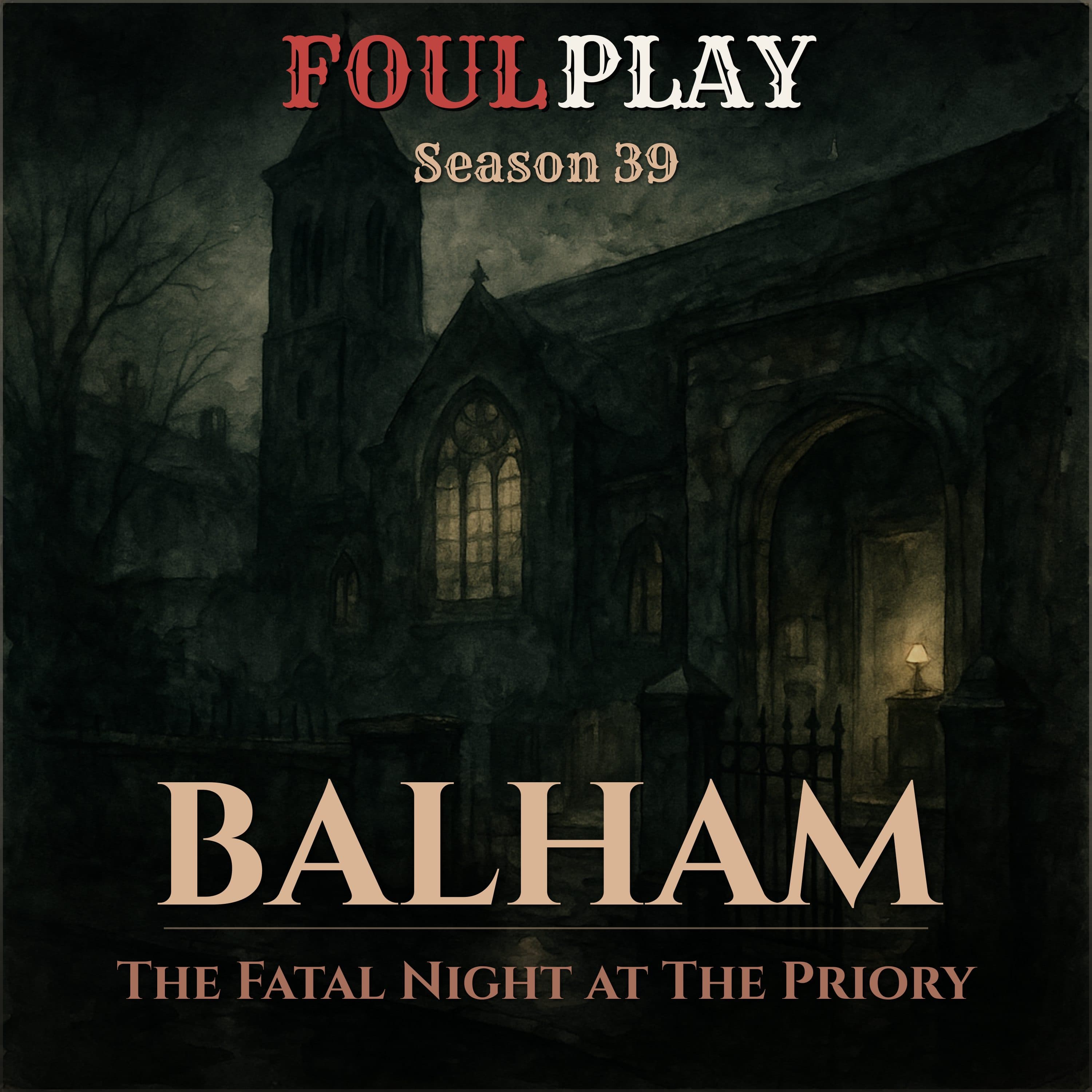
Balham: The Fatal Night at The Priory
Transcript
261 segmentsShow Notes
Content Warning
This episode contains discussions of poisoning and death. Support resources are listed at the end of these notes.
This Episode
Season 39: The Balham Mystery. April 1876—a young barrister collapses in agony minutes after retiring to bed. For three days, Charles Bravo suffers while doctors, family, and suspects gather. He names no one. The poison is antimony—enough to kill ten men.
Behind the gaslit elegance of The Priory, a household harbors dangerous secrets. A wife with a scandalous past. A companion facing dismissal. A former lover humiliated by her marriage. And a husband who knew everything—and paid the ultimate price.
The Victim
Charles Delauney Bravo was thirty years old when he died on 21 April 1876. A barrister called to the bar only recently, he had married Florence Campbell just four months earlier, on 7 December 1875. The marriage brought him access to Florence's considerable fortune—approximately £40,000, inherited from her first husband Alexander Ricardo.
Charles was ambitious. His chambers at Essex Court in the Temple represented the foundation of a legal career he hoped would match his new social position. But colleagues described a man preoccupied with money—Florence's money—and control over the household he had married into.
On that final Tuesday, Charles argued with Florence in their carriage, his horse bolted during an afternoon ride, and by nightfall he had consumed enough antimony to "kill a horse," according to the doctors who watched him die.
The Crime
The evening of 18 April 1876 began unremarkably. Charles, Florence, and her companion Jane Cox dined together at The Priory on Bedford Hill. Charles ate well—whiting, lamb, eggs on toast—and drank several glasses of burgundy. Neither woman touched the wine.
After dinner, they retired to the morning room. Around nine o'clock, Charles suggested Florence retire to bed. She had been unwell. Jane accompanied her upstairs.
Charles remained alone.
Approximately fifteen minutes later, he climbed the stairs to his bedroom. The housemaid Mary Ann Keeber passed him on the staircase. She would later tell police that he looked at her strangely—pale, silent, studying her face.
In his room, Charles undressed and reached for the water jug that servants prepared fresh each evening. He drank. Within minutes, his bedroom door flew open and he staggered onto the landing, screaming for Florence, for hot water, vomiting violently.
The post-mortem revealed thirty to forty grains of tartar emetic—a derivative of antimony—ten times the lethal dose. The poison had been in the water.
The Investigation
The first inquest convened on 25 and 28 April 1876. Coroner William Carter sought to spare the family's feelings, keeping the inquiry private. The jury returned an open verdict.
But Charles's stepfather, Joseph Bravo, was not satisfied. He demanded a second investigation.
The second inquest ran for an unprecedented twenty-three days, from 11 July through 11 August 1876, at the Bedford Hotel in Balham. It became a Victorian sensation. Crowds gathered in the streets. Newspapers printed every salacious detail—Florence's affair with Dr James Manby Gully, the abortion in Bavaria, the household tensions, Charles's jealousy.
Our Sponsors:
* Check out Kensington Publishing: https://www.kensingtonbooks.com
Advertising Inquiries: https://redcircle.com/brands
Privacy & Opt-Out: https://redcircle.com/privacy
Credits
Shane Waters, Founder & Host
Wendy Cee, Co-Host
Produced by Myths & Malice
Listen to Foul Play: A Historical True Crime Podcast
Get More from Foul Play: A Historical True Crime Podcast
Unlock exclusive content and support the show.
- Ad-free listening
- Early access to episodes
- Bonus episodes
- Support independent podcasting
the M&M Dispatch
Get new Foul Play: A Historical True Crime Podcast episodes and case updates from across the network.
Enjoying Foul Play: A Historical True Crime Podcast?
Leave a rating on Apple Podcasts. It takes a few seconds and helps new listeners find the show.