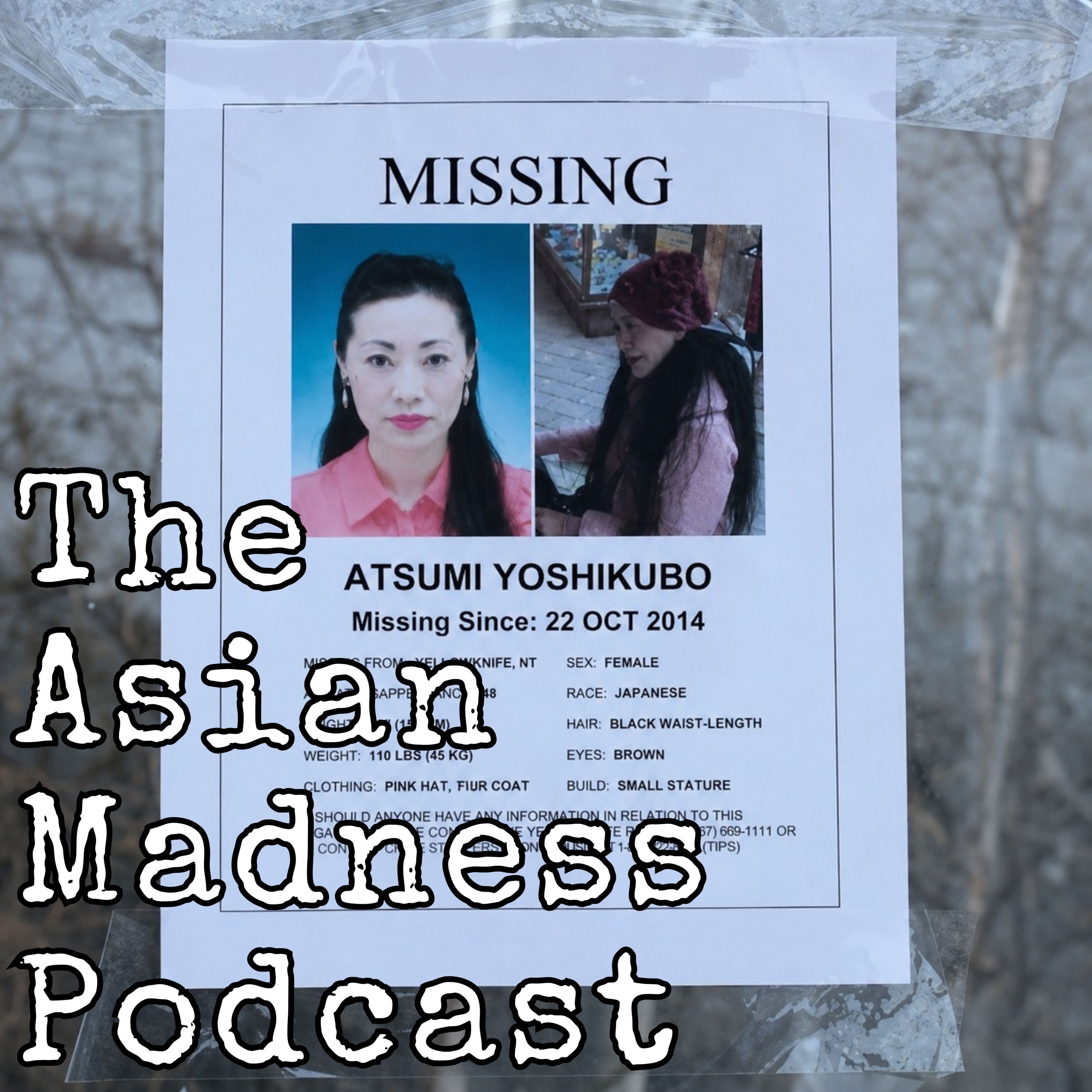
0:00 [SPEAKER_01]: This is Jessica, and you're listening to the Asian Madness podcast. 0:39 [SPEAKER_00]: Thanks for watching! 0:47 [SPEAKER_01]: Welcome back to episode 141. 0:49 [SPEAKER_01]: I hope you've all been well and taking care of your body and mind. 0:53 [SPEAKER_01]: Just to cook heads up, I have decided to refresh some of my older catalog from Patreon, which I do not have anymore. 1:02 [SPEAKER_01]: I will be updating some of those cases, writing and research wise, and will proceed to publish those in the upcoming months. 1:11 [SPEAKER_01]: But anyway, what are we talking about today? 1:15 [SPEAKER_01]: So who likes to travel? 1:18 [SPEAKER_01]: And I definitely know that some people cannot stand it. 1:22 [SPEAKER_01]: It could be due to anxiety around airports, airplanes, or the unknown. 1:27 [SPEAKER_01]: But with today's technology, traveling has never been easier. 1:31 [SPEAKER_01]: There's an app for anything you need, and you have it all in your hand with your phone. 1:37 [SPEAKER_01]: But not all travel destinations are the same, and just because travel is common, and it 1:46 [SPEAKER_01]: especially when you go somewhere more remote. 1:50 [SPEAKER_01]: Let's talk about the Northern Lights, a very popular destination. 1:55 [SPEAKER_01]: There's something about the Northern Lights that pulls people in. 1:58 [SPEAKER_01]: People travel thousands of miles just to catch a glimpse of these magical lights. 2:03 [SPEAKER_01]: In October of 2014, a woman from Japan checked into a hotel in Yellowknife Canada, alone. 2:11 [SPEAKER_01]: She was quiet, polite, and she kept to herself. 2:17 [SPEAKER_01]: wandered around town, and then, days after arriving, she vanished. 2:24 [SPEAKER_01]: No note was found, no other plans were known, and no confirmed sighting. 2:31 [SPEAKER_01]: There were a few theories about what happened to her, and the deeper you dig, the more questions start to come up about how her story was handled, about the cultural blind spots that 2:47 [SPEAKER_01]: Was she looking for a fresh start? 2:49 [SPEAKER_01]: Or did something go terribly wrong in a land that she barely knew or understood? 2:55 [SPEAKER_01]: Because when a psychiatrist disappears into the frozen wilderness and the case is closed almost as quickly as it's open, you have to wonder, what are we not seeing? 3:05 [SPEAKER_01]: What is going on? 3:07 [SPEAKER_01]: Her name is Yoshikubo Atzami and this is her story. 3:12 [SPEAKER_01]: Let's begin. 3:15 [SPEAKER_01]: At sumi was a 45-year-old psychiatrist at the time, living in the city of Uto, located in Kumamoto Prefecture in Japan. 3:24 [SPEAKER_01]: At sumi appeared to have been unmarried, and while she had friends, she was set to have been estranged from her father and her brother. 3:32 [SPEAKER_01]: Unfortunately, I do not have further information surrounding at sumi's personal life, so in this case, we will mainly focus on the events surrounding her travels and her disappearance. 3:44 [SPEAKER_01]: What we do know is aotsumi booked a trip to Canada, which is a totally normal thing to do. 3:50 [SPEAKER_01]: There's something oddly freeing about being a stranger in a strange place. 3:55 [SPEAKER_01]: Nobody knows your name. 3:56 [SPEAKER_01]: You don't have to explain yourself to anybody. 3:59 [SPEAKER_01]: For a little while, you get to disappear into the background, blending with the others, and you can just explore, not just the city, but maybe even parts of yourself that don't get a lot of airtime 4:14 [SPEAKER_01]: Maybe that's what Atzumi was looking for when she boarded a flight from Japan to the quiet northern town of Yellowknife, Canada, in October of 2014. 4:25 [SPEAKER_01]: Upon arrival, she checked into the explorer Hotel, the nicest one in town. 4:30 [SPEAKER_01]: And asked about the Aurora tours, hoping to see the northern lights. 4:36 [SPEAKER_01]: However, she was told that her season had ended. 4:41 [SPEAKER_01]: The lights were still out there, of course, but there were no more guided tours for the rest of the year. 4:46 [SPEAKER_01]: It seems that for most tours, they recommend late summer to early October, or late winter to early spring. 4:54 [SPEAKER_01]: I'm not entirely sure if something happened in 2014 or if it was standard. 4:59 [SPEAKER_01]: So if you know more about these tours, let me know. 5:01 [SPEAKER_01]: That was for it's me, perhaps she was being spontaneous and did not look too far into bookings, so she failed to notice this detail. 5:11 [SPEAKER_01]: Either way, she was already there, so of course she was going to stay for the remainder of her trip and make the most out of her time there. 5:19 [SPEAKER_01]: She went out, did some shopping, and bought souvenirs, postcards, little trinkets, gifts that would later be found untouched in her suitcase. 5:29 [SPEAKER_01]: The kind of things that you pick out with someone back home in mind. 5:33 [SPEAKER_01]: Then a few days into her trip, she vanished. 5:38 [SPEAKER_01]: The last confirmed sighting of her was caught on security tape footage. 5:43 [SPEAKER_01]: She was walking down the highway toward a power station. 5:46 [SPEAKER_01]: She was alone. 5:47 [SPEAKER_01]: She carried no bags, but she was dressed for the cold. 5:52 [SPEAKER_01]: And that was it. 5:53 [SPEAKER_01]: Was she planning on going somewhere? 5:55 [SPEAKER_01]: Or was it just meant to be a quick outdoor stroll? 5:58 [SPEAKER_01]: But something else happened. 6:01 [SPEAKER_01]: Yellowknife is a capital city of Canada's Northwest Territories, somewhere in the upper middle of Canada. 6:09 [SPEAKER_01]: Yellowknife might seem like a quirky destination to most. 6:13 [SPEAKER_01]: After all, if it's northern lights you're after, you'd probably choose to go to Norway or Iceland, or even Alaska. 6:22 [SPEAKER_01]: But to some travelers, Yellowknife is something of a hidden gem. 6:27 [SPEAKER_01]: Since the 1990s, it's become the spot to see the northern lights. 6:31 [SPEAKER_01]: There's even an urban legend floating around that says a child conceived under the Aurora will be blessed with health and good fortune. 6:39 [SPEAKER_01]: Whether it's some of you believe that, or not, probably did not matter, as I don't think she was looking to get pregnant. 6:46 [SPEAKER_01]: Between 2008 and 2014, over 60,000 Japanese travelers made their way to Yellowknife to see the lights. 6:56 [SPEAKER_01]: She came during the off season, when the skies were not as clear, and the ground wasn't fully frozen. 7:04 [SPEAKER_01]: It was also too early for dog sledding, too late for guided tours, but she came anyway. 7:11 [SPEAKER_01]: She booked her trip through a tour agency in Toronto, reserved her room for a week, and decided to explore on her own. 7:19 [SPEAKER_01]: No schedule, no group, no guide. 7:22 [SPEAKER_01]: That, in itself, raised a few eyebrows. 7:26 [SPEAKER_01]: While solo travel isn't unheard of in Japan, it's not as common, especially for women. 7:32 [SPEAKER_01]: Japanese tours usually prefer a guided tour, and women especially prefer to be part of a large 7:41 [SPEAKER_01]: to her credit, this wasn't the first time that Semi did solo traveling. 7:46 [SPEAKER_01]: She wasn't independent woman. 7:48 [SPEAKER_01]: Still, yellow knife isn't Tokyo. 7:51 [SPEAKER_01]: It's remote, quiet, and bordered by a vast, wild expanse. 7:56 [SPEAKER_01]: The town itself sits snugly inside a hundred square kilometers. 8:01 [SPEAKER_01]: Step just a little outside of that, and you're in wilderness, unsettled land, forests, lakes, snow-dusted trails 8:12 [SPEAKER_01]: It's beautiful, sure, but also unforgiving. 8:15 [SPEAKER_01]: Temperatures at week hovered around zero degrees Celsius. 8:19 [SPEAKER_01]: Chili, but not lethal, not right away, at least. 8:24 [SPEAKER_01]: If you're unprepared or out for too long, hypothermia doesn't take hours to set in. 8:29 [SPEAKER_01]: It can just take a few minutes. 8:31 [SPEAKER_01]: And if you're walking away from town with no one watching, it can be pretty easy to just disappear. 8:39 [SPEAKER_01]: At Semi was last seen on October 22nd, 2014. 8:43 [SPEAKER_01]: But to understand what happened, we need to rewind just a few days. 8:48 [SPEAKER_01]: On October 19, her third day in Yellowknife, security cameras caught her visiting two local landmarks, the gallery of the midnight sun and the city's tourist information center. 9:01 [SPEAKER_01]: In both videos she was alone, dressed in a long pink parka, matching gloves, a dark pink hat, black trousers, and white shoes. 9:12 [SPEAKER_01]: She bought a few souvenirs, nothing seemed out of the ordinary. 9:16 [SPEAKER_01]: In fact, she looks like any regular Japanese tourist, quiet, respectful, camera slung around her neck. 9:24 [SPEAKER_01]: For the next two days, her movements became a bit of a mystery. 9:29 [SPEAKER_01]: There were no further sightings, no camera footage, no check-ins with anyone. 9:34 [SPEAKER_01]: It was like she slipped under the radar. 9:37 [SPEAKER_01]: Then, on the morning of October 22nd, her fifth day in Yellowknife, let's see me left her hotel for what would be the last time. 9:45 [SPEAKER_01]: Hotel security footage recorded her exiting the building wearing the same pink coat and dark pants she'd worn in previous days. 9:53 [SPEAKER_01]: She did not seem to have been carrying any bags with her. 9:58 [SPEAKER_01]: Around 11.30 a.m., a woman named Jessica Reel, a retired RCMP constable, was driving along the Ingram Trail, which is a road that cuts through the edge of yellow knife and into surrounding wilderness. 10:12 [SPEAKER_01]: She noticed a woman walking along the trail, dressed in pink, with a camera around her neck. 10:18 [SPEAKER_01]: The woman was headed toward an area that was largely undeveloped and known for being beautiful, but remote and risky, especially if you're unfamiliar with the terrain. 10:31 [SPEAKER_01]: Jessica considered stopping something about the scene nagged at her, but at Simea Lakalm, while dressed for the weather. 10:38 [SPEAKER_01]: She wasn't waving anybody down, didn't seem to be in distress, so Jessica let her be and drove on. 10:51 [SPEAKER_01]: days passed. 10:53 [SPEAKER_01]: Let's see me never return to our hotel. 10:56 [SPEAKER_01]: Three days later, staff noticed it was time for it to me to check out. 11:00 [SPEAKER_01]: But she hadn't checked out, and she hadn't asked to extend her stay. 11:04 [SPEAKER_01]: They called her room, and of course, no one answered. 11:07 [SPEAKER_01]: Eventually, when they entered her room, it was empty and neatly kept. 11:12 [SPEAKER_01]: Her luggage was still there, but packed. 11:15 [SPEAKER_01]: the souvenirs should brought were untouched, understandably, the hotel staff became a bit worried, so they reached out to the local police, and the RCMP checked with the yellow knife airport. 11:26 [SPEAKER_01]: Could it send me have just hopped on her flight and left all of her belongings? 11:31 [SPEAKER_01]: Of course not, the airport and airline staff confirmed that its semi had missed her return flight, and that's when the search for its semi began. 11:41 [SPEAKER_01]: Matsumi's disappearance was a first for yellow knife, and all the years that Japanese tourists visited the northern town to chase the Aurora, none had ever simply vanished. 11:51 [SPEAKER_01]: So when Matsumi failed to check out of her hotel and Mr. 11:54 [SPEAKER_01]: Flight Home, her case quickly escalated from a curious absence to a full blown international mystery. 12:02 [SPEAKER_01]: The police launched a full-scale effort. 12:05 [SPEAKER_01]: Officers can't vest the surrounding woods. 12:07 [SPEAKER_01]: Helicopters swept the vast boreal forest. 12:10 [SPEAKER_01]: Search dogs were brought in. 12:12 [SPEAKER_01]: Locals joined in, too. 12:14 [SPEAKER_01]: Coming trails in case the visitor had gotten hurt or lost. 12:18 [SPEAKER_01]: Temperatures were dropping. 12:20 [SPEAKER_01]: Daylight hours were getting shorter. 12:23 [SPEAKER_01]: In other words, time was running out. 12:26 [SPEAKER_01]: News of a disappearance spread quickly, 12:32 [SPEAKER_01]: To many people, Matsumi was just a quiet, gentle woman with no-known reason to vanish. 12:38 [SPEAKER_01]: And yet, just a week after launching the search, the RCMP suddenly called it off. 12:44 [SPEAKER_01]: Why? 12:45 [SPEAKER_01]: You ask? 12:46 [SPEAKER_01]: Because of a letter. 12:48 [SPEAKER_01]: Through coordination with Japanese police, Canadian authorities learned that just before leaving Japan, Matsumi had written to a friend. 13:02 [SPEAKER_01]: She had come to Yellowknife, it seemed, to vanish into the wilderness, to become, in home words, quote, a missing person, unquote. 13:11 [SPEAKER_01]: That statement hit hard, it suggested suicide. 13:17 [SPEAKER_01]: But not everybody bought it. 13:19 [SPEAKER_01]: This is quite an interesting turn of events. 13:22 [SPEAKER_01]: If you recall one of my past episodes, I discussed the phenomena of the vanishing people 13:29 [SPEAKER_01]: Many people simply leave their daily lives behind for various reasons. 13:33 [SPEAKER_01]: They leave their house, and they just never return. 13:36 [SPEAKER_01]: They don't necessarily choose to end their lives, but they choose to live off the grid become part of the vanishing population. 13:45 [SPEAKER_01]: While this could explain her disappearance, why would she not just do it in Japan? 13:51 [SPEAKER_01]: I get that it's nice to travel and see the northern lights. 13:55 [SPEAKER_01]: And it does feel a lot more final to do it this way, if you know what I mean. 14:01 [SPEAKER_01]: A Tsumi's family pushed back, pointing out that she had a round trip ticket. 14:05 [SPEAKER_01]: She bought souvenirs. 14:07 [SPEAKER_01]: She packed her luggage. 14:08 [SPEAKER_01]: Her brother, Kenji, confirmed that the letter existed, but said that he had never read it himself. 14:14 [SPEAKER_01]: He also said a Tsumi hadn't told him she was going to Canada at all. 14:19 [SPEAKER_01]: Despite their estrangement, he doubted she had taken her own life, not just because she had purchased a return ticket home, but because of how she had behaved 14:30 [SPEAKER_01]: She bought souvenirs, she smiled at people, she left her luggage packed as if she had plans to return. 14:37 [SPEAKER_01]: And that's a solid point, why bother doing all of that if you don't plan to come back? 14:43 [SPEAKER_01]: But it could also be a simple ritual, something that she felt she needed to do. 14:49 [SPEAKER_01]: You never really know how people think or what's going on in their heads. 14:53 [SPEAKER_01]: And then there was her profession. 14:55 [SPEAKER_01]: But Zumi was a psychiatrist. 14:58 [SPEAKER_01]: She understood the signs and patterns of depression, anxiety, or suicidal thoughts. 15:04 [SPEAKER_01]: To the family, it was impossible that she would slip into the same story. 15:08 [SPEAKER_01]: I'm not sure I fully agree with that. 15:11 [SPEAKER_01]: Who's to say a psychiatrist or a mental health professional is immune to the struggles that their patient's face? 15:17 [SPEAKER_01]: It's like saying doctors don't get sick. 15:20 [SPEAKER_01]: If she was depressed or something, maybe she felt hesitant to let others know. 15:26 [SPEAKER_01]: Topics and conversations surrounding mental health is still developing in many parts of Asia, so I can understand if she was feeling some type of way and decided to keep it to herself. 15:39 [SPEAKER_01]: As for the locals, they were feeling a bit skeptical. 15:46 [SPEAKER_01]: How could the investigation end so quickly without a conclusion? 15:50 [SPEAKER_01]: Why was it more done to rule out foul play? 15:54 [SPEAKER_01]: With no body, no weapon, no sign of foul play, and no clear answers, the case drifted into limbo. 16:01 [SPEAKER_01]: But behind the scenes, the investigation did not fully stop. 16:05 [SPEAKER_01]: RCMP low-key continued following leads and conducting small-scale searches, especially once the snow began to thaw. 16:13 [SPEAKER_01]: They focused on specific areas of the forest, chosen based on where Asumi was last seen, and 16:23 [SPEAKER_01]: Only trained personnel were allowed in, just in case they found remains. 16:29 [SPEAKER_01]: Meanwhile, the story continued to spread across Canada and Japan. 16:33 [SPEAKER_01]: Media outlets reported on our case extensively, and people from both countries sent messages of concern. 16:40 [SPEAKER_01]: In Yellowknife, residents signed condolence cards for our family. 16:44 [SPEAKER_01]: City Council members spoke publicly about the emotional impact the case had on the community. 16:50 [SPEAKER_01]: It wasn't just a story anymore, it felt more personal. 16:54 [SPEAKER_01]: Jessica Riel, the retired RCMP officer who'd seen Atzumi walking along the Ingram trail that day, later admitted she couldn't stop thinking about this. 17:04 [SPEAKER_01]: She'd considered offering Atzumi a ride, but talked herself out of it. 17:08 [SPEAKER_01]: And when she learned the woman had gone missing, she didn't sleep much that night. 17:13 [SPEAKER_01]: no doubt wondering how things would have been different if she had offered a ride. 17:18 [SPEAKER_01]: Of course, I don't believe it's her fault at all. 17:21 [SPEAKER_01]: Perhaps that Sumi exuded confidence and seemed to know what she was doing. 17:26 [SPEAKER_01]: Even if Jessica had stopped to talk to her, that Sumi could have just told her everything was fine. 17:33 [SPEAKER_01]: And then, months went by. 17:36 [SPEAKER_01]: In September of 2015, a hiker traveling north of the city, near the same Ingram Trail, found a scattering of personal belongings. 17:45 [SPEAKER_01]: Nearby, where human remains. 17:48 [SPEAKER_01]: Just fragments at this point, nothing more. 17:52 [SPEAKER_01]: Perhaps animals had gotten to it as well. 17:54 [SPEAKER_01]: This definitely was a big find, and of course, the police went ahead and tested the remains. 18:00 [SPEAKER_01]: Months later in April of 2016, DNA analysis confirmed it. 18:05 [SPEAKER_01]: The remains belong to what's in me. 18:08 [SPEAKER_01]: She had, in fact, died alone in the woods outside Yellowknife, but even with that confirmation, a lot remained unclear. 18:15 [SPEAKER_01]: There was no way to determine her exact cause of death. 18:19 [SPEAKER_01]: The corner confirmed that there just wasn't enough left of her body to perform an autopsy, so they couldn't identify any signs of trauma or injury, literally just bone fragments scattered in the forest. 18:37 [SPEAKER_01]: One was addressed to her friends and family back in Japan. 18:40 [SPEAKER_01]: The other was more personal, a love letter to Yellowknife. 18:45 [SPEAKER_01]: In it, she expressed how much she adored the north, the Aurora, and the stillness of the land. 18:51 [SPEAKER_01]: She asked to be buried there. 18:53 [SPEAKER_01]: Her wish was granted, and Otsumi was entered in Yellowknife's Lakeview cemetery. 18:59 [SPEAKER_01]: To some, the sending confirmed the RCMP's initial theory, that she had come to this frozen place to die on her own terms, that her death was a private choice. 19:11 [SPEAKER_01]: But as it is with many cases, that feel a little off, not everybody agreed. 19:18 [SPEAKER_01]: According to professionals working in mental health, Tsumi's walk into the forest might not have been a clear cut suicide, but more of a suicide fantasy, a kind of escape, whether person hopes that someone might find them, stop them, and save them. 19:33 [SPEAKER_01]: Others pointed out that if Tsumi had wanted to die by suicide, she had far more accessible options back home in Japan, like Aoki Gahata, which is the infamous suicide forest, 19:47 [SPEAKER_01]: Why come all the way to Canada? 19:50 [SPEAKER_01]: Many people said it was specifically because she had romanticized the idea of dying under the noise and lights. 19:57 [SPEAKER_01]: That she saw this as a place of peace, far from the noise of her real life, as she wanted to create distance from her family and her past. 20:06 [SPEAKER_01]: Maybe she thought this was kinder to her family, or they didn't have to discover her, or didn't have to identify her. 20:14 [SPEAKER_01]: Perhaps she believed that being out in the wilderness, that chances of running into somebody else, is close to zero. 20:21 [SPEAKER_01]: Oh, Kigahara, the so-called suicide forest, has many signs telling people to seek help and to not kill themselves. 20:29 [SPEAKER_01]: People often patrol the forest, as well, searching for bodies, and perhaps to stop someone 20:37 [SPEAKER_01]: On the other hand though, some people haven't completely abandoned the possibility that something else happened out there. 20:44 [SPEAKER_01]: With no witnesses, no camera footage, and no further evidence to uncover, we may never know the entire truth. 20:52 [SPEAKER_01]: The only thing we do know is that at Sumir arrived at Yellowknife alone, and for reasons we can only assume now, she decided to stay. 21:02 [SPEAKER_01]: At Sumi's death, left ripples across continents. 21:05 [SPEAKER_01]: From yellow knife to the home of her friends and family members back in Japan. 21:10 [SPEAKER_01]: At first, there were fears that her disappearance would scare off Japanese tourists. 21:15 [SPEAKER_01]: I know, kind of cold to think about that, but it's understandable for a tourist town to consider this. 21:22 [SPEAKER_01]: Some worried that the story of a woman vanishing alone in the northern wilderness might spark fear, or worse, copycats, but those fears never quite came to pass. 21:33 [SPEAKER_01]: Tourism did not decline. 21:36 [SPEAKER_01]: In fact, it grew. 21:38 [SPEAKER_01]: The Northern Lights kept drawing people in as they always have. 21:42 [SPEAKER_01]: But beyond the headlines and travels statistics, what remained was a topic that was a little bit difficult because that's when me was a psychiatrist. 21:51 [SPEAKER_01]: A woman who was trained to understand the mind to spot the warning signs to help others cope. 21:57 [SPEAKER_01]: And yet, she herself might have struggled with that kind of pain and chose to go down the path that she was trained to lead others away from. 22:06 [SPEAKER_01]: Mental health professionals are humans first. 22:09 [SPEAKER_01]: You can spend your entire life helping others climb out of this hole and still find yourself standing in it one day, wondering how deep it goes, or if you want to climb out at all. 22:21 [SPEAKER_01]: So there you have it. 22:23 [SPEAKER_01]: The somewhat mysterious death of a Japanese woman who traveled from her home to yellow knife and never left. 22:30 [SPEAKER_01]: As I mentioned previously, many parts of Asia still view mental health struggles as a source of shame, seeking help can feel like you're weak and admitting to pain is failure. 22:42 [SPEAKER_01]: And even for someone like Atzami, someone who likely knew better, it's possible that the cultural weight of all that stigma felt too heavy to shake off. 22:53 [SPEAKER_01]: We don't know what her final thoughts were as she stepped off the road and into the trees, 23:01 [SPEAKER_01]: but we can't hope that her final moments were calm, that she found some version of peace in the quiet hush of the forest, beneath a sky that she was so adamant to see. 23:12 [SPEAKER_01]: With all that said, please remember to pause and take a moment to think of those around you. 23:17 [SPEAKER_01]: If someone in your life seems a little too quiet or not being themselves lately, check in on them. 23:23 [SPEAKER_01]: And if you are struggling, you should always reach out to friends, 23:32 [SPEAKER_01]: Thank you for tuning into this episode. 23:34 [SPEAKER_01]: Even though it was a bit shorter than I expected. 23:37 [SPEAKER_01]: Please do take care, be kind, and stay safe out there. 23:42 [SPEAKER_01]: Till next time.
Show full transcript (236 segments)